

5 Best Historical Drama Series Of The '80s, Ranked
If you look back through TV history, you'll find a lot of ... well, history. The '80s especially were full of big, sweeping historical drama series that used the space multiple episodes provided to transport audiences back in time. Building off of the success of popular historical dramas of the previous decade, including some of the best shows of the '70s like "Roots," the '80s found new ways to make the past come alive and get millions to tune in.
Whether telling the story of a well-known historical figure or spinning a yarn about a fictional character in the midst of an actual era, the best historical dramas of the '80s all stand the test of time themselves. It is hard to narrow it down to five, so there are a couple of notable omissions. "Lonesome Dove" and "The Thorn Birds" are two of the most acclaimed miniseries of the '80s and both are dramas that take place in the past. However, the former is an exceptional Western and the latter is a sweeping saga about a fictional family. They're each distinct subgenres of their own and not necessarily what immediately comes to mind when one thinks "historical drama."
Having set those two classic series aside, let's take a look at five of the best historical dramas of the '80s.
5. George Washington
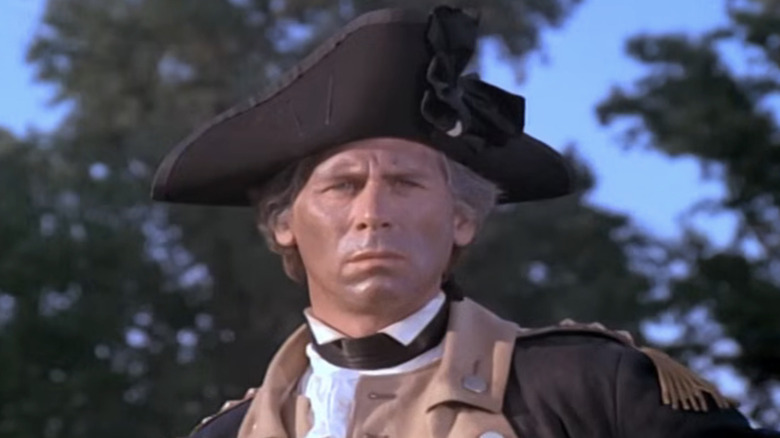
Unlike in a certain hit Broadway musical, nobody raps in this story of a Founding Father's life. The 1984 miniseries "George Washington," which aired on CBS in April 1983, was a success all the same. Based on a biography of the first president by James Thomas Flexner, "George Washington" begins with Washington's upbringing as a young man in the French and Indian War and follows him through the Revolutionary War. A sequel series in 1986, "George Washington II: The Forging of a Nation" tackled his presidency, but it was not as big of a success as the first show.
Barry Bostwick, best known for "The Rocky Horror Picture Show" and "Spin City," plays the title character, and a glowing New York Times review praised his emotional performance. The Times also endorsed the ambitious series as a whole, noting that its comprehensive telling of Washington's story helped paint a fuller picture of the man on the dollar bill than audiences were perhaps used to at the time. Variety's review noted that the show made familiar U.S. history fresh and entertaining. Viewed now, "George Washington" doesn't exactly reinvent the historical bioseries, but it's an extremely competent and rewarding example of the form. Our first president deserves a first-rate bioseries, don't you think?
"George Washington" was nominated for six Emmy Awards, though it ultimately went home empty handed.
4. Masada
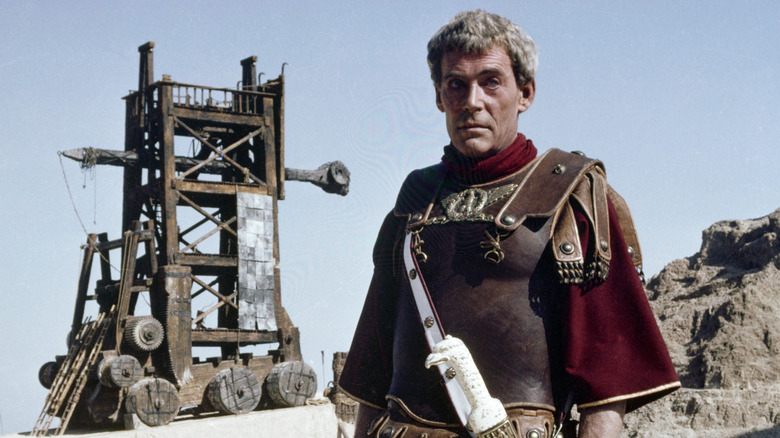
Peter O'Toole, the lead of "Lawrence of Arabia," was no stranger to historical epics set in the Middle Eastern desert. He returned to the region, albeit for a tale set nearly 2,000 years earlier, in the 1981 ABC miniseries "Masada." O'Toole plays Flavius Silva, a real-life Roman General who was tasked with conquering a Jewish mountaintop fortress near the Dead Sea. Peter Strauss played Eleazar ben Yair, the Jewish commander.
Based on "The Antagonists," a 1971 novel by Ernest K. Gann which told a heavily fictionalized account of the historical event due to a lack of extensive firsthand records of what actually happened, "Masada" was originally intended to be a movie but the scope of the story was simply too big for one feature film. ABC thought it had potential as a miniseries, and spent $25 million on the resulting 8-hour show. The budget shows on the screen; filmed on-location in Israel, "Masada" is a worthy swords and sandals epic, boasting a great, sympathetic villain performance from O'Toole. It all builds to the tragic end; after finally breaking through in the monthslong siege, Silva finds that everybody in the fortress has committed suicide rather than submit to Rome.
The New York Times review did note, somewhat critically, that the film ends with footage of the modern Israeli Army training on the site of Masada, a sour bit of propaganda to cap things off.
3. The Winds of War
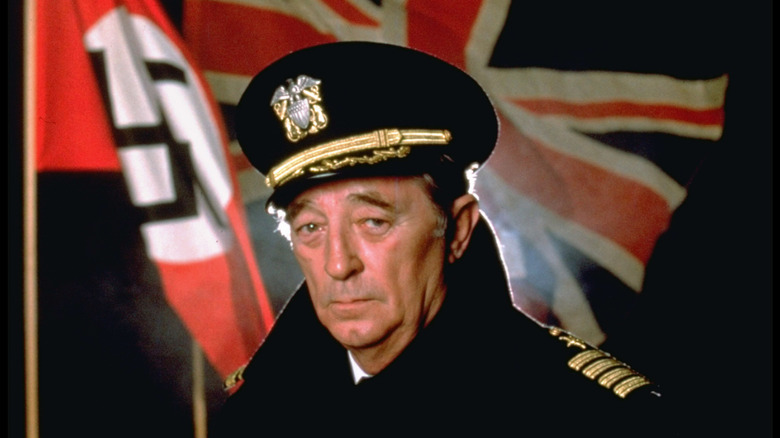
In 1983, 140 million people watched "The Winds of War," making the ABC naval drama the most-watched miniseries in television history, besting the previous record-holder, the '70s classic "Roots," by 5 million. Produced for $40 million, the seven-part, 18-hour show was an adaptation of Herman Wouk's 1971 novel of the same name. The great Robert Mitchum played the lead, Victor "Pug" Henry, a Naval attaché in the leadup to World War II. Though Henry was fictional, he crosses paths with many real-life historical figures, like Ralph Bellamy's President Franklin D. Roosevelt. Hitler, Churchill, and Mussolini also pop up as the show takes audiences from 1939 as the Nazis invaded Czechoslovakia to shortly after Pearl Harbor with America's entry into the conflict. Against this war backdrop, Henry also has to contend with plenty of drama within his own family.
With both global conflict and melodrama, "The Winds of War" can be a bit bloated. A negative Washington Post review from 1983 criticized it for being overlong. The New York Times, in a positive review, acknowledged that the series isn't high art and it does take a while to get going, but concluded that it's quite effective, engrossing TV once it does. Millions of American TV viewers agreed, as did the Emmys, which nominated "The Winds of War" for 13 Emmys. It won three.
In 2020, Seth MacFarlane announced he was developing a remake of "The Winds of War," though there have been few updates since then.
2. The Jewel in the Crown
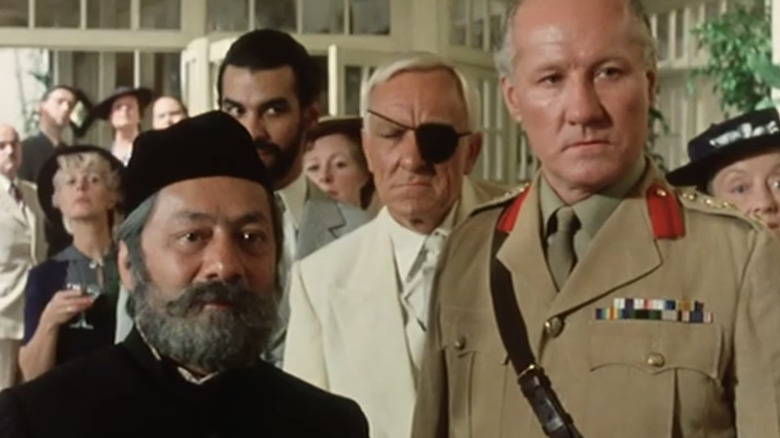
The Guardian called "The Jewel in the Crown" one of the best British TV shows of the '80s, and it was acclaimed in the United States when it crossed the pond and aired as part of PBS's Masterpiece Theatre in 1984. The New York Times celebrated it as a prime example of what television is capable of doing as a medium – no small praise.
An adaptation of Paul Scott's "Raj Quartet" book series, the miniseries told the story of the final days of British Rule in India. Filmed on location, the 15-hour epic begins in World War II and follows a cast of fictional characters through to 1947 when the subcontinent achieved independence. It is a beautifully made production that offers a powerful, nuanced, and refreshingly non-exploitative look at India and its colonizers that the Times said was far more comprehensive and honest than anything Rudyard Kipling ever wrote. More than just being good television, "The Jewel in the Crown" is important television.
Modern viewers who watch the show will no doubt be interested to see "Game of Thrones" star Charles Dance in his breakout role. The ensemble cast was so talented that all four Best Actress slots at the BAFTAs went to "Jewel in the Crown" performers. Tim Pigott-Smith, who played the villainous police superintendent Ronald Merrick, has such an effective and hateable performance that a woman on the street stopped him to say "If you owned a restaurant, I'd come and poison the food," per the NYT.
1. Shōgun
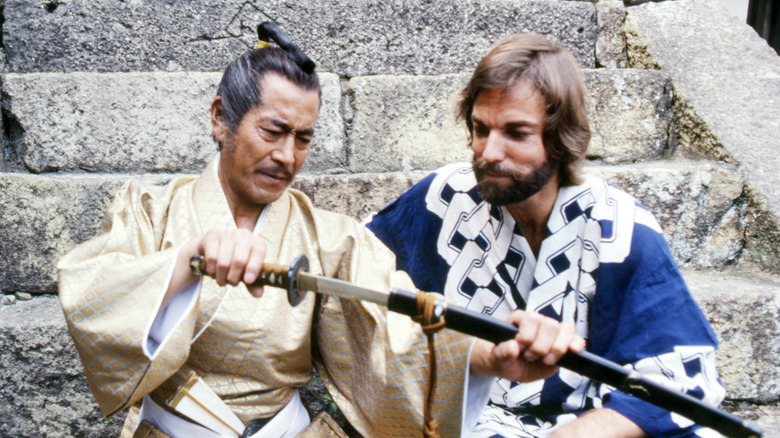
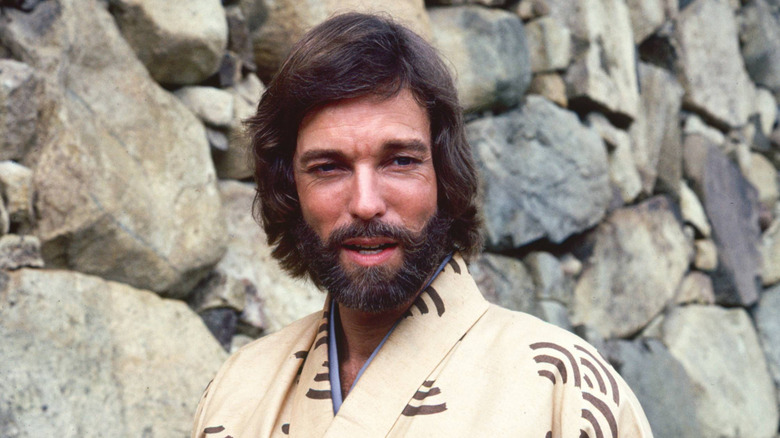
Though it's been overshadowed by the FX on Hulu remake starring Anna Sawai and Hiroyuki Sanada, the importance and success of the original "Shōgun" miniseries from 1980 cannot be overstated. One in three televisions in America was tuned to NBC for the final episode of the 12-hour miniseries. Based on the book by James Clavell, "Shōgun" followed Richard Chamberlain's John Blackthorne, a fictional English sailor inspired by a real historical figure, as he traveled to 1600s Japan and became embroiled in a feudal conflict. Legendary Japanese actor Toshiro Mifune played Yoshi Toranaga, an influential and cunning lord.
It's a complex, entertaining saga, but with the benefit of more than a quarter-century of hindsight, there are things to criticize about the '80s "Shōgun." Compared to the remake, the original verges on indulging the white savior trope. It centers Blackthorne's journey even though he is the outsider to this land full of people with their own hopes, customs, and traditions. However, viewed in the context of the time, "Shōgun" was groundbreaking. Set and filmed in Japan and with much of the dialogue in unsubtitled Japanese, "Shōgun" exposed audiences to another culture and forced them to take notice. Though claims that "Shōgun" is responsible for popularizing sushi in America are overstated, the miniseries was no doubt part of a wave of renewed interest in Japanese culture. It's easy to draw a line from "Shōgun" to the present day, when many foreign titles are some of the most popular and talked about TV shows.