

10 Best Sopranos Villains, Ranked
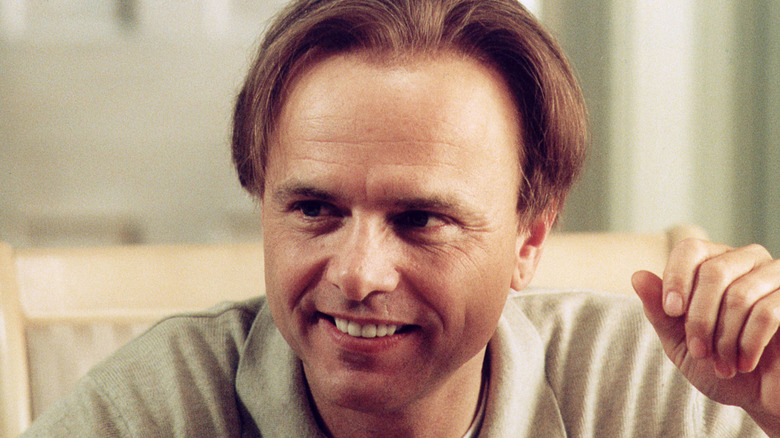
It's deceptively easy to distinguish what exactly a villain on "The Sopranos" is. After all, the show's protagonist is a narcissistic mob boss who lies, steals, and murders with little to no meaningful remorse. David Chase did give Tony (James Gandolfini) fair competition in terms of pure evil: an old-school psychopath challenging him for power; a sadistic capo who seemingly existed just to cause torment in other people's lives; even Tony's own twisted mother.
At the same time, some of the "villains" in Tony's life are far more sympathetic than he is. From the boss who challenged New Jersey's obvious dysfunction to the friend he failed to save, there are arcs where it's hard not to root for these characters to pull through. What unites every kind of villain on "The Sopranos" are their satisfying character arcs, rich psychological backgrounds, and indelible impact on the show's biggest events.
"The Sopranos" is a show about a monster, so it's easy to forget how many other monsters David Chase sent after him. Over six seasons, Tony Soprano survived rival bosses, double-crossing soldiers, and reckless upstarts, but the show's most dangerous enemies were rarely the ones with the highest body counts. More often, they were the ones sitting at his dinner table. We've ranked the best villains in the series (not including guest stars) with these qualities in mind. This is your first and only warning for major spoilers for all six seasons of "The Sopranos."
10. Jackie Aprile Jr.
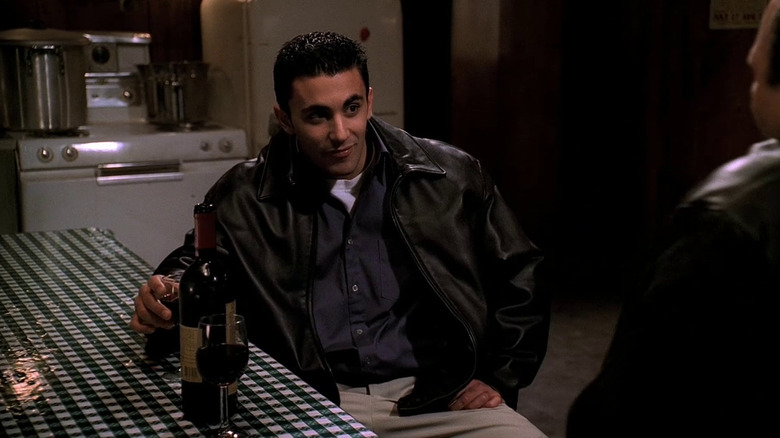
Jackie Jr. (Jason Cerbone) is a flash-in-the-pan villain — a troubled supporting character who could've become Tony Soprano's next protege, and instead wound up being one of his most tragic victims. The son of the late boss (Michael Rispoli's Jackie Aprile) is introduced toward the end of Season 2 as a steady example of what a child raised by a mobster — but decidedly outside the mob lifestyle — could become. The sad beauty of his character arc is that Jackie Jr. proves how superficial the line between those two actually is.
Though Tony honors his friend's wish that he not be allowed into the family, Jackie is still his father's son. He's reckless, arrogant, and coldly womanizing (despite initial chivalry and charm, he treats Meadow Soprano terribly and is ultimately caught cheating on her). This was all before he grabbed himself a gun and made the decision to try and shoot his way into the game. It shows how Jackie's father, his pseudo-stepfather, Ralph (Joe Pantoliano), and Tony rubbed off on him — they all thought that they could behave however they wanted without that behavior impacting their children. Jackie's arc foreshadows the dysfunctional life AJ Soprano (Robert Iler) grows into in the following seasons.
After shooting up a family card game (inspired by one of Ralph's stories) and hiding out with Michael K. Williams, Jackie is swiftly executed by Vito (Joseph R. Gannascoli). He's only a full villain for two episodes, but the path leading to that turn is enough to get him on this list.
9. Mikey Palmice
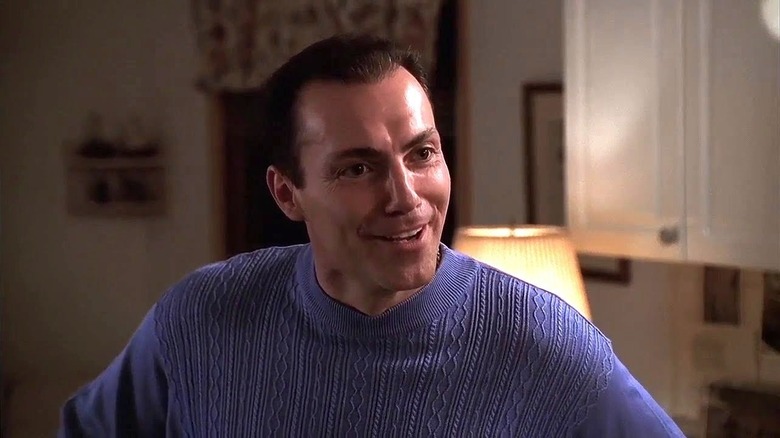
Though he doesn't last past Season 1, Al Sapienza's Mikey Palmice is memorable for being one of the most openly psychopathic characters on "The Sopranos." He serves as Junior Soprano's (Dominic Chianese) top enforcer, spending much of his time executing hits on Junior's behalf. The first time you see what Mikey's really capable of is in Episode 3, "Denial, Anger, Acceptance," when he breaks into the home of Brendan Filone (an associate of Christopher Moltisanti's, played by Anthony DeSando) and shoots him in his bathtub. Mikey also facilitates a simultaneous mock execution with a terrified Christopher (Michael Imperioli) and throws a man off a bridge three episodes later.
Suffice it to say, Mikey is both the most lethal soldier in the series and the one who tests the self-deception that being in the Mafia is like serving in the Army. Killing comes naturally to him, and he genuinely seems to enjoy it at times. He serves on the front lines of Junior's war against Tony, which is to say that he's responsible for hiring the sorry patsies to take out Junior's rival and tying up unsuspecting loose ends in the aftermath. By the time the audience is fed up with Mikey, Christopher and Paulie Walnuts (Tony Sirico) follow him on a run and gun him down in the forest. Tony dreams about riding with him in his father's car in "The Test Dream," perhaps symbolizing the violence that Tony carries.
8. Richie Aprile
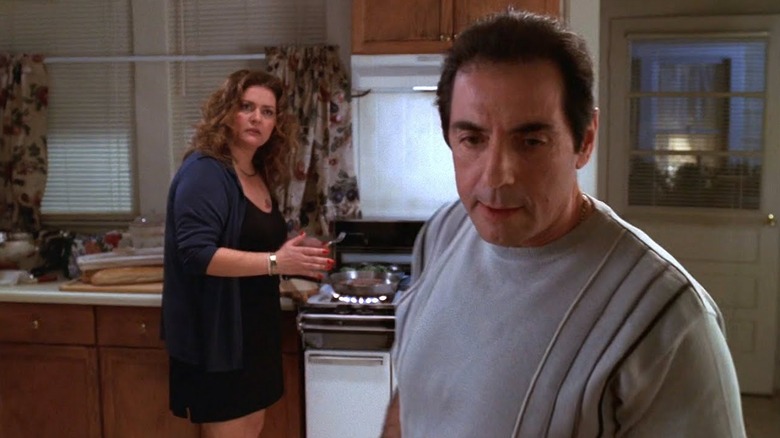
Richie might be the most realistically dangerous character on this list. Where Mikey is a sadistic murderer, David Proval's Season 2 villain is the perfect portrait of a career killer who actually buys into the notion that he's a soldier. He's Jackie Jr.'s uncle, the older brother of Jackie Sr., and a capo who went to prison when Tony was still working for the big guys. When he gets out, his brother is gone and he's asked to kiss Tony's ring. Though he does so, it's clear he harbors strong resentment about the Apriles losing control of the family.
In a worse show, this rivalry would be reduced to a retread of the war between Junior and Tony from Season 1 (though, admittedly, the similar flavors of the two storylines make Season 2 less extraordinary). What separates Richie and Junior is how their respective coups unravel. Junior is bested straightforwardly by Tony; Richie is undone by his own cruelty. The decision to have Janice (Tony's sister; Richie's lover; played by Aida Turturro) kill Richie during an argument rather than having Tony carry out an execution is structurally important to the evolution of the show's identity. It's not primarily a series about mobsters fighting for power, it's about what that life does to them and the people around them. His death has nothing to do with any war and everything to do with the way he treated Janice and his family (and, in turn, how she was raised to handle such treatment).
7. Johnny Sack
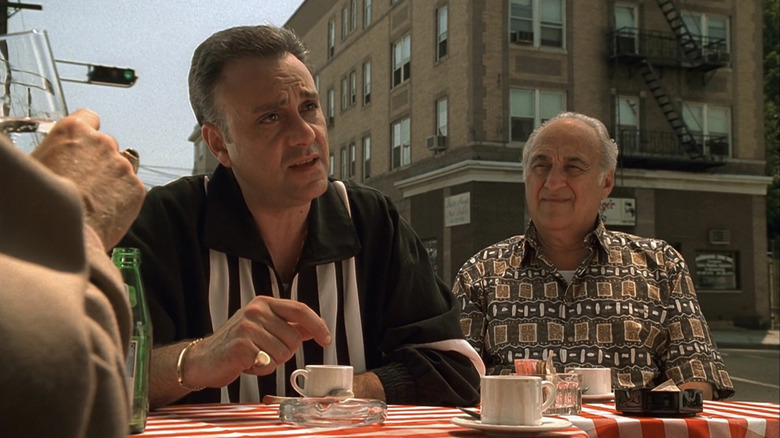
Johnny Sack (Vincent Curatola) is one of the many "Sopranos" characters you can only fully appreciate on your second watch. He's introduced as part of the Lupertazzi crime family in Season 1, but is essentially a blink-and-you-miss-him background player to expand the world. You start to recognize him after a few appearances but don't track him narratively — until, without you fully realizing it, the show has built him into a major rival in Season 3.
His spiral into villain status starts in Season 4 and escalates in Season 5, after he becomes the family's boss and learns Ralph has disrespected his wife. It's an arc that unexpectedly serves to illuminate how morally empty the family's respect for anyone truly is. Johnny is the only mobster (apart from Bobby) who has anything close to a healthy relationship with his wife and children, and the fact that he's so personally upset by a hurtful joke about her makes him one of the most sympathetic villains on this list. Is he right to want blood for such a comment? Not in our world — but in his world, where stealing a few suits from a made man can get you got, it's understandably outrageous that leadership would expect him to be bought off. His imprisonment and subsequent cancer emphasize how superficial the family's relationships really are.
Johnny Sack works as an antagonist because he's arguably the most competent and worthy leader in the show. He's strong-willed yet reasonable, ambitious yet willing to cooperate, and truly motivated by a love for his family. It's hard not to side with him over Tony.
6. Sal Bonpensiero
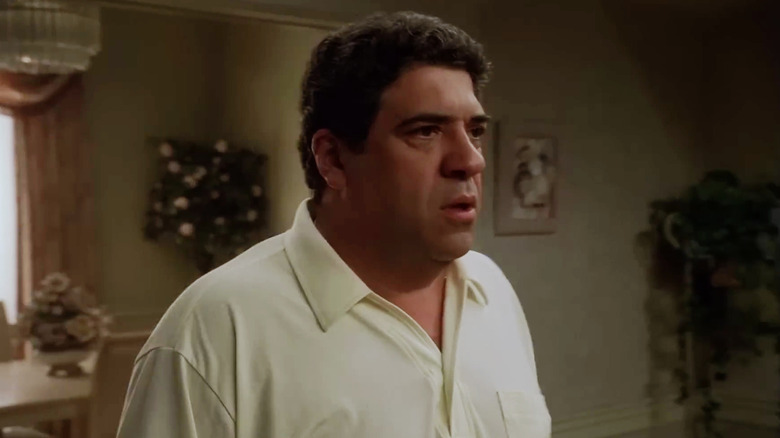
Another reason why Richie lacks impact compared to most other villains on this list is that he was largely overshadowed by Sal "Big P****" Bonpensiero. Played by the late Vincent Pastore, Sal was the show's first great character death — the best friend of Tony Soprano, built up over two seasons as a close ally, potential informant, scorned ghost, then actual informant.
The show handles Sal's Season 2 storyline perfectly, allowing it to run parallel to Tony's. As the latter is trying to navigate the pressures of having to make tough calls as the new boss, Sal is trying to navigate split loyalties and mounting secrets he can't balance. Both of them are punished for believing they can live two lives at once. What makes the conflict all the more striking is how David Chase resolves it, intentionally avoiding an arc where Tony successfully investigates Sal and uncovers the truth. Instead, in "Funhouse," a dream forces Tony to confront a fragment of the truth his subconscious already knows. It's an essential episode for a reason.
Sal, too, must ultimately accept the fate that was decided for him long before he was flipped by the feds — as Tony himself says, people in this life usually either wind up dead or in prison. His execution is a death of sorts for Tony as well, putting him on a colder, lonelier path that kills any belief that his criminal life won't infect everything else.
5. Tony Blundetto
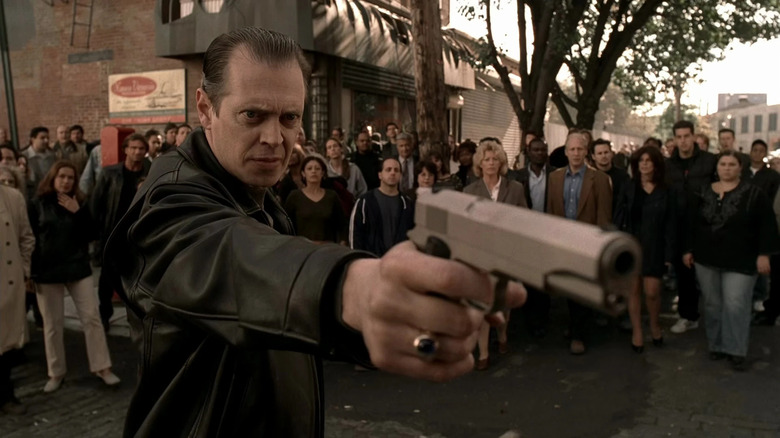
The surprise final antagonist of Season 5 is Tony Blundetto, Tony Soprano's beloved cousin who takes the fall for a crime they were both supposed to carry out (and who is played by occasional "Sopranos" director and future "Boardwalk Empire" star Steve Buscemi). Though he tries to lead an ordinary, lawful life with the second chance he's been given, he is eventually seduced back into the family as arguably its most dangerous recruit. Tony B stands out because he's noticeably smarter than everyone around him — he's quiet and calculating, even when he's simply trying to start a legitimate business.
This is a crucial element of the character's broader social commentary. The rest of the mob ensemble is generally depicted as stupid or sociopathic, ill-suited for any life but the one they were raised into. Tony B has other options — yet, perhaps because of his intellect, he's decided that he's more likely to succeed in life by working with the powerful, rather than merely doing their dirty laundry. His arc is less of a verdict about whether or not people can change and more so a commentary about how certain environments (and, just maybe, American society as a whole) can incentivize our worst impulses.
It's ultimately Tony B's financial desperation that escalates the Lupertazzi civil war and instigates tensions between that family and the DiMeos. He unintentionally sets the two families on a path to mutual destruction in the span of a few episodes.
4. Phil Leotardo
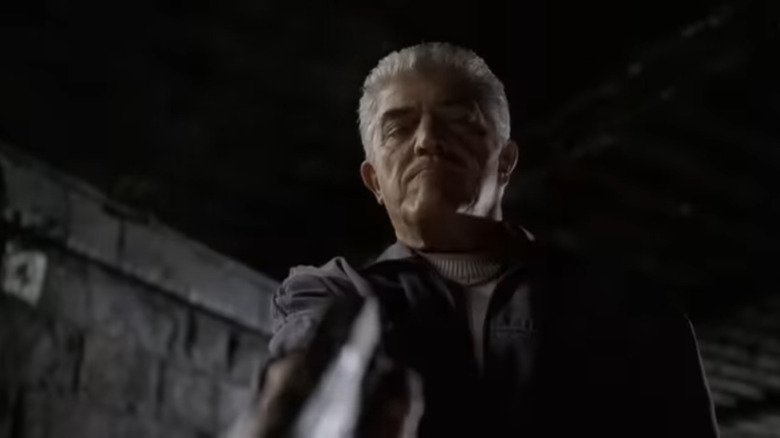
"The Sopranos" Season 5 is all about conflict between the past and the present. It begins with an entire class of mobsters getting released and proceeds to explore the difficulty of integrating them back into the family and-slash-or society at large. In the mob drama subgenre, there are few storylines better poised to explore unavoidable consequences in such direct and realistic fashion.
Tony B is one example of such consequences, having been left to rot by his cousin as a younger man; he represents a potential future that has been destroyed. Phil Leotardo (Frank Vincent) represents a past that can't be changed or forgotten. He's a true old-school underboss who was on the inside building resentment while everyone else was building their empires. Culturally and criminally, he's trapped in an era that represents what the mob is at its core, underneath the performances of honor, family, and mutual respect. Like Johnny Sack, prison teaches him how little that respect actually means and how it somehow cheapens once you're back on the outside.
It's this clear-minded stubbornness that makes him a perfect foil for Tony in the final season, as the latter character attempts to enforce a personal and superficial moral transformation on the world around him. He refuses to be handled like family, destroying once and for all Tony's hope that his life is anything more than crime — or that he and his "family" are anything other than self-interested murderers.
3. Junior Soprano
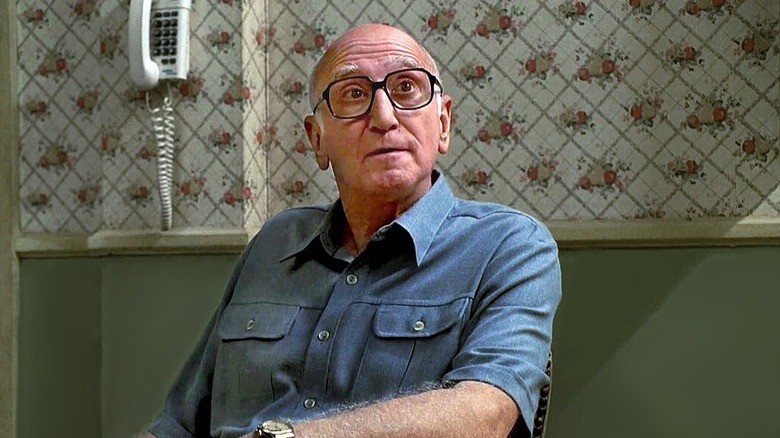
Junior Soprano is the most painful villain to follow throughout the series. Most crime dramas would kill off their inaugural big bad or have him survive to become a recurring threat throughout the remainder of the series. "The Sopranos" keeps Junior around seemingly as a form of fictional torture, isolating him more every season as he is slowly broken down by time itself.
He's at his most dangerous in Season 1, during the brief DiMeo civil war that results in the death of Mikey Palmice, the ascendancy of Tony, and his own imprisonment. And while he attempts to remain threatening thereafter, it's startling to see how he quickly and simultaneously reverts to the role of Tony's uncle. The man who once tried to have Tony killed is there to give Tony guidance when he needs it, and Tony in turn attempts to help him where he can. They actually seem to achieve a healthier — or, at the very least, more honest — relationship after the war.
It's sadly Junior's dementia that turns him back into an enemy. After Junior spends several years feigning incompetence to the feds in exchange for leniency, his mental faculties actually erode to the point that he mistakes Tony for an intruder and nearly kills him. Because of their history, Tony doesn't believe it wasn't an assassination attempt — though this was undoubtedly shaken by their heartbreaking final scene in the series finale, when it becomes clear to Tony how little of his uncle is left.
2. Ralph Cifaretto
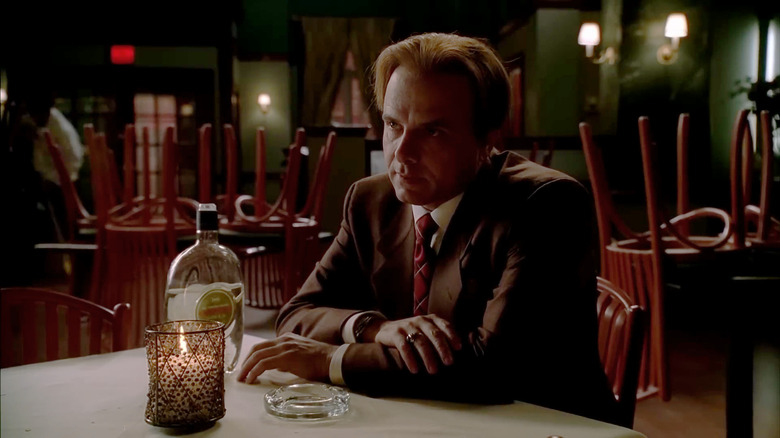
Ralph Cifaretto might be the most complex and psychologically compelling psychopath on television. From his first appearance in Season 3 to his death in Season 4, he's a genuinely exceptional supporting lead who stands head and shoulders above similar antagonists on other crime dramas — ironically because both David Chase and actor Joe Pantoliano made him feel entirely unexceptional in this world. He isn't portrayed as a criminal mastermind or an unpredictable lunatic; he's a brilliantly selfish, sadistic pervert who only stands out to the rest of the crew because they find him uniquely irritating. Tony only keeps him around because he's a good earner.
Thus, Ralph Cifaretto comes to represent the wickedness Tony is willing to allow in his life, his work, and, even reluctantly, his home. Like Tony's own dark side, Ralph seems like a manageable nuisance at first. Every time he tests Tony's or the crew's boundaries and walks away unchallenged, he gets a step further. In Season 3, he passively okays the hit on Jackie Jr. — allowing Tony to morally rationalize the murder of his best friend's son. The first time Tony realizes how much Ralph has infected his life is when Ralph brutally and impulsively beats Tracee (a dancer pregnant with his child, played by Ariel Kiley) to death outside the Bing. Ralph's cool, eerily convincing denial ("It's my fault she's a klutz?") mirrors Tony's own self-deception — and Tony's later reprisal in the face of a similar lie feels like Tony trying unsuccessfully to kill the ugliest part of himself.
1. Livia Soprano
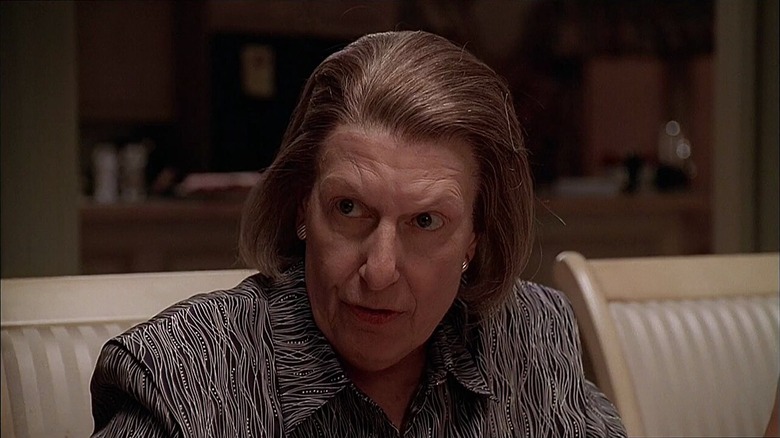
No villain haunts the show like Nancy Marchand's Livia Soprano. Like Junior, her direct influence is limited almost entirely to Season 1 — some would argue she nonetheless impacts every single episode of the series thereafter.
In her appearances across the first two seasons, Livia is manipulative to an extraordinary degree, to the point that no other character in the series (and few in the canon of TV) rivals her in this regard. Playing the victim in her modest New Jersey home (or her "retirement community"), she manages to shape conflicts with offhand comments, swapping secrets, and sheer guilt. Psychologically, she's the most dangerous character in the show for Tony because he has no defense against her. He can't admit that she doesn't truly love him and likewise can't allow himself to consciously feel hatred toward her. She traps him in a cycle of complaining, guilt, rationalization, and provocation that has real, deadly consequences. Several people die simply because she's upset Tony put her in a nursing home.
The character was originally supposed to be killed at the end of Season 1 (which David Chase changed to keep Marchand on the show), then was supposed to serve as a minor-to-significant threat to Tony's freedom in later seasons. Instead, however, because Marchand passed away in real life between seasons, the character does something far more devastating to Tony — she dies, quietly, presumably in peace, and without giving him even a hint of emotional or psychological closure. She traps him in that cycle forever, and Tony spends the rest of the series subconsciously dreading their reunion in hell.