

15 TV Shows Like Apple TV's Pluribus
We may receive a commission on purchases made from links.
On the surface, Vince Gilligan's defiantly weird sci-fi show "Pluribus" seems like a pretty unique project. After all, what other show features a protagonist who's struggling to get by in a world where an incredibly contagious viral sequence from outer space has turned every other human being into a member of a relentlessly optimistic hive mind?
Still, people have been making TV for a long time, and even shows with such left-field premises stand on a mountain of pre-existing works. While "Pluribus" has pretty openly referenced classic science fiction films like "Invasion of the Body Snatchers" and "Soylent Green," it also shares thematic similarities with a number of TV shows that came before — and some of them might be pretty surprising.
For viewers who are eager to explore shows that share some storytelling DNA with Apple TV's latest sci-fi standout, TVLine has compiled a list of 15 shows that resemble "Pluribus" in one way or another. Keep scrolling for our picks!
Breaking Bad

Let's get the most obvious point of comparison out of the way first, shall we? Being a Vince Gilligan show, "Pluribus" can't help but be compared to AMC's "Breaking Bad," and there's more to it than the fact that they have the same creator.
Gilligan's shows all share a very distinct visual tone, aided by their central setting of Albuquerque, New Mexico. This means that whenever Carol Sturka (Rhea Seehorn) isn't globe-trotting, her cozy cul-de-sac home looks over the very same city where Walter White (Bryan Cranston) — who, more often than not, was also very much in over his head — led his own complex life.
Yes, the two shows are very distinct from each other, and it would be quite surprising if Gilligan started to make any connections between the two, aside from maybe the occasional Easter egg. Still, watching the main characters' desperate, high-stakes existences, and seeing the same streets they walk and drive on, make it all too easy to imagine them grabbing coffee at the same cafe prior to the events of "Pluribus," suspiciously eyeballing each other as they wait for their orders.
Severance
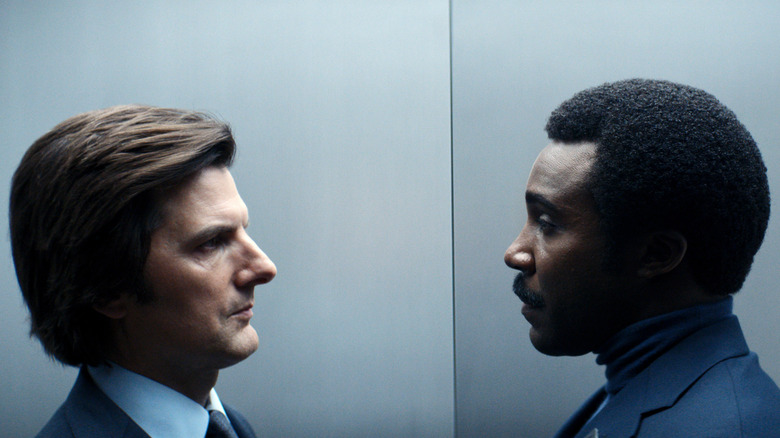
With its 10 Emmy wins and critical acclaim, "Severance" is the cream of Apple TV's sci-fi crop. As a sci-fi exploration of isolation and free will, it's also a surprisingly close spiritual sibling to "Pluribus."
There's something very similar in the predicaments of the Severed workers of Lumon and the people immune to the "Pluribus" hive mind virus. Both find themselves living in an absurd world that's full of mysteries and scenarios they can barely comprehend, yet have to live with every day. A sense of isolation and concern runs from scene to scene, and even when the characters are with someone, they often struggle to communicate and fully understand each other.
"Severance" Season 3 will hopefully answer the many burning questions we still have, which may or may not take the show in new directions that differentiate it from "Pluribus" and its themes. Until then, however, there remains a similarity between the two shows and the way they handle their outlandish situations.
Silo
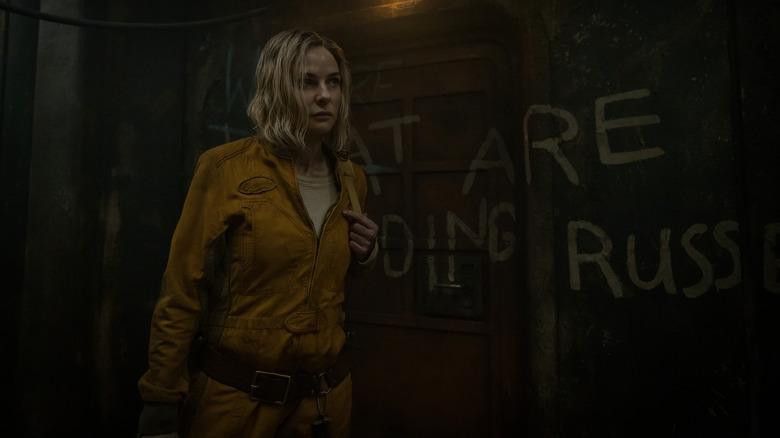
"Silo" is another Apple TV sci-fi show that focuses on themes of isolation and societal changes in a barely recognizable world. Based on Hugh Howey's 2013 novel "Wool" and its sequels, "Silo" follows a population living in a massive and regularly malfunctioning underground silo after the world outside has been turned into a toxic wasteland generations ago. Of course, things are not quite what they seem, and silo engineer Juliette Nichols (Rebecca Ferguson) finds herself exploring the mysterious truth behind the whole situation.
While "Silo" boasts a larger main cast than "Pluribus" due to the complexity of its claustrophobic underground dystopia, its main similarity with the Vince Gilligan show comes courtesy of Juliette. Neither she nor Carol are traditional heroes, but they're both thrust in the middle of a series of events and revelations that change everything about their respective societies, which leads to them becoming the central forces of individualism in their worlds.
Both characters also share a cynical and abrasive personality and are played by world-class stars; fans of Carol Sturka's pseudo-apocalyptic adventures will be right at home watching Juliette scowl her way through the world of "Silo."
The Leftovers

"Pluribus" and HBO's "The Leftovers" both deal with the aftermath of a dramatic status quo change that irrevocably alters the world's population. In the latter's case, it's the Departure: Two percent of the world's population mysteriously disappears, with seemingly no reason or rhyme about how the people who vanished were chosen.
Damon Lindelof and Tom Perrotta's show introduces an entire world of Carol Sturkas — people who are struggling to understand the situation and cope with their losses. Everyone handles this seemingly impossible situation their own way, from revealing other people's sins to the world or founding influential cults to simply trying to live their daily lives the best they can.
Full of great performances and constantly pushing the envelope with its storytelling, "The Leftovers" prefers a somber tone and tends to lack the occasional darkly comedic moments of "Pluribus." Other than that, the show is a natural addition to any "Pluribus" fan's viewing list.
Better Call Saul

"Breaking Bad" spin-off "Better Call Saul" is here for the same reason its parent show is, but with one massively important addition: Kim Wexler. Rhea Seehorn's capable, moral, and straight-shooting business lawyer is arguably the most important new character the latter series introduced. Wexler's own tragic journey is one of the show's greatest and most pivotal storylines, and it's nearly impossible to imagine any other actor bringing it home like Seehorn did.
Seehorn is extremely adept at balancing the fiery and icy sides of Kim's personality, and her performance here (very understandably) impressed Vince Gilligan enough to write the "Pluribus" main role specifically to her.
Those who haven't seen "Better Call Saul" yet owe it to themselves to give it a shot, especially to see what Seehorn can do in the sort of ambitious multi-season character arc "Pluribus" hasn't had time to build yet. Just know that while Kim Wexler and Carol Sturka have a certain similarity, they're ultimately two very, very different characters.
Black Mirror

The alien signal on "Pluribus" doesn't automatically transform the world's population into one happy hive mind. Humanity actually works hard toward the new status quo — first by catching and painstakingly deciphering the signal, then by following its recipe to put together the viral cocktail that inevitably escapes lab conditions and goes global. Technology, in other words, is what ultimately causes the Joining.
Charlie Brooker's Netflix anthology show "Black Mirror" specializes in this exact sort of thing. Its stories tend to skew heavily toward new inventions that influence people in unnerving ways, delivering a wealth of "Pluribus"-style sci-fi scenarios in episode-sized bites. As a bonus, viewers who enjoy the snippets of Carol's pre-Joining odd couple relationship with Helen L. Umstead (Miriam Shor) should absolutely check out "Black Mirror" Season 3 standout episode "San Junipero," a twisty and atypically heartwarming love story between Kelly (Gugu Mbatha-Raw) and Yorkie (Mackenzie Davis).
Devs
Alex Garland's "Devs" is a compact, eight-episode miniseries that starts out as a fairly straightforward drama about a Silicon Valley company with closely guarded secrets. But as the puzzle box slowly opens, "Devs" turns into something completely different, subverts the audience's expectations, and perhaps even provides some food for thought about the world in which we live.
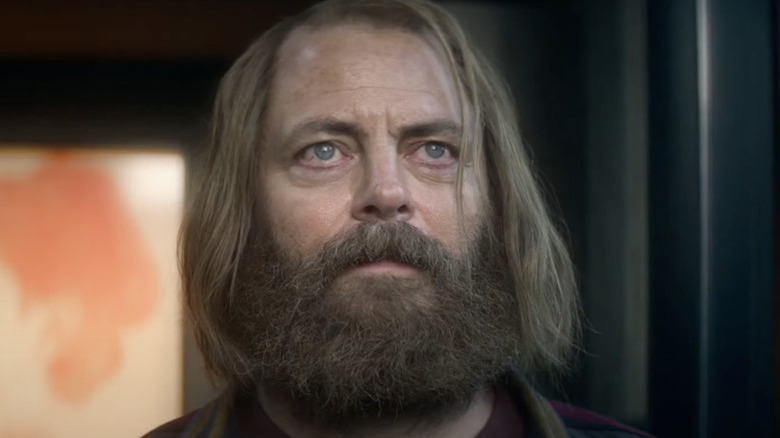
While "Devs" seems superficially pretty different from "Pluribus," both shows explore surprisingly similar themes, from game-changing technology — "Pluribus" has the hive mind virus, "Devs" has the Devs system — to the nature of free will. Add in a carefully considered dose of darkly comedic moments and the use of flashbacks as a narrative device, stir with Amaya CEO Forest's (Nick Offerman) thousand-yard stare that rivals Carol's own, and it's suddenly very hard to avoid seeing the core similarities between the two shows.
Mrs. Davis

From creators Tara Hernandez and Damon Lindelof comes "Mrs. Davis," a series that resembles "Pluribus" in its tendency to roll out impressive scenes and thoughtful questions about free will. Both shows also have a main character who's incredibly determined to put an end to a powerful force that she considers unwelcome: Carol Sturka is on a mission to reverse the Joining; Betty Gilpin's Sister Simone has it out for the global, seemingly-benevolent-but somewhat-ominous artificial intelligence known as Mrs. Davis. Just like the Others in "Pluribus," Mrs. Davis is also unfailingly polite toward the protagonist and constantly tries to reach out.
If those key themes sound good but you'd like a show that handles them a bit differently, you're in luck. "Mrs. Davis" and its fight against an all-knowing algorithm provide a visual feast with a heavy dose of comedy, and the show's other key themes revolve around matters of faith and technological development. The Peacock series is a wise choice for anyone who wants their "Pluribus" subject matter with a side order of whimsy.
The Last Man on Earth
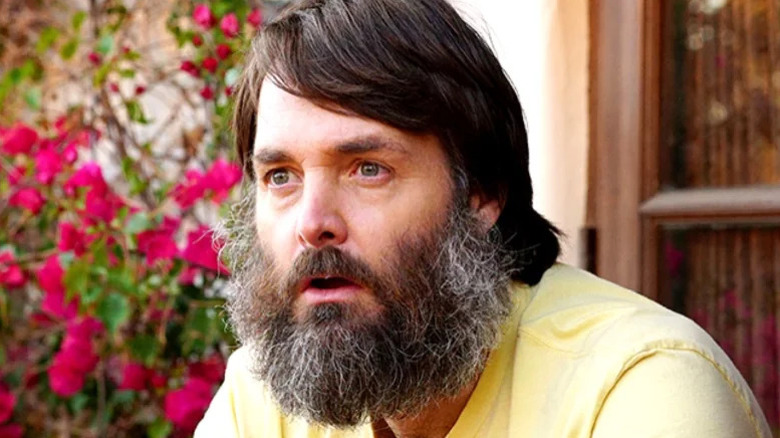
"Post-apocalyptic comedy" might seem like a clash of terms, but that's the genre in which Will Forte's Fox show "The Last Man on Earth" operates. After a virus effectively wipes out humanity, Philip Tandy Miller (Forte) lives in Arizona as the only survivor. Fortunately, a handful of others eventually turn up, but recreating civilization — let alone repopulating the world — isn't exactly a walk in the park.
Though its deadly virus is a considerably more traditional apocalyptic scenario than the hive mind situation, "The Last Man on Earth" is a worthwhile watch for a "Pluribus" fan. It has plenty of jokes, sure, but it also captures the desperation and darkness that haunt people who find themselves in extreme situations, much in the same way "Pluribus" does. Oh, and as a fun coincidence, both Phil and Carol ride out their versions of the post-apocalypse in expensive cul-de-sac areas.
The Twilight Zone

If you remove all the bells and whistles to distill "Pluribus" into a pure sci-fi concept, it's a show about an extraterrestrial message that destroys civilization as we know it by turning people into an eerie hive mind. In other words, it's essentially an episode of "The Twilight Zone" that got a two-season order from Apple and a big budget.
Rod Serling's seminal anthology series is famous for offbeat premises that are not unlike the one "Pluribus" offers. Many of the best episodes of "The Twilight Zone" cook up images that are very similar to Gilligan's series, and might even be able to carry an entire show in capable hands.
"The Twilight Zone" is still very much worth watching today, but if you're looking for particular episodes that share specific DNA with "Pluribus," consider Season 1 installments "The Monsters Are Due on Maple Street" and "A World of Difference." Carol Sturka and Manousos Oviedo (Carlos Manuel Vesga) would no doubt find common ground with the former's exploration of paranoia and trust issues surrounding a suspected alien invasion, as well as the way the latter throws white-collar worker Arthur Curtis (Howard Duff) into a radically different reality that upends his whole world and identity.
Star Trek: Discovery
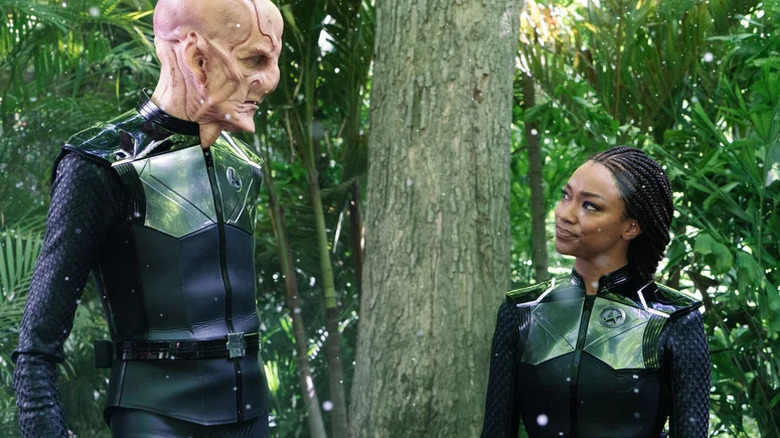
Can a "Star Trek" series and a Vince Gilligan show even fit in the same sentence? In this case, yes. After all, "Star Trek: Discovery" just so happens to feature a major arc that's too similar with the central concepts of "Pluribus" not to include here.
A significant plot line in "Discovery" Season 4 deals with the Dark Matter Anomaly, a gigantic gravitational distortion that can move around and poses a severe danger to everyone who ends up too near. It's eventually revealed that the aliens who built it, "Species 10-C," all share a mind link and live in a harmonious relationship with each other that doesn't involve the use of spoken language. Oh, and the anomaly? Just a device to gather resources to fuel the force field around their home planet.
Apart from the obvious similarities between Species 10-C and the "Pluribus" Others (who have also been known to unwittingly unleash chaos by, say, giving Carol a hand grenade), there's another fun connection between the "Star Trek" universe and Gilligan's series. While it doesn't make an appearance on "Discovery," the real planet the "Pluribus" hive mind code came from – Kepler-22b – not only exists in the "Star Trek" universe, but is actually inhabited.
Stranger Things

In 2025, "Stranger Things" Season 5 brings the Netflix show to an end. While "Pluribus" is unlikely to carry its torch as a major '80s horror mystery drama, it does connect to the Duffer Brothers' smash hit series on other fronts.
A key aspect of "Stranger Things" is possession, a favorite method of series big bad Vecna (Jamie Campbell Bower). With the "Pluribus" Others drawing from the "Invasion of the Body Snatchers" well, both shows explore the theme of characters becoming something other than they used to be — though, of course, "Pluribus" does this on a far wider scale.
Both shows also have their own concepts of hive minds. The "Pluribus" hive mind doesn't seem to be villainous, but Carol Sturka views it as antagonistic and is constantly on the lookout for ways to bring it down. Meanwhile, "Stranger Things" prefers a more traditional "ominous hive mind" theme, with Vecna controlling the entire Upside Down dimension as one connected organism.
Outer Range

"Pluribus" places almost every person in the world into a hive mind. "Outer Range" introduces an unnatural hole that appears on the lands of aging rancher Royal Abbott (Josh Brolin). On paper, one of these things is not like the other — but the hole turns out to hide a mystery that's just as strange as the Joining.
As far as protagonists go, Brolin's grizzled neo-Western rancher Royal is a far cry from urban creative Carol Sturka. Still, they're both relative everyday people who are suddenly forced to deal with a vast, unconventional situation with a mysterious origin and an ambiguous motivation. The world of science fiction is often littered with capable officers, heroes, and scientists who generally have an idea of what they're facing, so it's always refreshing to see a completely random person get thrown in the middle of a scenario that beggars all belief. Like "Pluribus," "Outer Range" does this job well.
Defiance

Like "Pluribus," Syfy's "Defiance" is about human survivors trying to coexist with a game-changing extraterrestrial influence. In "Defiance," the aliens have chosen a more hands-on method than a signal from outer space, and they come to Earth in the flesh.
Initially, the "Defiance" aliens have no intention to physically fight humanity. On the contrary, they arrive as refugees who fully expected Earth to be unpopulated, and are just as shocked to see humans as the humans are to see them. Sadly, shock and distrust escalate into a destructive war that reshapes parts of the planet, and humans and aliens retire to their own nations — with one town, Defiance, acting as a place where they all interact.
Focusing the show's action on the melting-pot town of Defiance again brings the show close to "Pluribus" and the way it explores the challenges of coexistence. At its heart, of course, "Defiance" is a far more traditional sci-fi series, but the show still provides plenty of entertainment for "Pluribus" fans looking for their next sci-fi binge.
Russian Doll

It's hard to say whether Carol Sturka would like or hate Nadia Vulvokov (Natasha Lyonne), but they could certainly exchange some pointers about adjusting to a situation where their lives suddenly turn into an unnatural mystery. In "Russian Doll" protagonist Nadia's case, she find herself unexpectedly stuck in a time loop that covers the night of her 36th birthday and resets when she dies.
Both "Russian Doll" and "Pluribus" focus on comparatively unheroic, cynical protagonists who are stuck in an overwhelming scenario they hate, and try to make sense of the situation. Apart from this, "Russian Doll" may also offer some comfort to those who worry about "Pluribus" eventually running out of steam with its "Carol butting heads with the hive mind" premise. After all, the Netflix show avoided repeating itself by reinventing its entire premise for its sophomore season, replacing the time loop scenario with a riff on "Quantum Leap" that must be seen to be believed. The experiment was a success and "Russian Doll" Season 2 received the same stellar reviews as its predecessor, so there's certainly precedent for a show like this adjusting its premise while retaining its considerable quality.