

15 TV Shows To Watch If You Like The White Lotus

HBO's "The White Lotus," with its rotating tales of class tension, passive-aggressiveness, sexual dysfunction, and explosive violence at several different resorts in the same global luxury chain, has become one of the most talked-about anthology series in modern television history. And, even though "The White Lotus" Season 4 is already filming, this is one of those shows so specific in their particular tonal and creative import that filling the void left by them in between seasons can feel like a daunting endeavor.
But fret not: we're here to help, with a list of 15 series that offer similar emotional, aesthetic, and thematic rewards to those of "The White Lotus" and its devious, dryly satirical vacation drama. Fix yourself a cocktail, and get to watching.
Nine Perfect Strangers
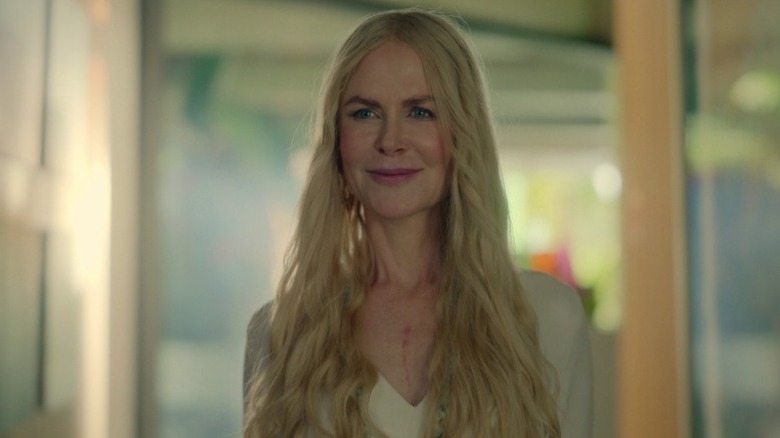
Developed by David E. Kelley and John-Henry Butterworth from the eponymous novel by Liane Moriarty (who also wrote the source material for "Big Little Lies"), the Hulu series "Nine Perfect Strangers" is centered around Masha Dmitrichenko (Nicole Kidman), a wellness specialist with a complicated past and a risky approach to health. In Season 1, she welcomes a group of — you guessed it — nine strangers to her famed resort Tranquillum House, takes away their phones, and thrusts them into a series of unorthodox group exercises; chaos soon erupts, leading to a revamped plot with an all-new cast save for Masha herself on Season 2.
Featuring star-studded ensembles around Kidman in both of its seasons, the series is probably the closest cousin there is to "The White Lotus" in form, style, and tone. It also utilizes a loose anthology template, with Season 1 taking place in the California country, while Season 2 relocates to the Swiss Alps. It also follows wealthy people with dark secrets as they sign up for an ostensible relaxation retreat, only for their vacation to become increasingly stressful and dangerous. And it also has a twisted, lurid sense of humor underlying the suspense, largely drawn from the ironic contrast between the idyllic scenery and the pressure-cooker plotting.
Enlightened
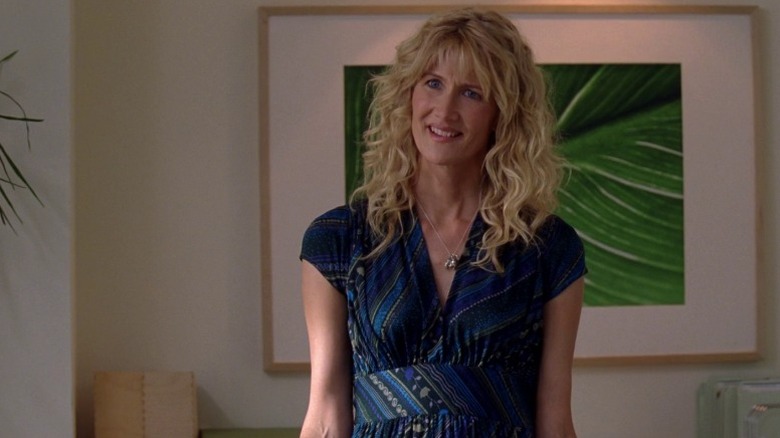
Before creating "The White Lotus," Mike White honed his craft as a television auteur with the acclaimed but short-lived "Enlightened," another HBO show that showcases his knack for crafting multidimensional characters, and then exploring their various shades in offbeat, tonally varied, and altogether fascinating ways.
Laura Dern stars as Amy Jellicoe, an executive at the nebulously-defined global corporation Abaddonn Industries, who, after a public meltdown stemming from a series of enervating personal and professional circumstances, excuses herself to a treatment facility for two months. She returns with a new, self-help-powered mindset, and a revitalized determination to better her life and the lives of everybody around her.
Although there's plenty of sweetness and earnestness — more so than in "The White Lotus" — to the way "Enlightened" charts Amy's movement through her web of tangled-up relationships, the show is just as sharp as White's later creation in the way it satirizes modern-day capitalism and its erosive effects on the human psyche; Amy's quest to feel more present and connected to others soon develops into a personal war against the nightmarish corporate abuses of Abaddonn. The way "Enlightened" spins out that story — slowly and surely, with attention to the hidden depths of each character involved — is nothing short of astonishing, and highly recommended if you're a fan of the novel-like sprawl of "The White Lotus."
The Four Seasons

Adapted from the eponymous 1981 American film, Netflix's "The Four Seasons" is, much like "The White Lotus," a strong comedy-drama series that uses holidays as windows into strained psyches and deteriorating relationships. Instead of per season, settings change within the show's story itself. Like the 1981 movie, "The Four Seasons" follows three married couples with a habit of going on season-appropriate vacations together every trimester. Each pair of episodes on the eight-part inaugural season (with Season 2 already set for release) homes in on one of those vacations over the course of a year, beginning with a spring lake house getaway, and culminating in a winter ski trip.
Although "The Four Seasons" was created by Tina Fey alongside Lang Fisher and Tracey Wigfield, it departs significantly from the bouncy, cartoony tone of previous Fey creations like "30 Rock" and "Unbreakable Kimmy Schmidt." Instead, the show opts for wistful, earthy melancholia, with the occasional laughs providing a buffer in a parade of painful relationship anxieties. It's a great watch if you're up for something in the vein of "The White Lotus" but a little more grounded.
Search Party
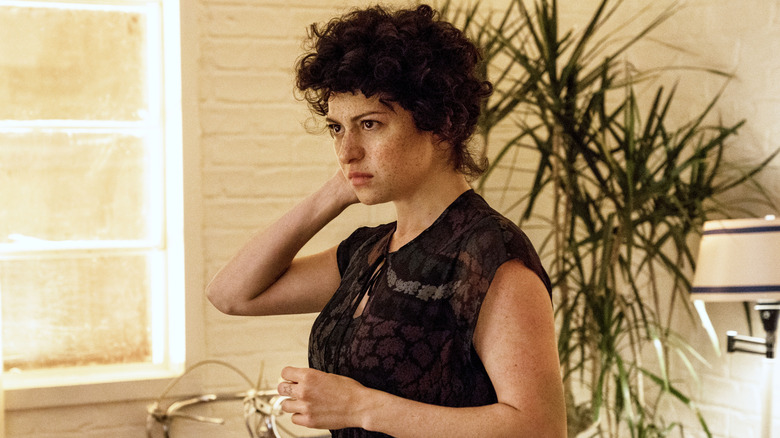
For a more left-field recommendation that matches "The White Lotus" in its proclivity for tonal mayhem, incisive satire, hilariously unsympathetic characters, and dry comedy leading to out-of-left-field darkness, you can turn to "Search Party."
Created by Sarah-Violet Bliss, Charles Rogers, and Michael Showalter, this cult series aired on TBS for its first two seasons before moving to HBO Max for its latter three. Alia Shawkat stars as Dory Sief, a New York City woman who, in Season 1, becomes obsessed with untangling the disappearance of her former college classmate Chantal (Clare McNulty).
As Dory plunges headfirst into an amateur detective routine with the help of her group of chronically Millennial Brooklynite friends, the show morphs from a savvy comedy of manners into an increasingly mind-boggling and dauntlessly genre-hopping experience, with each season telling its own bizarre story, dragging Dory and company into ever more dangerous predicaments. It's an utterly incomparable show, shot through with an euphoric madness that gets at something ineffable about living in the contemporary world.
Acapulco
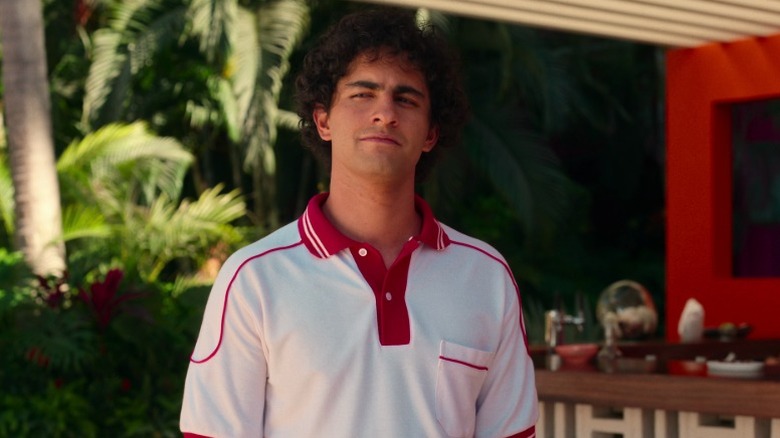
The Austin Winsberg, Eduardo Cisneros, and Jason Shuman-created Apple TV series "Acapulco" is liberally inspired by the hit 2017 comedy film "How to Be a Latin Lover," and, like the film, it is an Eugenio Derbez vehicle. With most of the movie's plot mechanics otherwise eschewed, Derbez's Maximo Gallardo Ramos is presented as an affluent businessman in Malibu, who begins to recount to his nephew Hugo (Raphael Alejandro) the story of how he started from nothing and climbed his way to wealth — a story that begins in 1984, with Maximo (played by Enrique Arrizon as a young man) getting a job at the luxurious Las Colinas resort in Acapulco, Mexico.
Told largely in flashbacks, "Acapulco" offers a somewhat different style of resort-set television from "The White Lotus," with a lighter, bubblier, and more optimistic slant. But the show's depiction of the everyday business at Las Colinas is just as vivid as anything on the HBO series, with just as much interest in the overlooked lives and struggles of the hotel's working-class staff as they navigate the moods of their rich, largely American guests. It's a great, proficient feel-good show that doesn't skimp on the emotion or the sharp social observation.
Beef
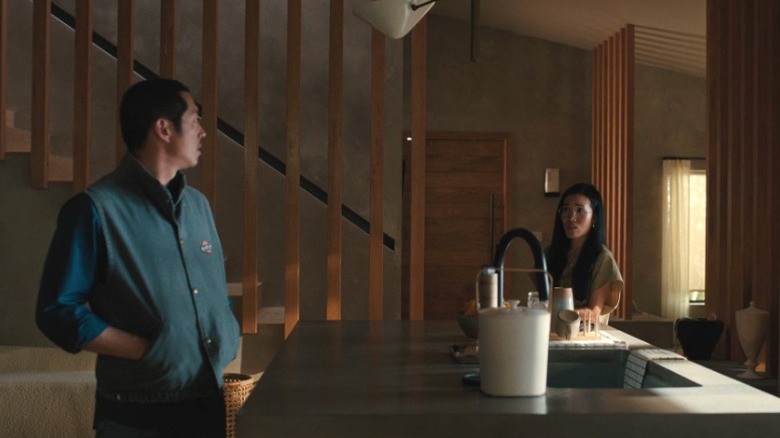
The Lee Sung Jin-created "Beef" may not outwardly look like a similar show to "The White Lotus," starting with the mobility of its story. In Season 1, Steven Yeun and Ali Wong star as a contractor and a houseplant business owner who get involved in a road rage incident, with the only plot constant from there on out being their vicious, vengeful obsession with one another. Season 2, meanwhile, turns up the heat by shifting focus to Ashley (Cailee Spaeny) and Austin (Charles Melton), a young couple who attempt to blackmail their country club owner boss (Oscar Isaac) in order to pay for Ashley's ovarian cyst treatment.
But despite the lack of direct parallels between the show's twisty revenge-based plots and the slowly-accumulating vacation stasis of "The White Lotus," any fan of the HBO show is likely to find a lot to like on "Beef." It is also a carefully-constructed anthology series on which a short order of episodes per season allows multiple plot threads to lock together in catastrophic, morbidly mesmerizing ways. Even more importantly, it's a similarly heady mélange of snappy comedy and intense psychological drama, with a keen eye for the subtleties of class conflict. If you've ever found yourself wondering if any other should could possibly recapture the particular tangy tone of "The White Lotus," "Beef" has got you covered.
The Afterparty
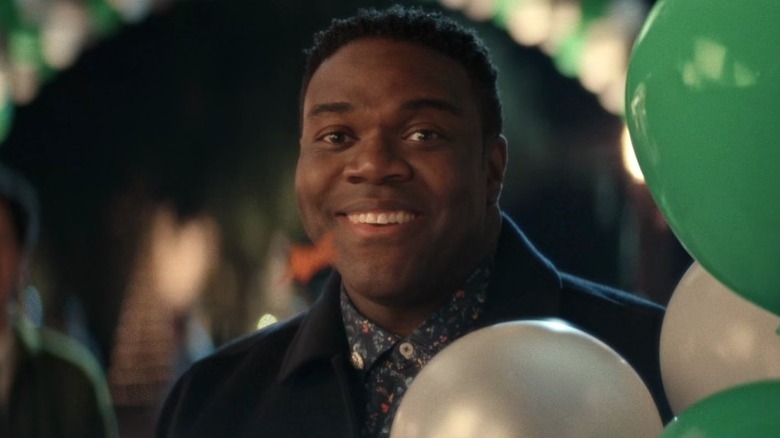
Created — and, on its first season, entirely directed — by Christopher Miller (best-known for his collaborations with Phil Lord including the 2026 blockbuster "Project Hail Mary"), "The Afterparty" uses a rotating-perspective conceit to transform a classic murder mystery into a banquet of different genres. Pop star Xavier (Dave Franco) is found dead at the afterparty of a ritzy high school reunion, leading Detective Danner (Tiffany Haddish) to interrogate the attendees — each of whom recounts their view of the night's events in a wholly different cinematic style.
The show is both hilarious in its loving parodies of each episode's chosen genre, and tremendously effective as a narrative puzzle in which the pieces snap into place one by one, with every character's POV proving crucial to the whole. Much like "The White Lotus," it's a mischievous, murder-strewn mystery-comedy that gets immense mileage out of its frothy settings and careful ensemble choices for each season, and hits upon moments of genuine existential depth in its excavation of modern life.
Fargo
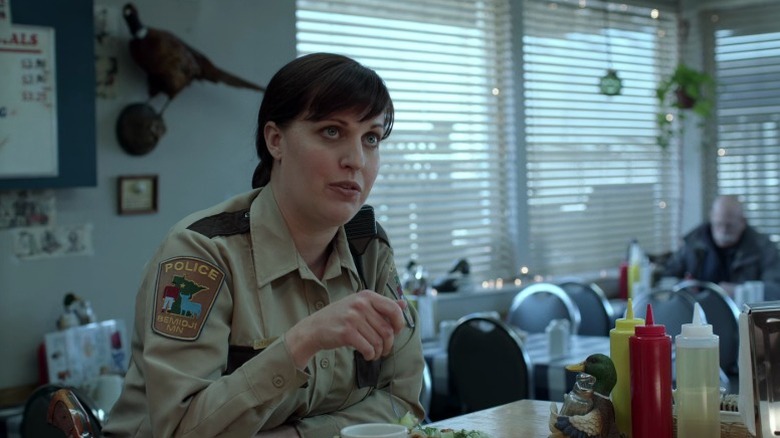
Despite its title, the connection between FX's "Fargo" and the eponymous 1996 Coen brothers film is less narrative than spiritual: save for a few tiny details evincing a shared continuity, the story of each season is unrelated to the Coens' "Fargo," but all five seasons share the movie's interest in mundane small-town awkwardness interfacing with grisly violence, petty crime, and deep-seated human evil. Like "The White Lotus," it's a porous anthology, with each season telling its own tale in a different setting and historical period, and a handful of characters and plot points recurring throughout.
Also like "The White Lotus," "Fargo" strikes a fantastic, relentlessly compelling balance between caustic cringe comedy and hard-edged, character-centric suspense. The opening of each episode replicates the film's fake textual warning about this being a "true story," and teases the season's cascading gruesomeness by mentioning the story's "survivors." From there, the Noah Hawley-led writing team spins stories of casual horror and stupefying cosmic absurdism that recall the Coens at their best, and, in true "The White Lotus" fashion, spark as many nervous laughs as they do nervous thrills. And Carrie Coon also steals the show on Season 3.
Little Fires Everywhere
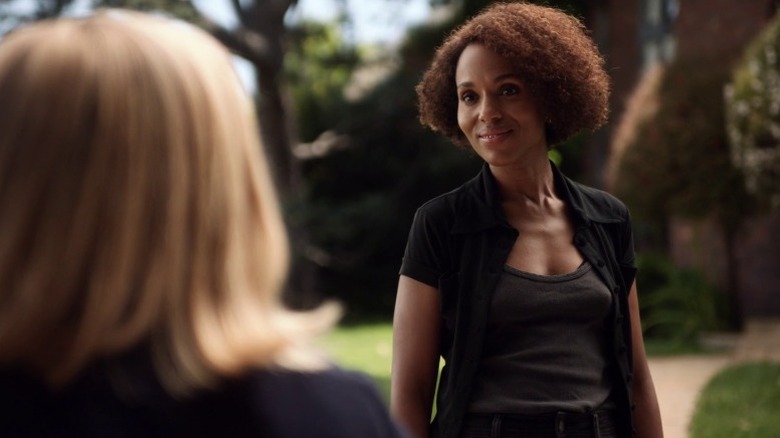
Created by Liz Tigelaar, the 2020 Hulu miniseries "Little Fires Everywhere" adapts the eponymous 2017 novel by Celeste Ng. The first episode opens with a massive, intentionally-started house fire that has taken over the home of the Richardson family in Shaker Heights, Ohio in 1997. We then flash back to four months earlier, when visual artist Mia Warren (Kerry Washington) arrived in town with her daughter Pearl (Lexi Underwood) and rented a home from local journalist and landlady Elena Richardson (Reese Witherspoon).
The rest of the series follows the initial friendship that blossoms between the Warrens and the Richardsons, and its slow disintegration into animosity fueled by race and class tensions. As the eight episodes inch closer to the fire, "Little Fires Everywhere" reveals itself just as adroit as the book in feeling out the fault lines of a seemingly idyllic '90s suburb, and analyzing the historical, sociological, and psychological currents that have slowly but surely contributed to those fault lines. Although more tonally severe than "The White Lotus," it shares with it the quality of being first-rate class-war soap, in which glossy surfaces and high-end living can barely conceal the roiling magma underneath.
Succession

As two of the most recent pop culture phenomenons ushered into the world by HBO, "The White Lotus" and "Succession" are both defining shows in the television landscape of the past decade. And there are plenty of commonalities between them: Both are hour-long, snazzily-shot, structurally dramatic but often temperamentally comedic series about the pettiness and dysfunction of the rich and powerful, boasting satire so blunt and lacerating that it often goes right past funny and into gut-wrenching.
What distinction there is between the two shows has mostly to do with pacing. Watching the Jesse Armstrong-created "Succession," which follows the tussle for power and influence among the children of a billionaire media mogul (Brian Cox), feels rather like careening down a slope in increasingly high speed, with chess moves, betrayals, mess-ups, corporate thunderstorms, media circuses, and other plot developments following each other relentlessly. But the show's attention to character psychology and operatic tragedy construction is entirely of a piece with the more languid stylings of "The White Lotus."
No Good Deed

Created by Liz Feldman as the follow-up to her highly underrated dramedy-thriller "Dead to Me," Netflix's "No Good Deed" tells the story of four married couples who become embroiled in an absurdly bitter fight for ownership of the same Los Angeles mansion. As in Feldman's previous creation, ghastly secrets abound in the shadows of the characters' pasts, to be slowly unveiled over the course of a dizzying, twist-packed season.
Fans of "The White Lotus" will be happy to find that "No Good Deed" is equally keyed in on the capacity of wealth, access, and privilege to conceal numerous varieties of moral rot and emotional disarray. While the Netflix show endeavors to be a more fast-paced and breathlessly bingeable watch, it very much echoes that signature "The White Lotus" experience of watching through one's fingers as a surface of vicarious luxury gets gradually disrupted by heady melodramatic reveals and bitter interpersonal falling-outs. And, with an ensemble made up of Lisa Kudrow, Ray Romano, Linda Cardellini, Luke Wilson, O-T Fagbenle, Teyonah Parris, Abbi Jacobson, Poppy Liu, and Denis Leary, "No Good Deed" also matches "The White Lotus" in sheer star power.
The Leftovers
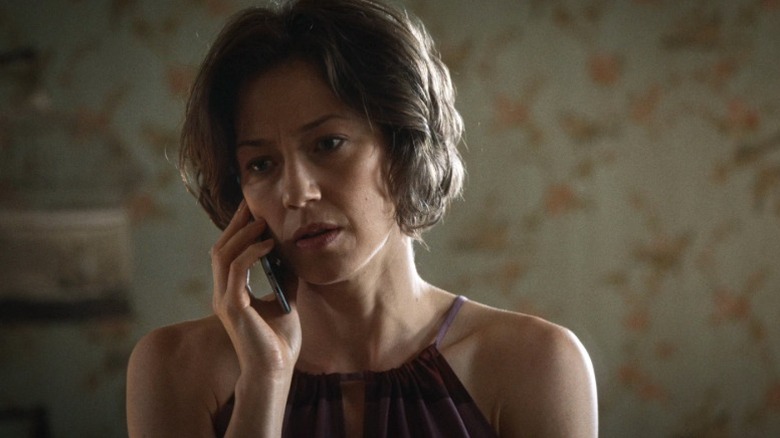
Created by Damon Lindelof and Tom Perrotta from Perrotta's eponymous 2011 novel, HBO's "The Leftovers" filters the heavy, tenebrous emotions of a horrifying quasi-doomsday scenario through a lens of unfettered absurdism. In the show's universe, an inexplicable event on October 14, 2011 saw the instantaneous disappearance of 140 million people around the world; years of an utterly rudderless planet-wide search for answers later, we follow a group of residents of a small New York town as they cope with the ocean of ambiguous grief in which they must now go about their lives.
Across three seasons of novelistic character-centric storytelling, the series fuses mystery, philosophy, religious contemplation, grand melodrama, and an utterly bonkers sense of humor into one of the best post-apocalyptic TV shows of all time. The main draw for "The White Lotus" fans, though, is the presence of Carrie Coon, who gives one of the greatest television performances ever in the role of the irascible Nora Durst — a woman who lost her entire family in the Sudden Departure, and has since become a matryoshka doll of unhealthy coping mechanisms. Imagine an entire show with the same surprising, gut-wrenching charge of Coon's monologue on the "White Lotus" Season 3 finale, and that will give you an idea of what watching "The Leftovers" feels like.
Palm Royale
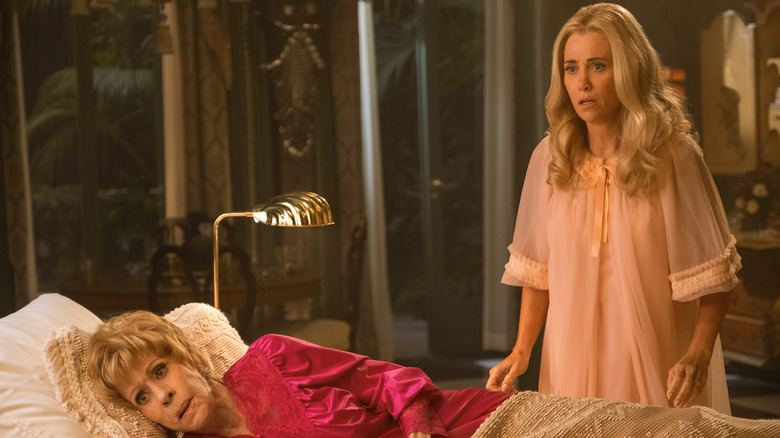
Kristen Wiig camps it up to a mighty degree even by her own standards on "Palm Royale," a controversial but brilliant Apple TV series that takes satirical aim at the lives of the rich and leisurely from an outsider's perspective. Wiig plays Maxine Dellacorte-Simmons, an inveterate social climber in 1969 Florida who hatches a plan to get into the titular Palm Beach country club by any means necessary.
The unstoppable, larger-than-life Maxine functions as a deluge of the outside world right into the heart of Palm Royale's carefully-kept bubble of privilege. And the Abe Sylvia-created series wrings the ensuing mess for all it can give — both as cackling social commentary (including a surprisingly serious and touching subplot about Maxine's brush with the '60s feminist movement), and as a helping of twisty, frothy soap. It's one of the very best shows to watch if you're looking for something with a similar alchemy to "The White Lotus," not least in that it features another flawless class-study performance by Leslie Bibb.
The Resort
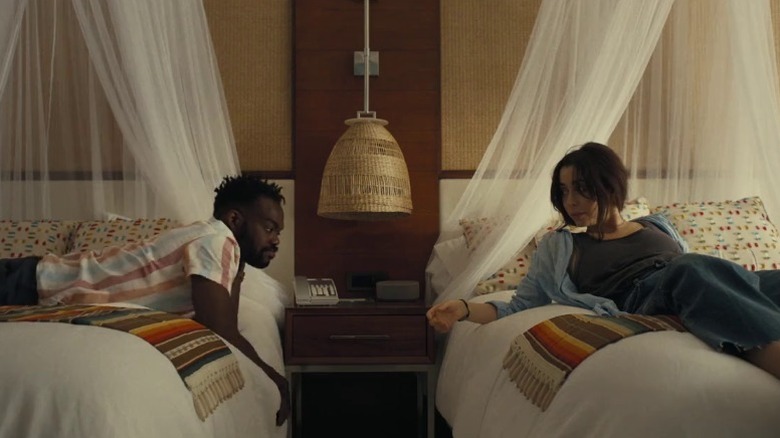
Cristin Milioti and William Jackson Harper star as Emma and Noah, a married couple going on their 10th anniversary, on the Andy Siara-created 2022 Peacock series "The Resort." The show follows the two lovebirds as they travel to a resort in the Riviera Maya in southeast Mexico, hoping to bring some spark back into what has largely become a passionless marriage. Once there, however, their vacation plans are derailed-slash-galvanized by their discovery of evidence linked to the unsolved disappearance of two young tourists 15 years prior.
As Emma and Noah slip cautiously yet giddily into the role of amateur detectives, their burgeoning adventure whisks them past the glossy tourist-ready surfaces of the resort, and into deeper, more hauntingly beautiful crevices (albeit not shot on the real location — here, northern Puerto Rico stands in for the Riviera). In parallel, "The Resort" takes flight as a unique, enormously fun, and consistently gripping mystery-comedy that calls to mind "The White Lotus" in its perfect marriage of droll tourist ennui and eerie pathos.
Big Little Lies
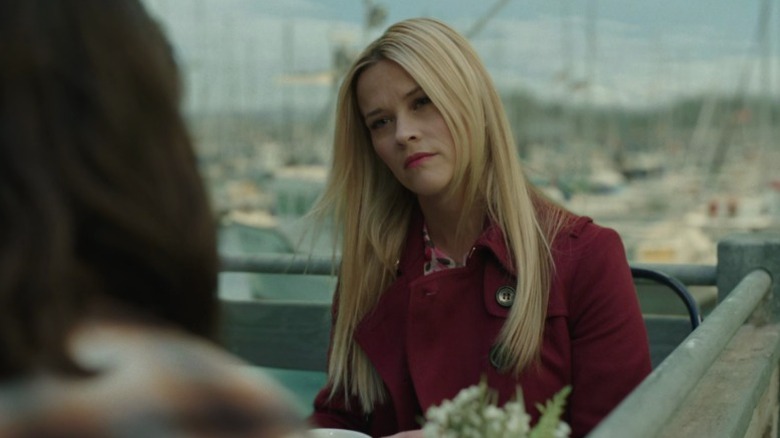
Where gleaming one-percenter soap is concerned, you can't beat the women of Monterey, California as brought to life on HBO's "Big Little Lies." Nicole Kidman, Reese Witherspoon, Zoë Kravitz, Shailene Woodley, and Laura Dern star as five mothers whose lives are dissected — by investigators, gossipy citizens, and incisive montage editing — in the wake of a suspicious death at a school fundraiser. A tensely-strung tapestry of secrets, rivalries, traumas, and bitter conflicts soon reveals itself underneath the picture-ready haze of their beachside lives.
Scripted by David E. Kelley from the eponymous Liane Moriarty novel, "Big Little Lies" stands out from the crop of TV wealth melodramas thanks to its searing, unflagging attention to the nuances of mood, tension, and psychology, as explored with cinematic flair by directors Jean-Marc Vallée in Season 1 and Andrea Arnold in Season 2 (with "Big Little Lies" Season 3 potentially on the way). It's both a swanky pool-deck hoot and a stunning piece of carefully-considered character drama — which makes it an easy recommendation for "The White Lotus" enthusiasts.