

South Park's 15 Best Episodes, Ranked
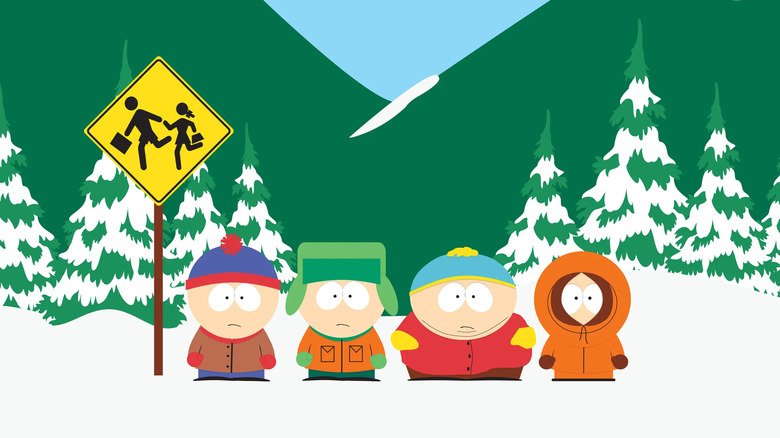
For 28 seasons (and counting), Trey Parker and Matt Stone's "South Park" has been pushing the boundaries of basic cable censorship and cultural sacred cows. Beginning with a video short in which Jesus fights Santa, it has continued to shatter taboos of the left, right, and every major religion, all from the perspective of four elementary schoolers. The show's young protagonists also allow Parker and Stone to create filthy parodies of other child-centric cartoons.
It's tough to pick only 15 best episodes out of 338. The early ones seem a little rough nowadays, but there have been consistently hilarious episodes every year. A few "South Park" episodes along the way have even been censored or banned altogether.
Many came close, but in the end these are the 15 greatest episodes of "South Park."
15. Cartoon Wars
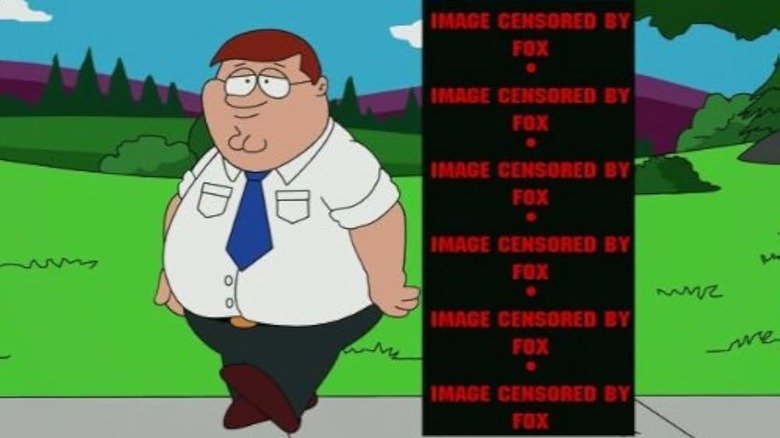
Trey Parker and Matt Stone's evident disdain for being compared to Seth MacFarlane bubbles over in this two-parter. Ostensibly an attempt to call out the media for capitulation to terrorist threats, "Cartoon Wars" is more remembered for its savage parody of "Family Guy."
In the episode, a rumor that "Family Guy" is going to depict Muhammad in an episode and invite terrorist blowback turns Cartman into an apparent free-speech warrior. However, it turns out he just hates "Family Guy" and wants it taken off the air.
During the episode, "Family Guy" is mocked as little more than a series of repetitive tangents, written by literal manatees who compose plots by combining random suggestions written on balls. Positive shoutouts are given to "King of the Hill" and "The Simpsons," but Cartman seems to be speaking for the entire show when he defensively insists, "I am nothing like 'Family Guy'!"
Ironically, Comedy Central censored the episode's climactic depiction of Muhammad.
14. Fishsticks
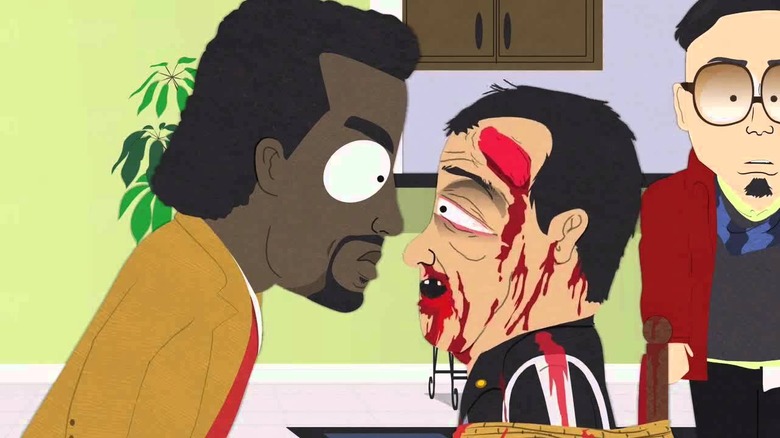
Before interrupting Taylor Swift at the VMAs, or making pro-Nazi statements, Kanye West was pegged by "South Park" as an unstable egomaniac willing to commit murder over a joke he doesn't understand. Unable to figure out a pun that plays on the similar sounds of "fish sticks" and "fish dicks," he goes on a rampage, even beating Carlos Mencia to death.
Meanwhile, Cartman demonstrates a different kind of narcissism, as his unreliable memories increasingly cast him as the sole author of the joke, despite the fact that it was mostly Jimmy. As the joke goes viral, Cartman stops at nothing to take all the credit.
Neither Cartman nor West ever realizes their actual mistake — instead, West becomes convinced that, as the joke's punchline suggests, he actually must be a literal homosexual fish.
13. Scott Tenorman Must Die
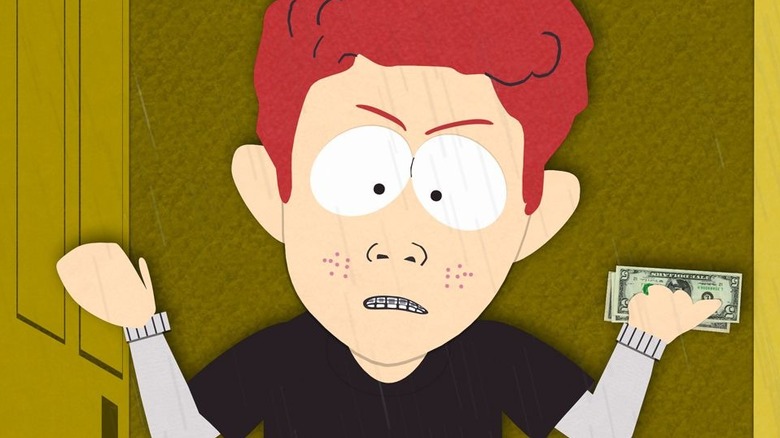
When high schooler Scott Tenorman pranks Cartman by selling him pubic hair, Cartman's escalating and thwarted attempts at revenge culminate in an evil master plan that results in Tenorman unwittingly eating his own parents. The episode marked a turning point for Cartman, who subsequently became not just an obnoxious kid but a genuinely evil genius at times, and for Trey Parker, who wrote this episode without a B plot for the first time in the show's run.
The episode works on two levels — at first, it's just genuinely funny to see Cartman's attempt at revenge blow up in his face, as he deserves to be on the receiving end of bullying for a change. Those laughs, while satisfying, are also ultimately a diversion so we won't see the big, grim twist coming, and suddenly understand that Cartman is a way darker human being than we've been led to believe.
Radiohead, Scott's favorite band, make a real cameo, gamely portraying themselves as insensitive jerks, which would be funny in any context.
12. All About Mormons
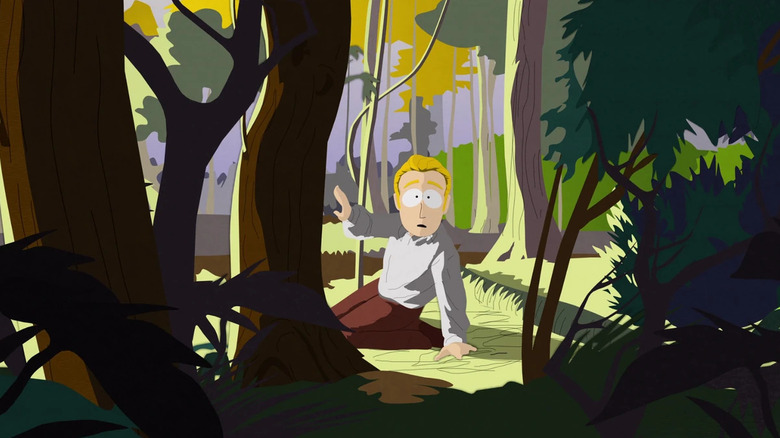
Growing up near Utah has evidently given Trey Parker and Matt Stone a lifelong fascination with Mormons. They've written an entire musical about them, and in "South Park" cosmology, they're the only religion that gets to go to Heaven. It's an odd love-hate relationship, as this episode completely mocks Latter-Day Saints founder Joseph Smith as a fraud, and depicts people who believed him as gullible fools. At the same time, it also casts contemporary Mormons as the nicest people in town, and condemns those who would mock their faith even if some of it does seem ridiculous to outsiders.
When Stan becomes friends with the new Mormon kid in town, he's impressed with the family overall, as is dad Randy, who declares that the Marshes will now be Mormon. That is, until they hear the story of Joseph Smith, depicted in animation, and scored with a refrain of "Dumb, dumb, dumb, dumb, dumb!"
"The Book of Mormon" musical would later make the same point — what matters is believing in something bigger than yourself, even if it seems made up to some degree.
11. Woodland Critter Christmas
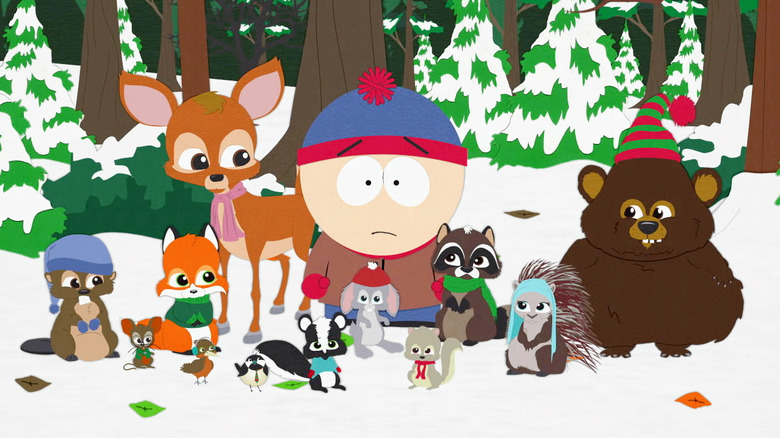
An episode for anyone who ever rode Splash Mountain at the Disney parks and thought the animatronic critters were creepy as hell — literally. "Woodland Critter Christmas" features Stan encountering a group of several Disney-ish talking animals who seem cute, but ultimately turn out to be Satanists attempting to usher in the birth of the Antichrist. To stop that from happening, Stan must teach three mountain lion cubs how to perform abortions on Kyle, who has become the host for the son of Satan.
It's ultimately all revealed to be a story told by Cartman as an elaborate antisemitic insult to Kyle, though the episode itself also feels like a deliberate attempt to be as insulting as possible to all faiths...or at least those who think a cartoon can be blasphemous. The sheer glee with which the episode trashes classic cartoons and any reverence for Christmas has an anarchic thrill to it, and the way the offenses keep piling up generates taboo laughs at every "can you believe this?" escalation.
Cheap laughs? Easy bait? Sure. But it works.
10. Stupid Spoiled Wh*re Video Playset
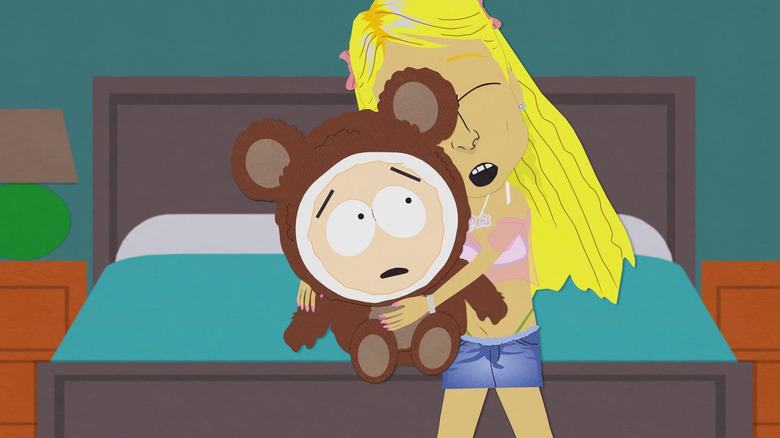
How do you satirize a culture that turns sex-tape celebrities into role models for young girls without punching down? For "South Park" it involves using Mr. Slave, initially a one-joke character introduced when Mr. Garrison tried to get fired from school for discrimination. Gradually, he evolved into one who could represent kink and consensual perversion for adults. In this episode, Paris Hilton comes to town, after marketing Stupid Spoiled Wh*re branded products to ecstatic elementary school girls. Mr. Slave ultimately demonstrates the episode's idea of what a real wh*re looks like by bodily inserting Hilton into his rear end.
Meanwhile, Butters' parents prove just how terrible they are and how trusting their son remains, when they try to sell him to Hilton as a pet for $250 million. When Butters flees the careless socialite, he gets a predictable lecture from his parents for costing them the payout — a pointed critique of parents exploiting their kids, even as inappropriate marketing is inducing the rest to exploit themselves.
Considering how many young kids likely buy "South Park" merchandise who probably shouldn't, the show knows of what it speaks.
9. Chef Aid
By Season 2, Episode 14, "South Park" had already become popular enough to attract an impressive lineup of musical cameos. Elton John, Rick James, Meat Loaf, Rancid, Devo, Ween, and Ozzy Osbourne were among the many to play themselves in an episode centered on a benefit concert for Chef, voiced by Isaac Hayes, whose clout in the music industry surely had something to do with it.
One artist who did not cameo as herself was Alanis Morissette, who kickstarts the plot of the show by stealing Chef's original song, "Stinky Britches." When Chef tries to get credit, the greedy record label sues him.
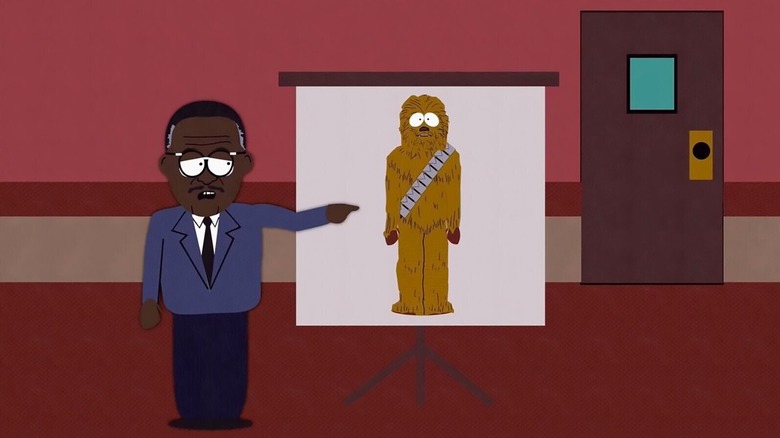
The episode isn't just a classic for the all-star soundtrack album released from it. It also added "Chewbacca defense" to the vernacular, referring to the strategy of unrelated misdirection used by Johnnie Cochran against Chef in his case against the record company.
8. Mr. Hankey the Christmas Poo
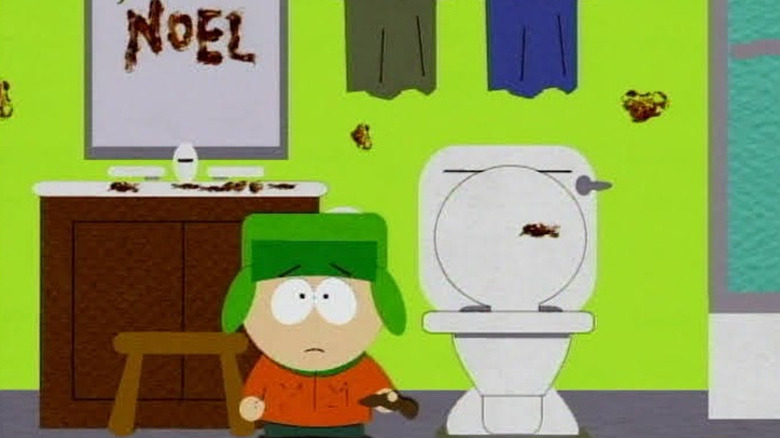
Creating a new Christmas character can be a license to print money in merchandising dollars. Making one that is both cute and scatologically disgusting, with a memorable catchphrase ("Howdy ho!") and theme song is on brand for "South Park," which, after all, began as a crudely animated Christmas short.
The charming talking turd known as Mr. Hankey began life as a story Trey Parker's father told him to try to get him to flush. When Parker told Matt Stone the story, they knew they had to use it somehow, and Fox executives refused to pick up the series unless the character was cut — leading the creators to take the project to Comedy Central, instead.
In the first official "South Park" Christmas episode, one of the best Christmas-themed sitcom episodes of all time, Mr. Hankey is put forward by Kyle as a non-denominational holiday mascot. Nobody believes that he exists, however, and instead sees a kid playing with his own feces.
Once Chef expresses that he also believes in Mr. Hankey, the whole town eventually learns to see him too, and believe in the good of the holiday. In the real world, Mr. Hankey's theme song would eventually reach #4 on the UK singles charts.
7. Sermon on the 'Mount
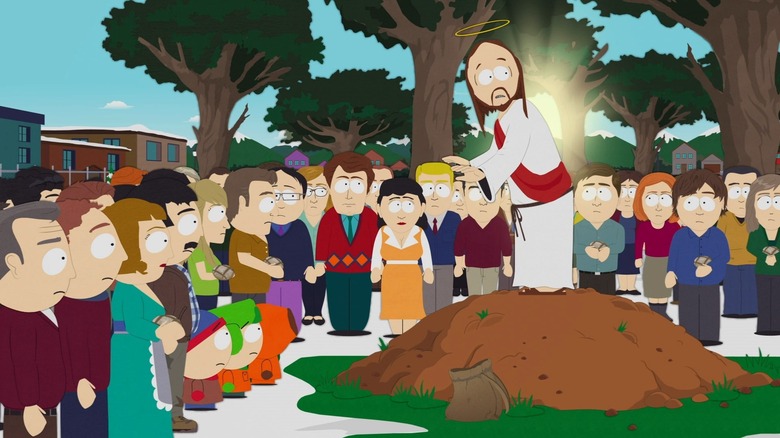
For much of the first Trump administration, "South Park" avoided specifically satirizing the president, as everyone else was doing. In the second term, when Trump's FCC went after Stephen Colbert and Paramount canceled his show, Trey Parker and Matt Stone responded by directly satirizing the administration and Paramount — which airs the show through Comedy Central.
The Season 27 premiere features Jesus being forced into local schools out of fear of federal lawsuits. Trump is depicted similarly to Saddam Hussein in past episodes, having a baby with Satan. The town of South Park is forced by presidential lawsuit to make MAGA propaganda, which features an obese Trump lookalike with a micropenis.
The episode kicked off an entire season that savagely took on the administration, depicting J.D. Vance as Herve Villechaize, Kristi Noem as a serial dog murderer, and Pete Hegseth as a clout-chasing influencer. It concludes with Satan's baby dying under highly dubious circumstances, à la Jeffrey Epstein. When "South Park" goes full scorched earth, they commit.
6. Imaginationland
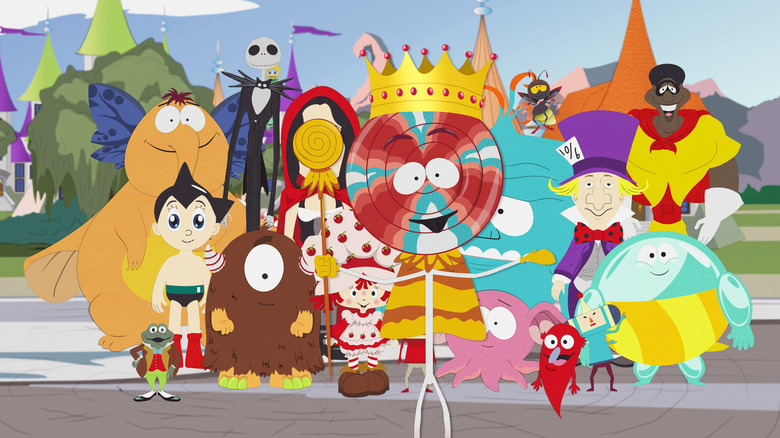
Originally considered as a possible second theatrical movie for "South Park," "Imaginationland" wound up being cut into three episodes instead, giving Trey Parker and Matt Stone a chance to homage and satirize every fictional pop culture character they enjoy riffing on. Controversially, in this episode both Jesus and ManBearPig (the show's running-gag metaphor for global warming) are depicted as imaginary.
When a leprechaun escapes into the town of South Park, it leads to a bet between Cartman and Kyle wherein Kyle must orally pleasure Cartman if leprechauns can be proven real. This leads into a story in which terrorists bomb the land of imagination, prompting the possibility that all the evil imaginary characters in the world will escape if the imaginary good guys can't defeat them.
Using the satire defense here allows Parker and Stone to absurdly mash-up IPs the way no studio could legally do, from "ThunderCats" and "Popeye" to "Hellraiser," "Aliens," and "The Chronicles of Narnia." It's all in the service of a ridiculous finale in which Al Gore nukes our collective imagination.
5. D**che and Turd
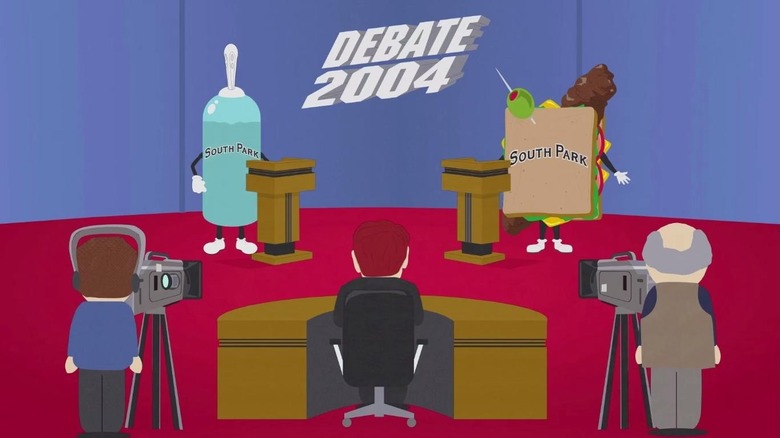
To fans who accuse "South Park" of taking the stance that it's cool not to care, "D**che and Turd" might seem like exhibit A. When an election for a new school mascot deteriorates into a choice between a literal feminine hygiene product or an excrement sandwich, Stan refuses to vote. As such, he is shamed and run out of town, with his life literally threatened by Diddy (another celebrity spoof that "South Park" was prescient about).
Look a little closer, though. Stan is ultimately persuaded by PETA members — who caused the election in the first place by protesting animal mascots — that every election is between a d**che and a turd, because politics is a system in which only those succeed.
Diddy's crew then proceed to massacre all of PETA, but Stan escapes and returns to cast his ballot. His choice loses in a landslide right before the school reinstates the original mascot, anyway, rendering the votes pointless. The real danger the episode is actually warning about is elections being undermined, or at least rendered null and void by a broken system.
4. Trapped in the Closet
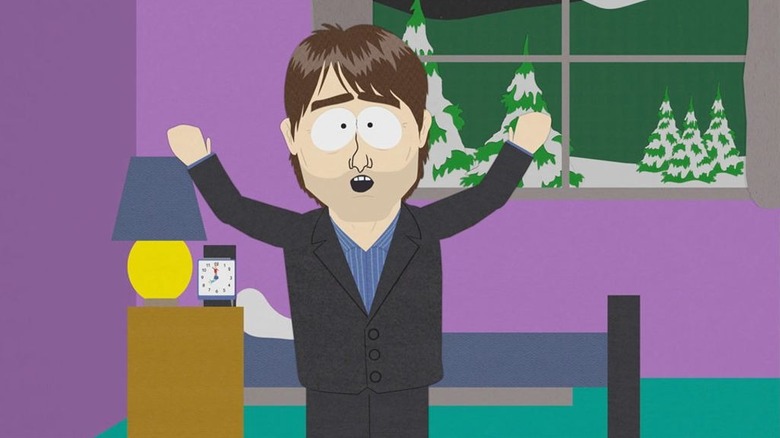
Trey Parker and Matt Stone don't like to be told who they can and can't criticize, and in Hollywood, it used to be common sense not to talk smack on the Church of Scientology, the notoriously litigious religious organization created by science-fiction author L. Ron Hubbard. Tom Cruise is an adherent, and hates mockery of his faith. When Penn Jillette was asked by Showtime not to criticize the Church on his show "Bullsh*t," Parker and Stone charged in where others' better angels really feared to tread.
In an episode where Stan joins Scientology and is flagged as a possible reincarnation of Hubbard, he also criticizes Tom Cruise's acting, sending Cruise to hide in a closet, where he's soon joined by John Travolta and R. Kelly. It's a parody of Kelly's music video for the song "Trapped in the Closet," but also riffing on the perception that Cruise and Travolta are secretly gay, which would be against Hubbard's teachings.
Then the episode goes further, fully dramatizing Scientology's secret origin story for the universe, revealed only to upper-level adherents. The saga of space warlord Xenu featured the onscreen caption "This is what Scientologists actually believe," and was followed by Stan learning the entire religion is a money-making pyramid scheme.
The controversy surrounding the episode was followed by Scientologist Isaac Hayes leaving the show. Parker and Stone responded by killing off his character, Chef.
3. Butters' Very Own Episode
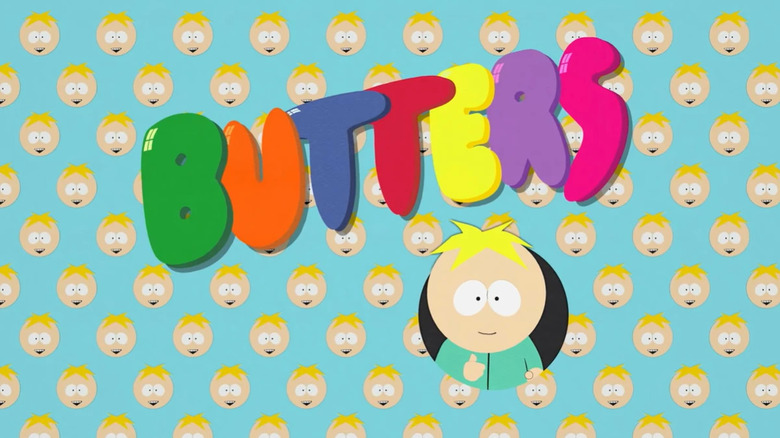
"Everyone knows it's Butters!" "That's me!"
Like so many tunes, that impromptu-seeming show ID is one of the most notable "South Park" jingles, created for an episode designed to parody sitcom spin-offs. Rule-abiding Butters, generally the most naive and trusting of the kids on the show, got a solo adventure at long last in Season 5, and it goes to some dark places, all while its young protagonist remains mostly oblivious.
"South Park" often mines humor from the contrast between darkly perverted adults and innocent kids, but with Butters being significantly more innocent than dirty-minded Kenny or bigoted Cartman, "Butters' Very Own Episode" stands out as especially twisted.
When Butters' mother Linda asks him to spy on his father, Chris, Butters discovers his dad going to a gay bathhouse and porn theater. Butters doesn't understand what he's seeing...but his mother does, and tries to murder her son by drowning him in a car. He survives, thinking it's an accident, and makes his way home, all while Chris and Linda, who think they've killed him, join up with the likes of O.J. Simpson and Gary Condit to search for "some Puerto Rican guy" who must be the "real" killer.
Butters eventually learns the truth, and realizes that sometimes lies are kinder. It's a typically hilariously contrarian "South Park" moral for particularly sensitive territory.
2. 200/201
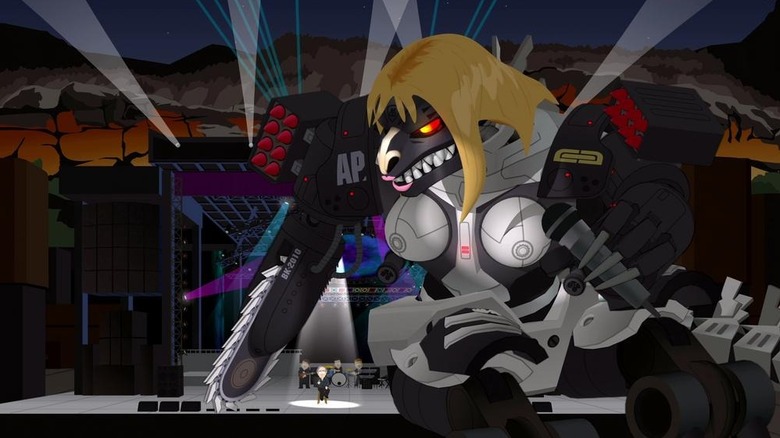
Predating "Avengers: Endgame" by nine years, the two-part story told in episodes "200" and "201" brought in every major character and formed an epic conclusion to virtually every significant "South Park" storyline prior. Unless you bought the DVD set, though, you can't see it officially any more. The ultimate "South Park" kitchen-sink storyline almost immediately became one of its most controversial episodes ever.
Beginning with the return of Tom Cruise and his thin skin about mockery, the epic tale also brings back the mystery of Cartman's father (and his Jennifer Lopez hand puppet), Scott Tenorman and his fellow gingers, Mecha-Streisand, killer whale Willzyx, Jesus vs. Santa, numerous other celebrities previously mocked by the show, semi-retired characters like Pip and Dr. Mephisto, and — most controversially — Comedy Central's censorship of references to Muslim prophet Muhammad. It's everything people like about "South Park," cranked to the max for a jam-packed special.
After an organization named Revolution Muslim threatened Parker and Stone over the episode, however, Comedy Central beeped out every mention of the prophet's name, as well as a concluding speech about how threats of violence work.
As in the episode itself, audiences understood the joke despite the censorship, much as Tom Cruise's efforts to control his image ultimately backfire.
1. Osama bin Laden Has Farty Pants
The terrorist attacks of September 11th, 2001, followed by anthrax attacks by mail, left the country in a massive state of shock, and Hollywood questioning what to do next. Studios postponed violent movies, and making fun of the president was also (at least temporarily) off the table. Radio stations banned aggressive songs. What was "South Park," so well-known for offending everyone, to do?
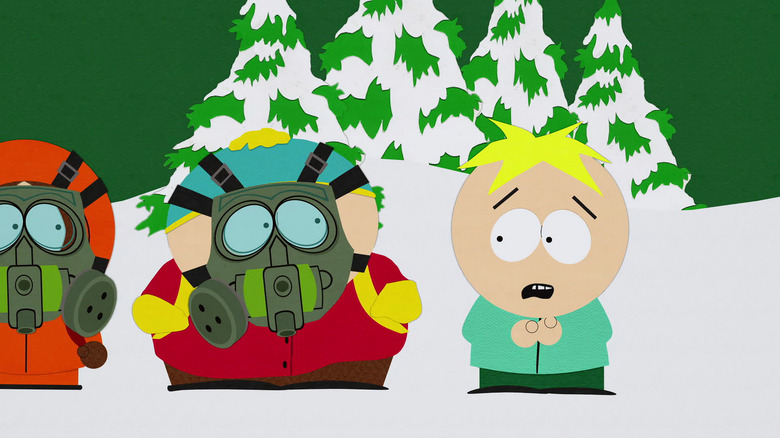
It took until November 7th, but they responded with the show's most brilliant, perfectly attuned episode. Opening with an acknowledgement of the national fears of another attack, the episode sees our core four kids going to Afghanistan to return a goat they received in a cultural misunderstanding. A certain level of military hard-headedness gets mocked, as army brass confuse the goat for Stevie Nicks. Ultimately, Cartman confronts and defeats Osama bin Laden in a Looney Tunes-style battle of pranks that also evokes classic World War II propaganda cartoons.
As the kids interact with their Afghani counterparts, the show manages to acknowledge the hurt civilians on all sides were feeling, and admit to America's problems while still rooting for it to succeed. It also allowed a shell-shocked audience to finally laugh at its own stress. "South Park" often finds middle-ground where there seems to be none, but when the audience needed it, they gave us all much-needed comedic catharsis.