

5 Sci-Fi Series From The '80s That Redefined The Genre
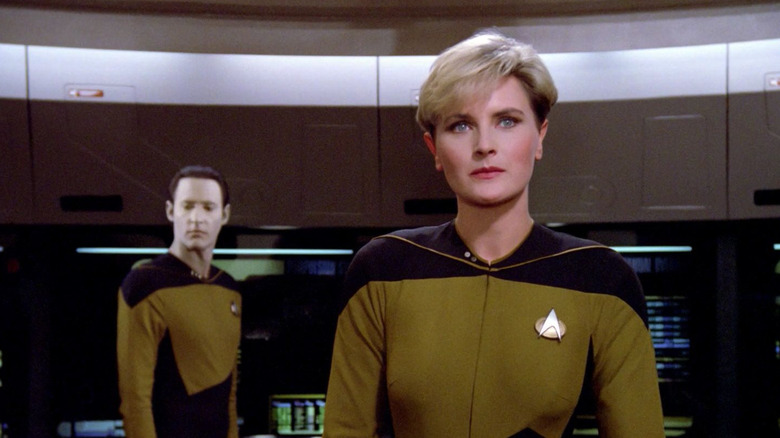
The 1980s were a golden era for science fiction across media, from space operas like "The Empire Strikes Back," to the beginning of the cyberpunk genre with novels like "Neuromancer" and films such as "Blade Runner." And while the most famous '80s sci-fi work may be found on the big screen or on the written page, television featured plenty of groundbreaking work between seminal animated series, and a "Star Trek" revival that many point to as the high point of the franchise.
TV was yet to become the prestige form it is today, with production budgets and available technologies often placing hard boundaries on what a series could do in the realm of science fiction. Nevertheless, it was a decade of innovation and bold storytelling, the effects of which can still be felt in both modern sci-fi and TV at large.
Today, we're taking a look back at some of the best and most influential of those '80s series — sci-fi shows that helped define the genre and laid a path for future stories to walk down.
V
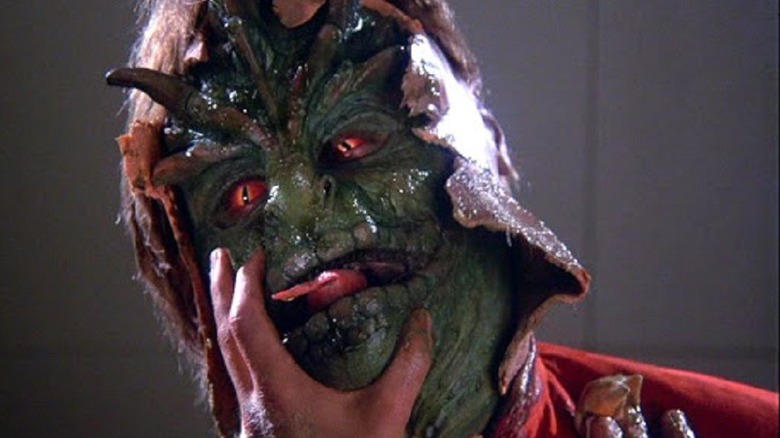
For as many incarnations of "V" as there have been, it's not a franchise that's discussed often in the context of sci-fi history. Some may know the name from the 1984 weekly series on NBC, or its 2009 ABC revival. Today, however, we want to focus on the original "V" — the two-part miniseries from 1983.
The miniseries details the arrival of alien visitors aboard massive motherships, who initially claim to come in peace (you may see where this is going). The Visitors weave themselves into the fabric of human culture via a series of technological gifts, and a tale of woe from their supposed home planet, but their presence eventually leads to a move against Earth's scientific community and a growing authoritarianism aimed at anyone who doubts the aliens' motives. Of course, their true nature is uncovered, and a rebel movement begins to work against them, all while scientists continue to be persecuted as a possible threat.
Inspired by Sinclair Lewis' 1935 anti-fascist novel, "It Can't Happen Here," "V" is more politically sophisticated than its early '80s camp highlights suggest. The story is prescient in its depiction of a scientific community persecuted for seeking the truth, laden with World War II imagery of Nazism and the Holocaust, all tying into an overarching theme on the dangers of fascism. Beyond that, the series' ratings success at a hefty '80s budget of $13 million for just two episodes (around $43 million today) can be seen as an early proof of concept for the sci-fi miniseries of the 21st century — from the initial 2003 "Battlestar Galactica" reboot, to more modern shows like "Station Eleven." Even in 2026, this is one forgotten '80s sci-fi TV show that's still worth watching.
Red Dwarf
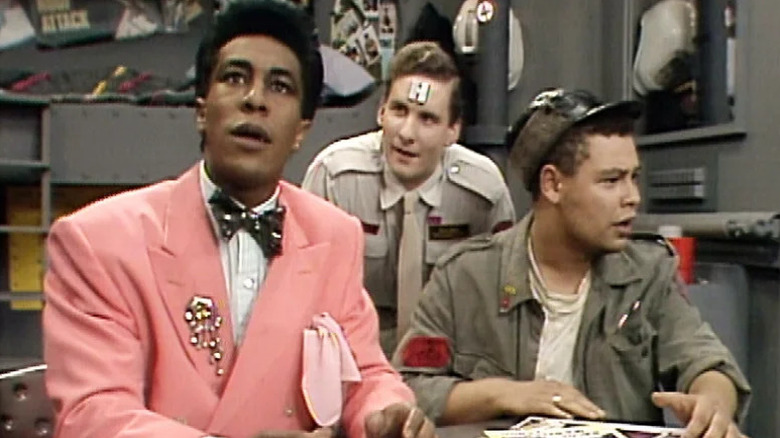
In many ways, "Red Dwarf" was a show ahead of its time. The BBC sci-fi comedy series ran for over a decade through the late '80s and '90s, and then another decade after the show was revived in 2009, compiling one of the most unique legacies in modern TV history. It's one of the weirdest sitcoms of all time, too, breaking ground as a show fully committed to comedy while never shortchanging its sci-fi circumstances.
That blend of parody and reverence for the genre made it a hit with fans of "Star Trek" and similar series. Today, the distinct blend of science fiction storytelling, comedy, camp, and occasional drama in "Red Dwarf" can be seen as a direct influence on series ranging from "Rick and Morty," to "The Orville."
At the time, though, that sort of respectful irreverence in science fiction wasn't as common, and certainly hadn't been pulled off as successfully as it was on "Red Dwarf." The specifically British brand of humor that the show became known for internationally also meshed well with its high-genre setting. The series' unbelievable longevity in pop culture is a testament to just how forward-looking it was when it premiered back in 1988.
Mobile Suit Zeta Gundam
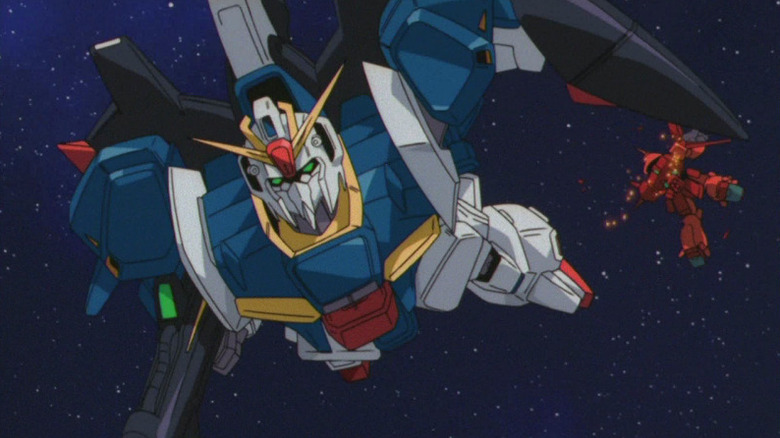
The 1980s were a golden age for sci-fi anime, with films like "Akira" and series like "Macross" setting the tone for years of storytelling to follow. But before those, there was "Mobile Suit Gundam" in 1979, the beginning of a titanic force that's as strong as ever today, and one of the most singularly influential pieces of mech fiction ever created. Several years later, in 1985, the first sequel arrived in "Mobile Suit Zeta Gundam," which took everything great about the original series to the next level.
The animation was better — more stylish, more bombastic. The Mobile Suits themselves continued to evolve in design and scope. But significantly, "Zeta Gundam" introduced far more complex ruminations on war, conquest, death, and political theater. The "good guys" from the original series are painted with far more of a gray brush here, and some of the old villains become the characters you root for. It's a story of shifting alliances, government corruption, the rising threat of fascism, and weight of grief, paving the way for the political, yet still emotional, storytelling in later "Gundam" series like "Seed," "The Witch from Mercury," and "Iron-Blooded Orphans."
Even with all the great series that have come in its wake, though, "Zeta" is still considered one of the best in the franchise, and a masterpiece mech anime.
Max Headroom
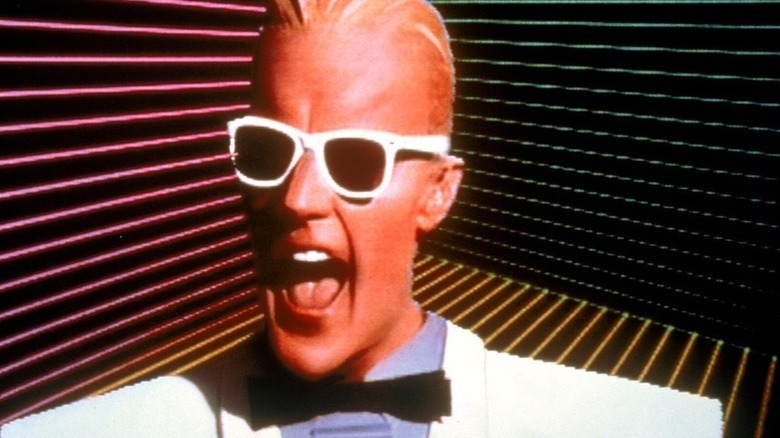
Max Headroom is more famous as a character than as a single series. Debuting in the British sci-fi TV movie, "Max Headroom: 20 Minutes into the Future," then parlayed into the Channel 4 series, "The Max Headroom Show," and eventually, a short-lived ABC series simply titled "Max Headroom," this trippy, satirical cyberpunk entity was a true phenomenon in certain circles in the mid '80s. Like several of the other shows mentioned here, "Max Headroom" was ahead of its time. For our purposes here, we'll focus primarily on the ABC series, as it's the most traditional, but all three incarnations of the character — a TV host from the future played by comedian Matt Frewer in heavy prosthetics — carry the same bizarre, psychedelic cyberpunk vibe.
In a future where TV megacorporations shape culture and commerce along neon airwaves, Max is presented as a parody of talk show culture with a digitized twist — utilizing harsh editing, vocal distortions, and other forward-thinking film tricks that would become common in more modern series, from the work of Tim & Eric, to the wider Adult Swim universe and deep-fried corners of the Internet's meme culture. On the science fiction end, "Max Headroom" was ahead of the curve, too, embracing the cyberpunk genre that was rapidly becoming ubiquitous in the '80s and placing it in a meta context that naturally fit its form.
Star Trek: The Next Generation
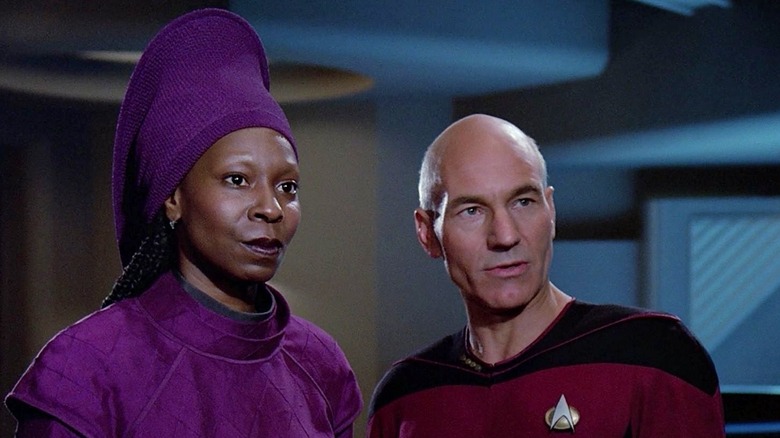
Of course, this list would be woefully unfinished without "Star Trek: The Next Generation" — the series that many fans point to as the high point of the franchise, and the entry that truly established it as an ongoing odyssey of top-tier science fiction.
"The Original Series" is a genuine classic, and nothing we're about to say diminishes that. But in basically every area — from the way various sci-fi plots are written to the overarching character work, ensemble, set designs, effects, and narrative ambition — "TNG" raised the bar for what was already a groundbreaking sci-fi series. It turned its predecessor's serialized starship format into a genre all its own; One which has remained a staple of TV sci-fi ever since. And that's without even going into any detail about the show's influence on sci-fi topics like artificial intelligence, space colonization, alien politics, hive minds, and more.
There is little to say about "Star Trek: The Next Generation" that hasn't been said many times already, so we'll just say this: It's timeless. And if you want to get somebody into "Star Trek" for the first time, there's still no better place to start than right here — perhaps the greatest space show ever made.