

15 Best TV Shows Set In Space, Ranked
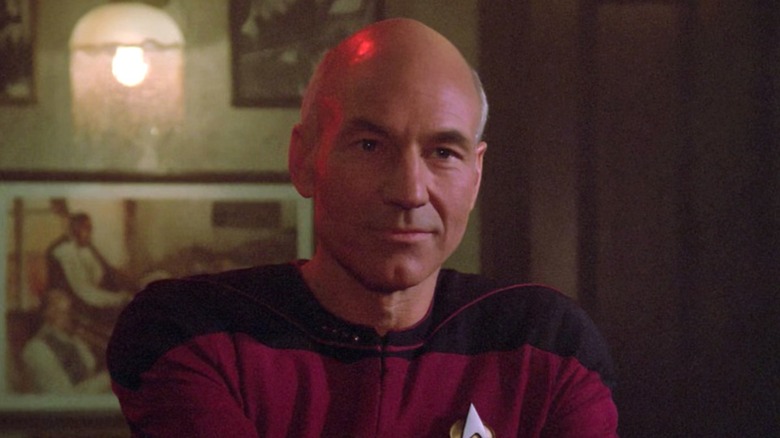
For a portion of the universe that has never been occupied by more than a small handful of humans at a time, outer space sure is conducive to great longform stories. Some of the finest television shows of all time have imagined what narratives may unfold in the mysterious reaches of the universe beyond the Earth, whether aboard massive faster-than-light spaceships or down on the ground in strange new worlds.
Scroll down for a ranking of the 15 English-language shows that cast drama and comedy across the cosmos with the highest levels of intelligence, creativity, and exuberance. Together, these series add up to more than a thousand hours of TV, which is good news if you're stocking up on entertainment for your upcoming interplanetary trip.
15. For All Mankind
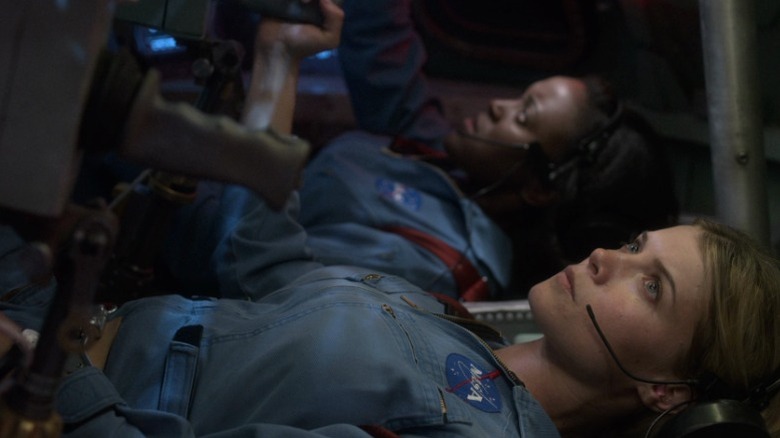
Apple TV has made a habit of tackling different genres and storytelling modes while imparting a dependable pedigree of quality to each of them, and "For All Mankind" is the streamer's typically formidable answer to the "hard" space drama genre. An original alternate-history series created by Ronald D. Moore, Matt Wolpert, and Ben Nedivi, "For All Mankind" takes place in a world where the Soviet Union beat the USA to the Moon in 1969, leading to an even more intense and motivated space race — which, due to the pressure created by Soviets' emphasis on gender equality in their space program, also comes to include women and minorities.
"For All Mankind" charts several decades of alternate world history as impacted by this technological boom, with each season taking place in a different decade beginning with the turn of the 1970s. It's an earnest, thoughtful, brilliantly-written series in which the TV medium is used to imagine a different and, in some ways, better world, without skimping on the gripping action and compelling drama — all kept to a level of procedural realism rarely seen in space fiction.
14. Stargate SG-1
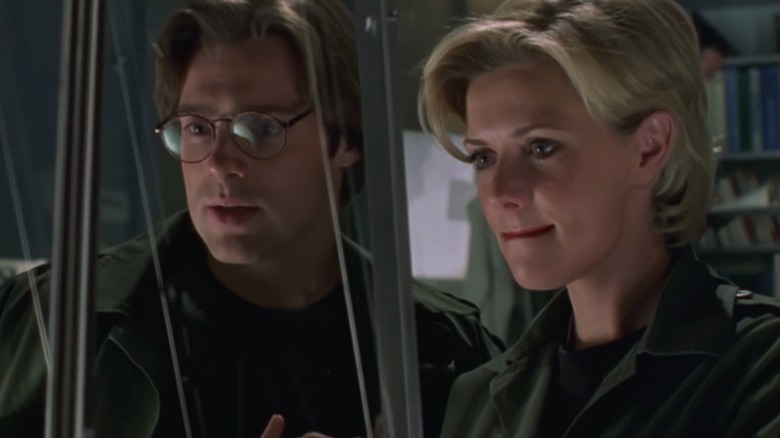
"Stargate SG-1" is one of the most improbably successful instances of a big-to-small-screen adaptation: Drawing from a fun but insubstantial 1994 action blockbuster, producers Brad Wright and Jonathan Glassner managed to cobble together one of the most thoroughly engaging, fascinatingly detailed, and emotionally vivid sci-fi sagas in TV history. Not to mention, they laid the groundwork for a full-fledged franchise that inspired numerous other works in various media.
The key to the "SG-1" phenomenon is that the Showtime (and later SyFy) series understood the importance — and the fundamentals — of strong world-building, while also adhering to the principle that good lore is only as engrossing as the storytelling it's propping up. The concept of a U.S. Air Force team traveling around the universe and making contact with different civilizations opens itself up to all kinds of exploratory invention, including numerous ingenious "origin stories" for ancient Earth myths. Still, "Stargate SG-1" series never forgets that its main pull is the curiosity, fear, and fascination experienced by a group of humans with an existentially demanding job.
13. The Hitch Hiker's Guide to the Galaxy
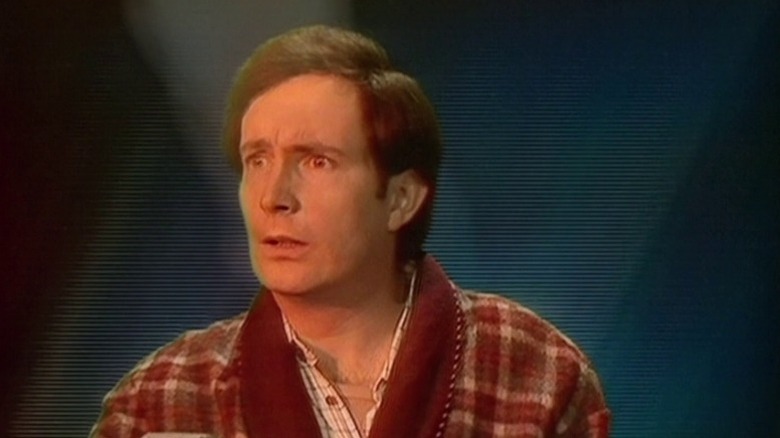
One of the foundational texts of modern science fiction, Douglas Adams' "The Hitchhiker's Guide to the Galaxy" began its life as a BBC radio sitcom before being ported over to the novels that made its international fame in 1979, and later to the live-action television format — where it became one of the most iconic and influential space shows of all time. Aired on BBC2 in six half-hour episodes in early 1981, "The Hitch Hiker's Guide to the Galaxy" takes after the surreally comedic, blazingly clever, and endlessly imaginative style of its source material.
Simon Jones plays Arthur Dent, an average English guy who discovers that his house is getting bulldozed along with the entire rest of planet Earth to make room for a hyperspace road. Thankfully, Arthur's friend Ford Prefect (David Dixon) is an alien field researcher who's been disguising himself as an earthling to collect data for the titular cosmic encyclopedia. Ford whisks Arthur off on a series of mind-boggling space adventures which showcase Adams' genius blend of goofy humor and expansive philosophy while infusing it with fitting dashes of visual psychedelia.
12. Exosquad
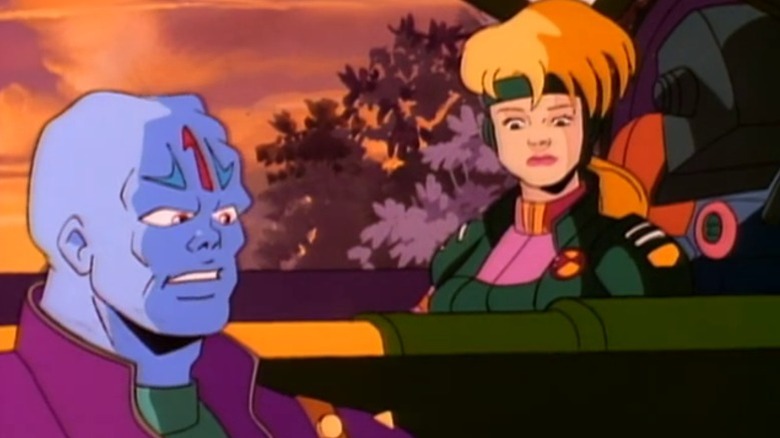
Historically, Western space cartoons have mostly been about light adventure and situational comedy; indeed, some of the best animated sitcoms ever made have been set in space. This makes "Exosquad" all the more extraordinary: Aired on syndication between 1993 and 1994 in the context of the era's toy-driven action cartoon boom, it proved that American TV was more than ready for a serious, adult-friendly animated sci-fi drama in the tradition of Japanese anime.
Created by Jeff Segal, "Exosquad" is set in a future where earthlings (aka "Terrans") have colonized and terraformed Venus and Mars, and tells of the war between humans and the rebelling Neosapiens species, who were once genetically engineered to be servants. Although the primary focus is on a Terran military unit, the show never reduces its central conflict to good vs. evil; you'd be hard-pressed to find another animated space opera with more believable, layered, and affecting characters.
11. Star Trek: The Next Generation
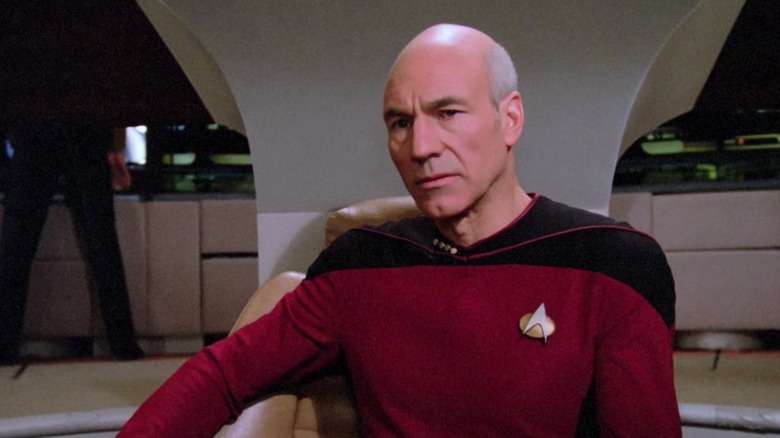
After "Star Trek" essentially inaugurated sci-fi television as we know it, the syndicated "Star Trek: The Next Generation" had the daunting challenge of succeeding it in a way that made sense for a new era while still honoring its immeasurable legacy. Not only did "The Next Generation" pull it off, but it became nearly as influential and important in its own right as the original "Star Trek," introducing a newfound level of serialization, political complexity, and lavish visual wizardry that catapulted the franchise into its own dauntless future.
Led by Patrick Stewart in a TV-hall-of-fame performance as Captain Jean-Luc Picard, the show's tales of a new USS Enterprise in the late 24th century represent TV space drama at its most mature and compelling. Early seasons struggled a bit to leave the original's shadow, but, once it found its own groove, "TNG" accessed a dazzling spectrum of possibility; from deepening the Klingons to distributing plots among a wider ensemble to embracing a stunning level of darkness and tangible plot consequence, it was an evolution in every sense. It's no surprise that so much of the overarching franchise derives directly from it.
10. Red Dwarf
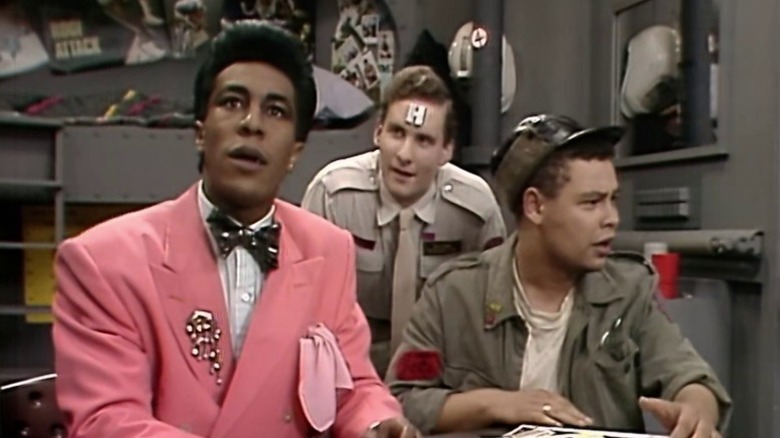
The British comedy series "Red Dwarf" boasts one of the most ingenious premises in sci-fi history: Low-ranking technician Dave Lister (Craig Charles) gets put into suspended animation as punishment for smuggling his cat into a mining spaceship; following a radioactive accident, the entire crew dies save for Dave, who is only awakened by the ship's computer Holly (Norman Lovett) once the radiation has fully died down 3 million years later. In that time, the inside of the Red Dwarf has become its own ecosystem, with risen and fallen civilizations, yet Dave remains the only living human — possibly in the entire universe.
If that sounds like a bleak, brain-frying concept, rest assured: "Red Dwarf" turns into the goofiest and most unserious of British sitcoms, zeroing in on a small ragtag bunch of characters as they travel through the universe. With 12 sporadic seasons aired between 1988 and 2017, it's a show that has transformed itself more times than possibly any other English-language sitcom on record — and it's this very capacity for reinvention that makes it a hilarious, enthralling, endlessly surprising romp.
9. Babylon 5
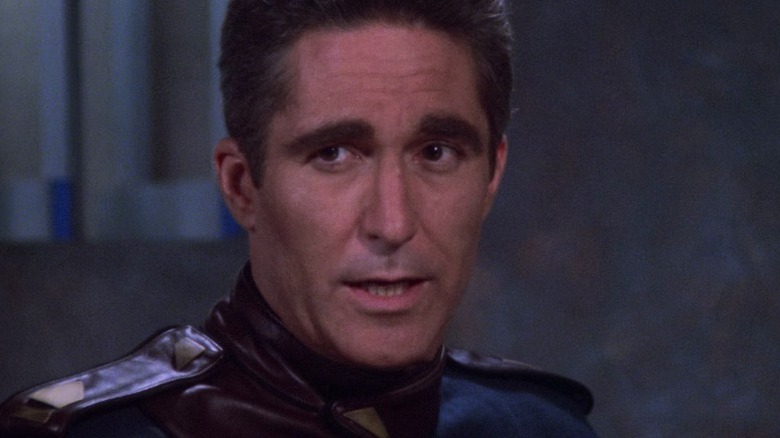
Set primarily in the mid-23rd century, "Babylon 5" takes its name from a neutral space station that serves as a hub for interstellar diplomacy and commerce, in a future where humanity has united into an Earth government and conquered faster-than-light travel. Like many space operas of its ilk, the show follows the tensions and conflicts between various alien races and populations, as imperialist powers and mysterious civilizations threaten the delicate balance of forces in the known cosmos.
What really distinguishes "Babylon 5" and makes it a '90s sci-fi show that still holds up today, is the way it builds off of that premise. Conceived by creator J. Michael Straczynski (who wrote the vast majority of its episodes) as essentially a five-season, hundred-plus-chapter novel in filmed form, the series strayed almost entirely from the episodic format that dominated American TV up until then, instead endeavoring to tell a whole cohesive tale across its run. And that tale remains astoundingly gripping, thought-through, and satisfying — an irrefutable case for a new television model that unsurprisingly went on to influence everything, from high fantasy sagas to gritty character dramas to other sci-fi classics.
8. Andor
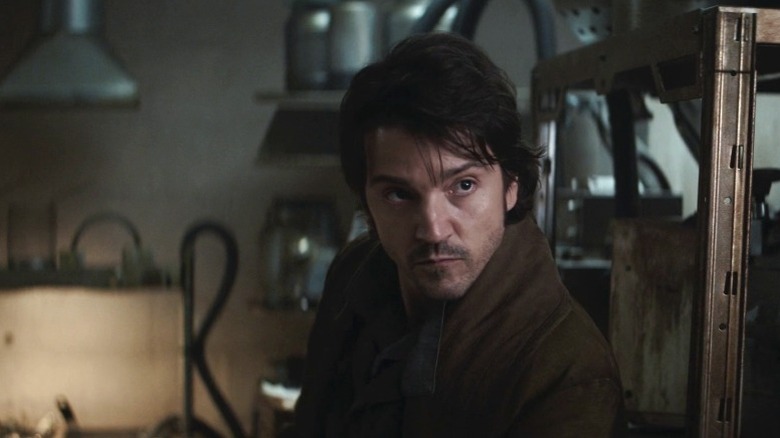
"Andor" is arguably the finest piece of filmed media ever to hail from the "Star Wars" universe, which is saying a lot when "Star Wars" is a contender for most monumental film and TV franchise of all time. This "Rogue One" spin-off was created by Tony Gilroy and aired for two seasons on Disney+ (a drastic change from its original five-season plan). The plot of "Andor" takes us back five years before the events of "Rogue One" and "A New Hope," and follows Diego Luna's Cassian Andor as he morphs from a politically dejected thief into a committed revolutionary.
In parallel, the show charts the impact of the Galactic Empire's tyranny on ordinary citizens, and the challenges of getting a full-blown rebellion off the ground. Gilroy and a brilliant team of writers and directors explore this politically charged setup as thoroughly as any genre show has ever mined a revolution story, carefully examining all the intricacies of resistance against totalitarian oppression in more realistic and layered ways than would have once seemed possible of a tentpole "Star Wars" show — all while telling some of the most heartrending and elegantly effective stories the franchise has ever seen.
7. Rick and Morty
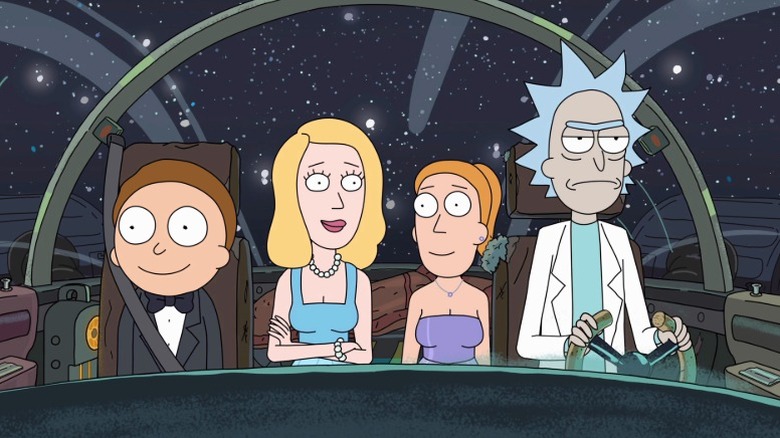
Space shows have long dabbled in multiverse storytelling, but none had made such surreal pretzels out of the concept of parallel realities before "Rick and Morty." The Adult Swim flagship animated series pushes science fiction to the point of fantasy, utilizing the adventures of the alcoholic genius scientist Rick (voiced by Justin Roiland and later Ian Cardoni) and his timid teenage grandson (voiced by Roiland and later Harry Belden) as a portal into endless recursions and iterations of its own lore-heavy story, until the very idea of a canon "timeline" becomes too wobbly to trust.
It's also completely hilarious. Indeed, what makes "Rick and Morty" a wonder is the way its quasi-nihilist, ultra-violent, reality-hopping mayhem is continually put in service of some of the most relentlessly funny material (some of it improvised) of any cartoon sitcom ever. There's almost a reassuring beauty to the show's willingness to pull jokes from anywhere and everywhere, while simultaneously offering enough conceptual creativity per episode to rival the entire runs of some sci-fi series. And underlying it all is a core of genuinely moving existential drama, with the gory debauchery allowing the characters to reveal their innermost selves in ways rarely glimpsed on TV.
6. The Expanse
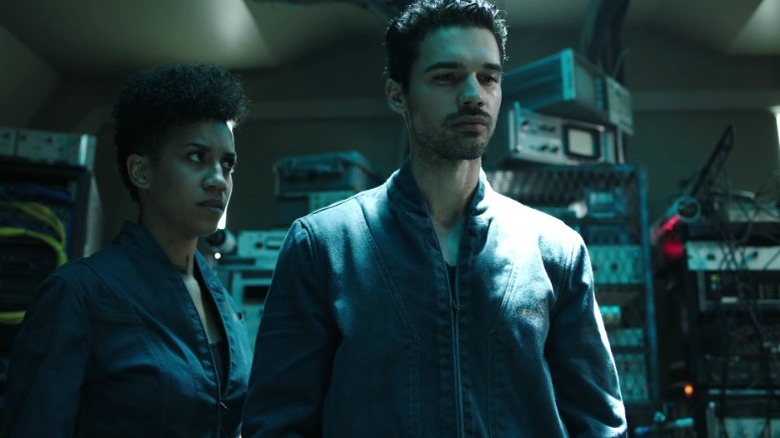
"The Expanse" features one of the most exacting, nose-to-the-grindstone, scientifically informed depictions of a world with space travel ever put to screen: Rather than the virtually fantastical concept of interstellar voyages, it imagines a future in which humans have established colonies on Luna (thus named to differentiate it from other inhabited satellites), Mars, and several asteroids and outer planet moons. This scattering of civilization across the Solar System has created a tense political mood, which gets navigated across six seasons by a host of characters with disparate histories and agendas.
Developed by Mark Fergus and Hawk Ostby as an adaptation of the eponymous James S. A. Corey book series, the show expands the workings of globalized Earth society — in all its dysfunction, class tension, and infighting for power and resources — to a massively bigger chessboard full of vibrant world-building pockets. Its main players are as invariably fascinating as its lore, with arcs and journeys that stand shoulder-to-shoulder with those of any realpolitik war tale in TV history. It's pretty much the platonic ideal of a show about what human life beyond Earth might really look like in practice.
5. Firefly
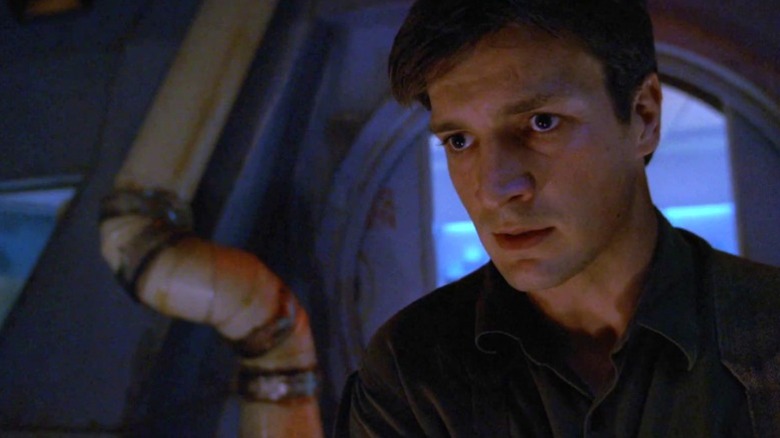
No show has ever fused together the fundamentals of the space sci-fi and Western genres with as much success as "Firefly." Aired on Fox for a single season in 2002, this cult classic follows a nine-person crew of renegades left to brave a desolate space frontier following their defeat in an interplanetary civil war. Led by captain Mal Reynolds (Nathan Fillion) and his second-in-command Zoe Washburne (Gina Torres), the Serenity crew takes on whatever work and income they can find while evading the authorities of the Alliance, a united federal government bringing together various human colonies originated from a now-barren Earth.
Even at just 14 episodes (plus one sequel film), it's impossible not to fall in love with the inner world concocted by the series, which incorporates plenty of stirring action and crisp deadpan comedy — yet remains a steadfast character drama through and through. Every episode is its own mini-masterpiece in moody Western storytelling, shrewdly augmented by the extraterrestrial setting in ways that no other space show has ever quite replicated. Indeed, it's one of TV history's great pities that "Firefly" wasn't allowed to last longer.
4. Doctor Who
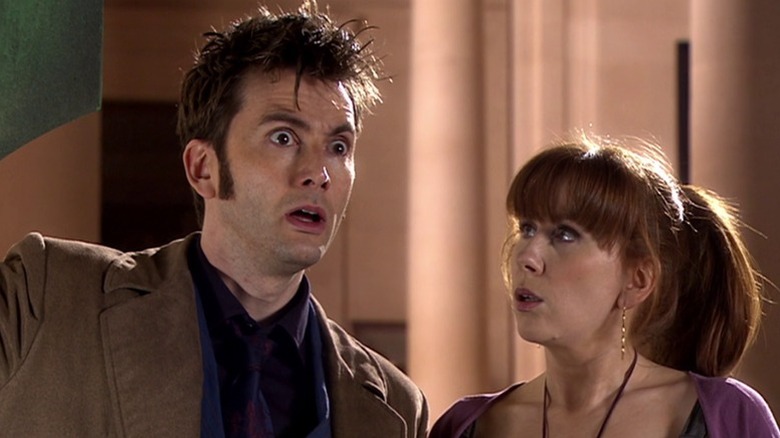
As its most ardent fans will readily admit, "Doctor Who" is an inconsistent show. But the beauty of this 62-year, 41-season institution emerges precisely from its inconsistency: Much like the TARDIS itself, "Doctor Who" is a machine that can take viewers anywhere and show them anything, with all the unbound potential and riveting unpredictability that entails.
Alternating between hard, nuts-and-bolts sci-fi and extravagant fantasy, "Doctor Who" has the single densest and most detailed mythology in all of British television. The show winds its way through time and space to tell stories that still, six decades later, speak to the chaotic essence of what it is to be human. In each of their 14 iterations, the Doctor has been as much a protagonist as a guide, ushering their companions — and, by extension, the viewer — toward all the untapped possibilities of intergalactic adventure, drama, comedy, horror, and mystery. No other show does so much with space.
3. Futurama
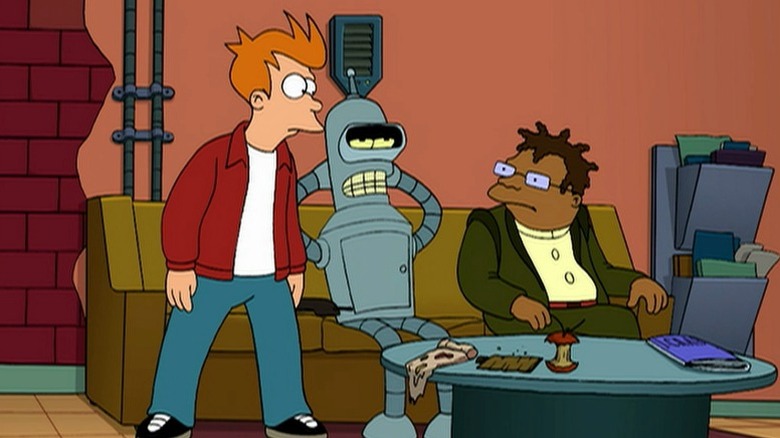
The long-running animated sitcom is a format uniquely suited to charting years or decades of transformation in contemporary life, but "Futurama" proves that it can also excel at taking epic stock of the future. Following New York City pizza delivery boy Philip J. Fry (Billy West), who falls into a cryogenic chamber on New Year's Eve of 1999 and gets awakened a thousand years later, the show applies the trademark omnibus wit of Matt Groening to a full-scale contemplation of where human society might be headed.
For all its over-the-top zaniness, the scathing satirical intelligence that "Futurama" brings to said speculation is nothing short of wondrous. And the show is equally sharp and hilarious as a space travel adventure, following the day-to-day mishaps of Fry's newfound interplanetary delivery company with the scrappiness of a workplace comedy and the gleeful weirdness of a surreal cartoon. In their Fox, Comedy Central, and Hulu iterations alike, you could scarcely find better spacefaring company than the Planet Express crew.
2. Battlestar Galactica
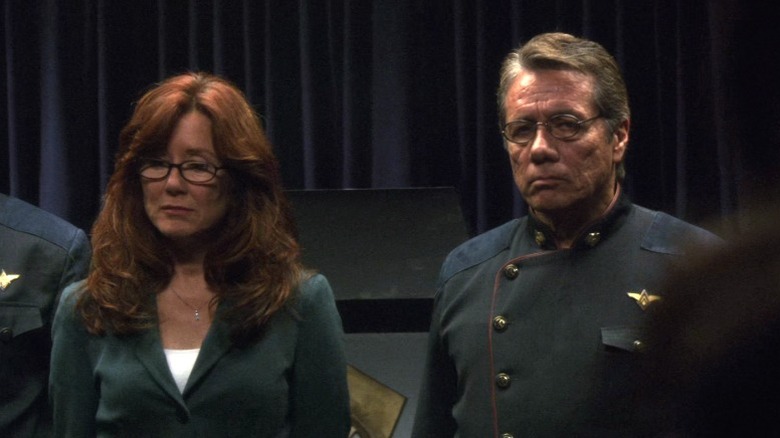
A remake of the eponymous 1978-79 ABC series created by Glen A. Larson, the Ronald D. Moore-created "Battlestar Galactica" is set in a universe in which humans have colonized twelve planets in a distant star system and fallen into a bitter war with an android civilization known as the Cylons. The show, which dispenses with aliens and reworks the Cylons' origin to be the work of humans themselves, follows the aftermath of an apocalyptic Cylon attack that reduces the colonies' population from tens of billions to a space-bound fleet of 50,000 survivors.
This hugely tragic setup is explored with enough weight and directness to make "Battlestar Galactica" one of the best post-apocalyptic TV shows of all time, but its achievements go even further than that. Simply put, "Battlestar Galactica" is the most profound, thought-provoking, psychologically rich, and thematically astute space drama in history. It grapples with themes ranging from the political (terrorism, oppression, wartime morality, cycles of violence) to the existential (religion, sentience, humanity's place in the universe) to the personal (grief, displacement, identity) with enough passion, intelligence, and first-rate acting to run circles around most TV — sci-fi or otherwise.
1. Star Trek
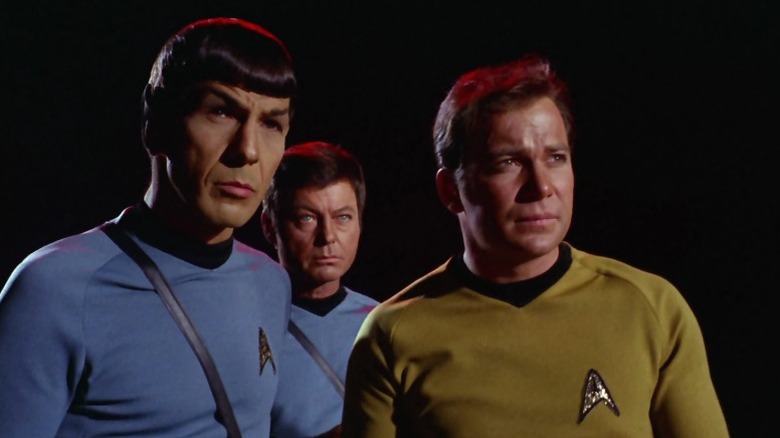
Limited though its resources may be as a '60s TV production, Gene Roddenberry's "Star Trek" dares to imagine a universe of ever-expanding reaches, and to occupy it with Shakespearean drama, pulse-pounding excitement, quiet philosophical contemplation, and trippy visual poetry as circumstances may require — sometimes everything at once. Its greatness is not just a matter of influence or novelty; on the contrary, it's precisely the show's very excellence that allowed it to become a sci-fi TV show that defined the genre.
Although "Star Trek" didn't shy away from blockbuster thrills, it understood on a fundamental level that its appeal to the imagination would hinge on the characters it created and the stories it told — and so it concocted what may well be the most iconic roster of heroes in TV history, in which virtually every player was developed and positioned carefully enough to become their own fiction archetype. When that character work supported rollicking action setpieces and brainy puzzle-box adventures, it was incredible enough; when it got whipped up into existential meditations and pointed political allegories that could scarcely be found in other '60s media, "Star Trek" was the best show on TV, full-stop. Its call for a future of greater curiosity, understanding, and solidarity was galvanizing in its day, and has only gotten more so.