

5 Things Dutton Ranch Does Better Than Yellowstone
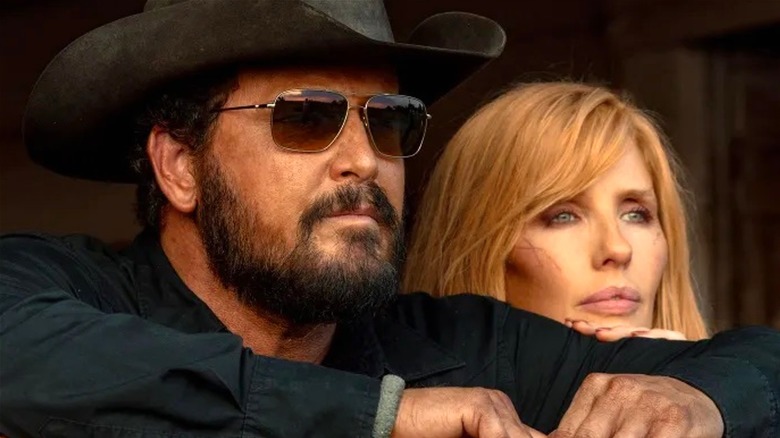
From the moment "Dutton Ranch" premiered, it was clear that it was the rightful successor to "Yellowstone." Sure, "Marshals" maintained that classic Montana setting, but the CBS spin-off is more police procedural than neo-Western soap. "Dutton Ranch," however, leans into the familiar Taylor Sheridan tone to expand on what folks already loved about the original Paramount Network drama. "Yellowstone" may have been Sheridan's vision, but this popular sequel series proves that Beth Dutton (Kelly Reilly) and Rip Wheeler (Cole Hauser) now have a life of their own.
"Dutton Ranch" does several things better than "Yellowstone." While the flagship series was often bogged down by recycled plotlines and frustrating supporting characters, the Paramount+ sequel has managed to evade some of Sheridan's biggest pitfalls. Creator Chad Feehan — who is not returning for "Dutton Ranch" Season 2 — stripped Beth and Rip of their happy Montana ending in favor of a move down south to Rio Paloma, Texas, which was perhaps the best thing for them.
But beyond the change in scenery, "Dutton Ranch" offers a more well-rounded take on some of its returning "Yellowstone" favorites, all while examining a different ranching world than Rip or Beth have known. Even if "Yellowstone" is among your favorite neo-Western dramas, these are some of the things that "Dutton Ranch" undoubtedly does better.
Stronger female characters
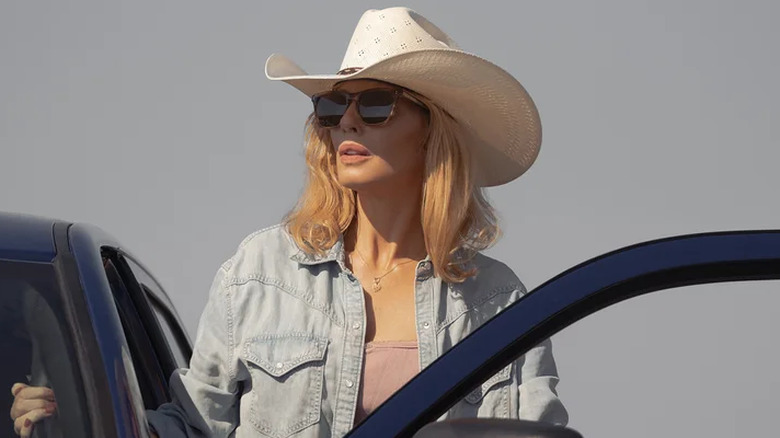
Arguably one of the strongest things that "Dutton Ranch" has going for it compared to its predecessor is its earnest and complex depiction of female characters. Taylor Sheridan has famously been criticized for the way he writes women across shows like "Yellowstone" and "Landman," but this Beth-and-Rip-centric sequel doesn't suffer the same creative pitfalls. Rather than over-caricaturize or underdevelop its female leads, "Dutton Ranch" leans heavily into them.
It's no secret that Kelly Reilly initially struggled to understand Beth, but post-"Yellowstone," the character has not only become more likable, but more balanced and multifaceted as a result. There's a capability to her on "Dutton Ranch" that felt overly performative before, and seeing her (and Rip) as an underdog in a larger fight is just the hook the character needed. Of course, Beth isn't the only example of an improvement in female characters.
"Dutton Ranch" also introduces franchise newcomers Beulah (Annette Bening) and Oreana Jackson (Natalie Alyn Lind), who are both far more compelling and fleshed out than many of the most annoying characters on "Yellowstone". Beulah offers a unique perspective on the cattle industry that separates the show from repeating the same John Dutton (Kevin Costner) mistakes, while Oreana exists as an interesting window into what the weight of such a legacy can do to a person.
Dutton Ranch feels more focused
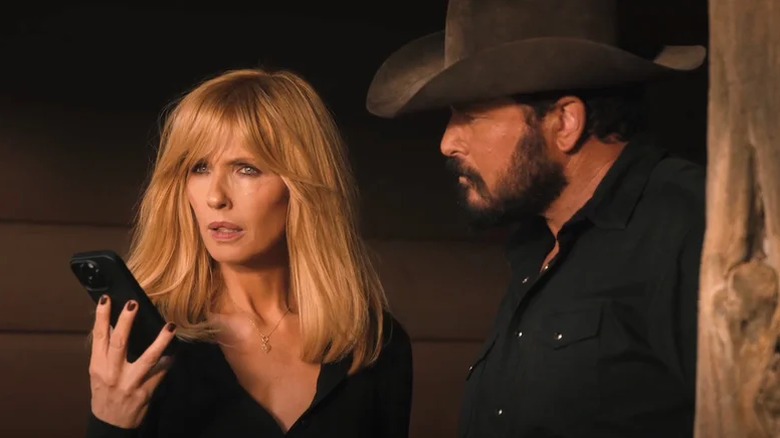
"Yellowstone" always had a penchant for introducing storylines that ultimately went nowhere. It was like a bad habit that Sheridan was simply unwilling to break. That's what happens, of course, when you're the only one writing every episode. Whether it was the result of Chad Feehan's creative direction or the creative efforts of the writers' room, "Dutton Ranch" has been careful to use every scene to build toward something rather than simply introduce a thread only to abandon it to the wind at a moment's notice.
There's a real continuity to each "Dutton Ranch" episode that "Yellowstone" sometimes lacked. "Yellowstone" had no trouble prioritizing moments (and entire scenes) designed to showcase an actor's ability rather than further the story along. Sometimes this worked, while other times it meant that we got the same "badass Beth" sequences multiple episodes in a row. In contrast, this Paramount+ sequel has managed to highlight both the abilities of its stars and the narrative itself.
Even though "Dutton Ranch" goes through several changes over its first nine episodes, from the Montana to Texas migration to the establishment of the new cattle operation to having to find work at the 10 Pedal, it all feels like a natural progression. Rather than wading around in the same old thing, "Dutton Ranch" has found new creative ways to push Beth and Rip in their next chapter.
The use (and price) of violence
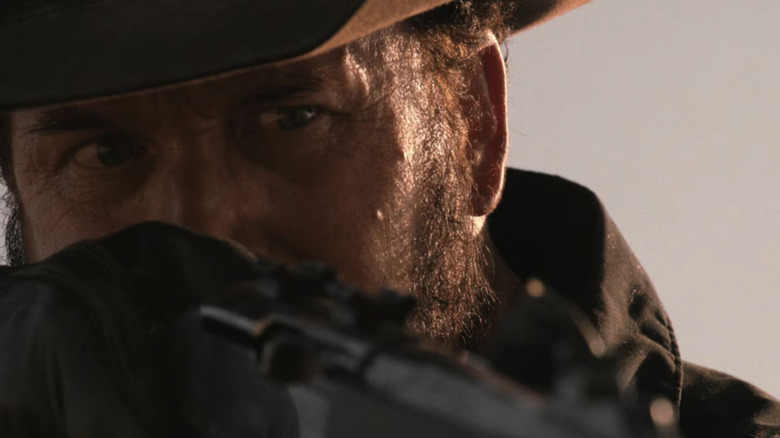
On "Yellowstone," the Duttons — and those who also sported the "Y" brand — often found themselves in physical altercations with rival cowboys, bar thugs, motorcycle gangs, corporate goons, and other unseemly characters at a variety of venues. Sometimes they even fought each other when pushed too far over the edge. On "Dutton Ranch," however, every major use of violence is carefully woven into the story. Nobody is jumping for a fight, and every shot carries real weight.
We see this clearly in "Start With a Bullet" when Rip is forced to kill all their infected cattle. His grief is felt with every pull of the trigger, and by the time he comes to the lone calf they saved from their previous Montana home, our hearts break. Even when the Dutton Ranch group exchange rounds with Mariano Reyes' (Raoul Max Trujillo) men in the season finale, "El Padrino," it's completely defensive. It's not about taking the fight to their enemies; it's about protecting what they've built.
Now, one could argue that was the motivation on "Yellowstone" too, but on "Dutton Ranch," it's clear that Beth and Rip want peace rather than war — a stark contrast from their default back in Big Sky Country. On this Yellowstone Universe sequel, violence isn't just a creative feature or a common occurrence. It holds a deeper and more personal significance. Beth and Rip know the cost of violence. They've lived it. And now they're trying something better.
Balance between cowboying and the main plot
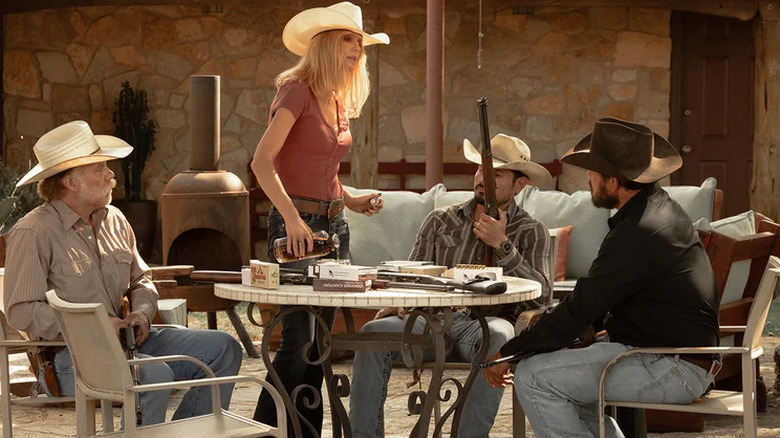
There's no doubt that over its five seasons, "Yellowstone" had time to develop its cowboy characters. That said, the ranch hand stories almost always felt divorced from the main plot, rarely intersecting with what the Duttons were dealing with on the daily. On some level, there's nothing wrong with that. The ranch hands were some of the most interesting characters, after all. That's probably why "Dutton Ranch" wanted to better blend both elements together — and it does just that.
The sudden and shocking wildfire that tore through Beth and Rip's home outside of Dillon, Montana, is the catalyst for their move to Rio Paloma. The first several episodes are all about this makeshift family unit (Finn Little's Carter included) making a new name for themselves just north of the U.S.-Mexico border. Their new Texas cattle operation takes center stage as they hire Azul Ramos (J. R. Villarreal) and Zechariah Moss (Marc Menchaca), with much of the main plot centering on their rivalry with the 10 Pedal — at least until they join it.
On "Dutton Ranch," everything is centered around the cowboy lifestyle. Rather than telling a story like "Succession" in the modern West, the "Yellowstone" spin-off leans more into its Western qualities. The Texas backdrop certainly helps, further separating the plot from those pesky land developers that took up so much of the Duttons' (and our) time previously in exchange for more cowboy-centric drama. There may be fewer hands to keep track of, but it just helps the show maintain proper focus.
Meditations on legacy
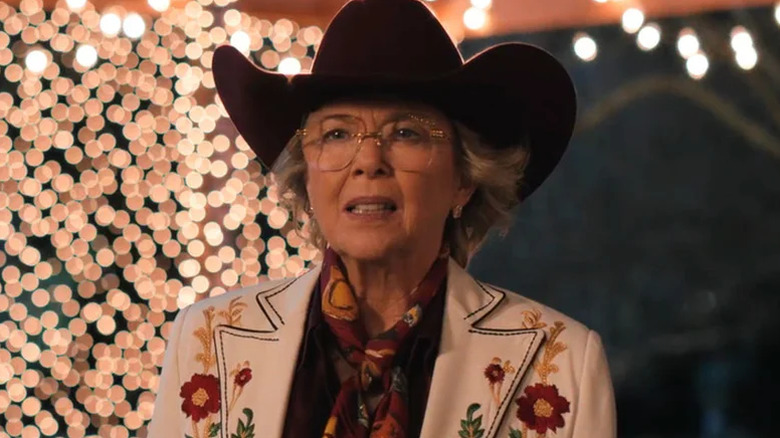
If "Yellowstone" was ever about one thing, it was about legacy. That said, the notion typically revolved around just keeping the land in the family name and preserving it from land developers more than anything else. For John Dutton, it was all about a promise he made to his father, and nothing else seemed to matter. But legacy is a more nuanced and complicated conversation on "Dutton Ranch." It speaks not just to the cattle operations themselves, but the character and decisions of those running them.
This side of "Life Is a Promise," Beth and Rip hope to honor the Dutton family legacy by starting a new Dutton Ranch. Even outside of Montana, they want the name (not just the slice of land in Paradise Valley) to mean something. At the same time, Beulah attempts to secure her family's legacy by molding her sons, Rob-Will (Jai Courtney) and Joaquin (Juan Pablo Raba), into proper successors.
These ideas were explored in part on "Yellowstone," but they carry more weight here when it's not all about fighting those trying to buy the land. To "Dutton Ranch," legacy is not just leaving behind a slice of heaven for future generations. It's about ensuring that the name and the brand are properly respected for all the hard work that went into forging them.