

Mad Men's 15 Best Episodes, Ranked
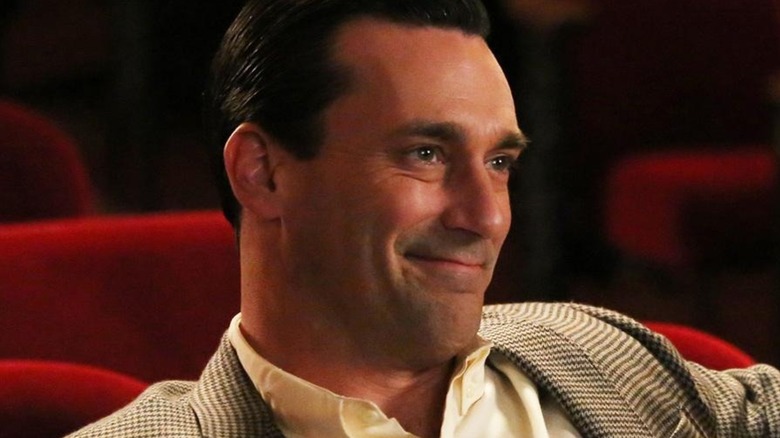
Any list of the best TV shows of the 21st century has to include "Mad Men." Created by Matthew Weiner, the AMC series explored the changing cultural tides of the 1960s, and highlighted how many of the same issues of sexism, racism, homophobia, and classism persist to this day. At the same time, it used the profession of advertising to examine how everyone literally and metaphorically puts up a facade to hide their true selves. The dreams that Madison Avenue ad man, Don Draper (Jon Hamm), sells to his clients are just that — "dreams" — and the reality is something much darker.
Narrowing "Mad Men" down to a list of the best 15 episodes was a herculean task, as there are no shortage of great choices. When assembling this ranking, we hoped to select the episodes that best encapsulated the show's core themes: From the illusions of self-creation, to the upheaval of societal norms. We also looked for episodes that were thoughtful and entertaining in equal measure, which is what "Mad Men" did better than just about any other drama on television.
15. The Hobo Code (Season 1, Episode 8)
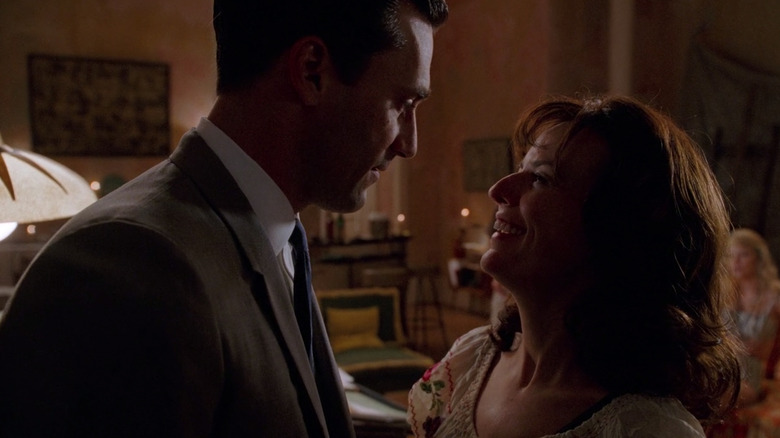
In Season 1, Episode 8, Don smokes marijuana with Midge Daniels (Rosemarie DeWitt) and her hippie friends. While getting high for the first time, he recalls a childhood memory of a hobo (Paul Schulze) who offers work in exchange for food, and leaves offended when his father, Archie (Joseph Culp), refuses to pay. Meanwhile, Pete (Vincent Kartheiser) cuts off his office affair with Peggy (Elisabeth Moss) for fear his wife, Trudy (Alison Brie), will find out, while Sal (Bryan Batt) rejects the advances of a man to keep his job.
"Mad Men" was built around the idea that we each hide something of our true selves, and "The Hobo Code" is one of its most incisive examinations of that. The subplots with Peggy and Sal drive home the overall message of the episode, which is that Don hides who he truly is for fear of bucking up against what society deems appropriate. He may envy Midge and the hobo for their bohemian lifestyles, but he's never quite willing to leave the comforts of suburbia behind.
14. The Good News (Season 4, Episode 3)
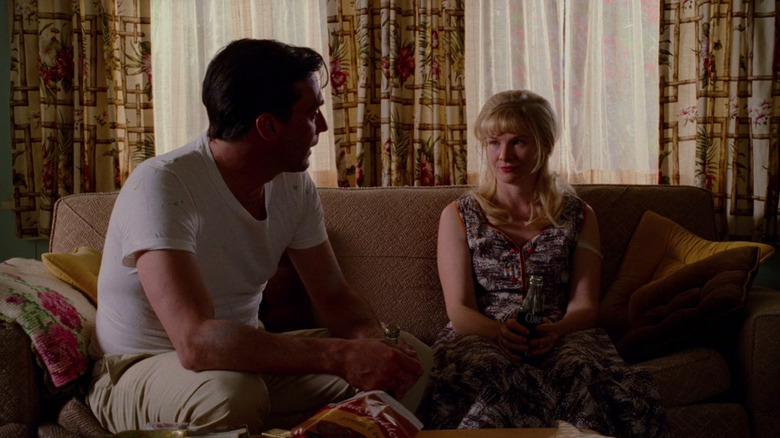
"Mad Men" always had a deft hand for balancing tragedy and absurdity, as expertly demonstrated in "The Good News." In Season 4, Episode 3, Don travels to California to visit Anna Draper (Melinda Page Hamilton), the wife of the man whose identity he stole. Don is devastated to learn Anna has cancer, a fact her niece, Stephanie (Caity Lotz), wants kept secret. Back in New York, Don takes Lane Pryce (Jared Harris) out for a drunken night with a pair of call girls to distract him from his failing marriage.
"The Good News" does an excellent job of balancing the comedic highs of Don and Lane's night on the town with the dramatic lows of Don's visit to California. Although this might sound like tonal whiplash, it's in keeping with one of the series' dramatic themes: We put a shiny gloss over our pain. Much like how Don wants to distract himself from the news about Anna, Lane wants to forget about his problems with his wife by paying a woman to pretend she likes him — yet another example of a facade.
13. Meditations in an Emergency (Season 2, Episode 13)
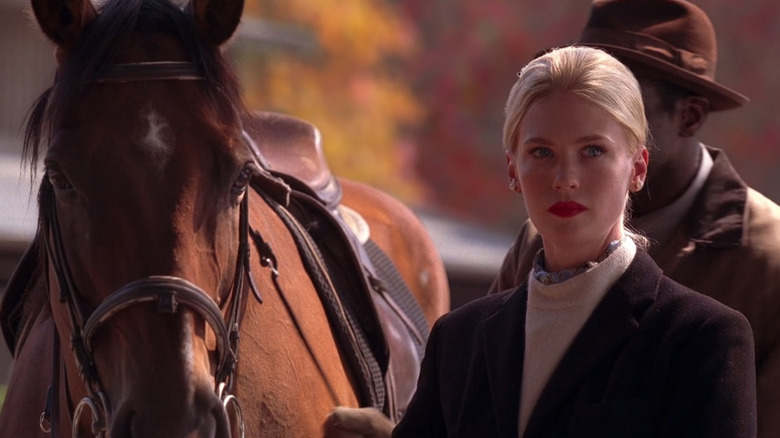
In the Season 2 finale, Betty Draper (January Jones) learns she's pregnant, and has a one-night stand with a stranger before telling Don the news. Meanwhile, Sterling Cooper is bought by Putnam, Powell, & Lowe, as Duck Phillips (Mark Moses) threatens to undermine Don as the new head of the company. Pete tells Peggy that he loves her, and she tells him they had a child that she gave away.
Matthew Weiner and Kater Gordon won an Emmy for writing "Meditations in an Emergency," which effectively explored the personal sacrifices Don makes for his career. Weiner set the action against the backdrop of the Cuban Missile Crisis, which serve as a metaphor for the conflict taking place not just at Sterling Cooper, but in Don Draper's household, as well. This is mirrored by Peggy's reveal to Pete that she gave their child up for adoption, showing how the cycle perpetuates. The episode is especially a standout for Jones as Betty Draper, whose facade as the beautiful, blonde ideal of a suburban housewife slowly starts to crumble with the advent of women's liberation.
12. Tomorrowland (Season 4, Episode 13)
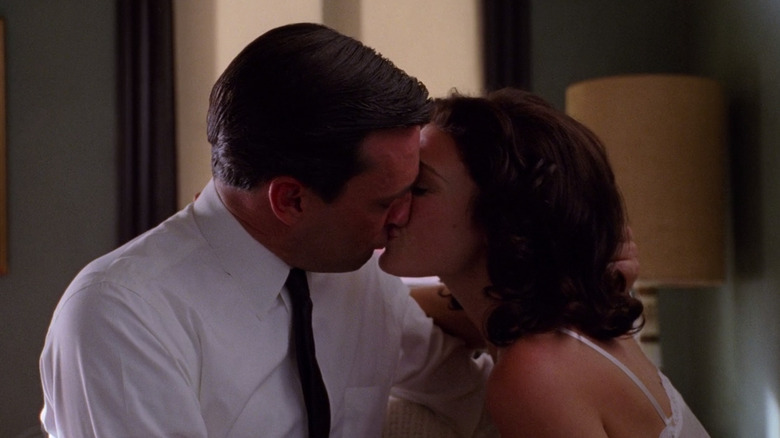
Don's search for happiness was at the heart of "Mad Men," and his inability to deal with his true self caused him to act out in self-destructive ways. In "Tomorrowland," he takes a trip to Disneyland with his kids, and asks Megan (Jessica Paré) to accompany him. He's impressed with how calmly she handles his children, even when they spill her milkshake. After getting the engagement ring the real Don Draper gave to Anna, he impulsively tells Megan that he loves her and proposes.
It's no accident that Don's proposal comes shortly after Anna's death. Matthew Weiner is clever, using her engagement ring as another example of Don trying to co-opt someone else's identity to keep from dealing with his own. While not necessarily a barnburner, the Season 4 finale does an excellent job of showing the cast taking drastic measures to change their lives. This includes the reveal that Joan (Christina Hendricks) decided to keep her baby after Lane offers her a promotion in name only, while Betty decides it's finally time to move out of the family home.
11. Nixon vs. Kennedy (Season 1, Episode 12)
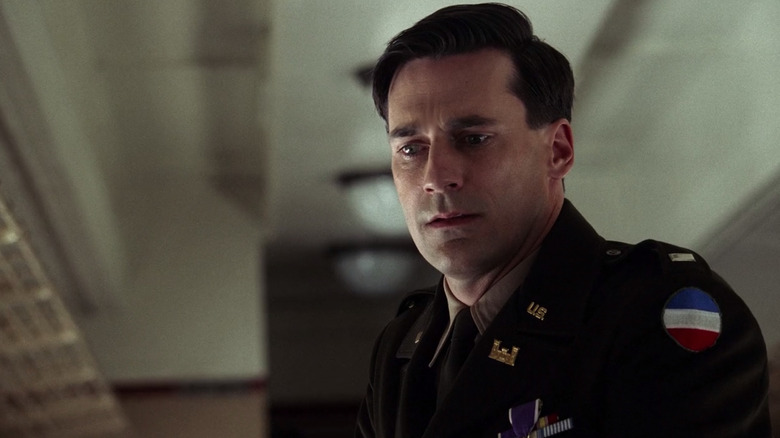
"Mad Men" often used historical events as a backdrop to the fictional drama unfolding, as it did in the penultimate Season 1 episode, "Nixon vs. Kennedy." In it, Pete discovers Don's true identity and threatens to reveal it if he's passed over for a promotion. Through flashbacks, it's shown that Dick Whitman served alongside the real Don Draper (Troy Ruptash) in the Korean War, and assumed his identity after an explosion left Don dead and disfigured.
"Nixon vs. Kennedy" uses the historic election as a metaphor for the struggle between Don and Pete: The seasoned ad man vs. the young up-and-comer. It also serves as yet another reminder of the role television played in selling an illusion of perfection to the public, as Kennedy's ready-for-primetime charisma gave him a leg-up over the sweaty Nixon. What makes this analogy truly effective is its pairing with Don/Dick's backstory. Dick's use of Don's "pristine" image to mask his own imperfections hints at why he would choose to go into advertising, especially in the coming age of television.
10. In Care Of (Season 6, Episode 13)
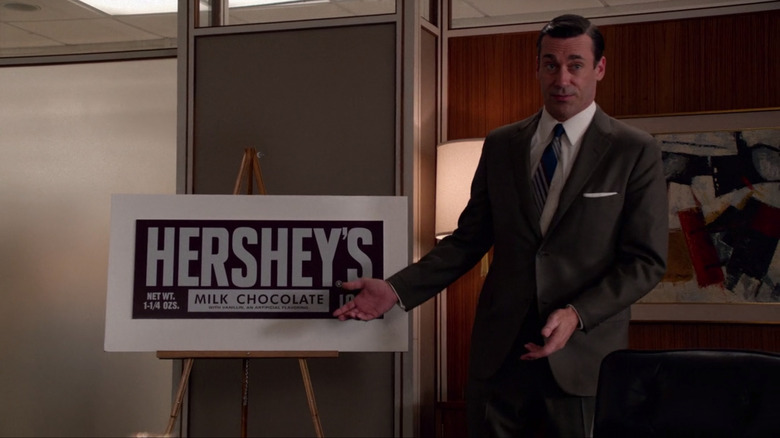
"Mad Men" used the ad business as a way to explore the shiny exteriors we create for ourselves to hide our deepest, darkest pain, as it did in the Season 6 finale, "In Care Of." While delivering a pitch for Hershey's Chocolate, Don breaks down and reveals he was raised in a brothel, where he collected change from clients to buy the candy bar. After being put on mandatory leave, Don shows his children the house he grew up in.
There are few scenes in the history of "Mad Men" as brutal to watch as Don talking about how precious Hershey's Chocolate was to him growing up. He goes so far as to say that the company doesn't need advertising to sell their product — a total rebuke of his profession. It's one of the rare moments where he lets his mask slip, shattering the illusion he's built for himself in his professional and personal life. In that sense, "In Care Of" is a crucial chapter in the show's narrative arc.
9. Waterloo (Season 7, Episode 7)
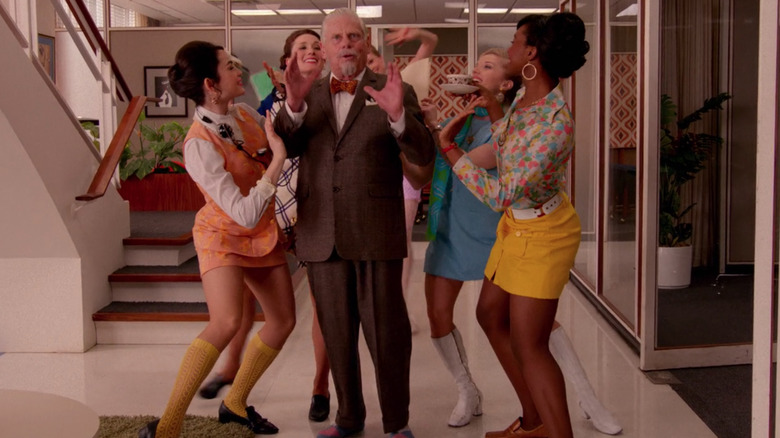
In "Waterloo," Don is in danger of getting fired by Jim Cutler (Harry Hamlin) for breach of contract. Although he's able once again to save his job, he's helpless to save his second marriage, as Megan refuses to move to California with him. As the nation watches the moon landing, Bert (Robert Morse) dies, and Don imagines his ghost singing "The Best Things in Life are Free."
"Mad Men" has one of the best final seasons of any TV show, broken into two parts. While its last episode, "Person to Person," is a bit too polarizing to qualify as one of the best series finales of all time, its mid-season finale is a real barnburner. For one thing, it's a great send-off for Bert Cooper, giving Broadway legend Robert Morse the opportunity to show off the musical theater chops that won him a Tony for "How to Succeed in Business Without Really Trying." It also effectively raises the stakes for Don and leaves us wanting more as the show barrels towards it final episodes.
8. Far Away Places (Season 5, Episode 6)
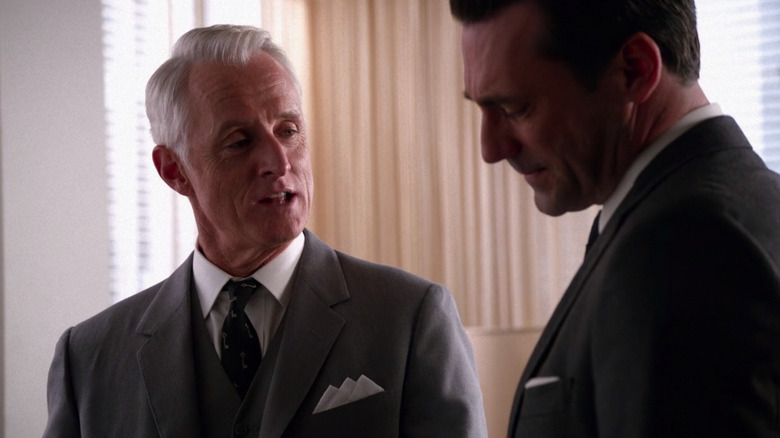
"Far Away Places" was one of the more experimental "Mad Men" episodes, telling three separate stories in a non-linear structure. Over the course of a single day, Peggy has a fight with her boyfriend, Abe (Charlie Hofheimer), which affects a meeting with a client; Roger (John Slattery) and Jane Sterling (Peyton List) take LSD and talk openly about their marriage with a group of intellectuals; And Megan fights with Don at a Howard Johnson's about her needs always taking a back seat to his.
Season 5, Episode 6 is ambitious, to say the least, weaving back-and-forth through time to tell three separate stories about alienation and loneliness. Matthew Weiner and Semi Chellas earned an Emmy nomination for writing this episode, which uses the vignette structure as more than just a gimmick. Rather, it's a way to explore the shifting sands of time; The ways in which the older generation gives way to the younger, and how each of us feels like a stranger in a strange land.
7. The Gypsy and the Hobo (Season 3, Episode 11)
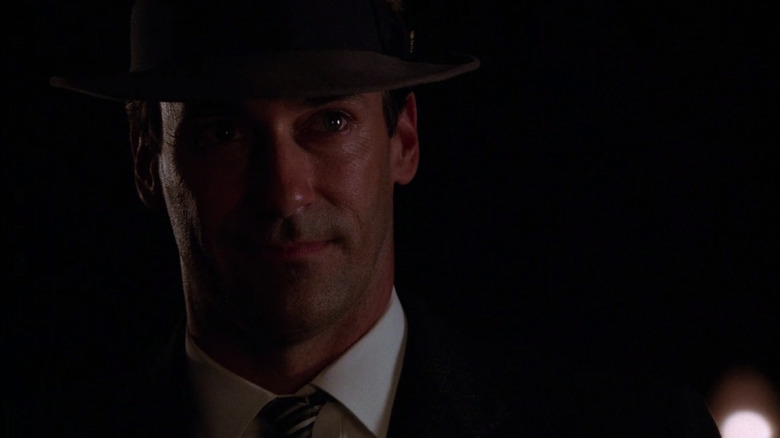
In Episode 11 of Season 3, Don tries to salvage the reputation of Caldecott Farms when it's found out their dog food is made primarily from horse meat. The company's owner, Annabelle Mathis (Mary Page Keller), is an old flame of Roger's, and refuses to change the recipe. But that's the least of Don's troubles, as he's finally forced to reveal his true identity to Betty.
The title, "The Gypsy and the Hobo," comes from the final scene, where Don and Betty take Sally and Bobby trick-or-treating as the titular gypsy and hobo. When their inquiring neighbor asks Don who he's supposed to be, he stares at him silently. Even though he's just told his wife his true identity, he still doesn't know who he really is. The best episodes of "Mad Men" use Don's professional problems as an analogy for his personal ones. Just like how Caldecott Farms dog food will always be horse meat, Don Draper will always be Dick Whitman, and no amount of good press will change that.
6. The Wheel (Season 1, Episode 13)
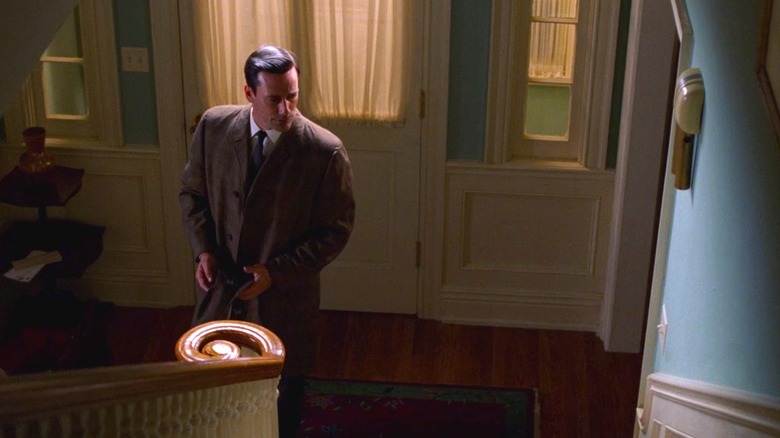
In "The Wheel," Peggy gets promoted to Junior Copywriter and put in charge of the Clearasil account ahead of the Thanksgiving holiday. But her career is almost derailed when she learns that her weight gain is the result of a cryptic pregnancy from her one-night stand with Pete. Meanwhile, Don uses his own family photos for his "Carousel" pitch to Kodak, but arrives home to an empty house after Betty leaves with the kids.
The brilliance of the Season 1 finale comes in its last moments, when Don uses photos of his family to evoke nostalgia for Kodak's slide projector. When he returns home to find his family missing on Thanksgiving, it drives home the show's core idea ... Don's brilliance as an advertiser masks his failure as a person. Matthew Weiner earned an Emmy nomination for writing the episode, which also masterfully ties up Peggy's first season arc from mousy secretary to talented advertiser, which comes at a cost to her personal life. In that way, Weiner hints at how much Peggy will eventually take from her mentor.
5. Guy Walks Into an Advertising Agency (Season 3, Episode 6)
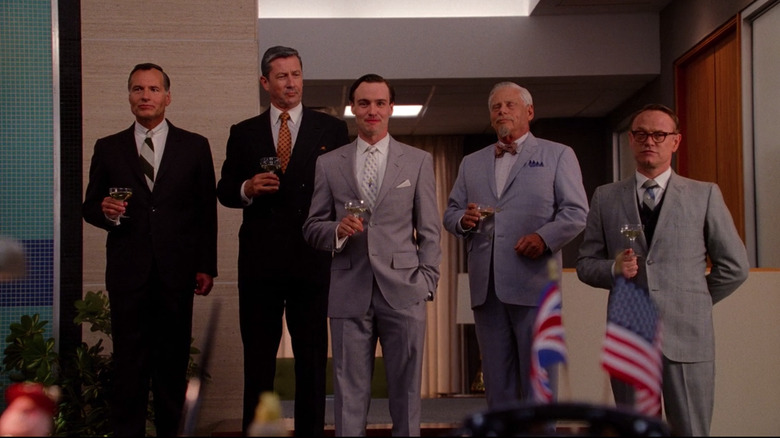
You wouldn't think "Mad Men" could stand alongside the best horror shows of all time, yet "Guy Walks Into an Advertising Agency" has as much gore as a typical episode of "The Walking Dead." Sterling Cooper is visited by their British owners, including Guy MacKendrick (Jamie Thomas King), a dashing young accounts man who's set to supersede Don. But a celebratory going-away party for Joan turns tragic when a secretary takes a new John Deere riding lawnmower for a spin.
Director Lesli Linka Glatter earned an Emmy nomination for this Season 3 episode, which is a marvel of suspense and payoff. Few could forget that spray of blood after the mower runs over Guy's foot, nor the shock from the Sterling Cooper employees after their office hijinks turn gory. But the true horror comes later on, when the partners at Putnam, Powell, & Lowe lament the end of Guy's promising career — not because he can't sell ads, but because he'll never golf again with a missing foot. It's a brutal reminder that in the world of "Mad Men," image is everything.
4. The Other Woman (Season 5, Episode 11)
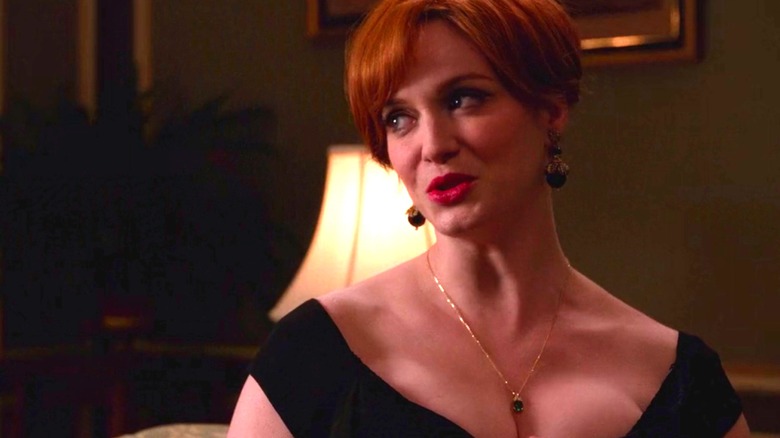
"The Other Woman" examines sexism with startling frankness, as both Peggy and Joan struggle to find their place in a male dominated world. Pete convinces Joan to sleep with a client so that SCDP can land a contract with Jaguar, and she agrees to do this in exchange for a stake in the company. Peggy, meanwhile, feels slighted when someone else gets credit for her Chevalier Blanc ad proposal, leading her to accept a job offer at a rival firm.
From the very first episode, Joan was presented as a sexual object, enduring the gaze of her male co-workers and struggling to assert herself at the company while carrying on a secret affair with Roger. The moment when Don arrives at her apartment to stop her from sleeping with the client — only for it to be revealed that she already has — is among the most heartbreaking scenes in all of "Mad Men," not just for what it means for her character, but for what it says about society. After all, how else is Joan supposed to climb the corporate ladder?
3. Commissions and Fees (Season 5, Episode 12)
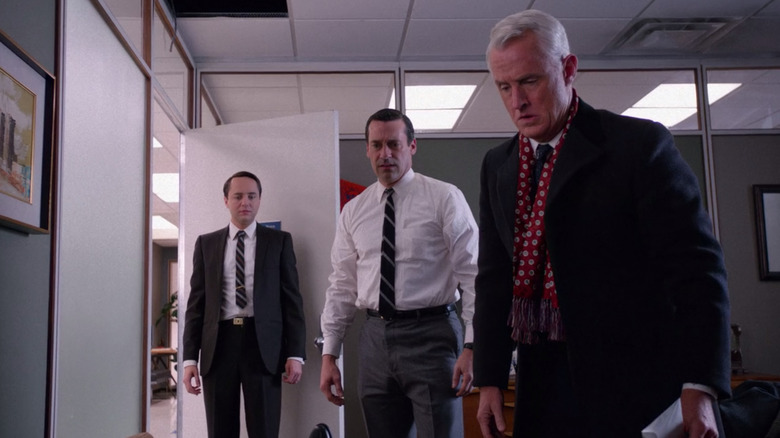
Season 5 of "Mad Men" is famous for one of the most shocking TV deaths ever, even if it was totally predictable. In "Commissions and Fees," Don discovers Lane's forged check and forces him to resign. After spending the rest of the day spiraling, he returns to the office and hangs himself, leaving behind his resignation letter to Don as a suicide note. In many ways, Lane's arc serves as a microcosm for all of "Mad Men," which is about how each of us crumbles when our carefully constructed facade slips.
Harris delicately balances the calamity and comedy of Lane's final day on Earth, as he falls flat on his face hitting on Joan and unsuccessfully tries to asphyxiate himself with the brand new Jaguar his wife bought for him. Lane's incompetence is a symptom of his world collapsing around him, and his inability to imagine a life outside Madison Avenue. That his undoing happens in the same episode where Don lands a lucrative contract with Dow Chemical shows how one man's tragedy is another man's triumph.
If you or someone you know is struggling or in crisis, help is available. Call or text 988 or chat 988lifeline.org
2. Shut the Door. Have a Seat. (Season 3, Episode 13)
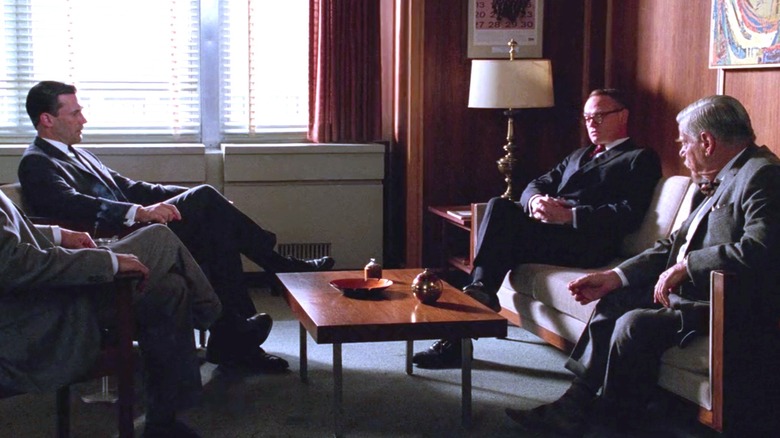
In "Shut the Door. Have a Seat," Sterling Cooper is in danger of being absorbed by a rival ad agency. Don makes a last ditch effort to save the company by starting a new one with Roger, Bert, and Lane. At the same time, he's unable to save his marriage, as Betty goes to Reno with her boyfriend to get a speedy divorce.
An Emmy winner for Matthew Weiner and Erin Levy's script, "Shut the Door. Have a Seat" is the best season finale the show ever had, as it encapsulates what made it so great. Whereas most finales were dark and bleak, the Season 3 send-off created tension and suspense by blending corporate upheaval with personal problems. In many ways, it plays almost like a heist movie, as Don and company scramble to create their new agency and take advantage of the London time difference to secure as many old clients as possible. Like most great "Mad Men" episodes, this one ends on a note of sadness, as Don leaves his family for good.
1. The Suitcase (Season 4, Episode 7)
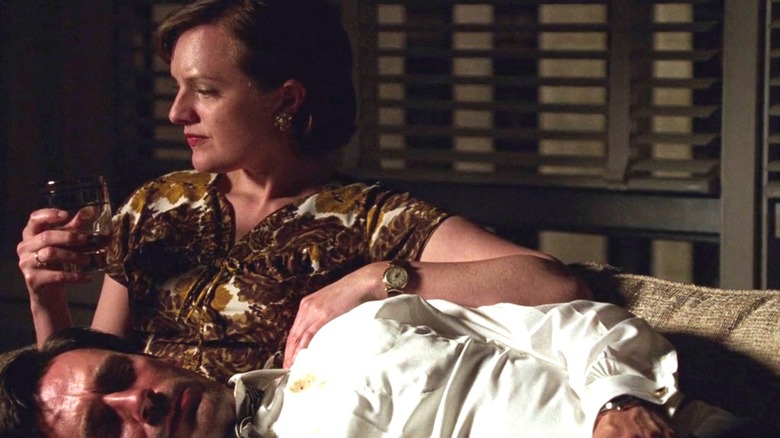
Although there are many great episodes of "Mad Men," there's one obvious choice for the very best: "The Suitcase." Season 4, Episode 7 finds Don and Peggy working late on an ad campaign for Samsonite while the rest of the office is watching the Ali vs. Liston boxing match. While Peggy blows off a surprise birthday party held by her boyfriend, Don avoids calling Stephanie, knowing she'll have bad news about her aunt's cancer diagnosis.
Matthew Weiner earned an Emmy nomination for writing "The Suitcase," which is hyper-focused on the dynamic between Don and Peggy. Over the course of one long night, Don and Peggy pour themselves into work (and the bottle) to avoid dealing with their personal commitments. Yet, as the episode makes clear, there's no one else they'd rather be with than each other. Don and Peggy's relationship, which grows in ways that are surprising and unexpected throughout seven seasons, is the engine that drives "Mad Men," and no other episode defined what they meant to each other better than "The Suitcase."