

10 Worst Plot Twists On The Twilight Zone, Ranked
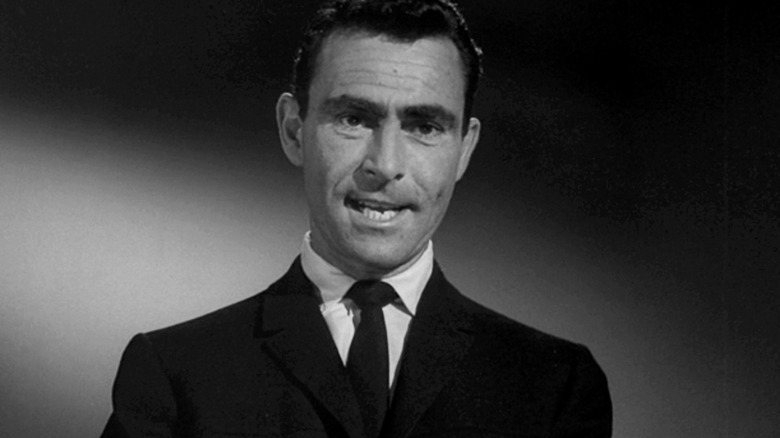
While "The Twilight Zone" may be regarded as one of the best TV shows of the 1960s, that doesn't mean the anthology series was flawless. While many episodes featured thought-provoking and haunting tales that explored the possibilities of imagination, some stories noticeably fizzled out. Many of those lackluster episodes hinge on plot twists that baffle, underwhelm, or otherwise fail to impress audiences in their execution. We've already covered the best "Twilight Zone" plot twists so now we're taking a look back at the series' weakest.
For the purposes of this list, we're keeping entries to episodes that were part of the original "Twilight Zone" series that we all know and love. If we included plot twists from the show's various revivals, they'd likely fill up the entire list instead. The classic series continues to overshadow its follow-ups for a good reason, though the episodes we're mentioning here certainly aren't as celebrated in its legacy. Here are the 10 worst plot twists on "The Twilight Zone" ranked, completely failing to stick the landing.
10. The 7th Is Made Up of Phantoms
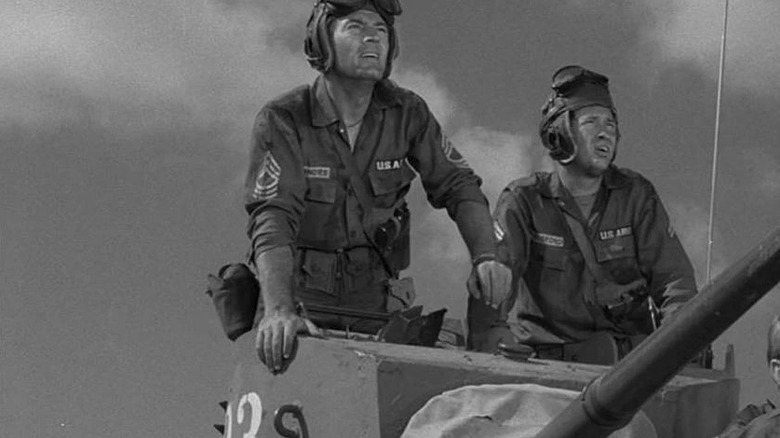
As much of a visionary as he was, series creator Rod Serling was still very capable of writing some of the weaker "Twilight Zone" episodes. This includes the fifth season episode "The 7th Is Made Up of Phantoms," which follows a contemporary National Guard armored unit. During a routine training exercise near the site of the Battle of Little Big Horn, the unit finds themselves transported back in time to the 19th century skirmish. The episode's twist has the soldiers' associates back in present-day shocked to see their missing comrades listed among the fallen troops from that battle nearly 90 years prior.
"The 7th Is Made Up of Phantoms" is one of the strangest stories that Serling wrote for "The Twilight Zone" and makes less sense the more one thinks about it. Even armed with game-changing modern weapons, the three men traveling back to 1876 appear to be no match for the historical battle. Also, the implications of having three soldiers with modern technology in the past and its impact on the timeline never comes into play. We might just be overthinking things, but "The 7th Is Made Up of Phantoms" just feels like a half-baked time travel story right down to its hollow ending.
9. In Praise of Pip
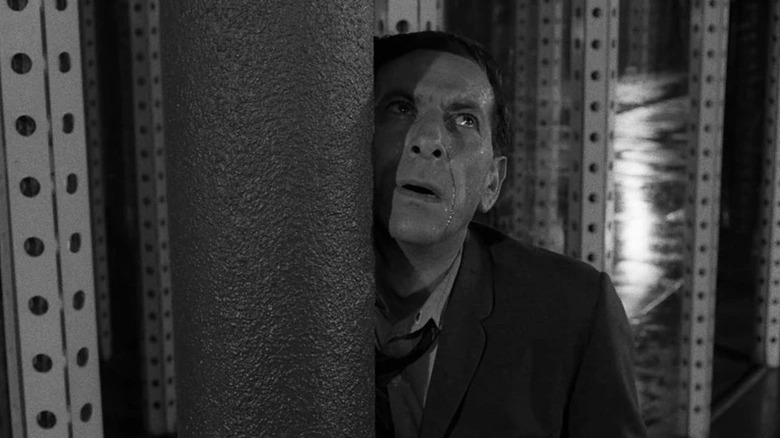
A deadbeat dad gets the chance to make things right with his son at the cost of his own life. That's the logline for the fifth season episode "In Praise of Pip," with negligent father Max Phillips (Jack Klugman) discovering his son Pip (Robert Diamond) is mortally wounded in Vietnam. Confronted by a vision of his son at a younger age, Max ultimately offers up his life in exchange for Pip surviving his wartime injuries. The episode's closing scene reveals Pip always thought highly of his father, despite his constant absence in his life, with Max's sacrifice successful.
In better hands, "In Praise of Pip" could've been a solid sentimental story about fathers and sons and lengths family goes for each other. Such as it is, the episode feels like a cloying attempt to tug at the heartstrings culminating in Pip commenting just how swell his old man was. "The Twilight Zone" could and did do sentimentality well, with the first season episode "Walking Distance" being the strongest example of this. "In Praise of Pip" feels like a tonal retread of that story, with diminishing returns made all the more clear by its weak ending.
8. Come Wander with Me
One of the best "Twilight Zone" plot twists is at the end of the first season episode "The Hitch-Hiker." The story has Nan Adams (Inger Stevens) realize that she's been dead for most of the episode while being stalked by Death (Leonard Strong) posing as a hitchhiker. The idea of a protagonist being dead all along as a plot twist was revisited several times throughout "The Twilight Zone" with diminishing returns. The most egregious use of this overdone trope is Season 5's "Come Wander with Me," one of the last installments of the classic series.
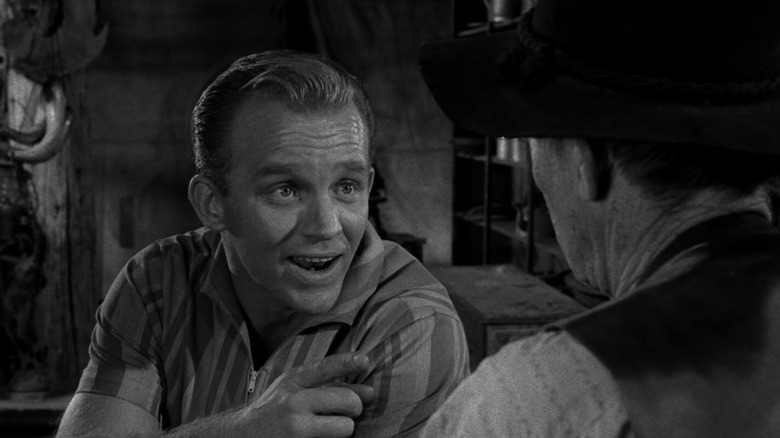
In this episode, singer-songwriter Floyd Burney (Gary Crosby) arrives in a small town as he searches for inspiration to compose his next tune. While finding a solid melody, Floyd finds increasingly disturbing evidence that he will die in this remote community. "Come Wander with Me" not only tells the viewer what kind of story it's going to be early on, but it becomes clear it doesn't quite know how it's going to get there. Clashing between a temporal loop tale and a story about accepting death, "Come Wander with Me" lacks any punch as it reaches its telegraphed conclusion.
7. The Last Night of a Jockey
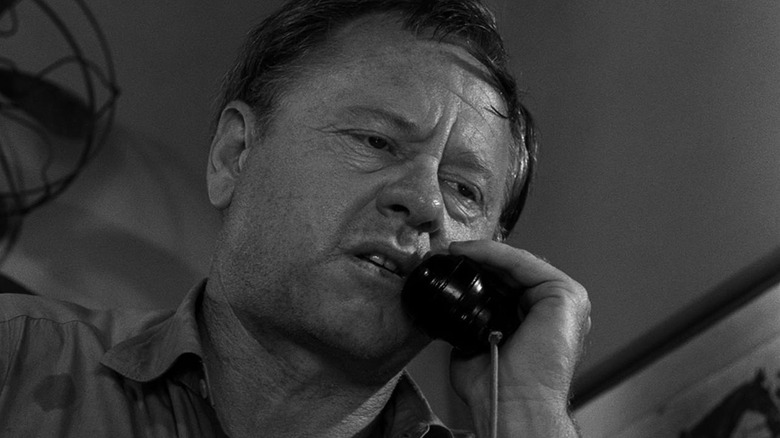
As painful as it is to admit, Mickey Rooney stars in one of the worst "Twilight Zone" episodes ever made. In Season 5's "The Last Night of a Jockey," Rooney plays disgraced horse jockey Michael Grady. Seemingly banned from the sport that made him a star, the diminutive Grady uses a magic wish to suddenly become eight-feet tall. This is followed by the twist that Grady's racing ban has been lifted, only for him to now be too tall to race as a jockey.
"The Last Night of a Jockey" isn't particularly funny and its closing twist lacks any discernible emotional content in its delivery. We never feel all that sorry for the boorish Grady over the course of the story nor do we take any punitive pleasure in his ironic comeuppance. The twist that Grady could've gotten his jockey back if he never changed his size just feels more pointlessly cruel than anything else. Rooney's considerable talents were wasted and, five seasons in, it was becoming increasingly clear that "The Twilight Zone" was nearing its natural end.
6. He's Alive
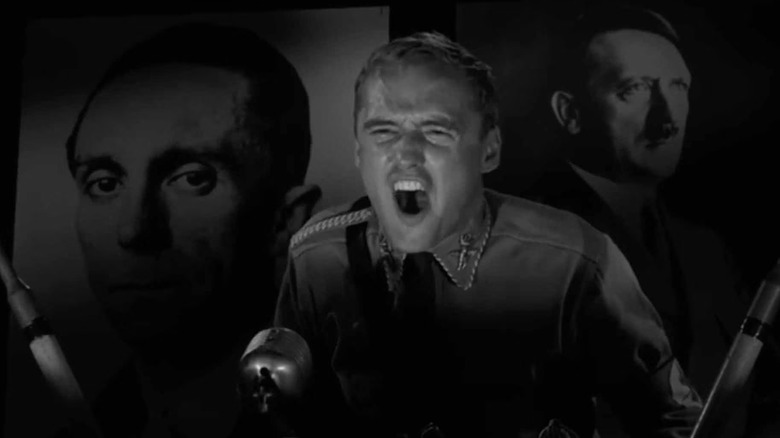
One episode that feels more timely than ever in today's volatile climate is the fourth season installment "He's Alive." The story centers on Neo-Nazi Peter Vollmer (Dennis Hopper), who initially struggles at attracting followers for his hateful views. This is changed by a shadowy benefactor who eventually reveals himself to be a seemingly immortal iteration of Adolf Hitler (Curt Conway). The story's twist is not only does Hitler live on but he keeps scouring the world for other figures to use as his mouthpiece on Earth.
To be clear, "He's Alive" is one of the scariest episodes of "The Twilight Zone" ever made, but its ending doesn't hold up. The Hitler reveal feels like a jump-the-shark moment for the story that raises more questions than answers as the bigoted despot continues on like a cloaked revenant. Admittedly, the inclusion of "He's Alive" is likely the most divisive choice here, but any time you bring literal Hitler into a story, you're running a big creative risk. The intense tale of staying vigilant in the face of vitriolic adversity is an important one but its puppetmaster antagonist is a bridge too far.
5. Cavender Is Coming
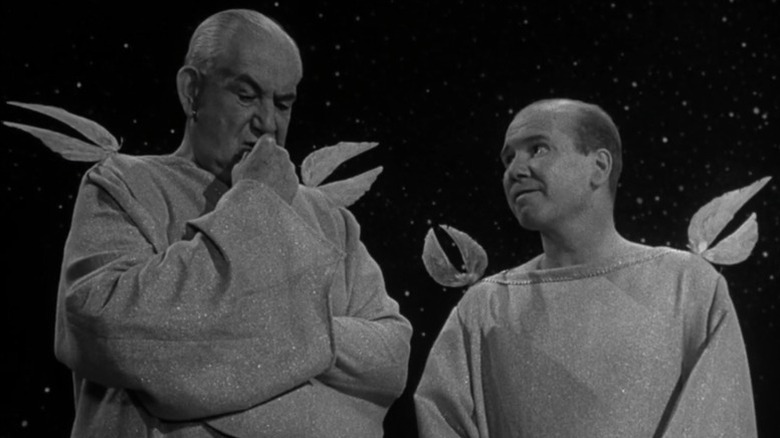
Unless it's a "Twilight Zone" Christmas episode, the series should steer far, far away from stories involving guardian angels. This case is clearly, if inadvertently, articulated by the decidedly non-yuletide episode "Cavender Is Coming" from the show's third season. The story has guardian angel Harmon Cavender (Jesse White) assigned to improve the life of clumsy young woman Agnes Grep (Carol Burnett) within 24 hours. In the end, Cavender and his angelic superiors realize that material wealth is not a guarantee for happiness as Agnes finds an improved life on her own terms.
Look, Carol Burnett is one of the most influential figures in television comedy, with "The Carol Burnett Show" winning dozens of Emmy Awards alone, but she can't save this episode. In her defense, the episode's overall lackluster quality really isn't her fault, but just the story's overall uninspired writing. The closing suggestion that angels wouldn't understand that friendship and appreciation far outvalues tangible changes is laughably short-sighted. Burnett deserved much better material than "Cavender Is Coming" and the episode itself feels like a tale better suited for a cheap holiday special.
4. The Mighty Casey
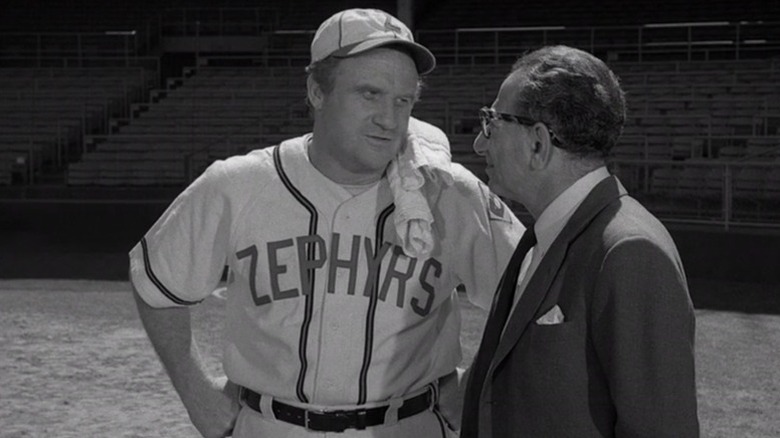
Another clunker written by Rod Serling is the first season episode "The Mighty Casey," mixing sci-fi with classic baseball. The story is named for robotic ballplayer Casey (Robert Sorrells) whose artificial body makes him an unbeatable pitcher. After Casey's mechanical nature is discovered, he is banned from the league unless he can be made to be more human. The big twist is that, in becoming more human, Casey is too compassionate to be merciless when pitching against opposing teams.
The question is what exactly is the big takeaway here –- is it that compassion and competition don't walk hand-in-hand? More likely is that "The Mighty Casey" is another attempt by Serling at telling a funny story, with its twist serving as the punchline. The problem is that this story isn't all that funny and its sci-fi elements aren't all that interesting either. Arguably the weakest episode in the first season of "The Twilight Zone," "The Mighty Casey" strikes out on what already feels like an uninspired premise.
3. I Dream of Genie
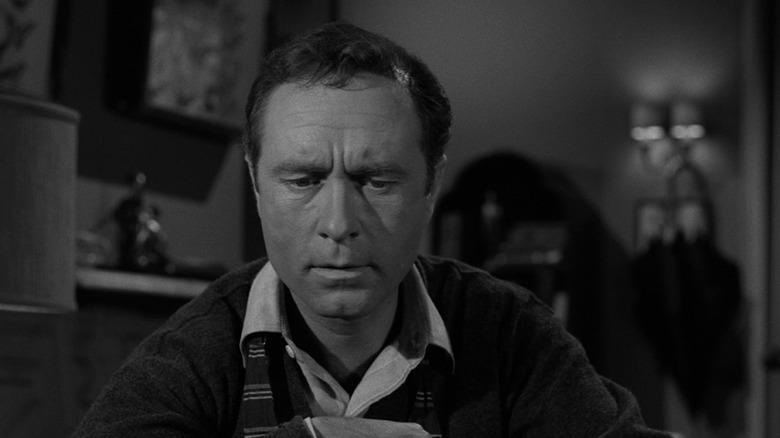
Many "Twilight Zone" protagonists are downtrodden and meek figures who find themselves in extraordinary circumstances to emerge from their respective personal shells. In the case of Season 4's "I Dream of Genie," the outlandish scenario involves office worker George P. Hanley (Howard Morris) discovering a magic lamp. Only offered one wish as opposed to the usual three, much of the episode has George overthinking his way out of the dreams he could have fulfilled. The story's twist is that George uses his wish to transform into a genie himself, now dispensing wishes to others.
Another example of "The Twilight Zone" trying and failing at telling a funny story, "I Dream of Genie" is the series at its most forgettable. That George is content at a life of servitude as a genie feels more depressing than providing a funny punchline to this fantasy tale. George is a born loser and there's a self-acceptance of that sad-sack state that forms the basis of the whole story. We don't really get to see the little guy win at the end of "I Dream of Genie," as much as the episode's closing scene tries to convince us otherwise.
2. The Bard
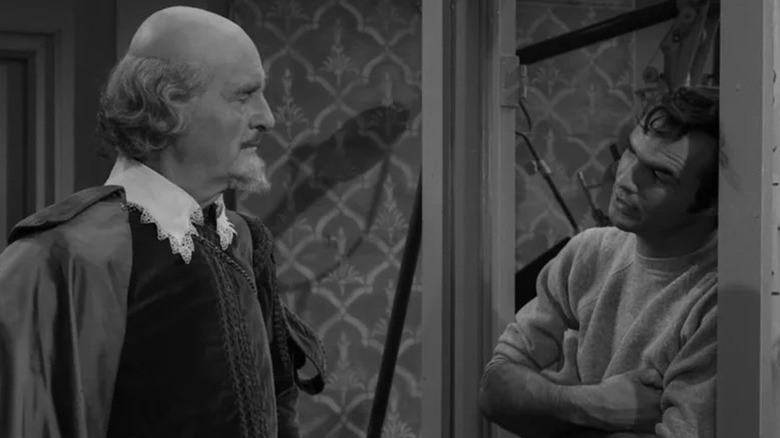
Among the major movie stars who appeared on "The Twilight Zone" is Burt Reynolds, guest-starring in the fourth season episode "The Bard." Reynolds plays an egotistical actor named Rocky Rhodes, working with struggling screenwriter Julius K. Moomer (Jack Weston) on a television series. Using black magic, Moomer summons William Shakespeare (John Williams) as his co-writer, with Shakespeare clashing with Rocky and the network's revision notes. The plot twist reveals Moomer hasn't learned anything from this ordeal, summoning historical figures to work with him as creative consultants.
There's just something off whenever "The Twilight Zone" leans into overt humor, unable to retain its usual storytelling charm. In these instances, the closing plot twist is usually one last punchline rather than anything more intriguing with its premise. This is especially true of "The Bard," even as the episode tries to depict a sharp satire of the television industry. At the end of the day, "The Twilight Zone" isn't all that funny and "The Bard" and its last gag cements that distinction.
1. From Agnes - With Love
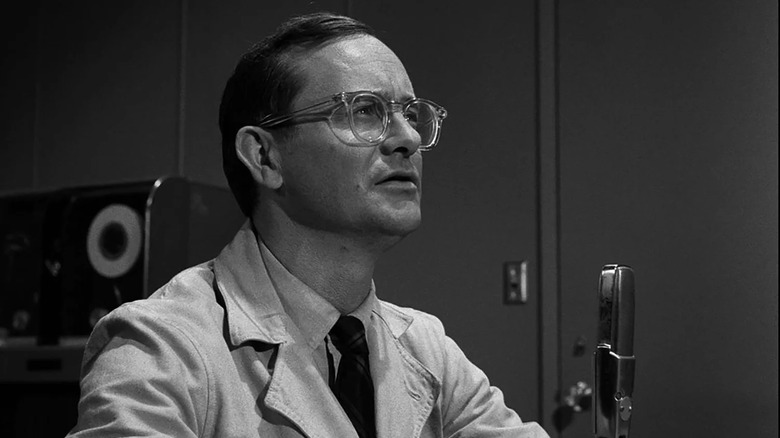
"The Twilight Zone" is one of the best sci-fi anthology TV shows of all time, but some of its science fiction concepts are dead on arrival. The series' sci-fi story that landed with the biggest thud was Season 5's "From Agnes – With Love." The episode centers on computer specialist James Elwood (Wally Cox) as he works with an advanced supercomputer nicknamed Agnes by its programmers. Elwood discovers that Agnes is deliberately trying to sabotage his dates, with the big twist being that the supercomputer is not only sentient but has fallen in love with him.
Being a show that was often so forward-thinking for its era, it's always unfortunate to remember that "The Twilight Zone" is also a product of its time. With "From Agnes – With Love," the show provides a story that's built around a misogynistically comedic premise that's neither interesting nor funny. Seeing how jealous the supercomputer gets and the twist that Elwood's romantic rival has been assigned to oversee Agnes instead is just more eye-rolling than anything else. That Agnes doesn't even get murderous over its jealousy robs "From Agnes – With Love" of any sense of peril and anything that could've made it at least compelling.