

10 Scariest Episodes Of The Twilight Zone, Ranked
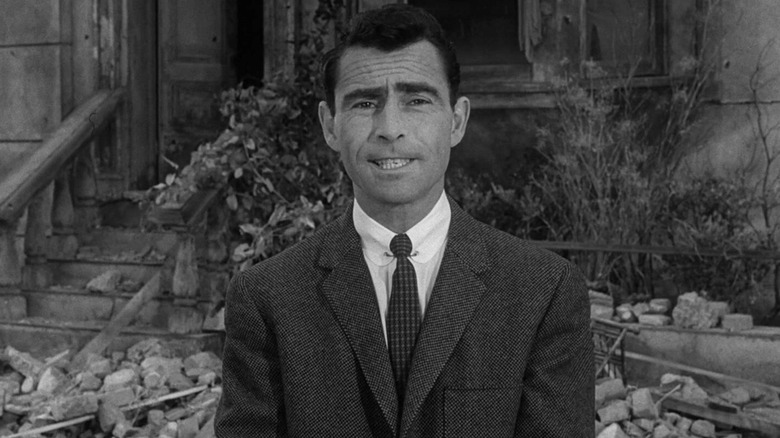
There's just something about "The Twilight Zone" — the Rod Serling-created anthology series that aired from 1959 through 1964 — that remains elementally frightening. While Serling's work was rooted in the anxieties of the time, especially the psychological remnants of World War II and the silent threat of nuclear war, its use of supernatural and genre elements cut through any didacticism and left the viewer absolutely bewildered.
Some episodes are masterpieces of science fiction. Some are even great to watch during Christmas. But now, let's get ready to get spooked by the 10 scariest episodes of "The Twilight Zone," ranked in order of frightfulness.
10. The Shelter (Season 3, Episode 3)
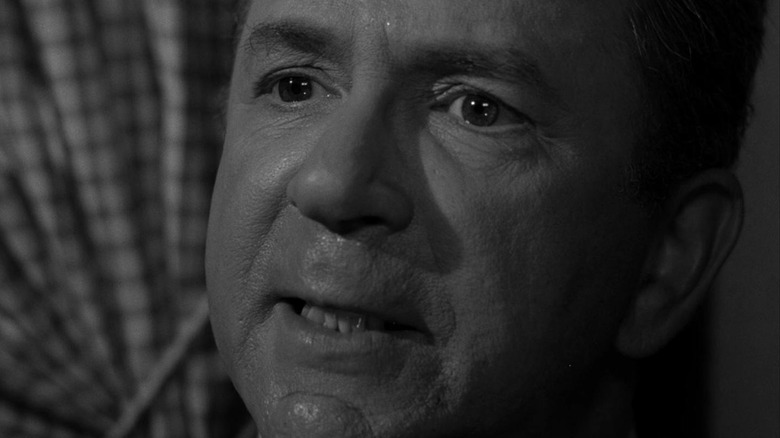
A rare "Twilight Zone" episode without any hard-genre element, "The Shelter" is an excoriating and terrifying episode because of its directness. To make his fierce point about his fellow man's propensity for paranoia and violence during the Cold War, Rod Serling had no use for allegory. It's a full-throttle shaking of the audience's shoulders, a wake-up call that gets under the skin and stays there.
In the Season 3 episode, Dr. Stockton (Larry Gates) has a birthday party with his family (Peggy Stewart as his wife, Michael Burns as his son) and several friends. Then, a radio announcement seemingly confirms that nuclear weapons are screaming toward the United States. Dr. Stockton has a shelter in his basement, but it can't fit everyone.
With this simple premise established, Serling turns the screws, giving his actors ample room to explore the rawest mutations of base survivalism available to a human being. It's melodrama of the highest and scariest order, and Dr. Stockton's final conclusions define the lingering existential horror with miserable accuracy.
9. Shadow Play (Season 2, Episode 26)
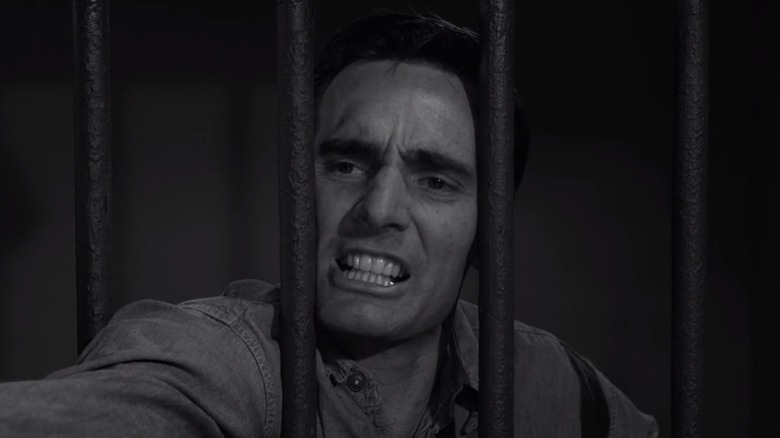
For the show's second season, Charles Beaumont adapted his own short story "Träumerei," or "Daydream," into "Shadow Play," an episode that asks us to believe an accused murderer, no matter how outlandish his claims may seem. After all, his claims involve our very existence.
The accused in question, Adam Grant ("Gunsmoke" star Dennis Weaver), is convicted by a jury and sentenced to death. But instead of accepting his fate, he breaks down and screams to the entire courtroom that none of this is real. Adam is dreaming; everyone around him is a figment of his subconscious. And if he dies in the dream, everyone else will die, too.
An absurd Hail Mary defense that not even Johnny Cochran would endorse? Maybe so. But Adam's protestations and troublingly accurate descriptions of his previous deaths begin to agitate those who've heard them, leading to an eradication of guardrails on systemic and personal levels.
"Shadow Play" is so disquieting and frightening because of its willingness to gnaw at a question many people try to ignore: What is reality? Combine that with the grimness of a murder, the psychological destruction of figures we're supposed to find infallible, and the harrowing ending moments, and you've got a "Shadow Play" that will fester long after the curtain falls.
8. Night Call (Season 5, Episode 9)
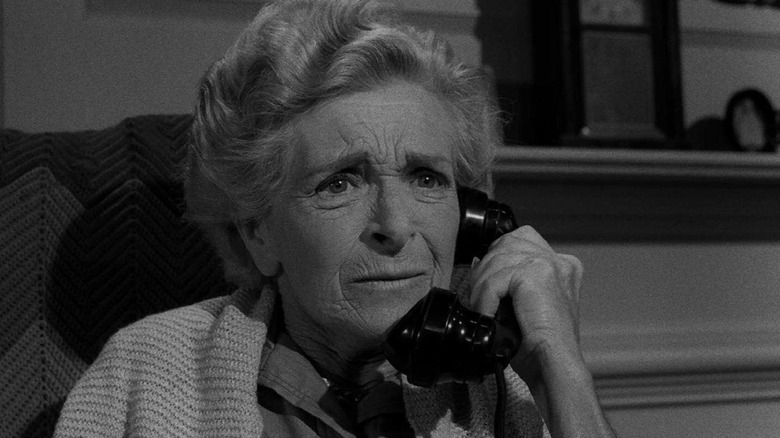
First, a little arcane "Twilight Zone" history. The episode "Night Call" is adapted by sci-fi and horror maestro Richard Matheson from his own short story, known both as "Sorry, Right Number" and "Long Distance Call." There is another "Twilight Zone" episode called "Long Distance Call," but it's not an adaptation of the story, hence the need to change this episode title to "Night Call." And somehow, none of this confusion is the scariest part of the episode!
In this Season 5 banger, Gladys Cooper plays an elderly widow who lives alone. She keeps receiving phone calls from an unknown source. First, these calls are silent, punctuated only by static. Then, a male voice begins to speak. "Hello? Where are you? I want to talk to you."
Who is this mysterious caller? Why does he want to talk to Cooper? Can the madness ever end? These questions are definitively answered, in ways different from Matheson's original story, and the answers are so devastatingly horrifying that they border on cruel. It turns Matheson's work into one of the best and most affecting gothic horror stories of recent years, one that will tickle fans of Matt Flanagan or M. Night Shyamalan.
7. He's Alive (Season 4, Episode 4)
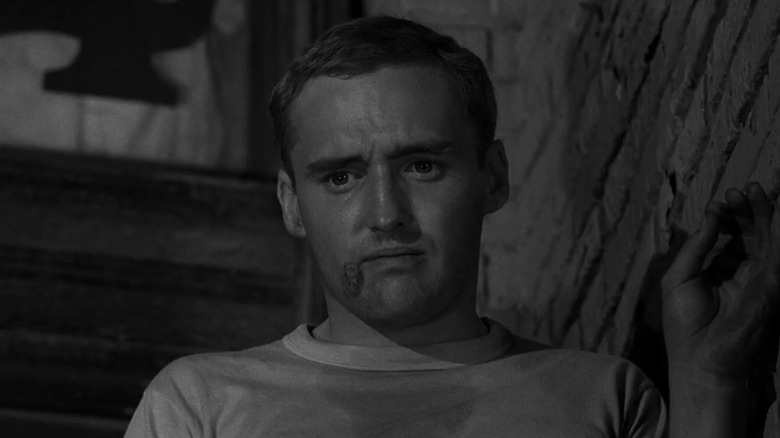
Let's not bury the lede: The titular "He" in Season 4's "He's Alive" is Adolf Hitler (Curt Conway). If an episode where Adolf Friggin' Hitler comes back from the dead isn't scary enough for you, gird yourself for what comes next.
The great, often terrifying Dennis Hopper plays a neo-Nazi struggling to find followers in a small American town that, thankfully, doesn't like what he's selling. Until ol' Ghost Hitler comes apparating in, that is, sensing a corporeal mouthpiece to funnel his still-fermenting hate through.
Rod Serling uses this ghastly premise to explore how fascism can strengthen, clawing its hooks into human susceptibilities like bloodlust and storytelling. It's harrowing to see Hopper's character delve further and further into the pitch-black heart of hatred; it's downright soul-crushing to see his American town fall for the grift.
And it's all absolutely nerve-shredding, terrifying stuff, a perfect combination of hard genre thrills and historically-based social commentary. It's one of Serling's finest hours.
6. The After Hours (Season 1, Episode 34)
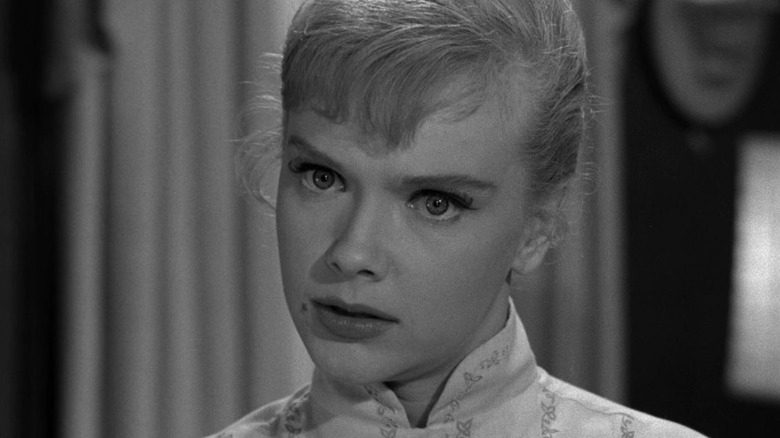
Originally airing in the first season, "The After Hours" might give contemporary analog horror fans of things like "The Backrooms" a particularly intriguing kind of jolt.
In the Rod Serling-penned episode, Marsha White (Anne Francis) visits a department store, seeking a gold thimble to give as a present to her mother. A mysterious elevator operator (John Conwell) instructs her to go to the ninth floor, even though that floor doesn't seem to exist. She heads there regardless. And things slowly get creepier and creepier the further she explores.
This is the stuff of classic ghost stories, starting with its insidious corruption of something we all find familiar: shopping. It also explores and helps codify the idea of liminal spaces, those interdimensional areas that seem simultaneously familiar yet alien, like a ninth floor that doesn't have an elevator button.
Naturally, the ending involved a trademark "Twilight Zone" plot twist, one that melds together horrifying with the tragic, and even bittersweet, making "The After Hours" quite the shopping experience.
5. What's in the Box (Season 5, Episode 24)
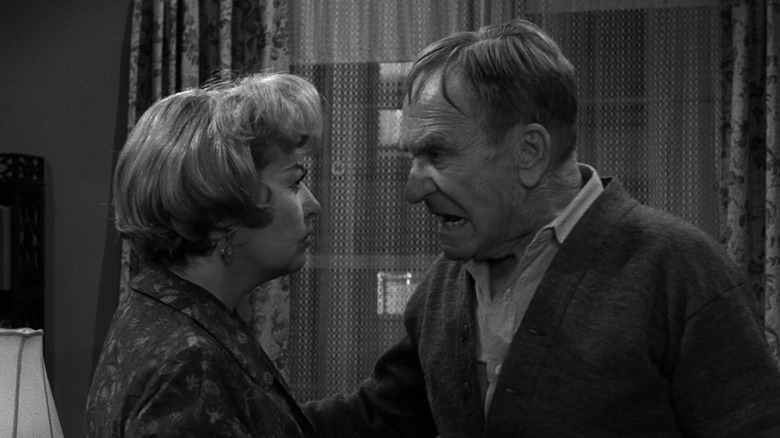
No, we're not talking about Brad Pitt screaming at the end of "Se7en." This Season 5 episode, "What's in the Box," refers to the television set itself. Television has long been one of our most self-reflexive mediums, especially in its early history, and writer Martin Goldsmith uses his teleplay to interrogate the idea that we all let such a powerful device into our most intimate places. That he fuses it all onto an irresistibly high-concept piece of horror storytelling is just icing on the cake.
A married couple (Joan Blondell and William Demarest) is having issues. Arguments, accusations, violent outbursts — these are all unfortunately par for the course. One day, they have a TV repairman (Sterling Holloway) over to fix their set, and they antagonize him, too. The repairman fixes the set and tells them it's on the house. And now, the married couple gets a new, mysterious channel...
What's shown on the channel is brutal, a domestic horror story that channels (pun fully intended) the works of auteurs like Ingmar Bergman or Michael Haneke, with more than a twist of the macabre. The final fate of the couple is beyond satisfying from a storytelling perspective, but downright horrendous from a "human decency" perspective.
4. The Hitch-Hiker (Season 1, Episode 16)
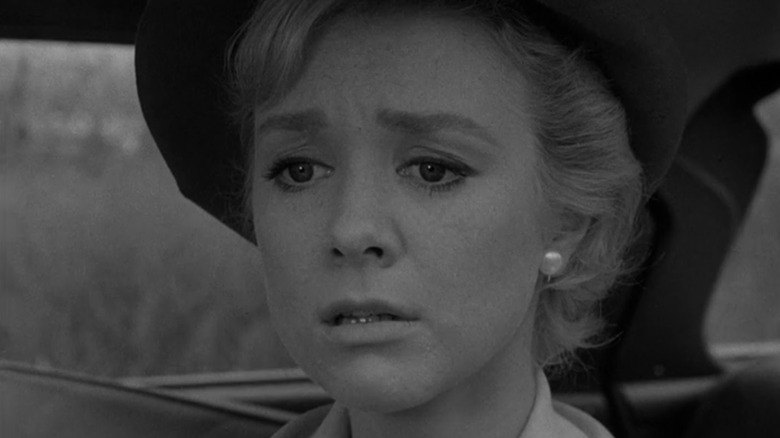
Rod Serling, adapting an acclaimed radio play by Lucille Fletcher, takes another universal, even primal fear — what if someone was following you? — and heightens it to an existential realm. If you have to drive soon, "The Hitch-Hiker" will make you look over your shoulder.
Originally airing in the first season, "The Hitch-Hiker" stars Inger Stevens as Nan Adams, a young woman driving across the country. When she survives a harrowing accident, she notices a single hitchhiker (Leonard Strong) nearby. When she gets back on the road, she notices him again... and again... and so many more, increasingly implausible times. This one man's appearance begins to torture her, endangering her and other cars on the road. Who is he, and what does he want with her?
The episode ain't just "It Follows" meets "Fast and the Furious" (though when it is more-or-less doing that, it's very good at it). In the great tradition of "Twilight Zone" episodes, the terror takes on a literary quality, cleanly metaphorizing the impending and unending pall of death that waits for us all. Thumb out. Asking for a ride...
3. Living Doll (Season 5, Episode 6)
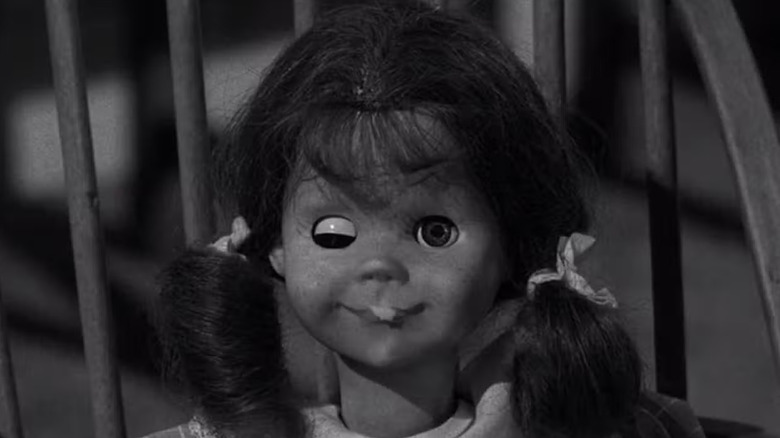
"My name is Talky Tina... and I'm going to kill you."
Imagine you're the stepfather (Telly Savalas) of a young girl (Tracy Stratford). You're trying your best, but you have a lot of problems and a lot of anger. Your wife (Mary La Roche) buys your stepdaughter a new doll called Talky Tina. And one day, you hear Talky Tina say these threatening words to you, in a voice that sounds an awful lot like an uncredited June Foray. What would you do? And will anyone believe you?
Thus, the compelling and nerve-shredding drama of "Living Doll," written by an uncredited Jerry Sohl, ensues. A sentient doll that wants very badly to murder you is scary enough. But Sohl's script, and Savalas' devastating performance, move beyond any ceiling of genre conventions because of their focus on interpersonal relationships. There's a real, ugly rot at the center of the family dynamics before the doll enters the picture; the doll just kicks up all the dust and makes us all breathe it in. It makes for a truly gut-wrenching, and downright scary, watch.
2. Escape Clause (Season 1, Episode 6)
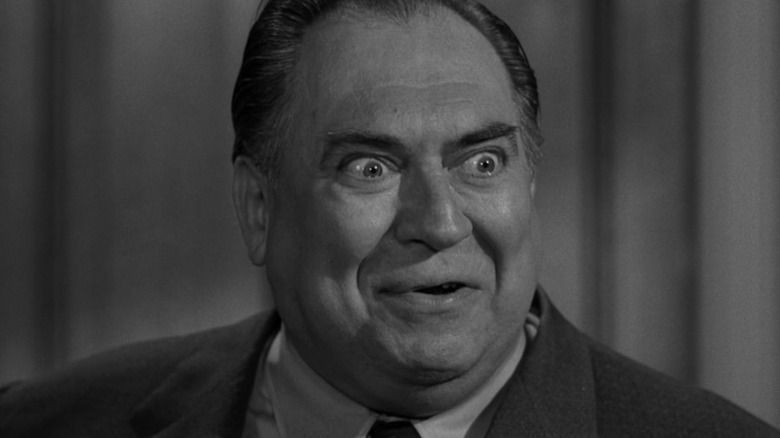
"Escape Clause" is like if "Double Indemnity" was invaded by the literal Devil. Rod Serling's first-season episode is a noir-horror that pushes some of the jet-black absurdism prevalent in, of all things, "Groundhog Day" into the grotesque. It's supernatural, yes, but its most chilling component may be the very human sociopathy at its center.
This sociopath is Walter Bedeker, played fearlessly by David Wayne. But he begins the episode at his lowest point, a sniveling paranoiac convinced his wife (Virginia Christine) is trying to poison and kill him. Then, the aforementioned Literal Devil (Thomas Gomez) arrives to offer Walter the deal of his dreams. For a price, of course.
Walter's character turn is sharp, vicious, and amoral. He just might represent Serling's cynical point of view that when humanity takes one sip of pure evil, they'll do anything to keep their beak wet. But it's not just evil that Walter is tempted by. It's a kind of bored, laissez-faire level of hedonism and destruction that powers his actions and gives the episode its particularly potent ending. It's likely Serling's bleakest script, a work of nearly pure dread.
1. It's a Good Life (Season 3, Episode 8)
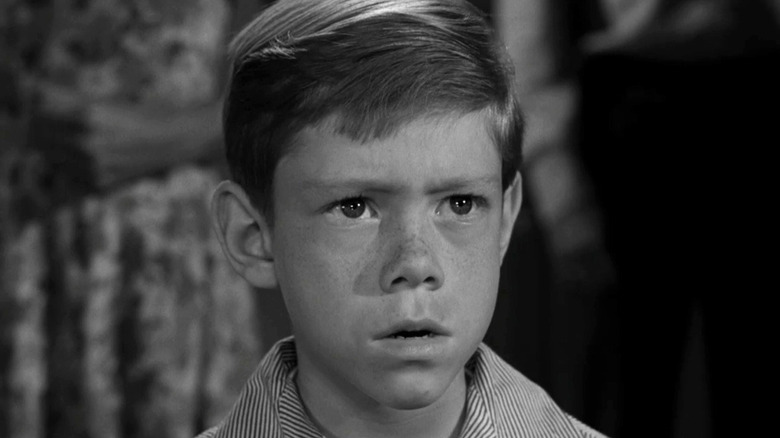
"It's a Good Life" is easily the scariest "Twilight Zone" episode. Based on a short story by Jerome Bixby, Rod Serling's Season 3 episode takes what should be the paragon of innocence — a bright, smiling child pursuing happiness — and contorts it into abject evil, pain, and downright cruelty.
The bright, smiling child in question is Anthony Fremont (Bill Mumy). But Anthony isn't just a kid. He's a malevolent God, a seemingly omniscient ruler of a small town in Ohio. The adults who live there, including his parents (John Larch and Cloris Leachman), cower in fear, hiding their agony behind a smile. Anthony must be constantly placated and assured that everything is good. Or the town will suffer the consequences.
There are elements of body horror in "It's a Good Life." The doesn't doesn't shy away from portraying the psychological torturing of its characters, an assertion that power-hungry authoritarianism can begin early in one's life, and the big, existential terror that comes with musing about a God who doesn't care about, or actively hates, us. Serling fused as many terrifying things as possible in "It's a Good Life," creating an iconic chapter of horror television in the process.