

15 Smartest TV Lawyers Of All Time, Ranked
The legal drama is only as good as the lawyers who keep it alive. From the days of "Perry Mason" and "Matlock" to "Better Call Saul" and "Suits," the genre has been a machine for creating iconic characters because of what it takes to be a truly brilliant lawyer: cunning and creativity, extraordinary intelligence, charisma, and sheer grit. The smartest lawyers aren't the ones who can cite the most case law or charm the jury — they're the lawyers who use everything at their disposal to deliver for their clients.
On TV, this often means breaching the boundaries of strict legal ethics — a few angels didn't make the cut for this list, while several borderline evil attorneys worked their way in. We're not making judgments about morality. We're looking at effectiveness and results, while admittedly contending with decades of conflicting TV legal logic. Across more than half a century of courtroom battles, these 15 lawyers are at the top of the pack.
15. John Cage (Ally McBeal)
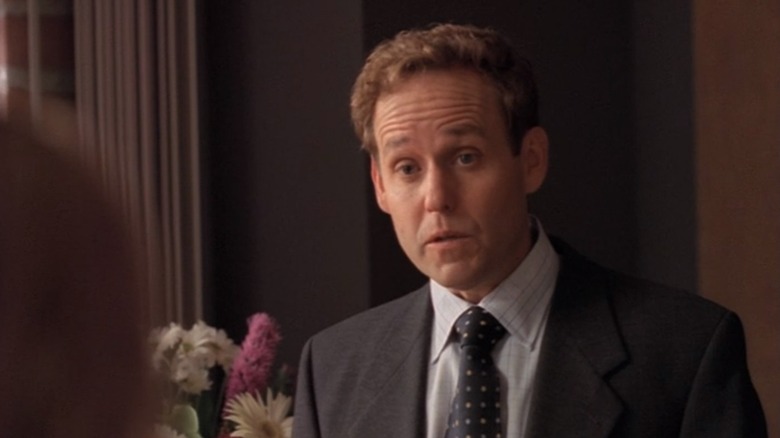
TV audiences were first introduced to Peter MacNicol's John Cage in 1997, during the first season of "Ally McBeal." Though he is obviously not the titular character of the series, he is one of the name partners at the law firm that hires Calista Flockhart's beloved Boston attorney.
For the uninitiated, "Ally McBeal" is as much a broad romantic comedy as it is a legal procedural. We have to grade Cage on a bit of a curve as a consequence. Outside the courtroom, he's awkward, neurotic, and clumsy — but when he steps inside the halls of justice, he might as well be Barry White. He's got the charisma and presence to go toe-to-toe with flashy showmen who just missed the bar for this list — including Harvey Specter ("Suits") and Jeff Winger ("Community"). He clears them because he can charm a jury just as effectively and has the raw intellect to back it up.
He's only weak when the show is. His argument in favor of workplace romances in "Pyramids on the Nile" (in which Cage uncomfortably discloses his prior sexual relationship with his co-counsel) doesn't come across as smart outside a fictional universe that prioritizes love above all.
14. Ben Matlock (Matlock)
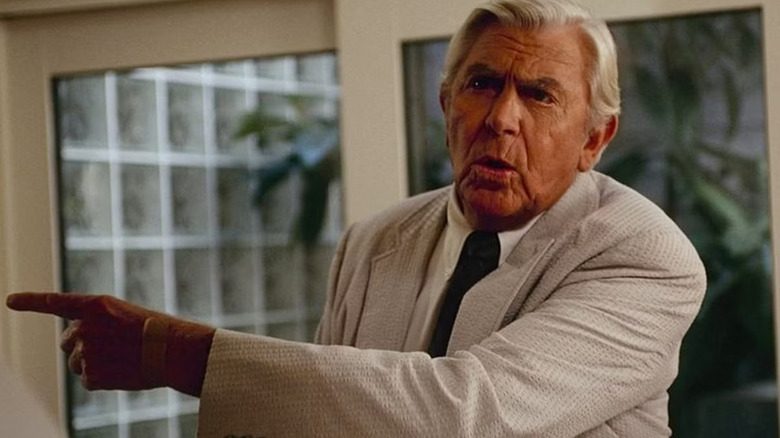
Easily one of the most famous fictional lawyers of all time, Andy Griffith's Ben Matlock was a television staple throughout the mid-'80s and '90s. He made "Matlock" an influential legal drama. He was known for his fashion sense, his affinity for hot dogs, and his quarter-million-dollar retainer (when adjusted for inflation).
If you asked his clients, most would say the fee was well worth it. A 2026 study conducted by Underwood Law Firm (and reported by the ABA Journal) found Matlock's win rate to be 97.1% (136 of 140 cases). It's unlikely this is a complete picture — it's not like we get to see every case Matlock argues, and the ones he loses presumably wouldn't make good television. Still, in the world of television, he was depicted as nigh-peerless in terms of legal dominance.
What are the secrets to his success? First, Matlock has impeccable character judgment and usually defends clients only if he feels they are actually innocent. Second, Matlock is an equally skilled investigator — he surveys crime scenes personally and consistently finds clues the police failed to see. John Cage and Ben Matlock are both eccentric attorneys with surprisingly formidable courtroom skills, but Matlock's theories come from personal investigation, and his record is longer, stronger, and better documented.
13. Maurice Levy (The Wire)
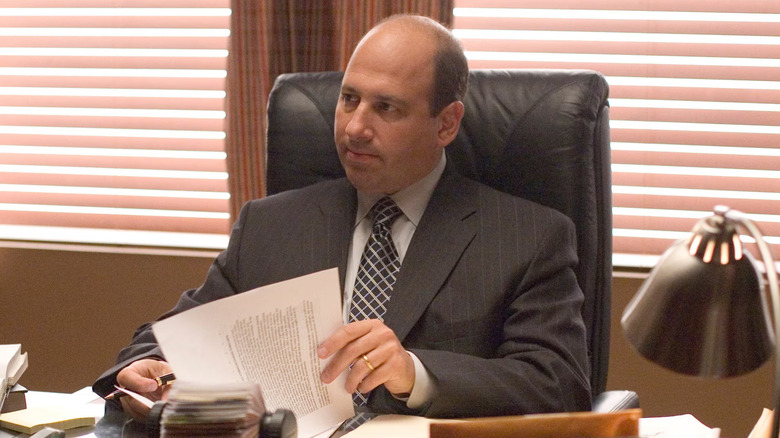
Of course, in the world of television, it's historically been pretty easy for upstanding lawyers to defend innocent clients. The moral arc of the writers' room normally bends toward justice. It's a lot rarer that a defense attorney is capable of defending guilty clients with consistent success. Enter Maurice Levy.
Michael Kostroff's character is introduced in the very first episode of "The Wire," in which he manages to get D'Angelo Barksdale (the nephew of Baltimore drug kingpin Avon Barksdale, played by Larry Gilliard Jr.) acquitted on a murder charge. It's only the first time he catches the local justice system with its pants down. Later that season, he negotiates a light seven-year sentence for Avon Barksdale (Wood Harris) on significant drug charges — then helps get him out just a year later on early parole. Levy's real stroke of genius comes late in the series while he's in the employ of Marlo Stanfield (Jamie Hector).
When Stanfield is arrested, Levy realizes that Baltimore P.D. had been using an illegal wiretap in its investigation — he uses this detail not only to free Stanfield but also to protect himself from prosecution. The only caveat is that there isn't much evidence of his brilliance outside such morally bankrupt cases, where illegality and criminal connections provide unique advantages.
12. Ted Hoffman (Murder One)
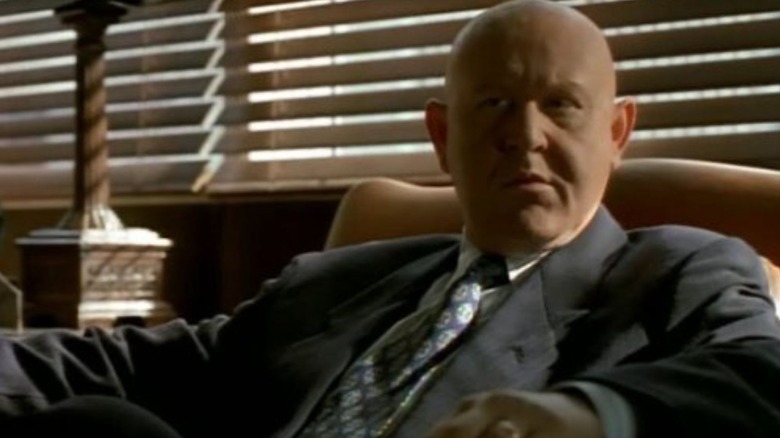
In 1995, when court procedurals were decidedly episodic, ABC's "Murder One" dedicated the vast majority of a 23-episode season to a single case, defended by Ted Hoffman (Daniel Benzali). This protracted format is both more realistic (given the lengthy timeline of many major court cases) and beneficial to depicting the sustained intellectual warfare of defending a seemingly hopeless client.
Hoffman is hired to defend Neil Avedon (Jason Gedrick), a movie star on trial for the murder of his 15-year-old girlfriend's sister. The process forces Hoffman to contend with institutional corruption, extraordinary and calculated influence peddling, and a genuinely reprehensible client. He still wins, not by lowering himself to Maurice Levy's level but by refusing to let even an initial guilty verdict prevent him from cornering his enemies into revealing the truth. Benzali was fired after Season 1 as the network reportedly searched for a bigger star — and so went one of TV's most fascinating, underrated lawyers.
11. Victor Sifuentes (L.A. Law)
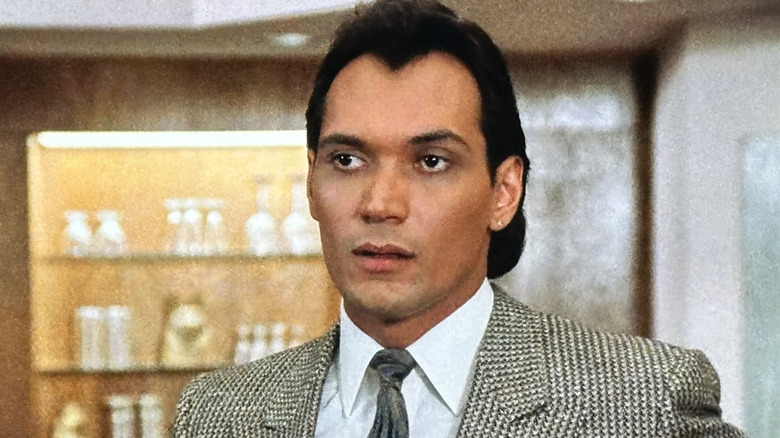
Coincidentally, Steven Bochco, who co-created Ted Hoffman and "Murder One," also co-created "L.A. Law," which introduced Victor Sifuentes, with Terry Louise Fisher. Jimmy Smits starred as the character in the first five seasons of the show — two of which David E. Kelley served as showrunner. During the series' dominant run on NBC, Smits won an Emmy for his performance.
The actor earned another honor during his tenure — an award from the National Hispanic Bar Association, which recognized how Sifuentes shaped the perception of Hispanic lawyers in the real world. (Legal dramas can be incredibly meaningful for those considering a future in the law — a 2022 study from EM Law found that over half of the legal professionals surveyed were influenced by portrayals on TV.) His cross-examination in "Justice Swerved" is structurally elegant and built on real case knowledge. When the stakes are highest — like when he's defending his childhood friend from a death sentence in "The Last Gasp" — audiences get to see how much of the law he's mastered.
10. Annalise Keating (How to Get Away with Murder)
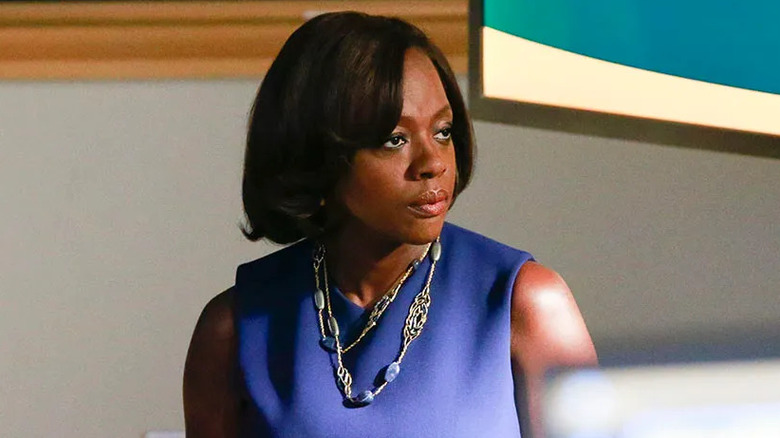
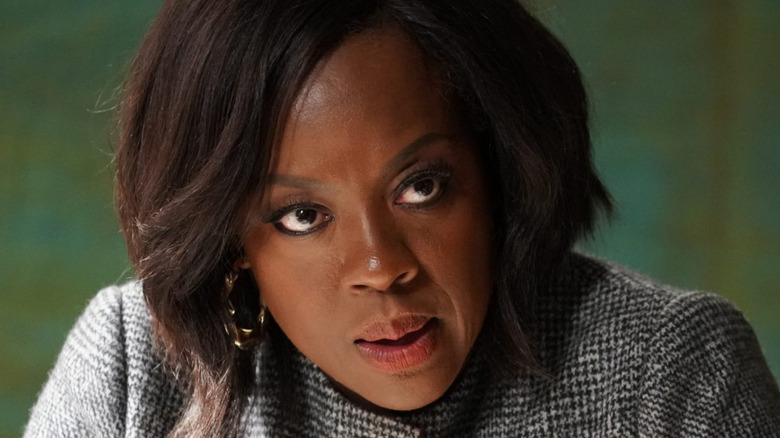
Viola Davis' Annalise Keating is often either underrated or overrated because of her unconventional approach to the law. She's kind of a righteous bully in and out of the courtroom, primarily using her talent for psychological manipulation and narrative control to get her way. Critics argue this isn't so much legal prowess as it is manipulation of the justice system for the greater good — fans argue that's precisely why her strategy is more effective than any other lawyer's.
We land somewhere in the middle, though we'd emphasize that Keating's objectively exceptional legal skill is overlooked. The crossover between "How to Get Away with Murder" and "Scandal" actually allows her to shine as an attorney in earnest. She argues before the U.S. Supreme Court that the underfunding of public defenders is an urgent civil rights issue tied to systemic racism and the legacy of slavery — and she does it with an undeniably moving speech that turns an opposing justice's own prior arguments against him. She's one of the few TV lawyers depicted winning a U.S. Supreme Court case on constitutional grounds.
9. Mickey Haller (The Lincoln Lawyer)
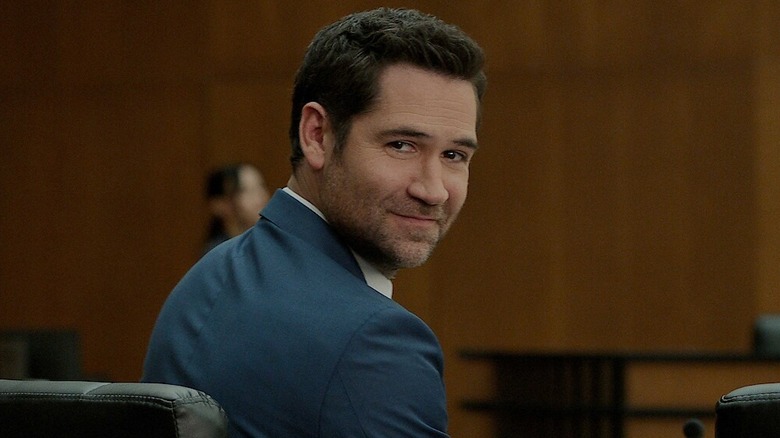
The first thing most people learn about Mickey Haller (Manuel Garcia-Rulfo) is his calculated efficiency. For those who've never seen "The Lincoln Lawyer," Haller earned the nickname because he runs his Los Angeles law practice out of a Lincoln. It isn't because he's short on cash — it's because he did the math and realized his practice would be more efficient if he remained on the move. That tells you everything you need to know about him.
Unlike most TV lawyers, Haller's primary strength isn't showmanship but a patient dedication to working each problem as it arises while focusing his energy on the battles he knows he can win. That doesn't mean he refuses tough cases — it means he won't waste time trying to sway a jury toward an unlikable defendant when he can produce a deal or tear the prosecution down with his ruthless exploitation of procedural rules. Haller will be called upon to face his toughest case yet in the fifth and final season of the series.
8. Jack McCoy (Law & Order)
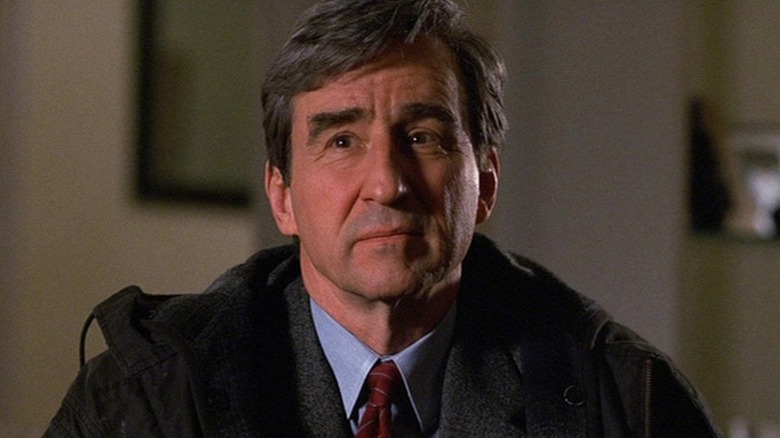
Sam Waterston played Jack McCoy across 30 years of "Law & Order," making the character one of the longest-running TV lawyers of all time. The prosecutor was likened to a hangman by the New York legal world, with his effectiveness rooted in his ability to adapt the goals of the trial to what the evidence supported.
His signature move was to reach for depraved indifference — if he couldn't prove intent to kill, he'd argue for second-degree murder based on the extreme recklessness of the act. In the context of a TV show where the lines between good and evil were relatively solid, this made him a formidable foe for the criminals of New York City. (In the real world the depraved indifference tactic was so frequently used and abused by prosecutors in New York that it was effectively shut down by the Court of Appeals in 2006.) In rare cases, McCoy's "Hang 'Em High" approach could be damaging — like in the episode "Trophy," which reveals that he unwittingly sent an innocent man to prison.
7. Alicia Florrick (The Good Wife)
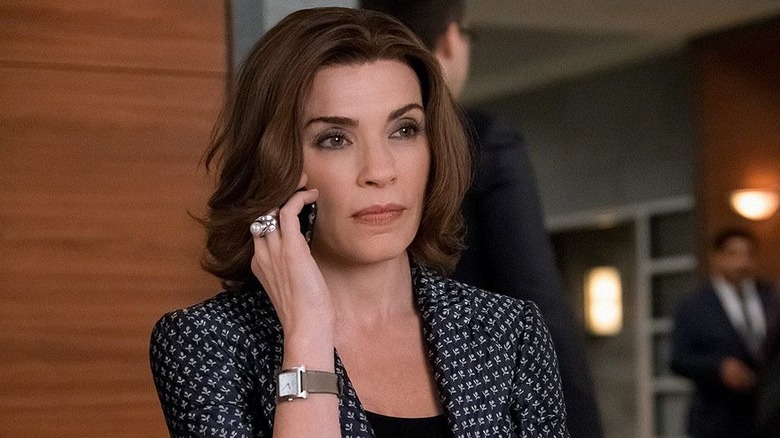
In that aforementioned TV-lawyer win rate study from Underwood Law Firm (which anointed Ben Matlock and one other lawyer further down this list with dubious near-perfect scores), Alicia Florrick of "The Good Wife" ranks third. It's a far more impressive stat than the ranking would suggest — unlike "Matlock," "The Good Wife" is every bit as much about the cases Julianna Margulies' attorney can't win as the ones she can. Sans 20th-century lawyer plot armor, she wins 87.8% of her cases on the show. She's the best of the TV lawyers who are actually allowed to lose.
In terms of our list specifically, Florrick is the best pure legal generalist here. Corporate litigation and defense (for the tech giant Chumhum), criminal defense, military court, election law, ethics, and workplace discrimination — she even navigates serving a client whom she understands to be one of the most powerful drug lords in America. This is all even more impressive when you take into consideration that she starts "The Good Wife" after a decade-plus career hiatus.
6. Chuck Rhoades (Billions)
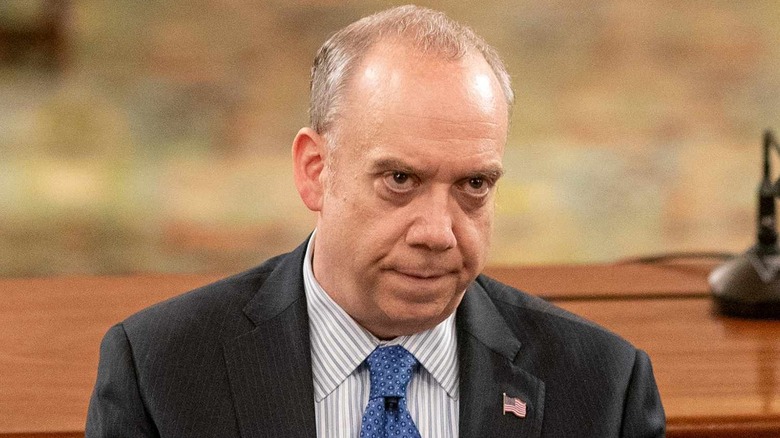
81 to 0. That's not a study-based record of on-screen wins — that's the canonical evidence of legal lethality that Paul Giamatti's Chuck Rhoades flaunts in the very first episode of Showtime's "Billions." That record represents the impact of his career prosecuting financial crimes as U.S. attorney for the Southern District of New York. He's a veritable terminator for the financial elite, with "Billions" depicting his fight to bring down his white whale — Bobby Axelrod (Damian Lewis).
Without spoiling how their conflict resolves, suffice it to say that the end of Chuck's battle with Axe is unexpected, complicated, and exemplary of how the attorney fights for justice — he doesn't just want the win but the total destruction of the evil his wealthy adversaries represent. This level of obsession is also regularly his undoing, personally and professionally. While some may argue it's the factor that allows him to compete with equally obsessed businessmen like Axe, it is also the thing (at least in our minds) that holds him back from a higher position on this list.
5. Alan Shore (Boston Legal)
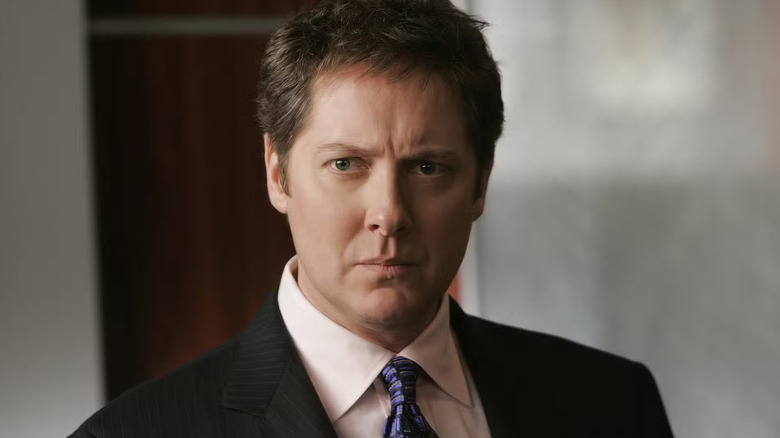
Alan Shore is arguably the most brilliant legal showman on TV. James Spader's memorable litigator from "Boston Legal" and "The Practice" is defined by his flashy, verbose, and persuasive closing arguments, which often serve as an episodic climax. His closest point of comparison on this list is fellow David E. Kelley creation John Cage. In addition to sharing a progenitor, they both hail from legal comedies and do their best work in the actual courtroom.
But Shore is far less constrained by the comedy of "Boston Legal" than Cage is by "Ally McBeal." His sense of humor is self-aware and integrated into what would actually make someone like him an indispensable asset in court — the structure, the rhythm, the repetition, and a carefully deployed sense of irony. Look no further than the rare cases when he (and the writers) brings all of these tactics together for more serious subjects, like his evisceration of gay conversion therapy in "Selling Sickness." Oh — and he wins a case before the U.S. Supreme Court.
4. Diane Lockhart (The Good Fight)

Across "The Good Wife" and "The Good Fight," Christine Baranski's Diane Lockhart proves herself to be an unstoppable force. She has a complicated relationship with Alicia Florrick in "The Good Wife," serving as both a powerful ally and a dangerous adversary at various points. At her best, she's a strong mentor — formidable and graceful yet firmly unshakable in her beliefs. She's also something of a one-woman legal institution, having been a name partner at multiple firms while surviving several professional setbacks that would have forced anyone less resourceful into retirement.
Take "The Good Fight," which begins after she is financially and reputationally ruined by a Ponzi scheme — she's able to turn what should've been the end of her career into a definitive second act that arguably eclipses what she'd accomplished up to that point. It's also one of many examples of her shrewd professional politicking, which allows her to keep her job, keep the lights on, and keep her conscience — most of the time.
3. Perry Mason (Perry Mason)
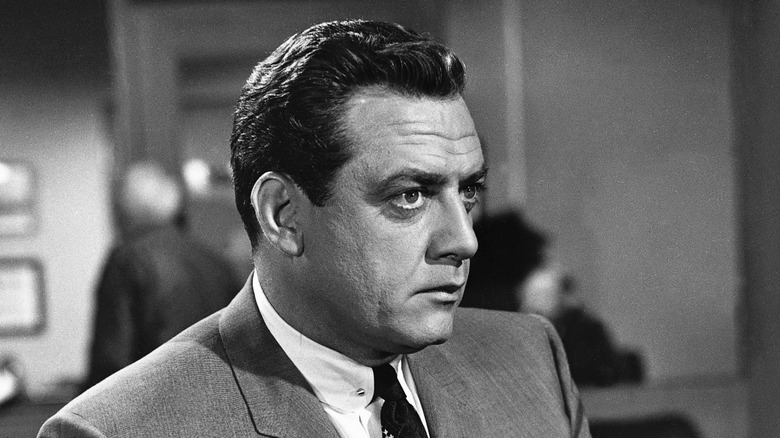
Raymond Burr's Perry Mason is, without question, the most famous TV lawyer of all time. The American Bar Association ranked him third on its 2010 list of the greatest fictional lawyers, and Underwood Law found that he was the most successful on-screen attorney on television, with a win rate of 99.2%.
Like Ben Matlock, a great deal of Mason's work relies on in-house investigations of the crime scenes related to his cases (though Matlock does more of the legwork personally). And while the format of the series is largely what guarantees that near-perfect win rate (Mason's one true loss is incidental and peripheral in the very episode that contains it), it still forces him to work his way out of seemingly impossible situations. His most impressive feat was getting a defendant off death row by uncovering the identity of the true murderer. Even though he's one of the least realistic lawyers on this list, the series makes him a credible expert in the law and human psychology. Within the series' logic, he earns his "'Perry Mason moment" in every episode.
2. Patty Hewes (Damages)
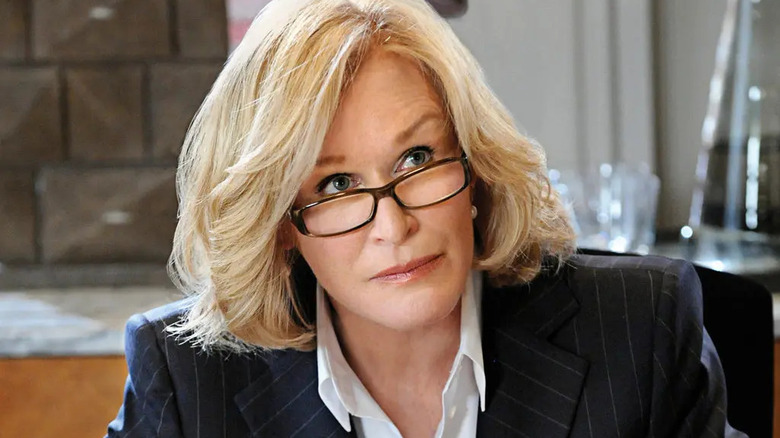
Plenty of the lawyers on this list have been described as intellectually dangerous — Patty Hewes is literally dangerous. Glenn Close starred as the litigiously brutal and peerlessly manipulative attorney in the FX (and, later, Audience Network) legal mystery thriller "Damages." She's safely situated among the unethical lawyers on this list, having once gone so far as to attempt to have her protégée (Rose Byrne's Ellen Parsons) murdered.
That violent disagreement was born from Ellen violating the one thing Hewes holds dearest — total control. In "Damages," Hewes is always the one pulling the strings, even when it looks like she's losing. Her key witness lies and weakens the firm's settlement position? Good — she actually wanted to go to trial. Of course, exerting such outrageous will over the court comes with consequences, morally and legally. The very unethical strategies she employs are ultimately what compel her to prove the rest of the world is as corrupt and ruthless as she is. She can't really compartmentalize, either, because being a lawyer is her entire identity. If she could keep her pathological obsessions in check, she'd be the smartest lawyer on this list.
1. Saul Goodman (Better Call Saul)
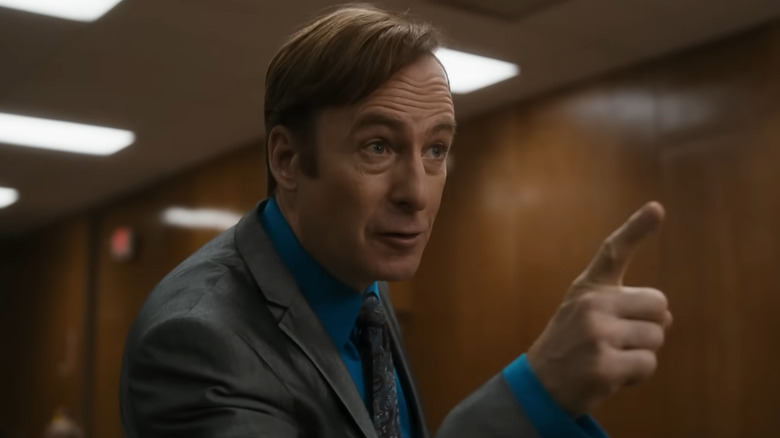
If we were building this list on pure IQ, the No. 1 spot would go to Charles McGill. By the book, Michael McKean's character from "Better Call Saul" seems like the smartest lawyer on TV. And yet, it's his inability to think beyond those law school pages that causes him to lose multiple times to the actual smartest lawyer on TV — his brother, Jimmy.
People underestimate Jimmy McGill, aka Saul Goodman (Bob Odenkirk's lawyer from "Better Call Saul" and "Breaking Bad"), because he breaks the law and spends most of his screen time being a true scumbag, to the extent that he largely churns through clients with plea deals. When he truly throws himself into a case, however, he's pretty much unstoppable. He beats Chuck despite his brother having him dead to rights in a disciplinary hearing; he locks himself in a bathroom and emerges with the makings of a multimillion-dollar class-action lawsuit; and he negotiates what should've been a life sentence down to seven-and-a-half years.
Regardless of what side of the law he's on, Jimmy understands the legal world better than anyone else — especially the ugly parts. He almost always gets the outcome he wants, even if it's technically a loss.