

10 Best Community Guest Stars, Ranked
It's been over a decade since we graduated from Greendale Community College, and we're still thinking about the teachers, students, and other miscellaneous lunatics who made "Community" such great TV. Guest-starring on the NBC (and, for its final season, Yahoo Screen) series was deceptively simple. On one level, it had the basic tone, look, and sense of humor of a network sitcom — on another, it was deeply self-referential and aware of the entertainment industry at large. Actors weren't just seen in the context of their characters and performances in a single episode, but also in conversation with their careers and on-screen personas.
There are plenty of great "Community" guest stars who delivered without acknowledging their resumes — but they were lesser-known comedy actors compared to the biggest names the series wrangled. In some episodes, the show would cast an actor directly against type, like when it drafted a classic nerd from '80s cinema to play a cartoonish school bully. In others, the show would take someone known for a distinctive persona and throw them into this unorthodox setting without changing much, just to see what would happen. In any case, the best characters and/or actors would disappear into the ensemble rather than distract from it — except when that was the meta-joke of them being there in the first place.
10. Matt Berry
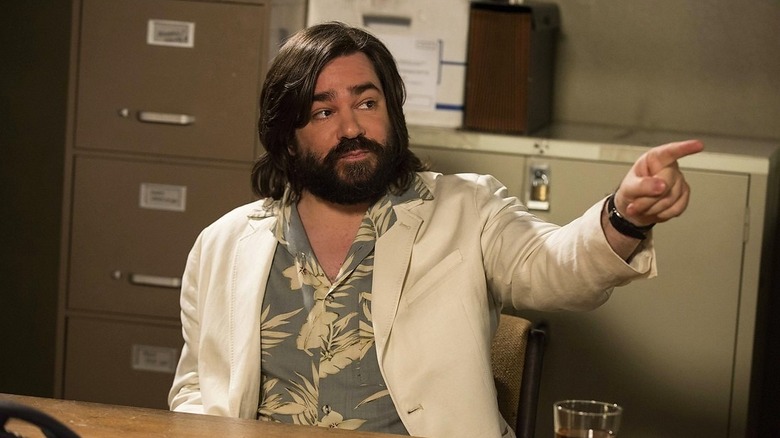
Many Greendale alumni would probably argue that their classes weren't worth what they paid for, but only one class openly admits it's a grift. In the Season 6 episode "Grifting 101," "Community" introduces us to Professor Roger DeSalvo, a master of the art of separating people from their money, played by Matt Berry. As far as guest stars for the show go, the "Darkplace" and "Toast of London" star fits in far better than most. In fact, we'd argue the only thing working against his inclusion on this list is that his comedic persona is so "plug-and-play" here that there isn't much room for surprise in his performance or character. But if it ain't broke...
Professor DeSalvo is able to get under Jeff's (Joel McHale) skin by attacking the one thing he likes about himself that he doesn't owe to Greendale — his ability to lie. Jeff considers himself a master grifter, given the scam he was able to run on his old law firm, but DeSalvo reduces him to an artless hack by proving real grifting requires more than confidence and charisma. It evokes the fun conflict of early "Community" episodes like "Debate 109," where Jeff's carefree attitude was stripped down by someone who was actually better than him at something. What elevates DeSalvo above the antagonists of those episodes is Berry's distinctive performance. Nobody plays a smug, grandiose jerk like him (save maybe Todd Rivers, whose influence can be felt in Berry's more delightfully exaggerated deliveries).
9. Stephen Tobolowsky
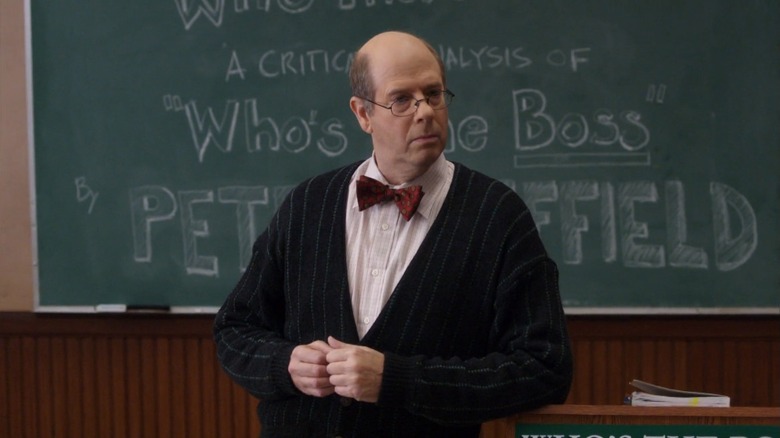
Stephen Tobolowsky is a national treasure of American television. There's something so fitting about one of the medium's most beloved and recognizable character actors playing a guy who has clearly spent too much of his life watching TV. (Hey, who are we to judge?)
In Season 2's "Competitive Wine Tasting," Tobolowsky plays Peter Sheffield, a Greendale professor who teaches Abed's TV studies class. The principal achievement of his career is a book-length dissection of the power dynamics of the ABC sitcom "Who's the Boss?" Abed stands in front of the class and shatters his entire worldview by empirically proving, "by all known definitions of the word 'boss,'" who is actually the boss. Tobolowsky has a knack for playing antagonistically smug characters who simultaneously seem like they're one minor inconvenience away from a total mental breakdown — Professor Sheffield is no exception. By the end of the episode, it's revealed that he keeps a handgun in his drawer next to a copy of a book called "What WAS Happening?: An Analysis of 'What's Happening!!'" It's a bleak sight gag that's also one of the series' best.
Sheffield's impact was such that he was referenced again in Season 5's "Introduction to Teaching" (when Abed takes a class on Nicolas Cage). Perhaps the shtick lands especially hard for us because it's built on the absurdity that someone could become a respected academic devoting themselves to analyzing — but not definitively solving — something as hyperspecific and subjective as a single TV show. But, again, who are we to judge?
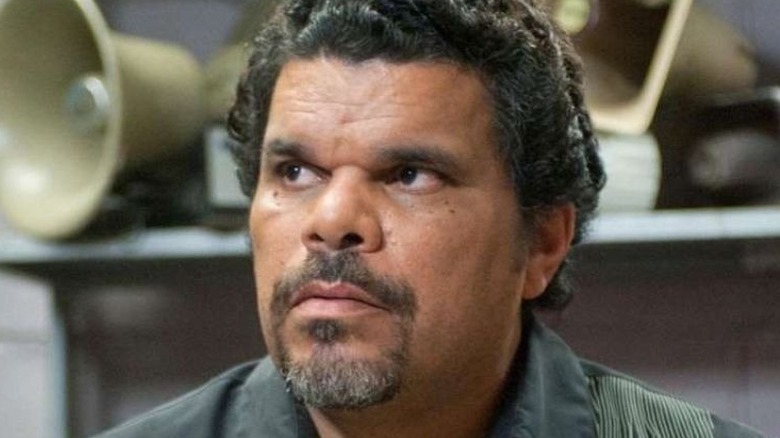
8. Luis Guzmán
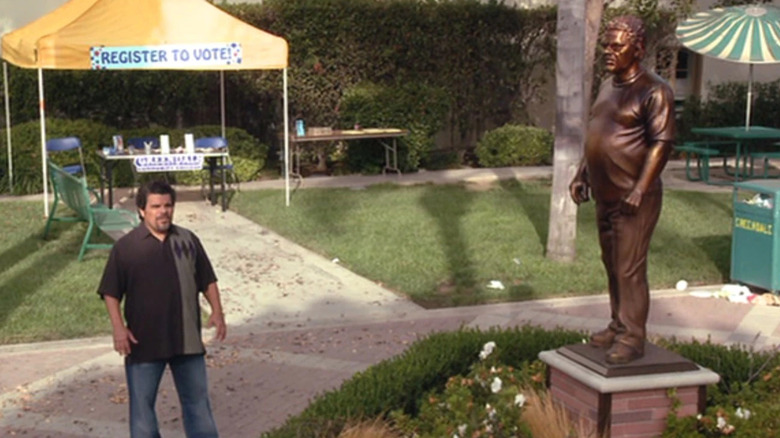
After "Community" unveiled Greendale's grotesque bronze statue of Luis Guzmán in Season 1 ("Advanced Criminal Law"), it was only a matter of time until the actor showed up in the flesh. (Hilariously, despite not appearing in the episode, Guzmán was actually involved in the making of the statue with the Russo brothers, and got a check every time the show featured it.) They finally brought him in for Season 3's "Documentary Filmmaking: Redux," in which Jeff notifies Guzmán's lawyers that a commercial is using his image (via the statue) without permission in an attempt to get the Dean's (Jim Rash) tyrannical production shut down. Instead, it inspires Guzmán to see the commercial in person.
It's impossible to imagine a smarter or more thematically satisfying way for "Community" to pay off this absurd running gag. In the show's mythology, Guzmán is Greendale's most famous alumnus — his statue thus becomes a kind of avatar for the Dean's insecurity about the school and his position within it. Like many of his schemes throughout the series, the commercial descends into madness because he's obsessed with proving that Greendale is better than it is. Guzmán's arrival is a come-to-Jesus moment for the Dean (one that's been a long time coming by that point), forcing him to finally accept the Greendale he has rather than the one he thinks he can sell. It's also just funny that the episode's moral comes from an exasperated character actor whose only retrievable positive memories of the school are the times he got laid.
7. Josh Holloway
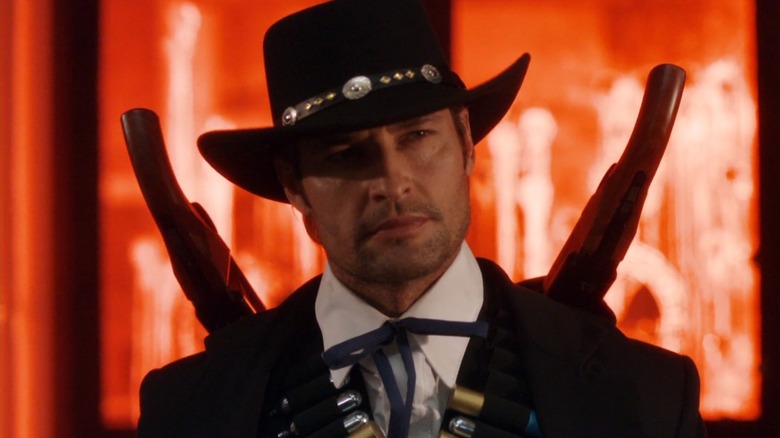
"Community's" first paintball episode put the show on the map. More than almost any other episode in Season 1, it showed the series was creatively ambitious enough to push the sitcom format just to the point of breaking. For the Season 2 sequel, "A Fistful of Paintballs," the game had to be bigger and more dangerous, even closer to the feel of a modern action blockbuster (it's no wonder this episode helped get the Russos their cushy gigs at Marvel). As part of this mission, the casting department brought in Josh Holloway, who'd spent the last several years playing one of TV's biggest bad boys in "Lost."
His performance in "Community" cashes in on that persona hard. The episode doesn't even bother to give him a name — he's just "The Black Rider," a professional paintball player brought in as a ringer to aid a scheme by the rival City College. The character is all personality, threatening one-liners, and what the kids are calling "aura farming." That's what makes Holloway's casting so important — the star power gives him immediate importance and danger, while the lack of traditional characterization keeps him totally separate from the rest of the cast. It allows the show to give him the dramatic presence of an epic Western villain in just a handful of scenes. Of course, that whole persona is brilliantly deflated when he's the only one with enough humanity to fall for Pierce's (Chevy Chase) "heart attack."
6. Jason Mantzoukas
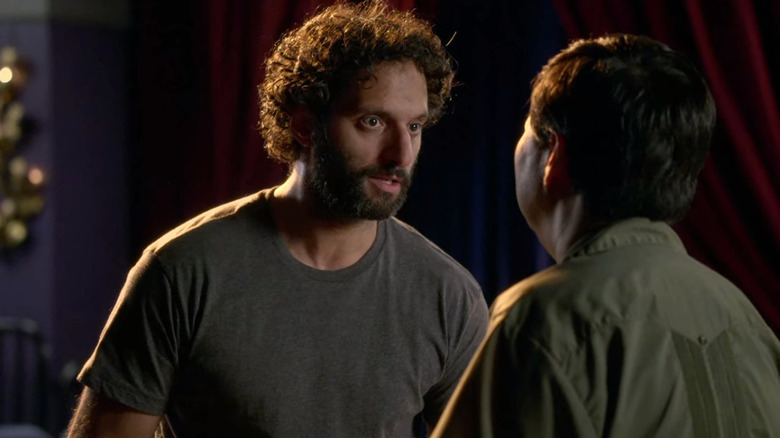
Leave it to Jason Mantzoukas to out-crazy Ben Chang. In the Season 6 episode "Queer Studies and Advanced Waxing," the actor guest-stars as Matt Lundergard, a theater director helming a stage adaptation of "The Karate Kid." Despite hoping to be cast against type as Daniel LaRusso, Chang (Ken Jeong) is thanklessly thrust into the role of Mr. Miyagi. Lundergard ruthlessly and meticulously berates Chang throughout the rehearsal process, with Mantzoukas' performance evoking J.K. Simmons' Academy Award-winning role in "Whiplash."
The parody lands because Mantzoukas' commitment is 100% serious and controlled. As ferociously as he plays the character, Mantzoukas always knows how far he can push it without spilling into caricature. It reads as though Lundergard is actually in a psychological thriller about artistic pressure, while Chang and Annie (Alison Brie) are trying to make sense of him in a sitcom (and, not for nothing, that exact dynamic perfectly recreates the experience of doing community theater with a director who takes themselves way too seriously).
The twist that reveals this also works in service of a great character showcase for Chang. Lundergard's abuse ultimately proves that he believes in Chang more than Chang believes in himself, and sets the stage for Chang's (and Jeong's) amusingly restrained performance on opening night. The entire storyline is a master class in comedically mismatched stakes, which is the style of comedy that drives the funniest episodes of "Community."
5. Anthony Michael Hall
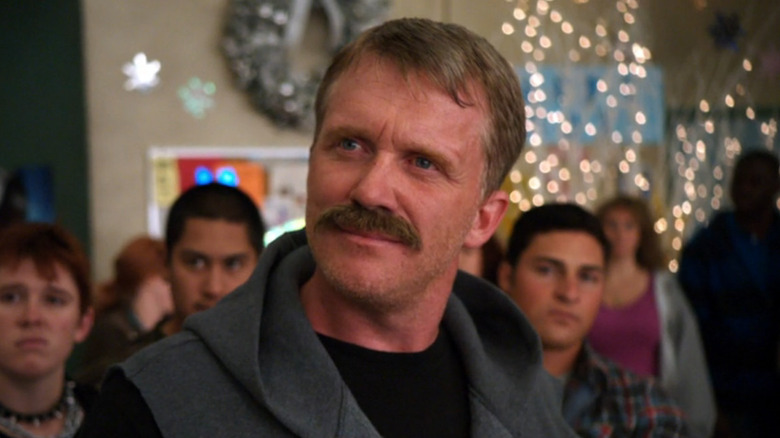
Given how movie-obsessed "Community" is, it's hard to imagine Anthony Michael Hall wasn't cast intentionally to subvert his status as one of the most recognizable nerds of '80s cinema. If that was the case, however, his episode certainly doesn't rely on the subversion to be funny.
You can watch "Comparative Religion" without having seen "Weird Science" or "Sixteen Candles" and still come away thinking Hall's Mike Chilada is the best guest star on the series thus far. The actor totally disappears into the role of a comically aggressive bully who stomps around trying to instigate fights. ("If this dude doesn't show up, we're definitely going to Applebee's, 'cause I'm getting into a fight no matter what" — an all-timer "Community" throwaway line that tells you exactly who this dude is.) He targets Jeff because he intervenes when Mike tries to intimidate Abed (Danny Pudi) over a Winterdoodle dispute.
The character works perfectly for this episode because he's so obviously pathetic and punchable at the same time. There is nothing Jeff gains and really no one he's protecting by acquiescing to Mike's demand for a fight — yet you kinda want to see Mike get decked in the halls anyway. The tension culminates in an all-out brawl on the campus, where Jeff and Mike awkwardly push each other around in the snow while shirtless men do karate in the background. Hall's character played a major part in helping define the chaotically endearing vibe of the first "Community" Christmas episode.
4. Betty White
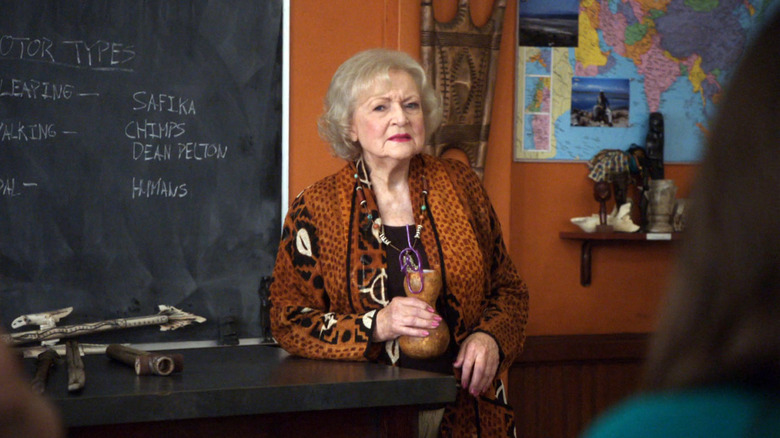
The beginning of "Community" coincided with the fondly remembered career renaissance of Betty White. The same year the sitcom legend won an Emmy for hosting "Saturday Night Live," she played Professor June Bauer in the Season 2 premiere, "Anthropology 101." On the surface, the performance and the character are more or less what you'd expect from White at the time — Bauer is an elderly woman who looks and sounds like your grandma but couldn't be more different. At first, you might worry that "Community" would be satisfied to repeat the same bits we'd seen in "The Proposal" and that Super Bowl Snickers ad.
But what makes Bauer refreshing nonetheless is the specificity of the character. She isn't just a misbehaving octogenarian. Every joke is rooted in her off-putting dedication to anthropology, whether she's trying to convince her students of the health benefits of drinking urine or trying to explain Tom Berenger's role in "Inception" to tribal leaders in the Congo. The highlight of her guest spot is when she undercuts a classic Winger speech by attempting to prove that a crossbow is a better weapon than "respect."
Because the writers didn't rely on the tired jokes about her sex life or drug use, White felt right at home in the "Community" world. It's an exemplary use of a potentially distracting celebrity guest star.
3. Walton Goggins
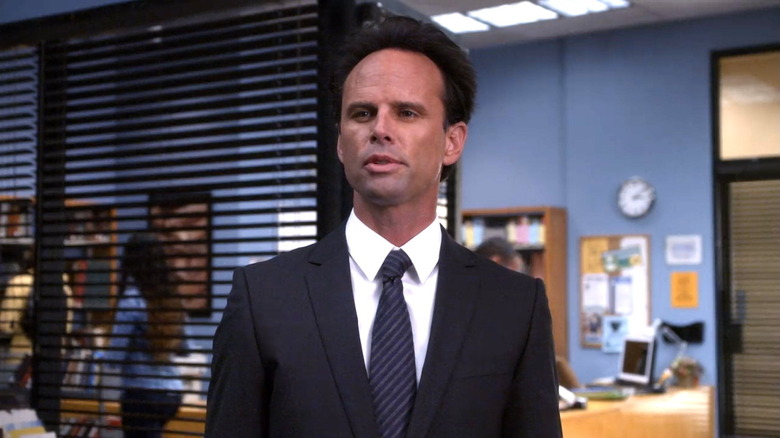
On paper, a character like Mr. Stone shouldn't be on this list. He's the executor of Pierce's will, tasked with overseeing a polygraph test of the entire study group in the Season 5 episode "Cooperative Polygraphy." This means actor Walton Goggins is tasked with playing a dry executor whose purpose is to be a vessel for a character the audience actually cares about — or, rather, cared about, until they heard how little Chevy Chase wanted to play him. Goggins has absolutely zero right making Mr. Stone as funny and captivating as he is.
The total commitment to the restrained performance is the key. On one hand, it gives Pierce's posthumous torment of the group a cold and procedural tone that highlights how ludicrously cruel it is. On the other hand, when Stone begins bequeathing Pierce's sperm canister by canister to the group, that tone morphs into something more tender without Goggins changing the delivery. Pierce's kind words and sudden vulnerability (spoken safely from beyond the grave) make that coldness feel tragic, as it emphasizes how little of Pierce is actually in the room with them. He can't hear or see how much his gifts meant to the group, and they have no one to thank but a stone-faced lawyer.
Finally, the tag pushes Stone from great to golden. Goggins' — and, by extension, the character's — emotionlessness sets up Stone finally cutting loose at a bar, where he drunkenly reveals the dark punchline behind Pierce's cause of death.
2. LeVar Burton
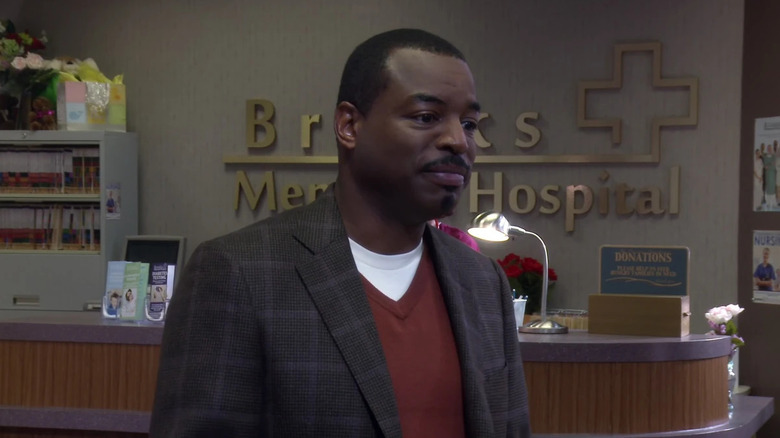
Speaking of Pierce's bequests, "Intermediate Documentary Filmmaking" laid the foundation for "Cooperative Polygraphy" all the way back in Season 2. Except, in the former episode, Pierce isn't actually dead or even dying when he decides to torment the study group with deathbed gifts. The most brutal — and hilarious — is LeVar Burton. The iconic actor was invited by Pierce to meet Troy (Donald Glover), who had previously expressed to Pierce that he never wanted to actually meet Burton out of fear of disappointing him. His presence immediately causes Troy to experience a paralyzing panic attack-slash-emotional breakdown, which Glover plays wonderfully. The grief is so raw and unhinged, we wonder if Glover improvised any of it on set.
Beyond the fact that Burton's appearance gives us some of the best Troy moments of the entire series, he's just so good at playing the straight man for these characters. Neither he nor the script ever drags his on-screen persona down to the same level of chaos as the main ensemble, but he doesn't feel detached or sanitized. His down-to-earth demeanor serves everything happening around him, including Jeff's mounting anxiety that Pierce will really find a way to forcibly reunite Jeff with his father. More than any other character on this list, he's the one we'd most want to see return for the "Community" movie — mostly so we can figure out if that whole "capture by pirates" thing actually happened.
1. Jack Black
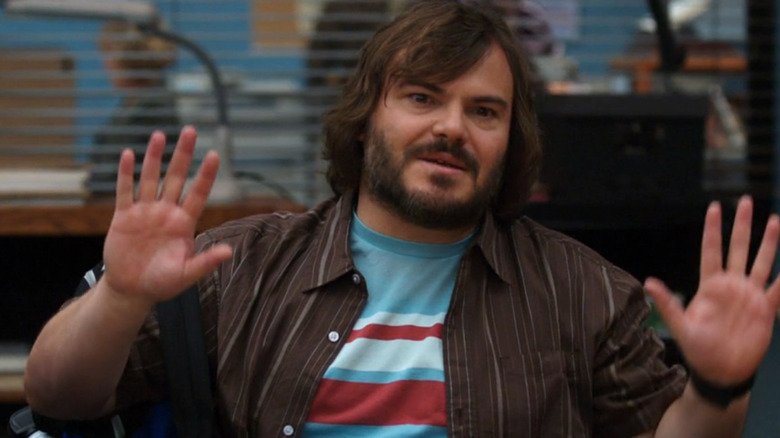
No other guest star on this list helped establish this side of "Community's" tone as much as Buddy. The character is largely remembered for being played by Jack Black. Indeed, it has all the hallmarks of a stock celebrity cameo — it plays directly to Black's established on-screen persona as a talented musician and surprisingly dexterous physical comedian. But "Investigative Journalism" reads much differently after you've seen a few seasons of the show and can appreciate how openly meta it eventually became. It also feels like the first time the show took a bold swing in this direction.
In hindsight, Buddy plays like an intentional parody of a "big celebrity guest star" coming into a sitcom. He's distractingly recognizable, essentially plays an exaggerated version of Jack Black's established persona, and has been retroactively inserted into the characters' lives despite never being mentioned before (the episode exaggerates this by editing him into scenes from earlier episodes, not unlike the Mr. Poopybutthole character from Dan Harmon's "Rick and Morty"). The episode even uses the show's title sequence to interrupt Buddy at an awkward moment, reinforcing the feeling of an incoming cast member who can't find the ensemble's rhythm.
Later guest stars would fall into some of the same tropes "Community" subtly mocks in "Investigative Journalism" (as great as Matt Berry and Professor DeSalvo are, you can't make the same meta argument there). It's arguably the most creatively subversive guest spot "Community" ever produced. If it wasn't appreciated in its time, it's because the show was simply streets ahead of its audience.