

10 Best Twilight Zone Episodes With Happy Endings, Ranked
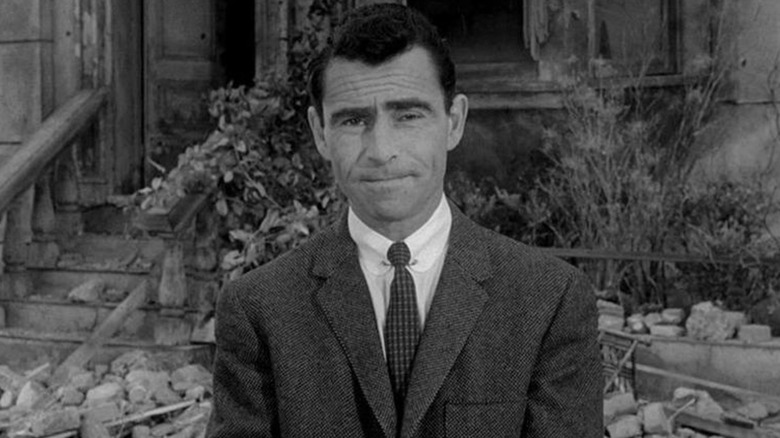
Some of the best "Twilight Zone" endings will fill your heart with joy. While Rod Serling's legendary anthology series is associated with terrifying tales that boast dramatic twists, not all of them are doom-laden. In fact, "The Twilight Zone" is often a very sweet show that sets out to warm our hearts and touch us in the feels — and these episode endings are a testament to the show's life-affirming qualities.
Of course, that's not to say every "Twilight Zone" episode with a happy ending is joyous throughout. After all, sweet payoffs have a greater impact when the audience has been subjected to terror, tension, and emotional manipulation beforehand. What's respite without a little suffering?
On this list, you will find episodes that explore some heavy ideas, but their closing moments are as feel-good as it gets. However, other episodes are quite lighthearted and silly, highlighting the versatile nature of "The Twilight Zone." With that said, here are the 10 best "Twilight Zone" episodes that will put a smile on your face.
10. Two
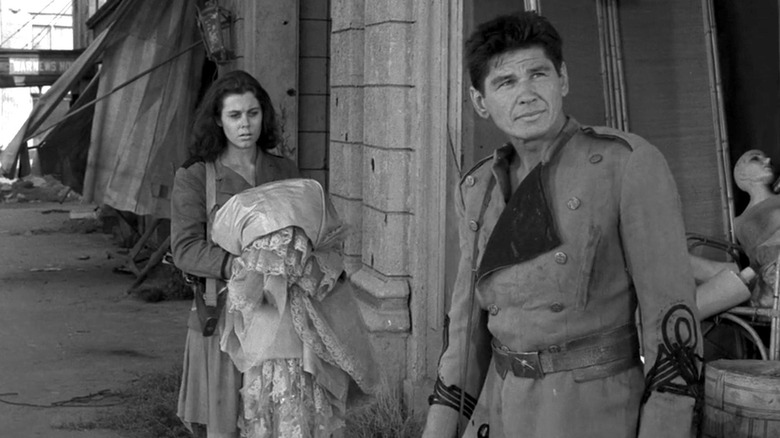
We've all heard the age-old adage about opposites attracting. "Two" takes that sentiment and applies it to a post-apocalyptic war story in which Charles Bronson and Elizabeth Montgomery — who were among the many movie stars who appeared on "The Twilight Zone " — portray characters on different sides of the conflict.
"Two" follows an unnamed man and woman as they come together in a city devastated by nuclear war. They appear to be the only two survivors, so they don't see the point in killing each other. As the episode progresses, though, Bronson and Montgomery's characters learn to trust each other, and it ends with them walking away together to begin a beautiful romance in a broken world.
This episode was released in 1961, a time when Cold War hysteria and nuclear anxieties existed in the real world. However, "Two" doesn't side with either side. Instead, it explores the notion that war is bad for everyone involved. Ideological differences shouldn't get in the way of the things that really matter — love, unity, etc. That's the biggest takeaway from this ending, and what's not to love about that?
9. The Last Rites of Jeff Myrtlebank
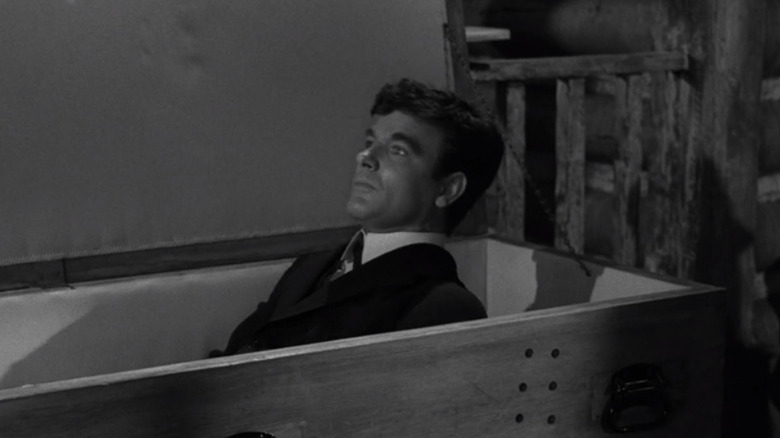
In horror shows, the dead typically return with the goal of haunting the living or feasting on their flesh zombie-style. However, "The Last Rites of Jeff Myrtlebank" shows that some dead people want to get married to their country sweethearts and live happily ever after.
The story follows Jeff (James Best), a simple country boy who returns from the dead and proceeds to rekindle his romance with Comfort (Sherry Jackson). The God-fearing locals believe that Jeff is possessed by a haint, but Comfort looks past his supernatural abilities and agrees to be his wife.
"The Last Rites of Jeff Myrtlebank" is quite creepy. There are moments when we're led to believe that the titular character might not be wholesome. He lies about his supernatural powers, and we never learn the truth about his resurrection. He could be the Devil, but the ending reveals that he and Comfort live happily ever after, so he can't be all bad. Overall, it's a fun episode that winks at the audience while providing plenty of food for thought.
Ryan Coogler also cited "The Last Rites of Jeff Myrtlebank" as a major influence on "Sinners," another spooky tale with a Southern Gothic atmosphere. This shows that even the most underrated "Twilight Zone" episodes remain important after all these years.
8. The Trade-Ins
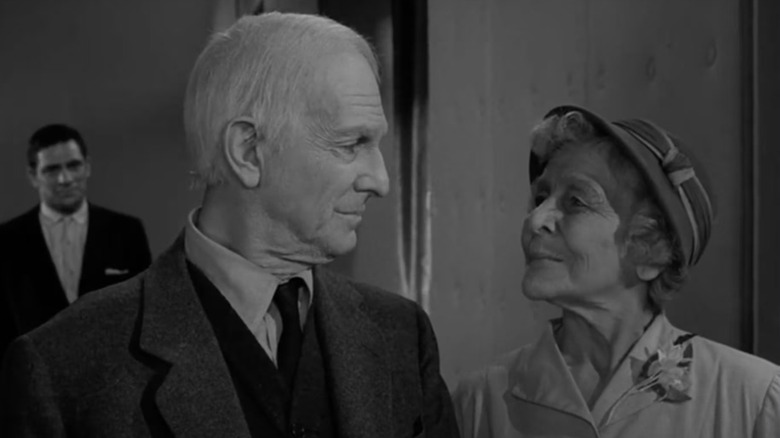
If you're looking for a wholesome love story, look no further than "The Trade-Ins." This one follows John (Joseph Schildkraut) and Marie Holt (Alma Platt), an elderly married couple who are offered the chance to get younger bodies. The twist? They only have enough money for one of them to get the procedure, so John accepts it, hoping to cure his physical pain.
In the ending, John gets the procedure reversed because his wife no longer recognizes him. The old lovers choose to live their final days as their natural selves, even if that means suffering physically. Sci-fi has long warned us about the dangers of unchecked science and technology, but "The Trade-Ins" highlights its off-putting qualities in a refreshingly sweet way.
"The Trade-Ins" is a beautiful story about everlasting love and accepting the cycle of life. Most people wish they could reverse the clock to some degree, but nothing beats a lifelong human connection. The ending promotes natural bonds and aging naturally over artificial beauty — an admirable message if there ever was one.
7. The Night of the Meek
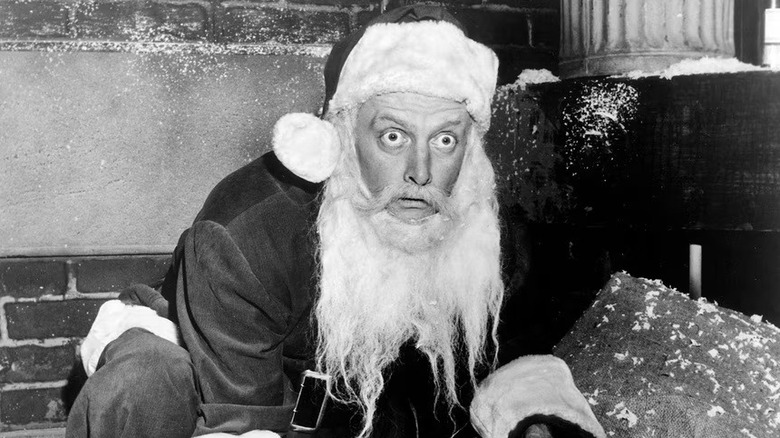
"The Twilight Zone" produced many great Christmas episodes, and this is arguably the best of the bunch. "The Night of the Meek" tells the story of Henry (Art Carney), a drunk, unemployed mall Santa who wishes for the meek to inherit the Earth. He also wants to make children happy at Christmas, and he gets his wish when he becomes the real Santa Claus.
"The Night of the Meek" is a prime example of a "Twilight Zone" episode that gives us darkness before the light. Henry is in the dumps due to his depression, addiction struggles, and social deprivation. The episode highlights that Christmas isn't fun for everyone, encouraging viewers to spare a thought for the less fortunate. Still, it's earnest and heartwarming, as all feel-good Christmas tales should be.
The ending — in which Henry takes off on a sleigh — is corny, but it's also very sweet. Carney delivers a fantastic performance as the down-on-his-luck mall Santa, and he makes Henry's redemption feel well-earned.
If you or anyone you know needs help with addiction issues, help is available. Visit the Substance Abuse and Mental Health Services Administration website or contact SAMHSA's National Helpline at 1-800-662-HELP (4357).
6. A Penny for Your Thoughts
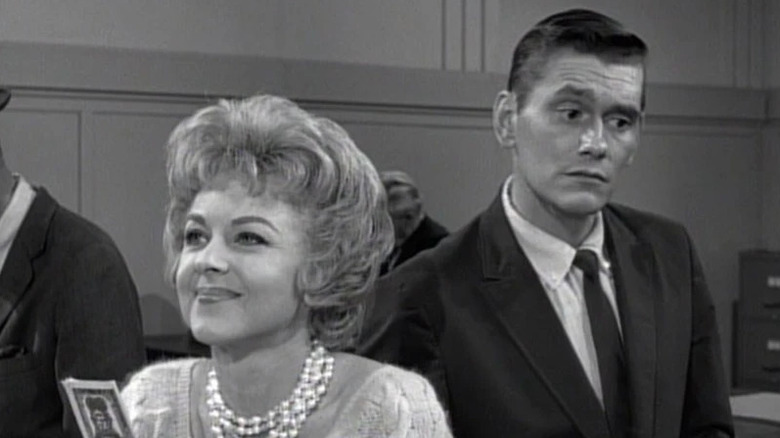
Everyone contemplates doing questionable things. Most of us just don't follow through with it. However, daydreams and intent might seem like one and the same if we could read other people's minds. That's the predicament bank clerk Hector (Dick York) faces in "A Penny for Your Thoughts," which tells the story of a coin that gives him mind-reading abilities.
Throughout the episode, Hector learns about customers who plan to embezzle money and colleagues who daydream about robbing the bank. His powers ultimately cost him, however, as he gets fired for snitching. However, Hector eventually gets rehired, and the episode ends with him losing his newfound abilities and finding romance with a colleague who has the hots for him.
The love story puts a sweet bow on "A Penny for Your Thoughts," but the ending is a reminder that there's bliss in ignorance sometimes. This is one of the more lighthearted "Twilight Zone" episodes, but that doesn't make its message any less effective.
5. The Hunt
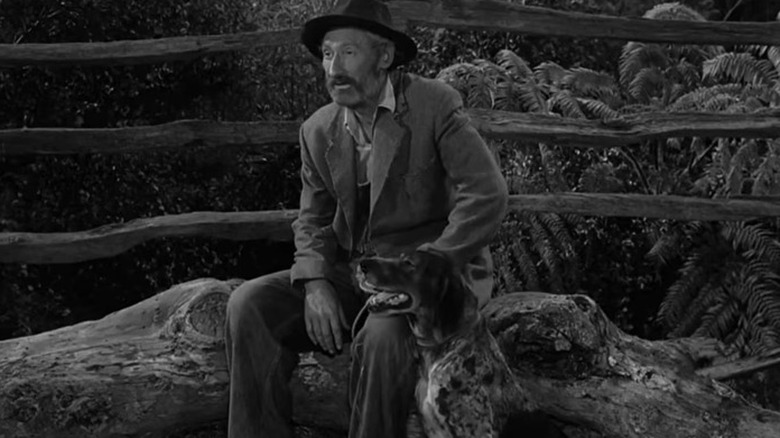
"The Hunt" involves a dog dying, but it isn't ruff (pun intended) viewing. This one follows an old man and his best boy after they die on a hunting trip and get some bad news afterward. A man in the afterlife informs them that dogs can't enter Heaven, so the old man opts for an eternity of roaming aimlessly to stay with his best boy.
We soon learn that it was all a devilish plot, and dogs really can enter Heaven. The Devil's agents hate dogs because they can smell brimstone, thus potentially robbing Hell of souls. The episode ends with the man and his dog going to Heaven, with the angel assuring them that everything will be okay.
"The Hunt" is a beautiful ode to man's best friend. Everyone who's loyal to their pet will feel a sense of camaraderie with the old man, and the ending is as wholesome as they come. All dogs should go to Heaven, after all.
4. The Changing of the Guard
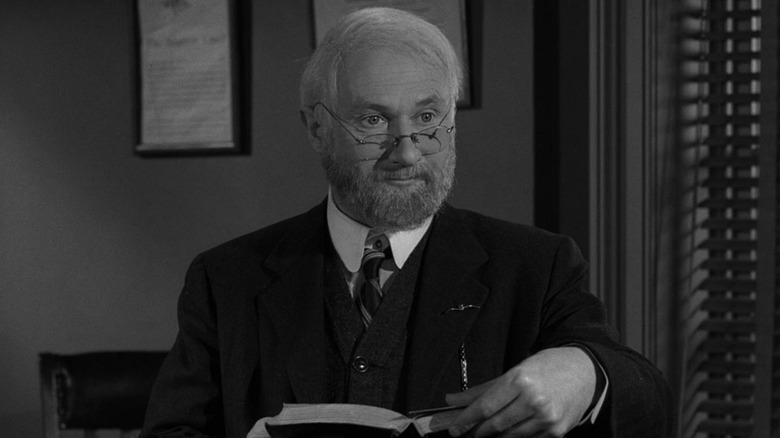
Some of the happiest "Twilight Zone" episodes are about characters rediscovering their lust for life. "The Changing of the Guard" begins on a harrowing note, as Professor Ellis Fowler (Donald Pleasance) plans to kill himself on Christmas Eve after he is forced into retirement. However, he changes his mind when he is visited by the ghosts of students he previously taught, all of whose lives his teachings changed for the better.
The episode ends with Ellis happy to retire because he knows he served a purpose and made people's lives better. You can interpret it as a celebration of teachers, whose influence and value in our lives are arguably underappreciated in the grand scheme of things. More than anything, though, the ending is a reminder that life is worth living, no matter how dark things might seem sometimes.
Pleasance delivers a tremendous performance here, the kind that makes sympathizing with and rooting for his character easy. When it's all over, you will feel relieved that he didn't go through with his original plan.
If you or someone you know is struggling or in crisis, help is available. Call or text 988 or chat 988lifeline.org.
3. A Passage for Trumpet
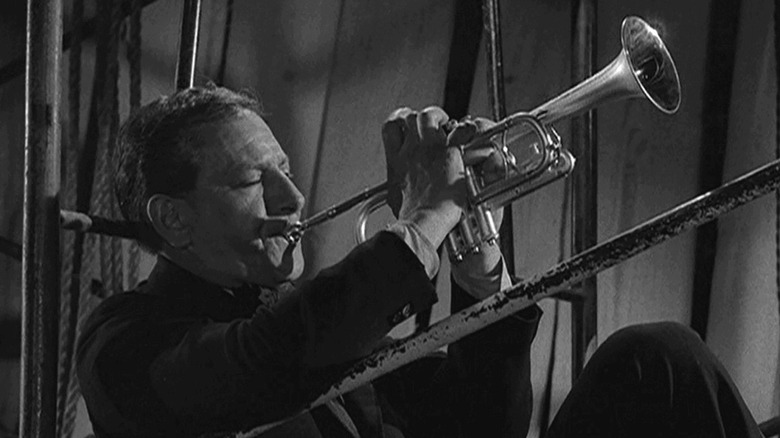
"A Passage for Trumpet" echoes "The Night of the Meek" in many ways. Like the Christmas episode, it follows a down-on-his-luck fellow forced to contend with alcoholism and limited job prospects. His name is Joey Crown (Jack Klugman), a trumpeter who gets a second chance at life following a brush with death.
This one doesn't conclude with everything falling into place for Joey. He's no closer to securing meaningful employment when the episode ends, but good things happen. Joey's trumpet playing catches the attention of a woman who asks him to show her around the city, suggesting that his future will be full of romance.
The ending posits the idea that bad luck is temporary and life's joys happen unexpectedly — like meeting a new lover during a chance encounter on a roof following a difficult day. It doesn't get much happier than that. "A Passage of Trumpet" treats viewers to one of the most beautiful "Twilight Zone" endings, even though it's quite subtle compared to others.
2. Walking Distance
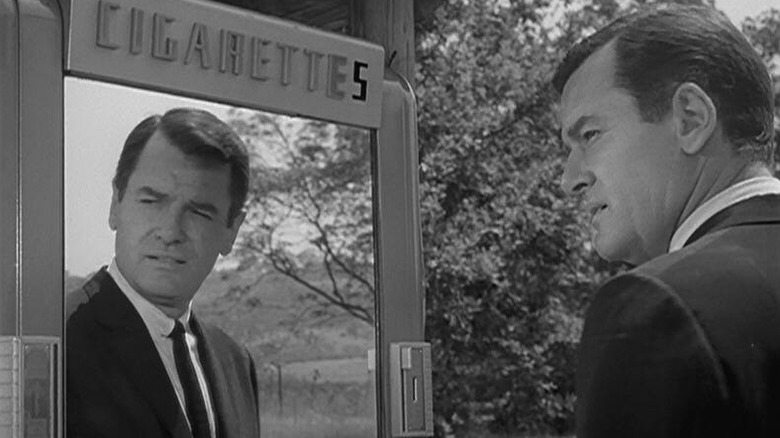
"Walking Distance" is one of the most personal episodes of "The Twilight Zone." Rod Serling penned the story while yearning to return to his childhood, a sentiment many people can empathize with. This sense of longing is evident in the story, which follows an advertising executive who goes for a walk and unwittingly returns to his childhood.
"Walking Distance" really emphasizes the existential woes of adulthood, such as job dissatisfaction, loneliness, and one's regrets about yesteryear. Some of the nostalgia is mournful, but the story ends with our protagonist feeling rejuvenated. He knows he'll never be a kid again, but he can still make time to enjoy the things that bring him happiness.
"Walking Distance" is one of the most rewatchable episodes of "The Twilight Zone." It's perfect comfort viewing for those days when you feel like a slave to the grind. The ending promotes the idea that it's healthy to focus on the things that make us happy, even if we have to juggle them with life's commitments.
1. One for the Angels
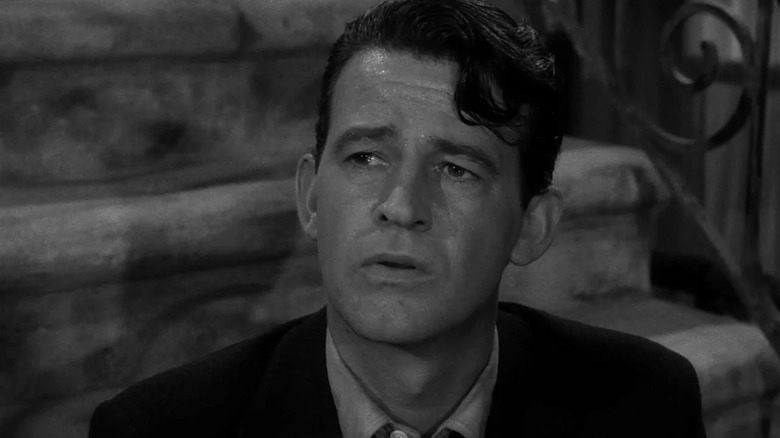
The scariest episodes of "The Twilight Zone" set out to make viewers afraid of death and the supernatural. "One for the Angels" certainly doesn't shy away from exploring the fear of the unknown, but the ending won't make viewers go to bed worrying about their own mortality.
The story centers around Lou Bookman (Ed Wynn), a 60-something pitchman who tries to convince Death (Murray Hamilton) not to take him. Unfortunately, prolonging his life requires a little girl to be taken in his place, forcing Lou to accept his natural fate. It's a sweet ending, though, because Death reveals that he's going "up there," easing Lou's concerns about the Great Beyond.
"One for the Angels" is a rare happy story about death — one that posits the end as just another chapter, rather than a horror to be feared. This is one of the best episodes of "The Twilight Zone" because it does a great job of tapping into a very real fear and easing the anxieties associated with it through quality writing and performances.