

10 Best Episodes Of The Twilight Zone, According To IMDb
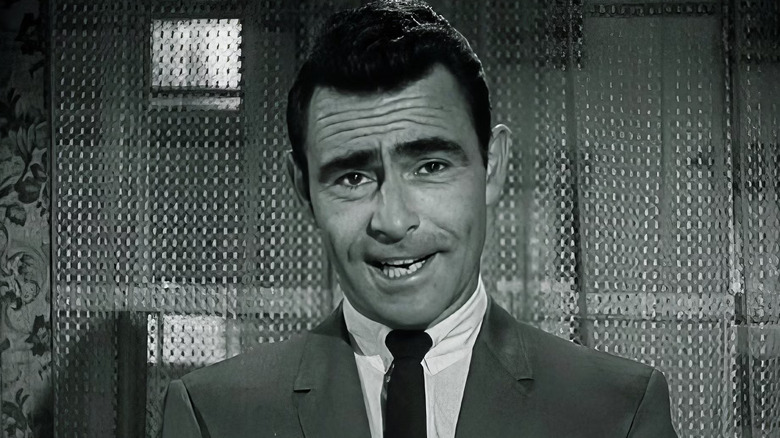
Not a ton of pop culture from the 1960s feels as relevant as the best episodes of "The Twilight Zone," but maybe that shouldn't surprise us. After all, creator and host Rod Serling flat-out told us his anthology series is "timeless as infinity."
One of the best CBS shows of all time, "The Twilight Zone" uses science fiction, horror, and thriller conventions to make incendiary statements about human nature. The show took shots at its time period's biggest political controversies — things like the Cold War, the Red Scare, and the comfortable isolation of white-flight suburbia — and argued these were evergreen facets of the darkest corners of humanity.
Which episodes are the best, wildest, and most revelatory? Look no further than the 10 best episodes of "The Twilight Zone," according to IMDb.
10. The Shelter
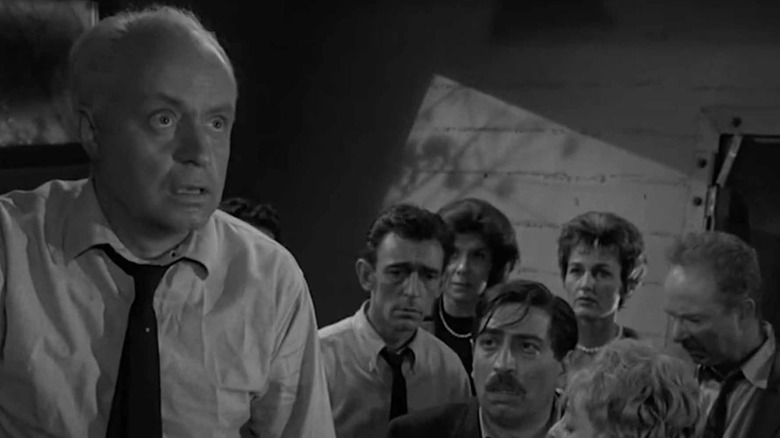
Originally airing in Season 3 and penned by Rod Serling himself, "The Shelter" rates an 8.6 on IMDb. Unlike a typical episode that uses horror, sci-fi, or fantasy elements as metaphor or allegory for the real-life issues that plague humanity, "The Shelter" plunges headfirst without any obfuscation.
The episode originally aired in 1961, when American society was smack dab in the middle of the Cold War and nuclear anxieties. Dr. Bill Stockton (Larry Gates) is having a lovely birthday party with his wife, Grace (Peggy Stewart), his son, Paul (Michael Burns), and a group of his friends. All goes well until a radio announcement (voiced by James Coburn) informs the nation that unidentified objects are hurdling toward the United States. It sure seems like nuclear war is imminent.
Dr. Stockton happens to have a bomb shelter in his home, as did many American families of the time. But this shelter can only hold three people, and the party devolves into hostility, violence, and ferocious bleakness.
9. The Obsolete Man
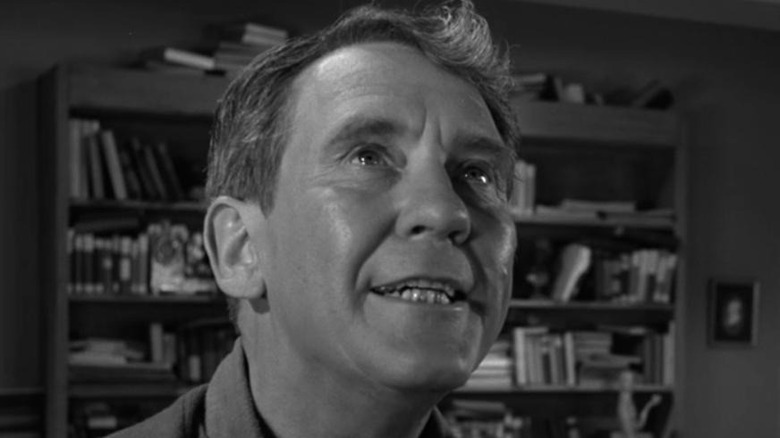
Another Serling-written episode, this time from Season 2, "The Obsolete Man" (8.6) stars "Twilight Zone" veteran Burgess Meredith as Romney Wordsworth, a librarian. Normal so far, right?
Wrong. Wordsworth lives in a futuristic totalitarian society where books are illegal. As such, he is put on trial by an otherwise unnamed chancellor (Fritz Weaver), found guilty, and sentenced to death. Wordsworth requests that his execution be televised live, and the state approves his request, perhaps eager to make him an example.
But the librarian has something stranger planned. What results in Serling's teleplay is action-packed and complicated, especially when it introduces religious beliefs into the tapestry, something uncommon for the typically rational-minded protagonists of a Serling story.
8. It's a Good Life
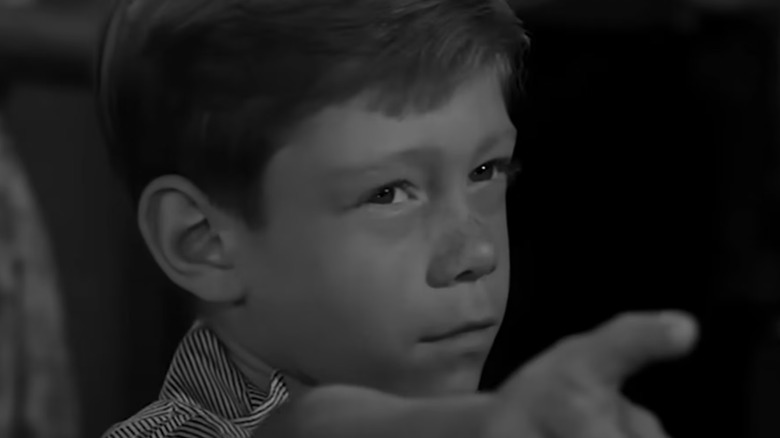
A Season 3 episode adapted by Serling from the Jerome Bixby short story of the same name, "It's a Good Life" is one of the scariest "Twilight Zone" episodes. It's relentlessly disquieting and upsetting, presenting another view of a world ruined by totalitarianism. It's just that this particular totalitarian leader is a child with supernatural powers.
Anthony Fremont (Billy Mumy) is a 6-year-old boy who loves playing, watching television, and controlling the lives, minds, and bodies of everyone he knows. Anthony is, basically, the god of Peaksville, Ohio, a feared entity who can read people's thoughts, conjure and kill mutated creatures, and banish anyone of whom he doesn't approve. As such, the town's residents must constantly put up a smiling face, kowtowing to their benevolent leader even as he impedes the food supply, outlaws singing, and forces complete fealty. It's a good life, because it has to be.
But what happens when one of the adult residents decides enough is enough and tries to stop Anthony? The 8.6-rated episode takes a further turn into the surreal and horrifying, concluding with a Don Keefer monologue that will chill you to the bone.
7. Living Doll
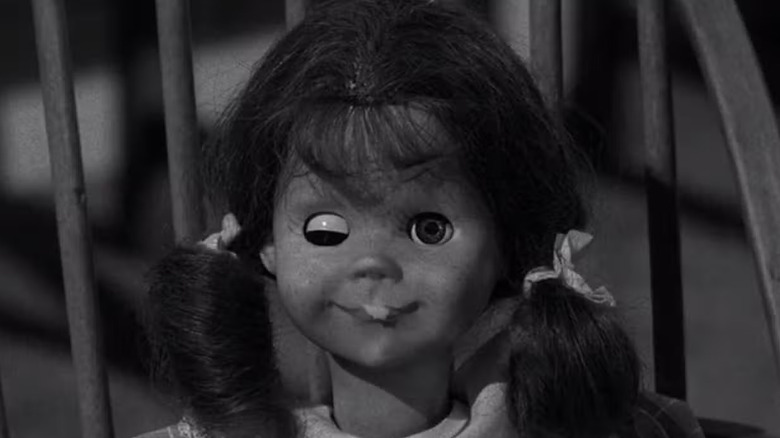
An iconic piece of horror storytelling that's influenced works as disparate as "The Simpsons" and "M3GAN," "Living Doll" comes from writers Charles Beaumont and Jerry Sohl.
The premise is simple: What if a children's toy wanted to kill you? The toy in question is Talky Tina (voiced by June Foray), bought by Annabelle Streator (Mary LaRoche) for her daughter, Christie (Tracy Stratford). Like many popular dolls, Talky Tina says cute things like, "My name is Talky Tina, and I love you very much."
Until Christie's stepfather, Erich (Telly Savalas), enters the picture. Then Talky Tina's ostensibly canned phrases become more and more hostile, culminating in outright threats of violence like, "My name is Talky Tina, and I'm going to kill you." Erich tries desperately to convince his blended family that this doll is not what it seems, though the script cleverly and uncomfortably positions him as a volatile, abusive figure himself, making it hard to believe or root for him.
This complication elevates the 8.7-rated "Living Doll" from silly horror to a jaw-dropping deconstruction of toxic family dynamics, and Bernard Herrmann's score is one for the books, too.
6. Will the Real Martian Please Stand Up?
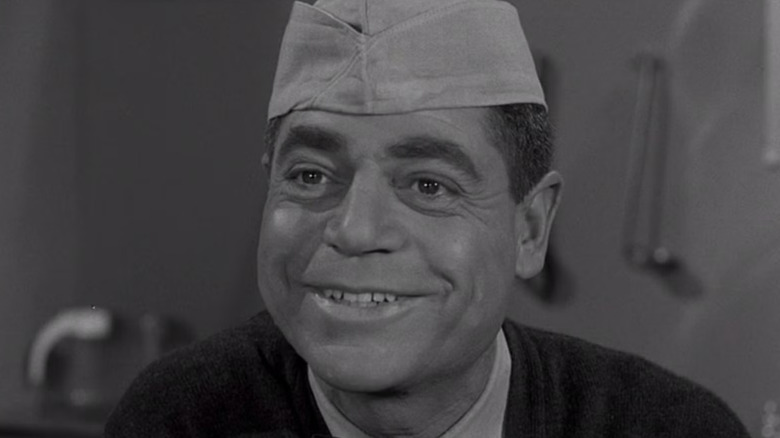
Another Rod Serling script from Season 2 — and a "Twilight Zone" Christmas episode — the 8.7-rated "Will the Real Martian Please Stand Up?" has many of the trademarks of Serling's most searing writing, with a central dynamic that recalls John Carpenter's "The Thing" or Agatha Christie's locked-room mysteries.
During Christmas time, state troopers Dan Perry and Bill Padgett (Morgan Jones and John Archer, respectively) investigate a possible UFO sighting in a small American town. Their clues lead them to the Hi-Way Café, a roadside diner with a few scattered individuals, including a bus driver (William Kendis), a dancer (Jean Willes), and the cook (Barney Phillips).
Perry and Padgett tell the restaurant patrons that they're suspicious of an alien, that no one is leaving, and that every person needs to prove their humanity. What follows is a chamber drama rife with antagonism, dehumanization, paranoid accusations, and social commentary about, among other things, Senator Joseph McCarthy's rooting out alleged communists during the Red Scare of the 1950s.
5. The Monsters Are Due on Maple Street
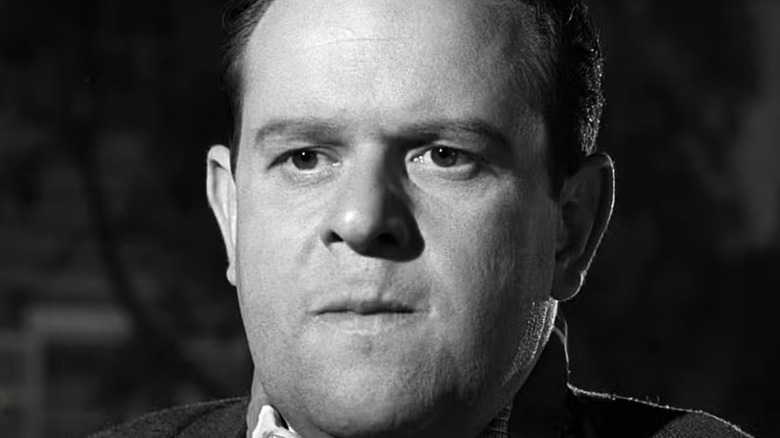
Beloved and influential, with obvious echoes in genre works like "The Purge" that document societal breakdown, "The Monsters Are Due on Maple Street" is a Rod Serling masterpiece, a towering and defining piece of "The Twilight Zone" rated 8.9 on IMDb.
Originally airing in Season 1, the episode begins with a mysterious shadow, a strange sound, and a bright flashing light over a typical suburban street. The residents originally think nothing of it, until young boy Tommy (Jan Handzlik) convinces the neighborhood adults that it's evidence of an alien invasion, and that these aliens are posing as regular humans.
In Serling's most effective works, humans have just a thin veneer of politeness over an inherently selfish, accusatory, and punitive core. But this episode never devolves into grimdark posturing. Even in its chilling ending, with one of the best and most echoing sentiments written in contemporary science fiction and horror, Serling gives us room to change. These are cautionary tales etched in glass, not stone.
4. Time Enough at Last
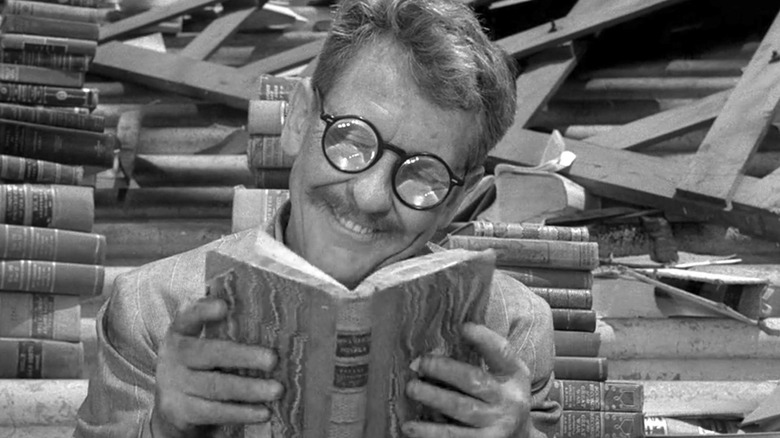
The eighth episode of the entire series welcomes back Burgess Meredith to this list and features one of Rod Serling's cruelest twist endings.
Adapted from a Lynn Venable short story, the episode stars Meredith as Henry Bemis, a man obsessed with books. He reads them day and night, much to the consternation of his customers at his bank and to his wife, Helen (Jacqueline deWit), who takes it upon herself to cross out key passages of his favorite works of poetry.
One day, Henry locks himself in the bank's vault to do some precious reading, and when he emerges, he finds that the world has been destroyed by the sudden onset of nuclear war. Bombs have annihilated his city, leaving him, seemingly, the last person on earth. What is a man to do?
Well, if you've seen any matter of pop culture referencing this episode (like "Modern Family" or "Family Guy"), you likely know the "unfair" fate that befalls poor Henry. But if you've somehow escaped the twist, then you have the 8.9-rated "Time Enough at Last" to experience the emotional destruction and see for yourself whether Henry deserved it.
3. To Serve Man
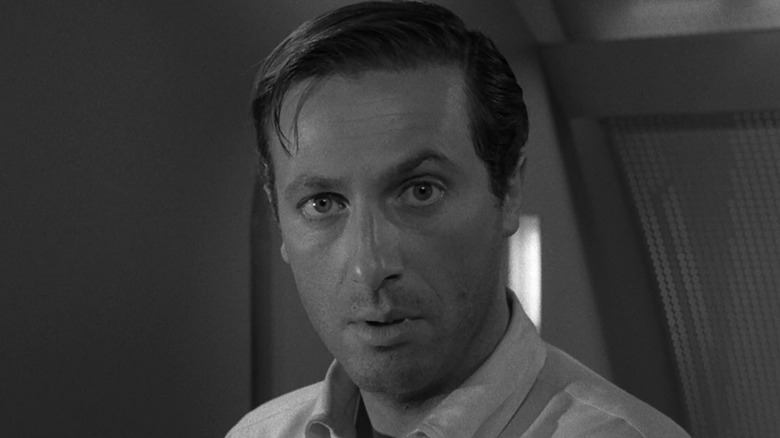
Another "Twilight Zone" episode referenced directly in a "Simpsons" "Treehouse of Horror" episode, and our first 9.0-rated episode, "To Serve Man" is one of Rod Serling's most abjectly nihilistic and, frankly, yucky.
Based on a short story by Damon Knight, "To Serve Man" begins with an alien invasion of Earth. The Kanamits (all played by Richard Kiel), a species that is ginormous and all have protruding foreheads, address the United Nations with a message of peace. The aliens have advanced pieces of technology that they wish to share with humans, fostering intergalactic cooperation.
United States cryptographer Michael Chambers (Lloyd Bochner) is skeptical but eventually gives in to the globe's unchecked love of the alien race. Chambers even signs up for a trip to the Kanamits' home planet, which is supposed to be a paradise.
But just before Chambers boards the Kanamits' spaceship ... well, again, if you've managed to avoid spoilers thus far, we don't want to be the bearers of bad news.
2. Nightmare at 20,000 Feet
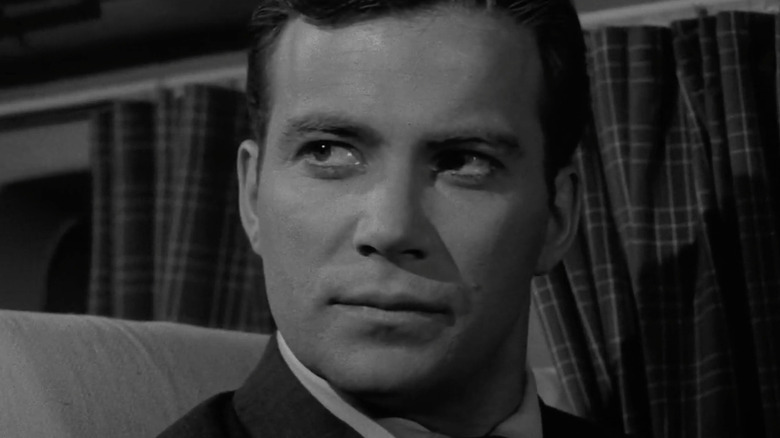
An action-packed thriller with an undeniably tense performance from William Shatner, "Nightmare at 20,000 Feet" is one of the out-and-out most fun "Twilight Zone" episodes, which is odd to say about an episode featuring anxieties, grotesqueries, and a devastating conclusion. But you can't deny that it's one heck of a ride, and IMDb agrees, giving it a 9.0 rating.
Iconic science fiction and horror writer Richard Matheson adapted his own short story for the episode directed by Richard Donner, starring Shatner as Robert Wilson, a salesman so afraid of flying that he spent time in a mental hospital after a breakdown on a flight. But here he is, on another plane, traveling with his supportive wife, Julia (Christine White), despite his obvious anxieties.
And then, Robert sees a literal gremlin (Nick Cravat) on the wing of the airplane through his window. This gremlin has chaos on its mind; it seems to want to destroy parts of the plane just to mess with poor Robert. Of course, no one will believe him. Can Robert stop the gremlin and land safely? Or is this another manifestation of his fear and mental illness?
If you are afraid of flying, maybe give this episode a skip. For everyone else, strap in, put on your oxygen mask, and hang on tight.
1. Eye of the Beholder
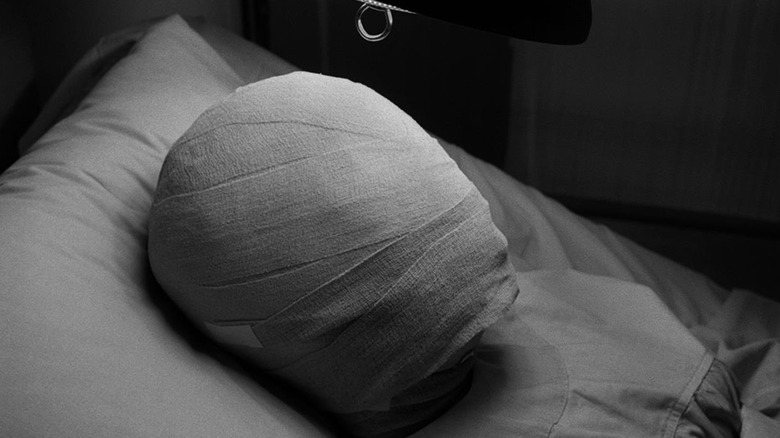
The best "Twilight Zone" episode, as rated by the users of IMDb with a 9.1, is "Eye of the Beholder," a Serling-penned episode from Season 2. In many ways, it's the culmination of Serling's most beloved interests — it takes place in a totalitarian society, it zooms in on humanity's basest and darkest fascinations, and it wallops the viewer with one hell of a twist.
Janet Tyler (played in tandem by Maxine Stuart and Donna Douglas) is covered in bandages, having undergone her 11th procedure of thorough and invasive plastic surgery. These surgeries have been demanded by the fearsome State — a repressive government that insists all members of its society look the same.
Janet's medical staff, lensed in curious shadows by director Douglas Heyes, describe her in horrible terms, insisting to the viewer that she is as ugly as ugly gets. And when one somewhat sympathetic doctor (William D. Gordon) speaks to the idea that physical beauty isn't worth such pain, he is berated with the threat of treason.
Again, the final moments of "Eye of the Beholder" are so wild and iconic that if you haven't experienced them, you must, posthaste. Suffice it to say, it gives visceral truth to the cliche that beauty is very much in the eye of the beholder.