

15 Best Political TV Shows Of All Time, Ranked
As exhausting as politics is, there's no denying it makes for extraordinary entertainment. The worst examples in scripted television are overly precious with the subject, steering themselves (intentionally or otherwise) toward self-conscious moral grandstanding and browbeating, with the covert intention of convincing a viewer their neighbor might be the enemy. When done right, political shows unite the audience rather than divide, exposing how political systems work for and against them.
The best of the political subgenre has taken many shapes — sunny workplace sitcoms, idealistic character studies, salacious melodramas, and pitch-black satires. At their most optimistic, the shows try to present the process as it should work within the bounds of reality; otherwise, they attack the bureaucratic dysfunction, corporate intervention, and self-serving partisanship that prevent the will of the people from being heard. The shows below have something to offer anyone, regardless of what end of the political spectrum they come from.
15. Scandal
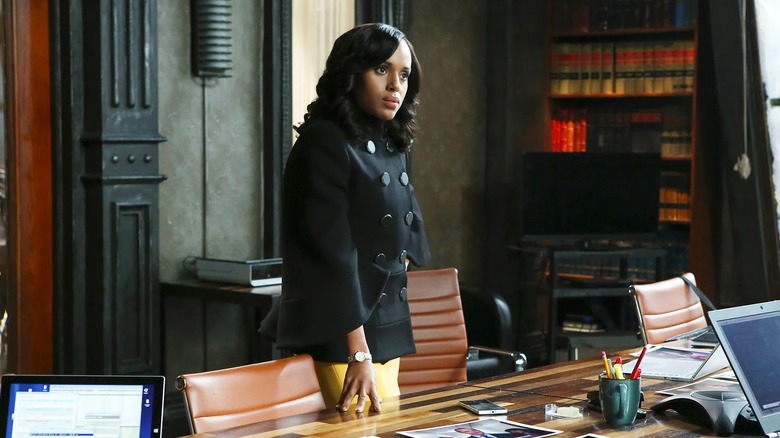
Is "Scandal" the most outrageously unrealistic series on this list? Yes. Is it also among the most entertaining, addictive, and culturally impactful political dramas ever made? Unimpeachably, yes.
At its most popular, Shonda Rhimes' political soap opera was watched by an average of 12 million people every week, and became a cultural behemoth thanks to social media. Most of all, it was a landmark in on-screen representation for Black women, with Kerry Washington's Olivia Pope leading a dominant network drama as a morally compromised antihero. "Scandal" was originally written around her white-hat Washington fixer running a quasi-clandestine crisis-management firm to cover up career-ending scandals for the world's most powerful people. Of course, because Rhimes is nothing if not the master of creating dramatic intrigue (even at the cost of credulity), this fixer is also having an affair with the sitting U.S. president (Tony Goldwyn's Fitzgerald Grant).
It had its peaks and valleys and was far more comfortable being a broadly entertaining broadcast drama than a serious exploration of Washington's dark side. Election rigging, conspiracy, murder, surveillance, perfidy, etc. — the "Scandal" ensemble basically commits every unforgivable political sin possible, often to the most extreme degree, and is typically let off the hook by the writers. A reader's mileage will certainly vary depending on how much of that they're willing to forgive for the sake of must-watch TV.
14. Boss
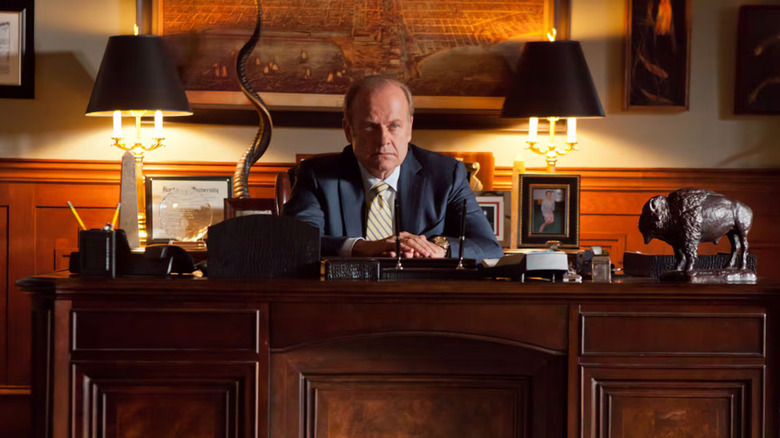
Of the 2010s political dramas that deliberately chose to eschew the idealism of a certain Aaron Sorkin series (which we will, of course, be discussing somewhere on this very list), "Boss" is the most obvious in its approach. That doesn't make it any less striking or audacious, relative to the time.
It doesn't feel like an accident that the name subtly evokes the mystique of organized crime. "Boss" is essentially "The Sopranos" mapped onto Chicago mayoral politics. This Starz series stars Kelsey Grammer as fictional Mayor Tom Kane, the deeply corrupt scion of a Chicago political dynasty. (Despite Grammer's statements to the contrary, many outlets quickly pointed out several similarities between Kane and real Chicago Mayor Richard M. Daley.) Where "Scandal" and other series on this list had get soapy with it to imagine corruption in the Obama era, "Boss" had a prestige-level clarity about how criminality can flourish in banal yet baffling ways. Like James Gandolfini's Tony Soprano, Kane receives a diagnosis at the start of the series that narratively serves to threaten his career and challenge his priorities — thematically, it feels like a manifestation of the hidden institutional decay "Boss" wants to push into the public.
"Boss" ran for just two seasons before being canceled in 2012. It feels all the more relevant today, particularly because of its interrogation of politicians clinging to power despite health concerns that undermine their ability to serve the public.
13. House of Cards
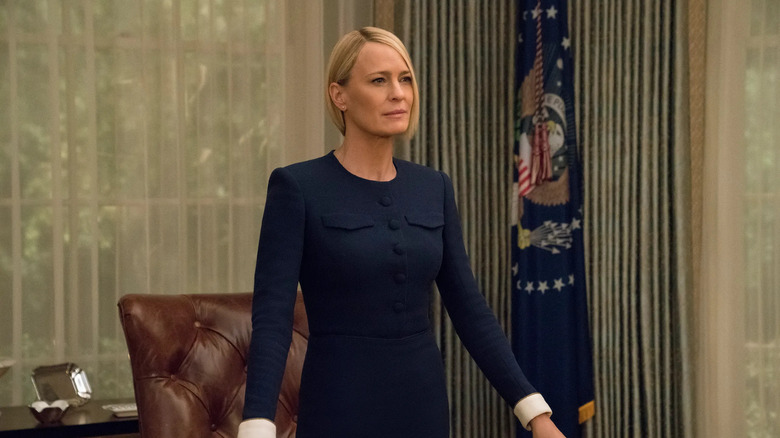
We'll assume that the vast majority of our readers are aware of and capable of navigating for themselves the big, Kevin Spacey-shaped asterisk that will sadly always be attached to "House of Cards." Outside his association with the series and a viewer's relationship with him as an actor, this really was once the greatest political series on TV — and, still outside those parameters, it suffered one of the most disappointing declines in quality we saw in the 2010s.
For anyone obsessed with this subgenre or the evolution of the prestige TV antihero, the first two seasons are required viewing. Spacey plays Frank Underwood, a congressional whip (Washington for "guy who bullies other congresspeople into toeing the party line") who is denied the position of secretary of state by the very president-elect he helped to win. The first two seasons follow his vengeful quest for power that lays bare the vulnerabilities of the American political system — access journalism, lobbyists, corporate donors, compromised and subservient politicians, and the sheer, Machiavellian ruthlessness of those with the will to succeed in politics. "Boss" — and another, higher-ranked show on this list — are the "King Lear" of political dramas; "House of Cards" is "Richard III."
12. The Americans
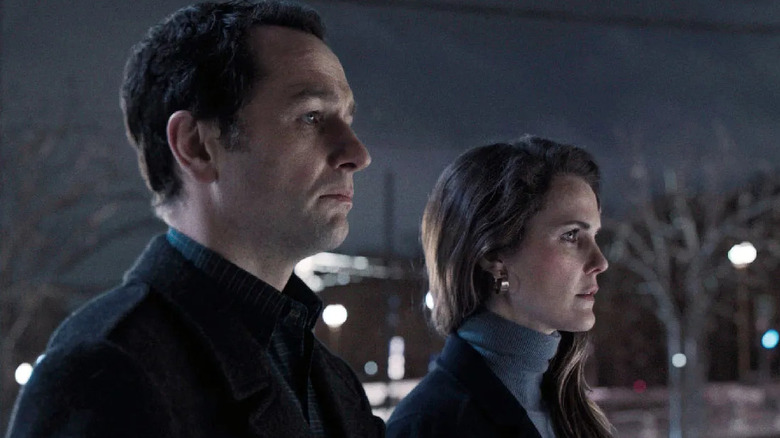
"The Americans" is, undeniably, one of the greatest shows of all time, period. If this list were purely ranked in terms of quality, it would be much closer to the top — in fact, it's a testament to its unignorable greatness that it felt wrong to make a "Best Political TV Shows" list without it, despite the fact that it doesn't engage with politics in the same way as any other series on this list.
The FX series is first and foremost a spy thriller about two KGB agents (Matthew Rhys and Keri Russell) who are deeply embedded in Ronald Reagan's Washington, D.C. Its politics manifest in a way most people, particularly Americans, might not consider explicitly political. As is evidenced by most of the shows on this list, we broadly process politics, narratively speaking, as the story of how a person wields power in office. In "The Americans," we are asked to question how a person wields trust, empathy, identity, and relationships, all of which are absolutely political (especially when you start thinking internationally, as "The Americans" does).
11. The West Wing
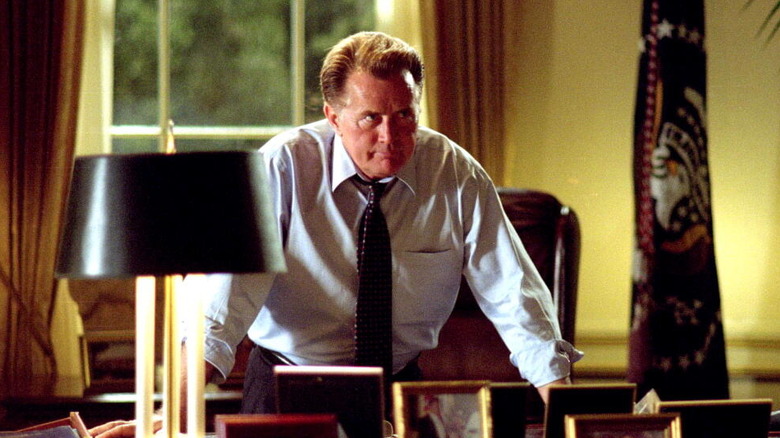
For better and for worse, "The West Wing" was the defining political television show of the 2000s. Aaron Sorkin's captivating NBC series was so popular and culturally impactful that it had a real effect on Washington, D.C. — numerous staffers preparing for the first term of President Barack Obama professed their admiration for the show, and described it as influencing their career path and ideology. And, for what it's worth, a 2022 Ipsos poll found that Americans surveyed over the age of 18 believed it to be the most realistic political show of all time.
Generations raised through Bush, Obama, and Trump have found comfort in the idea that — at its best — American politics should be about smart, qualified, compassionate people arguing with each other on behalf of the people, attempting to do the right thing even when that feels impossible. Martin Sheen's Jed Bartlet is depicted as human in the same way Superman is, with a few relatable flaws that struggle against his defining empathy and humility. When he's in the Oval Office, "The West Wing" feels fantastically — and, admittedly, inspiringly — heroic.
There are two major reasons for its low-ish placement on this list. First, after Sorkin's exit, the show takes a steep dive. Second, there's something to be said of Sorkin's questionable depiction of bipartisan cooperation, which hasn't stood the test of time even by his own standards.
10. The Good Wife
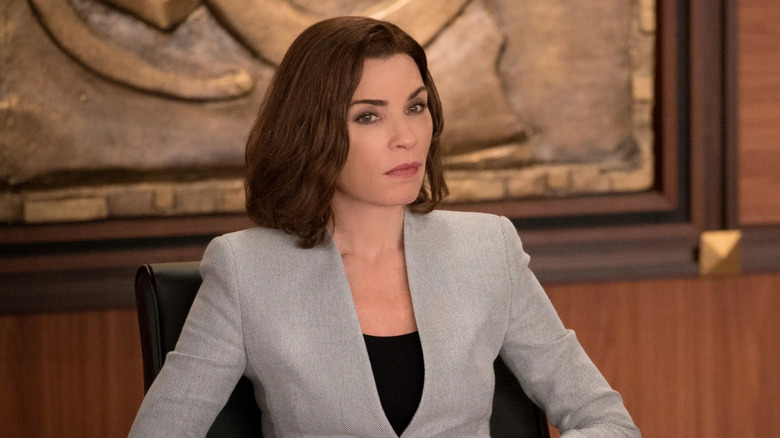
Despite how often politics and the law intersect, it's rare for a show like "The Good Wife" to come along and examine them both. Robert and Michelle King created the CBS series to explore and challenge how the wives of powerful politicians are understood. Julianna Margulies plays Alicia Florrick, a former lawyer who re-enters the workforce to support her family after her husband, a state's attorney (played by Chris Noth), destroys his life and career with accusations of sexual misconduct and corruption.
Where most legal dramas keep the profession inside the courtroom, "The Good Wife" allows itself to follow where a lawyer's pursuit of power might take them. Alicia's husband's political career is a major recurring storyline throughout the series; Alan Cumming plays his campaign strategist, a slightly less corrupt Olivia Pope; and Alicia herself eventually enters the political world. Premiering in 2009, just a few years after "The West Wing" ended, it brought healthy cynicism to American network television, portraying politicians as flawed, often selfish people who nonetheless saw themselves as trying to do the right thing.
9. Show Me a Hero
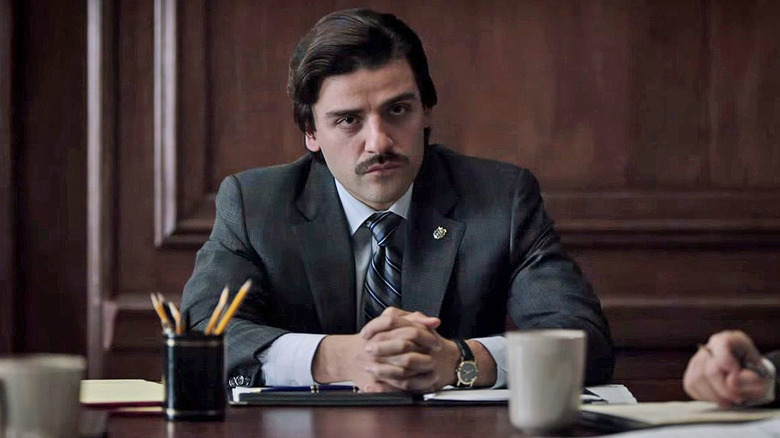
Coming from co-writer David Simon, one of the greatest crime drama showrunners of all time, "Show Me a Hero" is expectedly nuanced yet surprisingly hopeful about the will of the people to overcome fatally stagnant political processes. If you were compelled by his deconstruction of the war on drugs in "The Wire" and police corruption in "We Own This City," this 2015 HBO biographical miniseries exploring desegregation in urban development is the perfect hidden gem for your next binge.
Pre-Star Wars Oscar Isaac stars as Nick Wasicsko, a real politician who became the 28-year-old mayor of Yonkers, New York, in 1988, at the same time the city had been found to be using public housing initiatives to segregate Black and brown communities. A judge orders 200 new units to be built in white neighborhoods — even so, Wasicsko is forced to go to extraordinary lengths to actually get the city to meet these legal demands.
Those familiar with Wasicsko's story and/or the F. Scott Fitzgerald quote from which the series derives its title may enter "Show Me a Hero" bracing for tragedy. Simon certainly doesn't shy away from it. At the same time, while the series does explore how politics can destroy one's idealism, it also argues that change is possible on a personal and political level.
8. Tanner '88
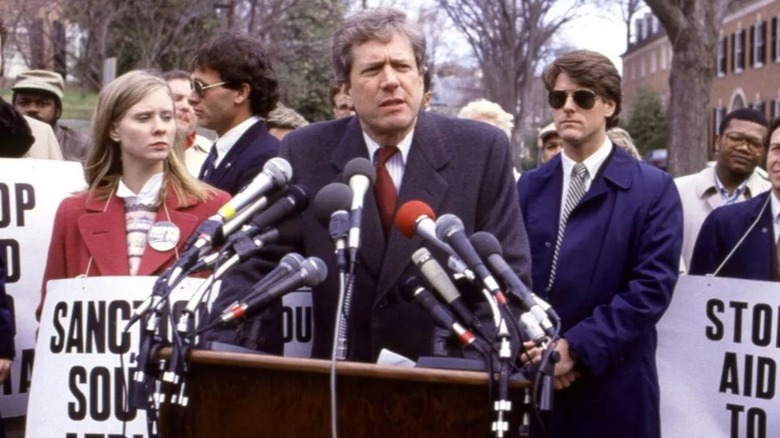
"Tanner '88" is a truly one-of-a-kind program that simply couldn't be made in today's American political climate. This fact comes down to the structural conceit of the 1988 HBO miniseries — Michael Murphy plays Jack Tanner, a fake congressman running in the real 1988 U.S. presidential election. Robert Altman and Garry Trudeau embedded the character in real campaign moments with real candidates from that election (who surprisingly played along with the joke).
It's carried by a significant amount of nostalgic charm. Anyone who was around for the 1988 election will undoubtedly find it to be a transportive if surreal time capsule of the era's politics in America. Underneath that, "Tanner '88" does dig at something far more evergreen in how television and the media have shaped our perception of our elected officials. Tanner's "campaign" starts in earnest because a flattering candid sound bite gets leaked to the press — every moment after that further blurs the line between authenticity and performance.
7. The Diplomat
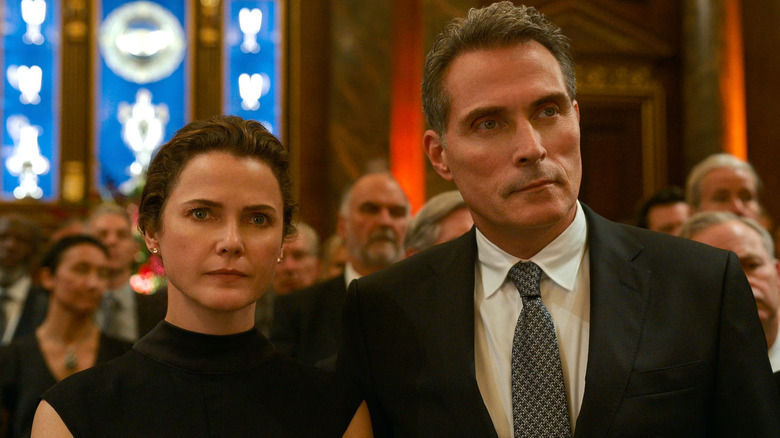
Only one series on this list is currently ongoing. Naturally, it's the best political drama on television.
Premiering in 2023, "The Diplomat" has gotten stronger with each season. "The Americans" star Keri Russell and Rufus Sewell play married diplomats Kate and Hal Wyler, respectively. When the series begins, Kate has recently been appointed to an ambassadorship by the sitting U.S. president; Hal, who served as an ambassador to two countries before a political blowup ended his career, is pushed to the sidelines. He's all at once indispensable and deeply resentful of their situation.
The series is a geopolitical thriller and a relationship drama wrapped together, and is far more successful at sustaining both elements than "House of Cards." Because the show is ongoing, we're going to be especially careful of spoilers here — we'll say only that part of its greatness is how willing it is to upset the status quo every season.
6. The Thick of It
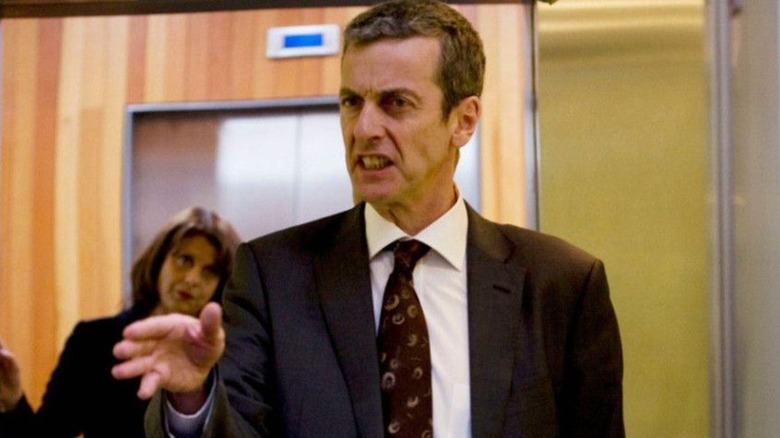
Stylistically, "The Thick of It" is quietly one of the most influential political shows of the 21st century. Two selections on this list — ranked even higher because they improved upon its formula and achieved greater cultural impact as a consequence — would absolutely not exist without it.
Creator Armando Iannucci takes the themes of "Tanner '88," loads them with cynicism and venom, and sets them totally loose in a fictionalized version of contemporary British politics. This swear-laden series revolves around Peter Capaldi's terrifyingly hilarious Malcolm Tucker, a vicious senior communications director who takes it upon himself to shape the story of his government from within. It scathingly reduces governance to spinning, personal branding, public optics, and how well one can bully and lie oneself through a crisis.
Iannucci said he was inspired to write the show after seeing how Tony Blair helped sell the invasion of Iraq, a subject which later became the setup for an Oscar-nominated spin-off film, "In the Loop." Both the film and the series become increasingly, painfully relevant as public discourse consumes actual politics.
5. Yes Minister
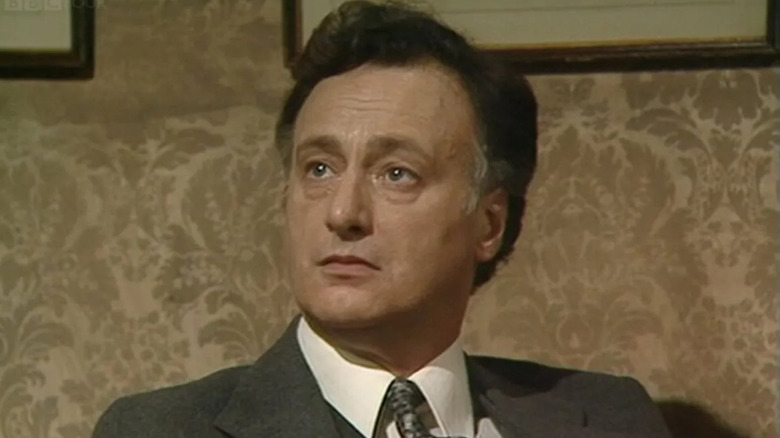
Of course, more influential still than "The Thick of It" is the show that helped propel Armando Iannucci to write it in the first place. "Yes Minister" is the template for the modern political satire. All the way back in 1980, it dared to imagine politicians as imperfect and in most cases incapable of serving the people for the most frustrating yet banal reasons. In short, it's a studio-audience Britcom where politicians struggle to get anything done because of terminal bureaucracy.
With regard to partisan ideology, "Yes Minister" is actually somewhat apolitical. It depicts systems in conflict rather than parties. Today, that might have a disappointing flattening effect. Given the time in which this was made, however, it deserves credit for presenting a then-novel argument to television audiences — that politics can be unproductive not because people believe the wrong things, but because no one working in politics seems able to turn belief into action. In 2006, a year after Iannucci got "The Thick of It" on air, U.K. MPs voted "Yes Minister" as the best political comedy ever made.
4. Mrs. America
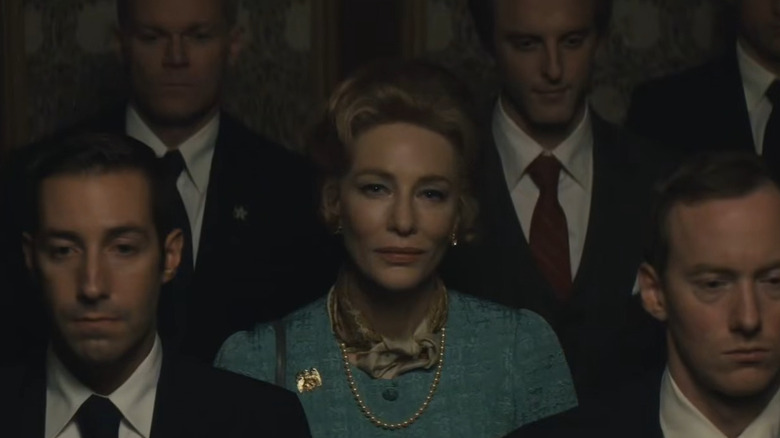
Often, bad political stories fall flat because they present a complicated issue with clear heroes and villains. "Mrs. America" is the exception that proves the rule.
Decades on from the fight to pass the Equal Rights Amendment, you'd be hard-pressed to find a reasonable American who would disagree with its aim to legally codify equality between men and women at the federal level. Champions of the amendment like the late Gloria Steinem — who appears in the series, played by Rose Byrne — are widely remembered as heroes for their activism. A series merely about their accomplishments would struggle to feel like more than a history lesson. Thus, it was a daring and dramatically rewarding decision for the FX series to tell the story of the ERA from the perspective of the woman who thwarted its passing.
Cate Blanchett's Phyllis Schlafly turns this moment in history into an opportunity to expose how, across decades and into the present day, opportunists can harness the power of culture wars for their own gain. This complex lens also gives "Mrs. America" license to explore the ideals and limits of this wave of activism.
3. Parks and Recreation
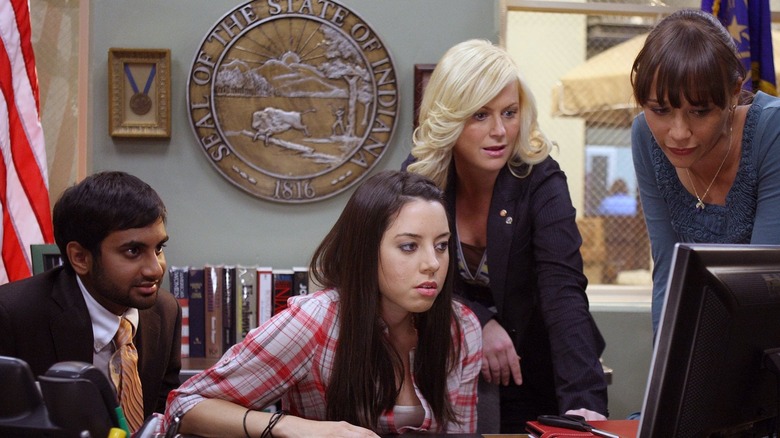
Today, "The West Wing" is often described as the go-to comfort show for those disheartened by the current trend in American politics. "Parks and Recreation" is the better option by far.
Rather than lose itself in attempting to demystify or mythologize Washington, this NBC sitcom uses the workplace mockumentary format (which co-creator Greg Daniels helped popularize through "The Office") to explore how governance works at the local level. It's the only show on this list that actually reads as a love letter to politics as we understand it today — the idealism of civil service embodied by Amy Poehler's Leslie Knope and the competence of her team exist alongside ridiculous bureaucracy, unqualified and cynical political adversaries, and people who are as uninformed as they are passionately, combatively engaged in the political process.
Every fight is a mess, but "Parks and Rec" argues that mess is the whole point. It also reads as relatively realistic for anyone who's stumbled upon livestreams of real city council meetings.
2. Succession
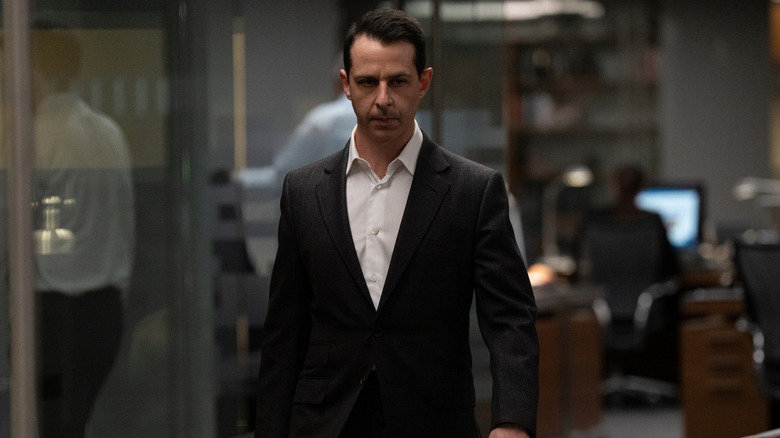
"Succession" doesn't immediately announce itself as a political satire — yet, if you think about it, it's hard to honestly describe it as anything else. While the Shakespearean family dynamics are what drive the emotional drama of the HBO series, it's ultimately a story about the nature of political power in the world today. To say "Succession" isn't a political drama because it focuses on a massive corporation is like saying "Better Call Saul" isn't a crime drama because it focuses on lawyers.
And, in a way similar to that genre-slash-thematic relationship in "Better Call Saul," the political element of "Succession" increases the deeper we get into the story. In Season 1, characters float political aspirations, flaunt connections to the president and previous political conquests, and engage with the process through isolated backroom dealings with specific figures. By Seasons 3 and 4, Waystar RoyCo and its news arm, ATN, are depicted as a machine capable of deciding the next president. It's proven to be eerily prescient about the tech industry's takeover of media for political influence, and in its depiction of terminal corporate consolidation.
1. Veep
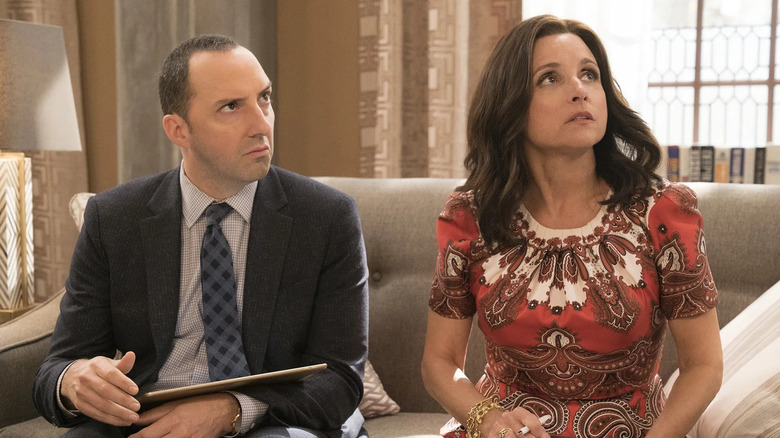
In the late 2000s, young staffers came to Washington with "The West Wing" in their hearts. By 2015, that same crowd was describing its direct antithesis as the most realistic show about American politics.
"Veep" is arguably the funniest sitcom HBO's ever produced, but it's absolutely not a comfort watch. It explores Washington politics from the perspective of the bitter, narcissistic, and constantly sidelined Vice President Selina Meyer (an all-time-great performance from Julia Louis-Dreyfus). Each episode follows her attempts to push her career forward while desperately clinging to what little power she has.
It's decidedly pessimistic about the American political system as is. Using the guiding "West Wing" pillars of qualification, competence, and moral courage, "Veep" is consistently contrarian — qualifications are earned through backroom deals, loopholes, and accidents; intelligence is rejected, while genuinely competent people are smart enough to stay out of politics entirely; and morality at large is treated as a weakness (as the finale makes clear). On their own, these changes make for a blisteringly funny black comedy in the same vein as "It's Always Sunny in Philadelphia" or darker episodes of "Seinfeld." Unfortunately, they've also resulted in a show that has even former presidents praising its accuracy.