

Former NCIS Star Pauley Perrette Had A Recurring Role On An Acclaimed '90s Legal Drama
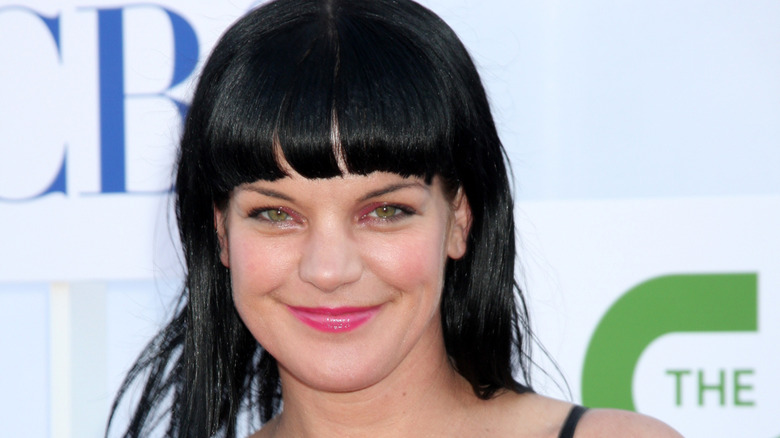
Pauley Perrette is best known for playing forensic scientist Abby Sciuto on "NCIS," which is almost the textbook definition of a procedural. Her first major TV role, however, was on an acclaimed '90s legal drama that did something different than nearly every other show of the era. Rather than having a case of the week, "Murder One" was doing longform storytelling — a fairly novel idea at the time.
Perrette joined "Murder One" two years after her screen debut in a 1994 episode of "ABC Afterschool Specials." The ABC legal drama, which premiered on September 19, 1995, starred Daniel Benzali as defense attorney Ted Hoffman. The entire 23-episode first season followed him as he defended a young Hollywood star (played by Jason Gedrick) accused of the murder of a 15-year-old girl. Patricia Clarkson and Stanley Tucci co-starred.
Critics lauded the show and its then-audacious effort to tell one story across an entire season, but the ratings were not very good. Nevertheless, ABC renewed it for a sophomore season, albeit with some big changes. Benzali left the show and was replaced by Anthony LaPaglia, whose character, Jimmy Wyler, was a young attorney who stepped in to run the firm. Perrette joined the cast in a small but recurring role as Gwen, one of his assistants. The other big change was that Season 2 focused on three cases rather than just one, in an apparent effort to make it a bit more manageable for pre-DVR and pre-streaming television audiences to follow.
One of the cases in Murder One's second season was based on the O.J. Simpson trial
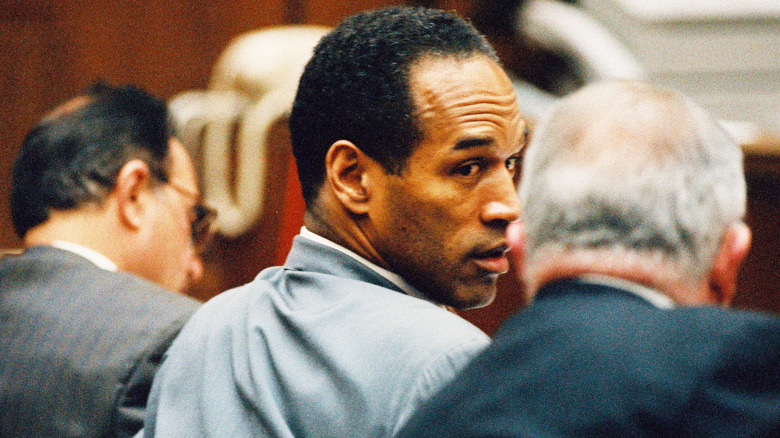
The second of the three cases in Season 2 of "Murder One" was clearly based on O.J. Simpson's murder trial and subsequent acquittal; the verdict came out on October 3, 1995, and season two premiered almost exactly a year later, on October 10, 1996. The storyline followed a Black basketball star who was accused of murder and eventually confessed on the stand, only for the jury to acquit him.
Despite the tweaked format and the ripped-from-the-headlines case, "Murder One" didn't see the necessary viewership improvement and continued to struggle in the ratings. The show ended its regular run in January 1997. The final case aired as a three-part miniseries in May of that year, after ABC had declined to renew the show for a third season. Three decades later, it seems as though there's a swanky new limited series every week that follows one murder or legal trial from premiere to finale; "Murder One" was simply too early.
British audiences loved Murder One
While "Murder One" didn't catch on in America, the series was pretty successful across the pond. In fact, a 1996 news story in The Independent noted that the show was drawing in 3.5 million viewers on the "middlebrow" BBC2 channel. Those figures were comparable to those of hits like "Star Trek: The Next Generation."
These millions of viewers were enjoying the first season of "Murder One," tuning in each week for the first 20 episodes. The 20th episode ended with the jury getting ready to reach a verdict, but the 21st episode was MIA the following week. The BBC had shelved the show for a few weeks to make room for its Olympics coverage, and it reportedly fielded plenty of complaints from viewers who were dying to know who had really killed the girl. The channel finally aired the last three episodes of "Murder One" in August of 1996.