

15 Best Main Character Deaths In TV History, Ranked
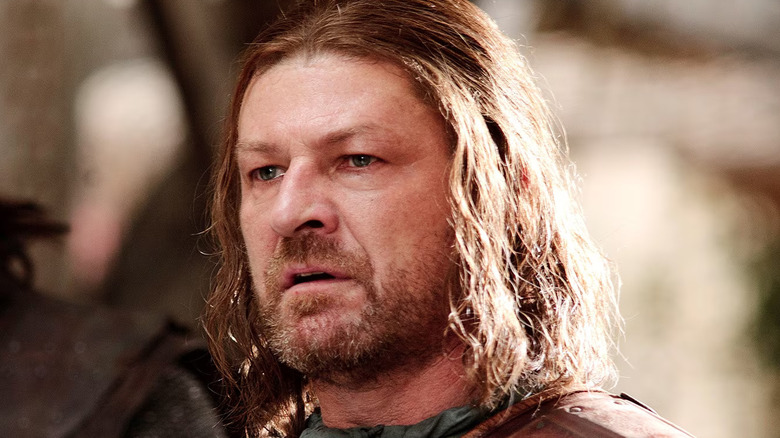
Of all the trends made popular by the era of prestige television, the most narratively impactful (broadly speaking) was the endangerment of the protagonist. Especially after the beheading of a certain honorable ruler, fans could no longer be certain that the most noble or even central characters would survive every episode. In one way, it made the opposite true — the more amoral a protagonist was, the more likely it was that they'd survive to meet a poignant end in the series finale (like the most infamous "cook" in TV history).
Following our previous list of the 100 most shocking deaths on television, we're looking specifically at main character deaths here. This excludes supporting series regulars and major antagonists (sorry — no Gus, no Shane). We've also elected to disqualify deaths that were later reversed (Jon Snow, Buffy Summers) or presumed deaths that are too ambiguous to pin down (Tony Soprano). With all that being said, this is your final spoiler warning — every entry below reveals how its show's main character dies.
15. Joel Miller (The Last of Us)
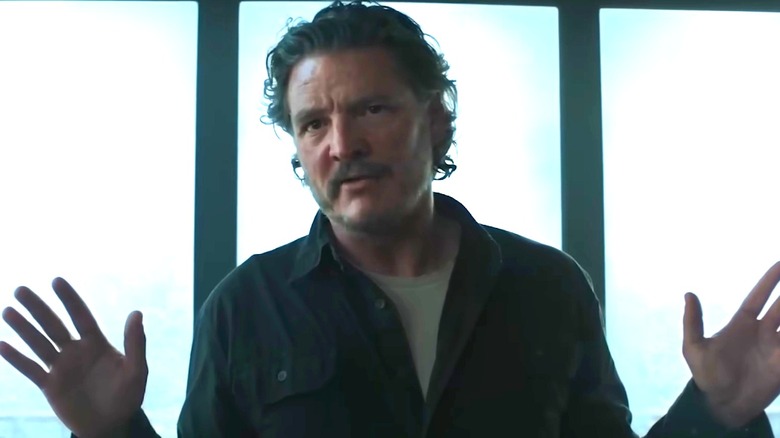
CAUSE OF DEATH: Beaten, tortured, and stabbed by a driving iron
THE EPISODE: Season 2, Episode 2, "Through the Valley"
ORIGINAL AIRDATE: April 20, 2025
This is the death on this list that's probably least deserving of that strong spoiler warning. In fact, it hardly needed one when the episode aired. The death of Joel Miller was a cultural flashpoint within the gaming community that leaked into the mainstream well before the HBO adaptation premiered.
That foreknowledge (along with the show's arguably over-reverent approach to the source material) is what keeps Joel's (Pedro Pascal) death at the bottom of our list. What TV viewers might not have known, however, is that one half of Joel's replacement is the woman who killed him. After Abby (Kaitlyn Dever) ambushes Joel and beats him to death to avenge the murder of her father, she gets to share the second season's focus with Bella Ramsey's equally vengeful Ellie. It was a widely expected death, and one handled with less subtlety than in the game. Nonetheless, it effectively catalyzes the show's exploration of violence, forgiveness, and grief.
14. Barry Berkman (Barry)
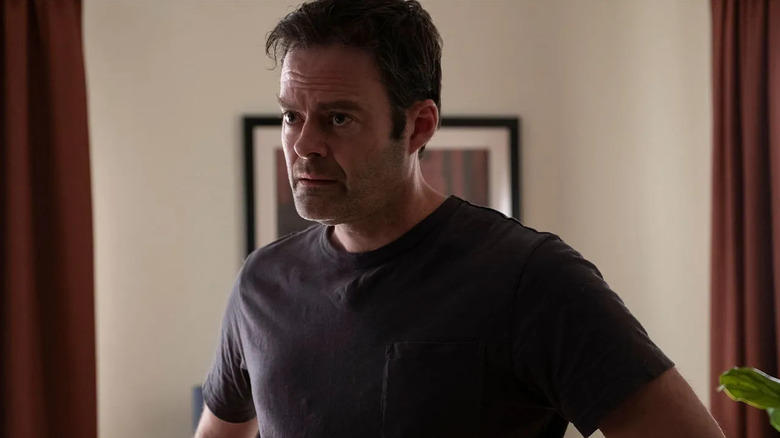
CAUSE OF DEATH: Shot in the head with Rip Torn's revolver
THE EPISODE: Season 4, Episode 8, "wow"
ORIGINAL AIRDATE: May 28, 2023
In the series finale, "wow," Barry Berkman finally accepts the role he was always destined to play: murderer. After a manic attempt to reunite with his family, Barry returns to the home of Gene Cousineau (Henry Winkler), his former acting mentor, whose girlfriend Barry killed years prior. Just after Barry has a sudden moment of moral clarity, deciding to turn himself in and provide closure for his victims once and for all, Gene appears with a truly Chekhovian gun the show had hidden in plain sight for years. All Barry gets out before his death is a flat "Oh, wow."
It's a perfect way to kill the character without the legendary spectacle of a gunfight — though the show's controversial decision to have him fictionally canonized by Hollywood undercuts its potential subversiveness.
13. Light Yagami (Death Note)
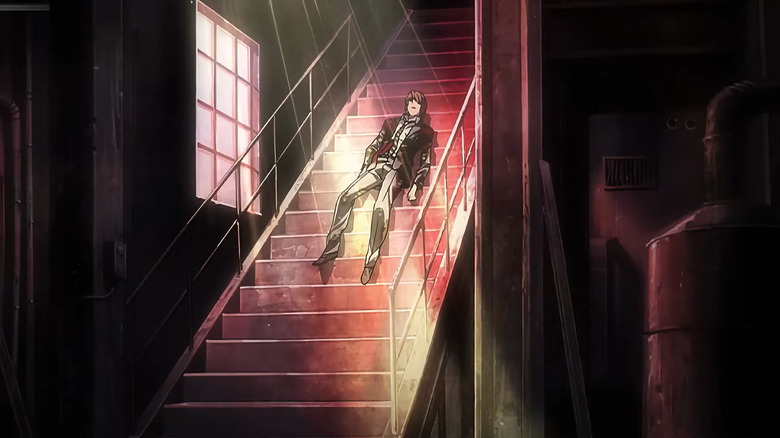
CAUSE OF DEATH: A heart attack after his name is written in the titular Death Note
THE EPISODE: Episode 37, "New World"
ORIGINAL AIRDATE: June 27, 2007
"Death Note" has long been hailed as an essential piece of Japanese anime, turning Tsugumi Ohba and Takeshi Obata's manga into a largely satisfying, narratively faithful crime thriller. It also confronts the same ideas "Barry" did over a decade afterward, and without announcing itself as overtly a takedown of antihero tropes.
Both shows end similarly, with "Death Note" antihero Light Yagami (a vigilante serial killer, originally voiced by Mamoru Miyano) being killed relatively senselessly and without spectacle before he can be lawfully held accountable for his crimes. In Light's case, however, his death also functions as a promise fulfilled — the demon Ryuk (Shidō Nakamura) told Light this is how his journey would end. Beyond prophesying his demise or serving as a final twist, Ryuk's invocation of their original pact more artfully deflates Light's idea of himself as a hero. His murders were always just a means to make the lives of two evil spirits less boring.
12. Lucius Vorenus (Rome)
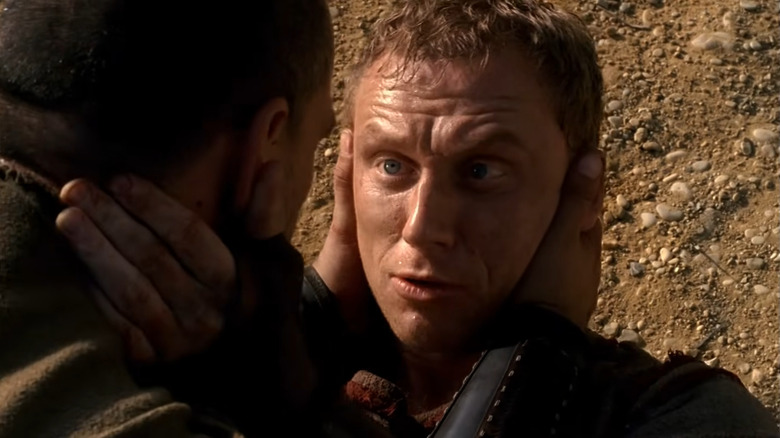
CAUSE OF DEATH: Fatally wounded in a battle with Roman soldiers
THE EPISODE: Season 2, Episode 10, "De Patre Vostro (About Your Father)"
ORIGINAL AIRDATE: March 25, 2007
If you only know Kevin McKidd as a doctor on "Grey's Anatomy," it's because you still haven't seen his greatest work in "Rome." The series was "Game of Thrones" before "Game of Thrones," acclaimed in its time for its bloody sword-and-sandal action sequences. It's also just as fearless when it comes to killing its heroes.
McKidd's Lucius Vorenus travels with fellow soldier Titus Pullo (Ray Stevenson), as they attempt to flee Egypt with the child of Cleopatra. They wind up in a skirmish with Roman soldiers at a checkpoint, during which Lucius is fatally wounded. McKidd's performance as he demands to be taken home is enough of a reason for the death to be included on this list — the fear and desperation is strikingly vulnerable for a 2000s hero of this kind. The series lets his last breaths take place off-screen, after a tender and tragic scene where Lucius gets to see his estranged children one last time.
11. Norman Bates (Bates Motel)
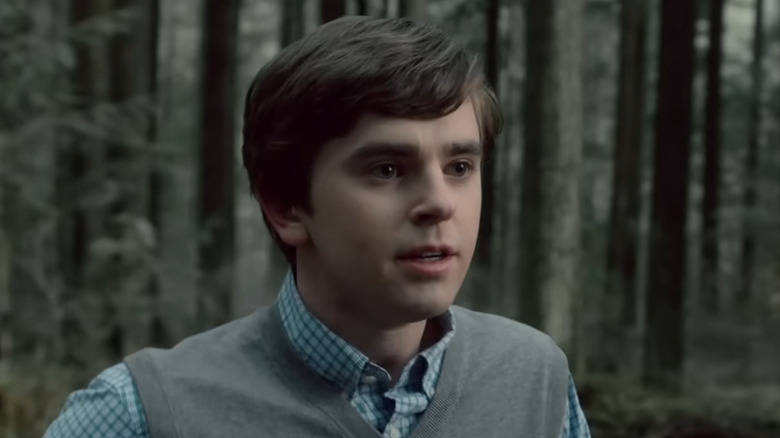
CAUSE OF DEATH: Forced his last living family member to shoot him
THE EPISODE: Season 5, Episode 10, "The Cord"
ORIGINAL AIRDATE: April 24, 2017
The achievement of "Bates Motel" is that it deepens what was already one of the most popular and psychologically rich horror stories of all time. The defining off-screen relationship of "Psycho" — between Norman Bates and his mother, Norma — is the main focus in this A&E series, where it is rendered as a contemporary tragedy.
Norman (Freddie Highmore) had already killed Norma (Vera Farmiga), setting the stage for the series to potentially repeat the beats of the Alfred Hitchcock film. Instead, the series further remixes the tale to imagine what would happen to Norman if he wasn't captured. He is caught by his half-brother, Dylan (Max Thieriot), who tearfully shatters Norman's delusion that Norma is still alive (poetically destroying his own withering belief that Norman's life was salvageable). Rather than get help, Norman begs Dylan to reunite him with his mother, lunging at him with a knife (with perfect Anthony Perkins form) to force Dylan to shoot him.
10. Nucky Thompson (Boardwalk Empire)
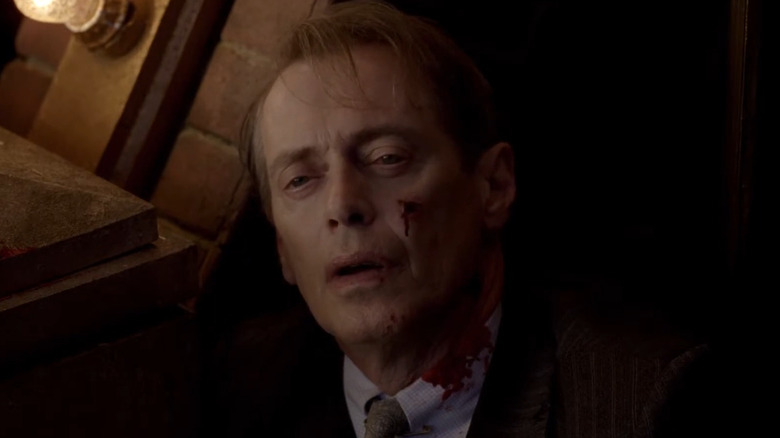
CAUSE OF DEATH: Shot on the boardwalk by the grandson of his first victim
THE EPISODE: Season 5, Episode 8, "Eldorado"
ORIGINAL AIRDATE: October 26, 2014
"The Sopranos" ends with a black screen that intentionally denies you closure about its central character. Seven years later, Terence Winter went in the opposite direction to end his own show, "Boardwalk Empire," neatly tying up a gangster's legacy of violence with a shocking return from the show's past.
While taking one last stroll down the Atlantic City boardwalk he once dominated, Nucky Thompson (Steve Buscemi) is confronted by his new protege, Joe Harper. Harper ultimately reveals himself to be Tommy Darmody (Travis Tope), the son of Nucky's former protege, Jimmy Darmody (Michael Pitt's character, whom Nucky callously executed at the end of Season 2). The delayed retribution for Jimmy's death and the return of the aged-up Tommy are gasp-inducing enough on their own. What really drives the death home is the revelation of Nucky's first truly evil act — the betrayal of a young Gillian Darmody.
9. Nell Crain (The Haunting of Hill House)
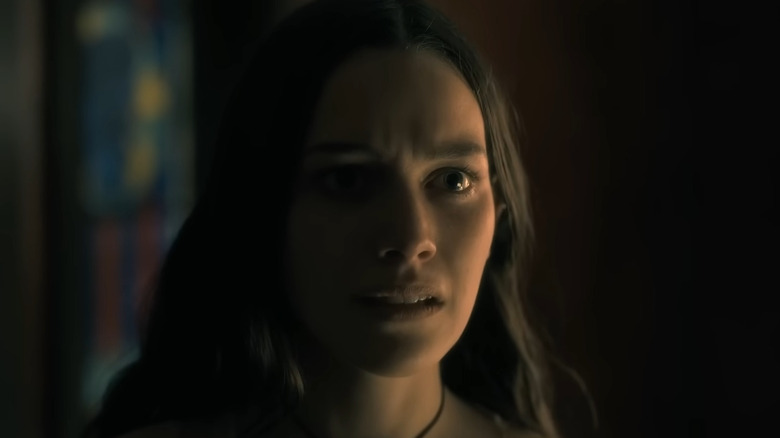
CAUSE OF DEATH: A hanging that turns her into her own demon
THE EPISODE: Episode 5, "The Bent-Neck Lady"
ORIGINAL AIRDATE: October 12, 2018
The death of Nell Crain (Victoria Pedretti; Violet McGraw) in Mike Flanagan's adaptation of "The Haunting of Hill House" is one of the most mind-blowing twists in a modern horror series. The character's fate is seemingly confirmed in the premiere episode, in which we are led to believe that Nell died by suicide after returning to the haunted childhood home that traumatized the entire Crain family. For much of the series, we see Nell's story in the past, as she suffers from vivid hallucinations of a ghostly "Bent-Neck Lady."
The fifth episode reveals that Nell was actually manipulated by a ghost of her late mother (Carla Gugino) into forcibly hanging herself — a death that sends her back through her own life, turning her into the very ghost that haunted her as a child. It's a horrifying twist that adds an insane layer to the show's exploration of childhood trauma and depression, and is the main reason the show is so satisfying to rewatch.
8. Jax Teller (Sons of Anarchy)
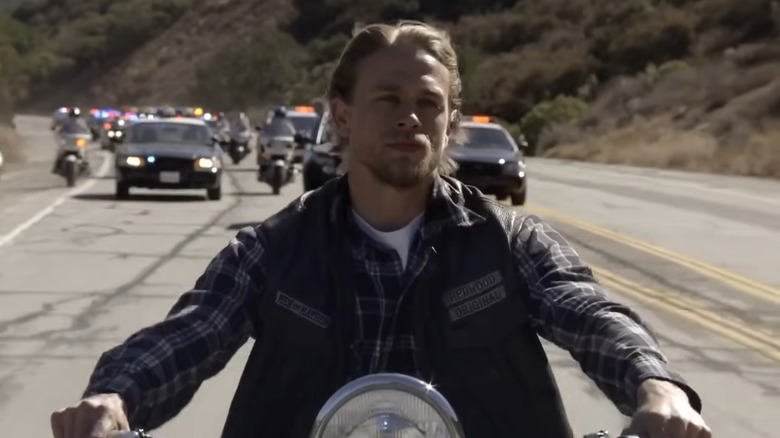
CAUSE OF DEATH: Execution-slash-suicide by semi-truck
THE EPISODE: Season 7, Episode 13, "Papa's Goods"
ORIGINAL AIRDATE: December 9, 2014
With its overt Shakespearean influences, "Sons of Anarchy" more or less promised from the premiere episode that most of its main cast would be slaughtered before the series finale. If anything, a main complaint surrounding later seasons is that the creative team had written themselves so far away from a particular character's demise that the ultimate course correction was distracting. The latter was true for Charlie Hunnam's Jax Teller, whose hard, almost irrationally nihilistic descent served as the shape of the show's final season. As fated as it felt, however, his death was fit to invoke comparisons to the Bard.
As the result of crimes committed against the club in the service of a suicidal campaign to avenge his slain wife, Jax is sentenced to death. He takes his own life by slaying a few more enemies in broad daylight to lead the police on a motorcycle chase to his father's own crash site, ultimately driving head-on into a semi-truck (amusingly driven by Michael Chiklis). It's a cathartic, epic end that suitably rewards the "Sons of Anarchy" fans that stuck with the show through rough terrain.
7. Bill Henrickson (Big Love)
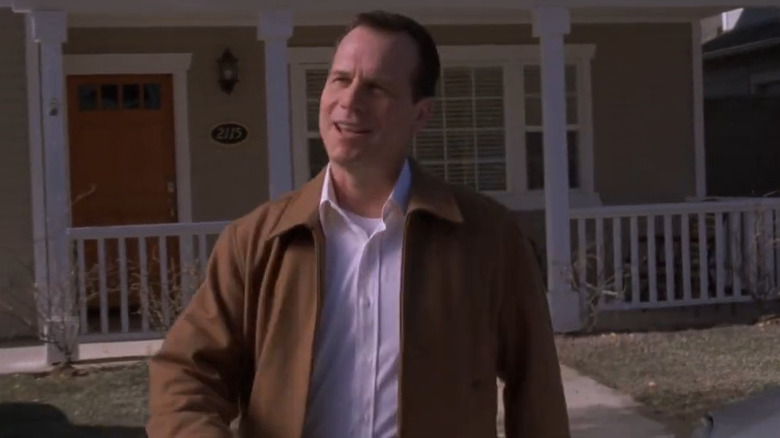
CAUSE OF DEATH: Shot by his neighbor in broad daylight
THE EPISODE: Season 5, Episode 10, "When Men and Mountains Meet"
ORIGINAL AIRDATE: March 20, 2011
The death of Bill Henrickson (Bill Paxton) in HBO's religious polygamy drama "Big Love" stands apart from the sea of antiheroes on this list. For how divisive the final season was, it never keeps you from rooting for him and his family to find their peace. By the end of the series, Bill had accomplished every major goal in his life, including starting a church and advancing his political career. The only important question up for debate was whether or not his family was truly as solid as he believed it was.
This is, sadly, answered by his death. Bill is gunned down by his petty, jealous neighbor, Carl (Carlos Jacott), after Bill takes the liberty of re-sodding Carl's lawn. In his last moments, Bill lets go of the final vestiges of the strictures that used to control his family's life, asking his wife, Barb (Jeanne Tripplehorn) to bless him as a priest. The family lives without the man it was seemingly built around.
6. Spartacus (Spartacus: War of the Damned)
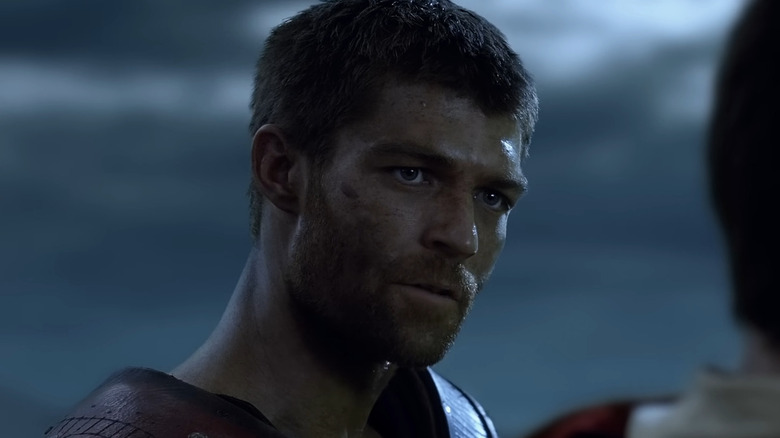
CAUSE OF DEATH: Skewered by Roman soldiers
THE EPISODE: Season 3, Episode 10, "Victory"
ORIGINAL AIRDATE: April 12, 2013
There are few deaths in history as widely known as that of the gladiator Spartacus. The triumph of the Starz series is that its depiction still feels shocking, gutting, and cathartic all the same.
In the final episode of "War of the Damned," Spartacus (Liam McIntyre) duels Roman general Marcus Crassus (Simon Merrells). Like every battle in this massively underrated historical epic, the action is thrillingly choreographed and staged, ranking it among the greatest fights to the death in TV history. Spartacus nearly deals the final blow, only to be interrupted at the moment of victory by intervening Roman soldiers. He is robbed of his ultimate vengeance and carried away by his fleeing allies.
Spartacus daringly uses this final defeat as a defining, hopeful argument for revolution. Especially compared to Crassus' somber military and political advancements, Spartacus' death as a free man feels genuinely like the ultimate moment of victory for the show.
5. Spike Spiegel (Cowboy Bebop)
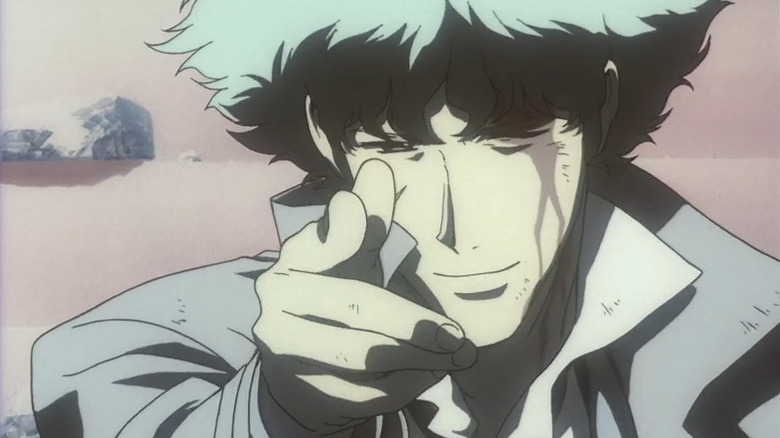
CAUSE OF DEATH: Blood loss from a last stand against the Red Dragon syndicate
THE EPISODE: Episode 26, "The Real Folk Blues (Part 2)"
ORIGINAL AIRDATE: April 24, 1999
Few, if any, shows have been as slick or stylish as "Cowboy Bebop." One of the greatest sci-fi shows of the '90s went out with a bang, sending the bounty hunter Spike Spiegel (Kōichi Yamadera) to kill his partner-turned-archnemesis, Vicious (Norio Wakamoto). Spike storms the tower alone, almost single-handedly taking out Vicious' syndicate guards in a spate of smooth firefights — each one exacting a toll as he explodes his way to the top floor. His last dance with Vicious fatally wounds them both, with Spike at least able to walk himself to the entry hall so that he can die in the light.
Of the deaths on this list, this is the one where the character's actual death manages to supersede the events directly leading up to it. Spike's slow trudge down the steps and final "bang" remains one of the most iconic moments in anime history. It maintains the character's legendary mystique without sparing him from the mortal consequences that had been inching closer throughout the entire series.
4. Mark Greene (ER)
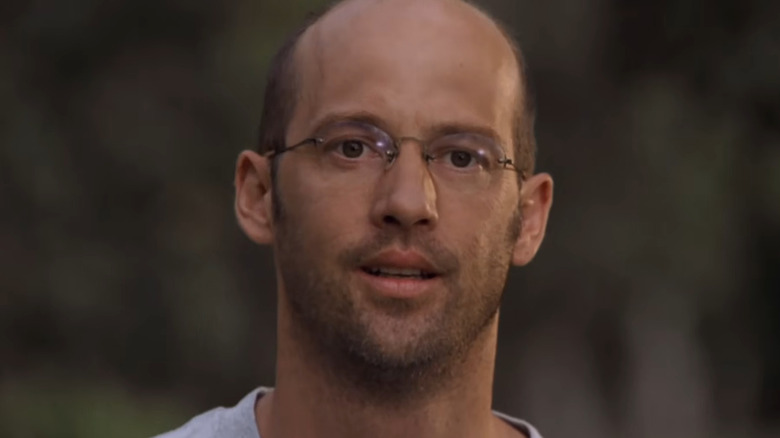
CAUSE OF DEATH: Complications from inoperable brain cancer
THE EPISODE: Season 8, Episode 21, "On the Beach"
ORIGINAL AIRDATE: May 9, 2002
By Season 7 of "ER," Anthony Edwards' Mark Greene had anchored the medical drama through several major cast shakeups. Aside from Noah Wyle's John Carter and Eriq La Salle's Peter Benton, he was the only series regular to remain from Season 1, and was in many ways the most prominent. As an actor, Edwards was ready to move on. He graciously gave the writers two seasons of notice of his exit, allowing them to write one of the most grueling, realistic, and moving death storylines for a TV character.
Dr. Greene struggles with cancer for nearly all of Seasons 7 and 8. When the tumor returns in an inoperable state, the arc becomes less about living with illness and more about accepting the end of a life. He spends his final days with his wife (Alex Kingston) and estranged daughter (Hallee Hirsh) in a Hawaiian paradise before a seizure confines him to a bed. With his last breath, he reminds us all to "be generous" with our time, love, and life.
3. Nate Fisher (Six Feet Under)

CAUSE OF DEATH: Complications from a stroke caused by arteriovenous malformation
THE EPISODE: Season 5, Episode 9, "Ecotone"
ORIGINAL AIRDATE: July 31, 2005
Peter Krause's Nate Fisher is one of the most beautifully, frustratingly complicated characters on TV. He lives throughout "Six Feet Under" with a brain condition that essentially threatens to kill him at any given moment, which both exacerbates and partially explains his erratic and often selfish behavior. It never absolves or saves him, however.
The series holds firm on this point in Nate's penultimate episode. Before his stroke, he cheats on his pregnant (and medically endangered) wife, Brenda (Rachel Griffiths) with Maggie (Tina Holmes), simultaneously ruining one of his few pure relationships at that point. Even after the stroke and a risky surgery that could've killed him, he coldly, if understandably, breaks up with Brenda on what ultimately becomes his deathbed. His condition suddenly takes a turn for the worse while David (Michael C. Hall) sleeps by his bedside, dreaming of being stranded on the beach with their father as Nate enjoys the water alone.
2. Ned Stark (Game of Thrones)
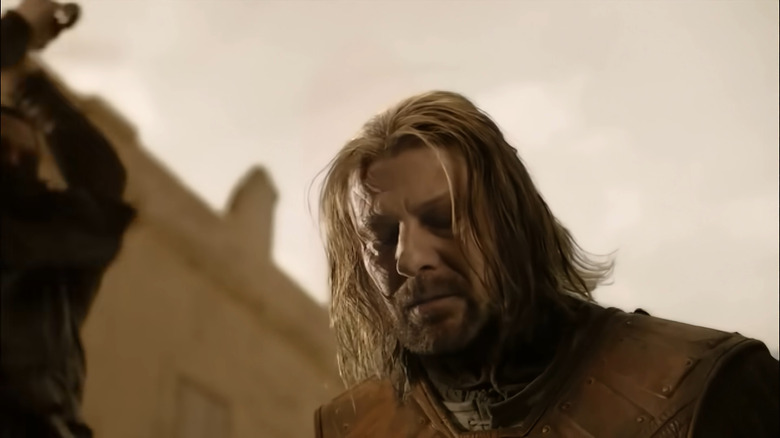
CAUSE OF DEATH: Execution by public beheading
THE EPISODE: Season 1, Episode 9, "Baelor"
ORIGINAL AIRDATE: June 12, 2011
Ned Stark's death was one of those moments that helped change TV forever. Thematically and structurally, it's the most elegant main character death of all time. Sean Bean's lord was depicted as the only honorable man in a kingdom that trades exclusively on dishonor. After reluctantly taking a position as Hand of the King, Ned uncovers a plot that successfully hands the throne to the illegitimate King Joffrey (Jack Gleeson). He is arrested on trumped-up charges of treason and reassured that he'll be spared for swearing fealty and false testimony — Joffrey reneges on the promise and beheads him anyway.
Ned was simultaneously proof that the best man for the job was the man who didn't want it in the first place, and (perhaps paradoxically) that that same man was also incapable of ruling regardless. His short tenure as the hero of "Game of Thrones" is singular in its pessimism. His fate established the series as an arena where anything could happen, paving the way for even more gruesome and memorable deaths down the line.
1. Walter White (Breaking Bad)
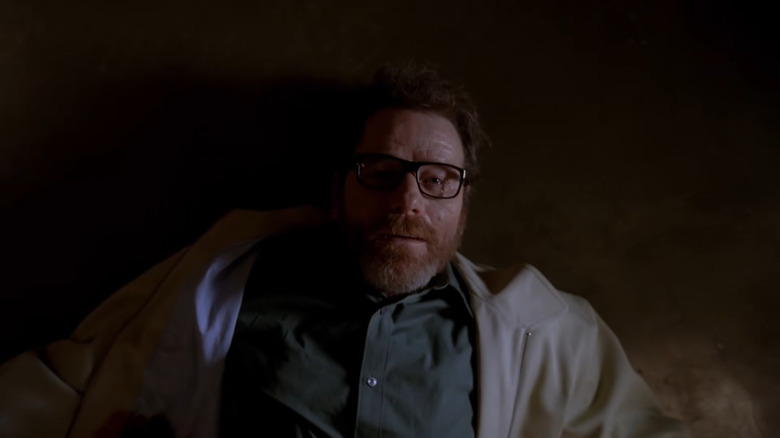
CAUSE OF DEATH: Accidental self-inflicted gunshot wound
THE EPISODE: Season 5, Episode 16, "Felina"
ORIGINAL AIRDATE: September 29, 2013
"Felina" is the standard for every series finale that aspires to send its antihero off to the other side. "Breaking Bad" already had some of the greatest deaths on television under its belt, some arguably even greater than that of Walter White (Bryan Cranston). When it comes to killing off a protagonist, however, nobody does it like Heisenberg.
The most overlooked element of his suicide run into the white supremacist compound is the final turn. Having spent the episode hollowly making "amends" and admitting to his selfishness, Walter wordlessly realizes that there's one person he can actually save before the cancer inevitably takes him — and he realizes it only after showing up with a machine gun designed to kill them both.
And yet, Jesse (Aaron Paul) doesn't forgive his mentor. Jesse's refusal to shoot Walt forces him to bleed out, surrounded by the lab that symbolizes the life he traded his soul for. Hauntingly, Walt still dies with a smile. He doesn't let go even in death, slyly implicating as the series fades out.