

12 Best Sci-Fi Anthology TV Shows, Ranked
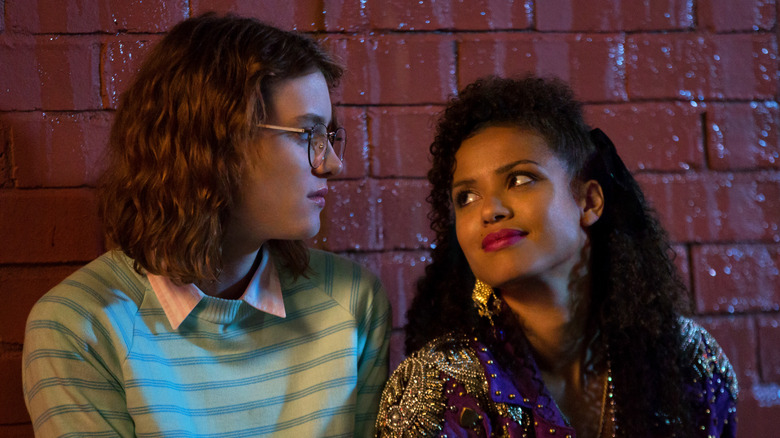
Sci-fi anthologies are a beast with two faces. Pick a great episode and you'll get a compact dose of speculative fiction that might provoke a thought or two. Then again, watch a bad one and you may not get much from the experience. The viewer has to either take the rough with the smooth or learn to abandon their completionist mindset and simply skip episodes that fail to captivate.
For those who wish to avoid dealing with too many underwhelming episodes, doing some homework before choosing the show helps. While even the finest sci-fi anthology shows can have the occasional dud, lining up a certifiably great series generally leads to a far better batting average than choosing one at random.
To help you with this, TVLine has taken a plunge into the wild waters of this beloved but inconsistent subgenre and emerged with 12 of its finest series. Some of them you might already be familiar with, while others might soon find their way on your viewing list. However, they all have one thing in common: they're among the greatest sci-fi anthologies of all time. Here's how they stack up.
12. Amazing Stories (1985)
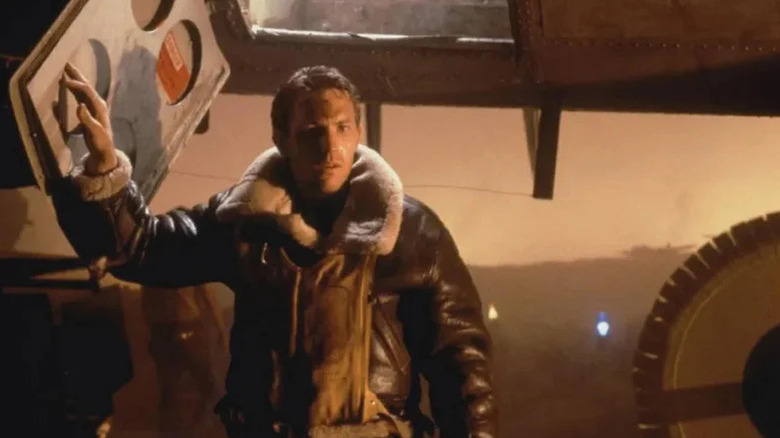
For those who value pedigree in their anthology shows, it's hard to beat "Amazing Stories." The 1985 series was co-created by Steven Spielberg and features appearances by Kevin Costner, Mark Hamill, Kathy Baker, James Cromwell, and Harvey Keitel. The director's chair was equally star-studded, with figures like Clint Eastwood, Martin Scorsese, Danny DeVito, and Spielberg himself each helming an episode or two.
For that reason alone, the show is worth a look. "Amazing Stories" is more than just a bingo card of entertainment industry top dogs, though. Its 45 episodes can be somewhat hit-or-miss, and its genre game occasionally veers well outside the confines of traditional science fiction. In fact, since some of the show's best episodes are far closer to supernatural escapades than sci-fi, we can't in good faith rank "Amazing Stories" higher than this.
Still, "Amazing Stories" features more than enough aliens, time travel, mysterious meteorites, and mad science to keep sci-fi fans entertained. Just remember not to confuse "Amazing Stories" with the underwhelming 2020 Apple TV revival of the same name, and there's plenty of fun to be had.
11. The Ray Bradbury Theater
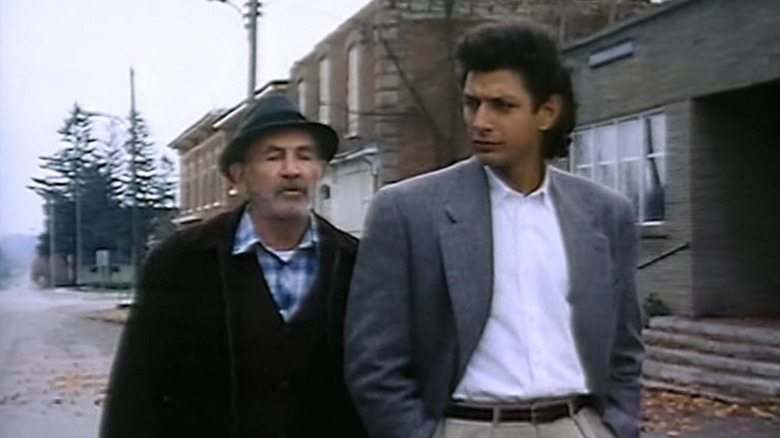
In 1985, the aptly titled "The Ray Bradbury Theater" went straight to the source with its science fiction stories. Sci-fi writer Ray Bradbury wrote every story during the anthology show's six-season run while also serving as its presenter. This makes the series a must-watch for his fans.
Like its fellow 1985 debutant "Amazing Stories," this show is absolutely packed with familiar faces. The first season alone features a series of sci-fi predicaments with actors like Jeff Goldblum, Drew Barrymore, and Leslie Nielsen. This star-spotting might add to the contemporary viewer's enjoyment, but the stories have their charm even without it.
One tonal caveat: Regardless of your stance on star power, "The Ray Bradbury Theater" fits best for those who like their sci-fi with wobbly sets and a generous helping of kitsch. It might not be included on any list of prestige sci-fi shows anytime soon, but it's still a fun watch even when it gets ridiculous — or rather, especially when it gets ridiculous.
10. Joko Anwar's Nightmares and Daydreams
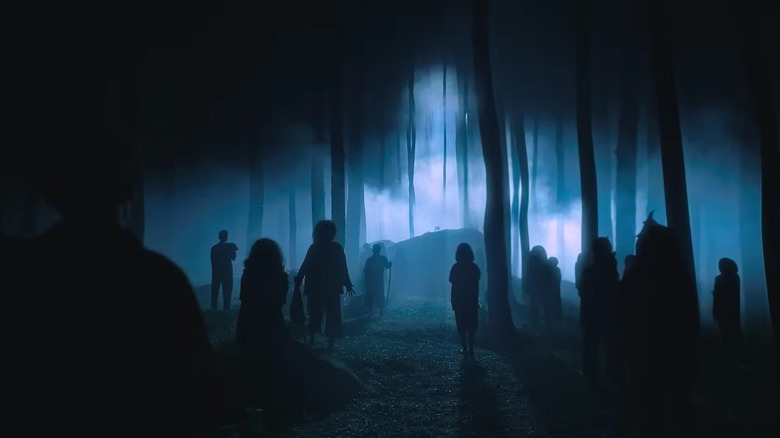
It's easy to think of sci-fi anthology shows in terms of "The Twilight Zone" template: a series of settings and premises that have little to do with each other, with a signature style of twisty structures and moral lessons providing the connective tissue. Of course, there are other ways to approach the genre, as well.
"Joko Anwar's Nightmares and Daydreams" is a 2024 Netflix anthology for sci-fi fans who are looking for a twist on the formula. Seamlessly blending science fiction and supernatural horror, filmmaker Anwar tells a series of individual but connected stories that unfold across several decades in Jakarta — the capital of the creator's native Indonesia.
Anwar is known for making genre projects that tackle hard-hitting real-world issues, and "Nightmares and Daydreams" very much fits in that mold. Short but decidedly not sweet, the seven-episode series has received positive reviews. It's an excellent watch for viewers who like their sci-fi with a side order of sociopolitical commentary and interesting cultural details.
9. The Outer Limits (1963)
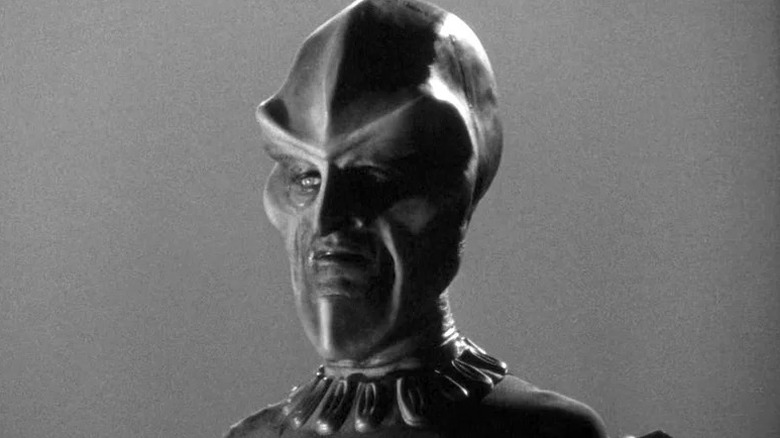
"There is nothing wrong with your television set. Do not attempt to adjust the picture. We are controlling transmission."
"The Outer Limits" was ABC's 1963 answer to "The Twilight Zone." It certainly knew how to make an impression: The intro frames the show as a hostile takeover of the viewer's TV set, effectively ordering viewers to sit back and watch what unfolds.
It's a good thing, then, that "The Outer Limits" mostly lived up to the lofty expectations set by its opening narration. Slightly more straightforward than "The Twilight Zone," the show often dealt with alien encounters, physical mutations, and scientific experiments gone awry. However, the show could still be deep when it wanted. Episodes like the alien penal colony story "The Zanti Misfits" have plenty to say about the nature of humanity, while others like the Harlan Ellison-penned memory loss mystery "Demon with a Glass Hand" deliver gut punches for the ages.
8. Electric Dreams
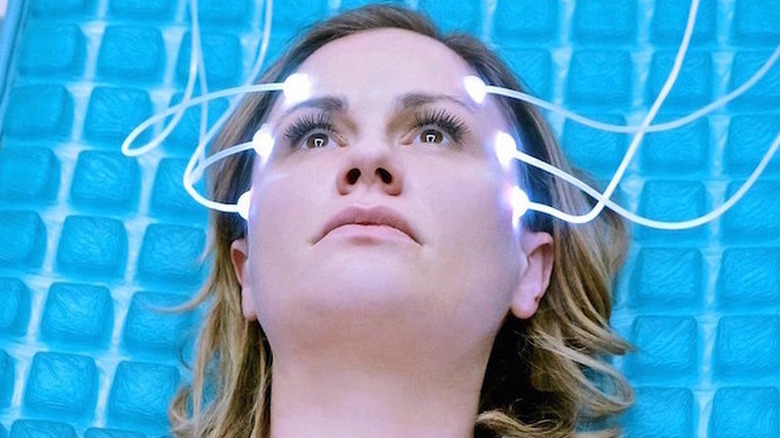
The world of sci-fi movies and TV shows is full of Philip K. Dick adaptations: "Blade Runner," "Total Recall," and "The Man in the High Castle" are but a few of the best-known examples. Of course, there's plenty to adapt — the prolific author wrote 36 novels and five short story collections, after all.
Since there's precedent for Dick adaptations being successful and a wealth of source material available, it's only natural that someone would take the anthology approach to the writer's work. Prime Video's "Electric Dreams" answered this call in 2017 with a 10-episode run that devotes each installment to a different Dick story, featuring stars from Bryan Cranston to Anna Paquin.
While "Electric Dreams" doesn't quite join "The Man in the High Castle" on TVLine's list of 12 best sci-fi shows streaming on Prime Video, it's a good show that's absolutely worth watching for fans of both sci-fi anthologies and the author. From the "Blade Runner"-esque artificial human themes of "Autofac" to the "Black Mirror"-style targeted ad terror of "Kill All Others," Dick's stories make for interesting anthology episodes. Not all of them hit the mark as truly great television, but they're consistently thought-provoking.
7. Kizazi Moto: Generation Fire
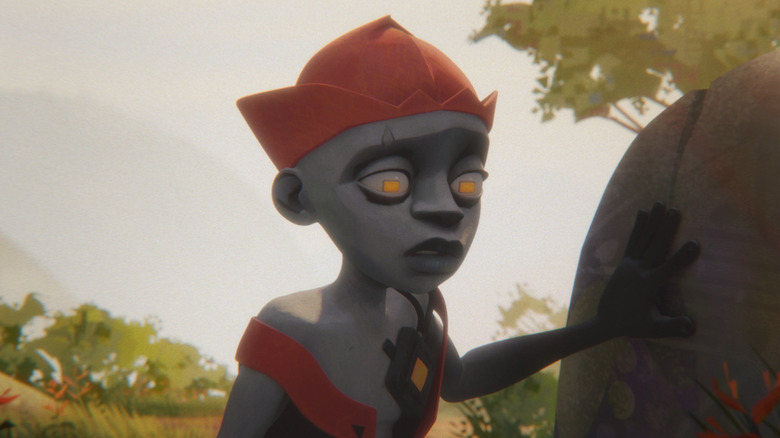
"Kizazi Moto: Generation Fire" is a vibrantly animated Disney+ anthology that explores sci-fi concepts through African mythology. It's also a quick, gorgeous trek through landscapes that range from futuristic megacities to the surprising dangers of cattle herding.
Each of the show's 10 episodes comes from a different creator or creative team. They have a distinct visual style and tackles its own blend of spiritual worlds and futuristic visions. Some of the episodes carry hints of "Star Wars" and other works that came before, but each short is also very much its own, wholly unique thing.
While "Kizazi Moto: Generation Fire" isn't the only animated sci-fi anthology on this list, its swift glimpses into various African countries' visions of the future are among the most unique tales any sci-fi anthology has ever given us. Since the episodes tend to stay under the 12-minute mark, this series makes for an easy, delightful binge that can be appreciated over and over again.
6. Dimension 404
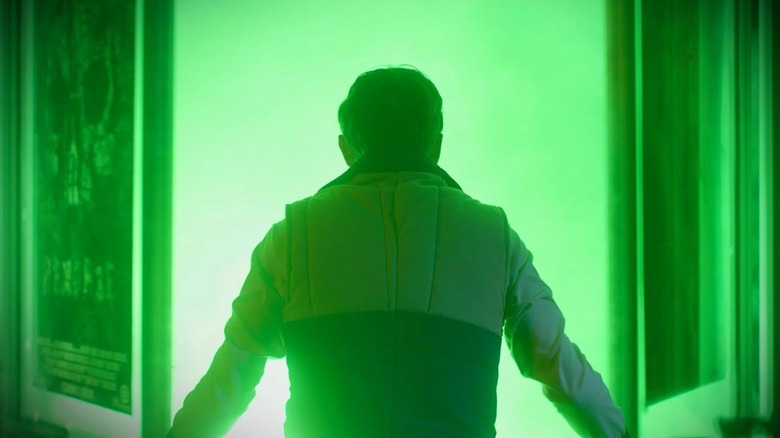
When done correctly, sci-fi and comedy can be very good bedfellows. "Red Dwarf" became one of the most underrated sci-fi shows of all time by combining laughs with riveting storylines, and the best episodes of Seth MacFarlane's "The Orville" helped hone the show into a genuinely ambitious space exploration series that just happens to be very funny.
When it comes to sci-fi anthology shows, on the other hand, comedy can be in short supply. Hulu's "Dimension 404" does some heavy lifting to fix this particular issue with its six episodes. Narrated by Mark Hamill, "Dimension 404" adds an internet-savvy twist to the darker musings of "Black Mirror" and "The Twilight Zone."
Here, the dangers of modern technology and twisty endings intertwine with extremely online chaos. The episode "Polybius" tackles a creepy real-world urban legend about an evil video game. In "Cinethrax," Patton Oswalt is in full out-of-touch uncle mode during an unsettling movie night with his niece (Sarah Hyland), and "Matchmaker" introduces online dating horrors that are a slightly different flavor of scary than in real life. Humor and sci-fi terror hold hands without shame throughout "Dimension 404," and its positive reviews are proof that not every anthology needs to take itself seriously.
5. Journey to the Unknown
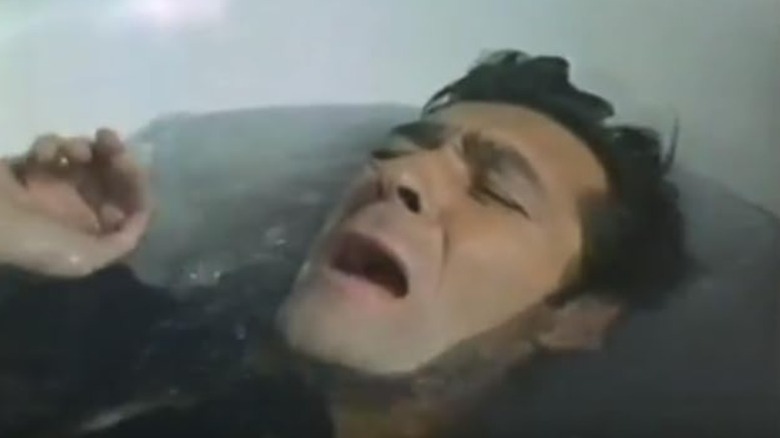
"Journey to the Unknown" might just be the most obscure entry on this list, but it's a very worthy one. The show marked the legendary horror house Hammer Film Productions' venture into the world of television, which should give you a pretty good idea of what's in store.
Hammer horror is so iconic that it's practically a scary movie subgenre in itself, but the studio has also dabbled in sci-fi with projects like "The Quatermass Xperiment." Imagine a TV show that combines the best of both worlds, drawing inspiration from "The Twilight Zone" while infusing its episodes with that classic Hammer atmosphere. That's "Journey to the Unknown."
The British 1968 anthology series only ran for a single 17-episode season, which ABC later mashed into four TV movies: "Journey into Darkness," "Journey to the Unknown," "Journey to Murder," and "Journey to Midnight." While it's far from a hardline sci-fi anthology, there's plenty of science fiction-themed fun to be had — along with a heaping helping of that Hammer flavor, of course. "Matakitas Is Coming" combines time travel with a library-set serial killer mystery, "Stranger in the Family" follows a scientist and a boy with mysterious powers, and "The Madison Equation" centers on a deadly computer. If you're not a sci-fi purist and enjoy a bit of that signature gothic Hammer fright, "Journey to the Unknown" brings the goods.
4. The Outer Limits (1995)
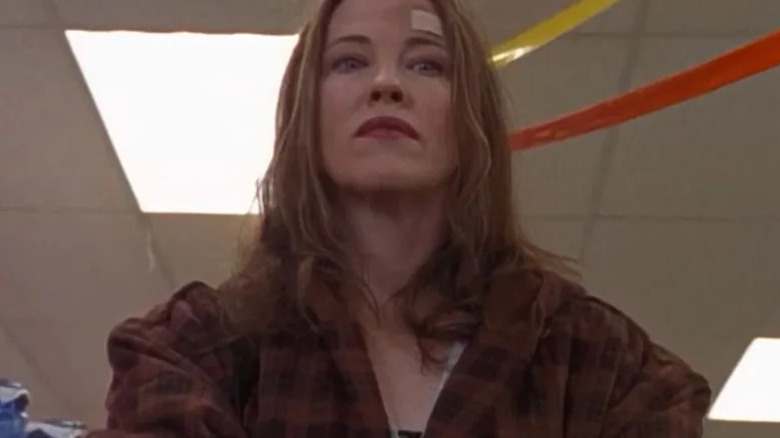
Revivals can be a touch-and-go business, but "The Outer Limits" knew how to play the game very well with its 1995 comeback. Much as the 1960s version came in the wake of "The Twilight Zone," the return of the show took place a couple of years after "The X-Files" had breathed new life into genre TV. Also, much like the original "The Outer Limits," the 1990s version actually rocks. In fact, this Emmy-winning version ended up outlasting the original, running for seven seasons as opposed to the 1963 version's two.
Three decades can change a lot, and time certainly played with the tone of "The Outer Limits." The 1995 version still has its share of alien escapades – in the Season 2 episode "Afterlife," for instance, a convicted killer (Clancy Brown) is turned into an alien hybrid and must fight for the remnants of his humanity. Yet, the anthology isn't afraid to go all in on much darker subject matter, either. Consider the Season 5 episode "The Human Operators," which follows a man (Jack Noseworthy) who has spent his life as the enslaved operator of a self-aware spaceship until he catches a glimpse of something more.
This version of "The Outer Limits" embraces the sci-fi sensibilities of the 1990s while featuring adaptations from the likes of George R.R. Martin, Stephen King, Harlan Ellison, and Larry Niven. It's a worthy anthology that belongs in the conversation about great sci-fi creations of its era.
3. Black Mirror
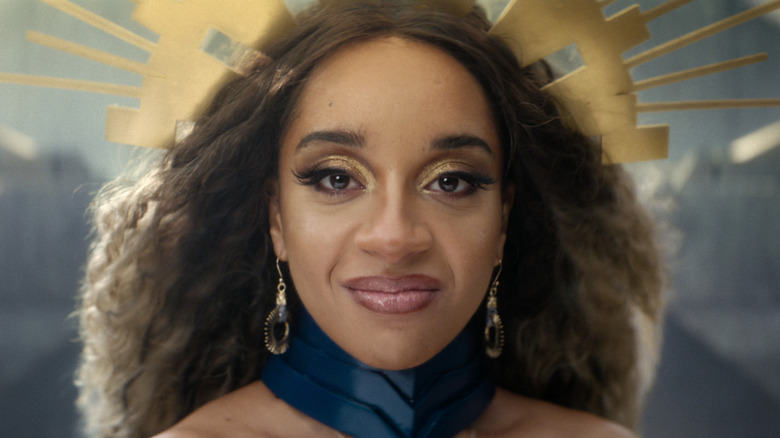
Out of all contemporary sci-fi anthology shows, Charlie Brooker's "Black Mirror" occupies the largest slice of the zeitgeist. There's a reason for that. The Netflix show's central premise — examining the ways modern technology can go awry — is a winner, and its best episodes linger long after viewing.
The twisted "Black Mirror" episode "White Christmas" inspired "Severance" with its themes of seclusion and digital copies of human beings. Season 1's Jesse Armstrong-penned "The Entire History of You" shows the dark side of using technology to document our lives. The improbable, yet sweet love story of Season 3 standout "San Junipero" offers a rare ray of light in the show's usual bleakness. All of these episodes and many, many more grace the viewer with stories of technologies and social issues that are all too relatable. This is exactly what good sci-fi should do, and "Black Mirror" has proved so enduring that Season 7 made TVLine's list of the 25 best TV shows of 2025.
Granted, the usual anthology caveats apply here. "Black Mirror" can often be heavy-handed, and its social criticism is sometimes a little too clever for its own good. Still, when the show hits its mark, it's a reliably immersive watch that deserves every single one of its six Emmys.
2. Love, Death & Robots
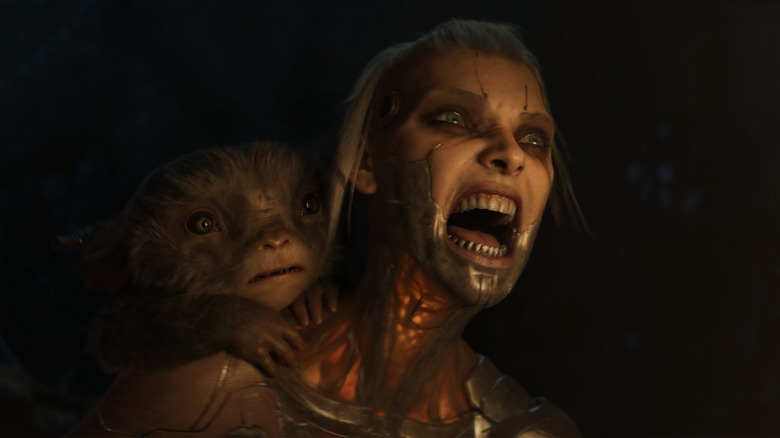
It's easy to imagine that an animated show with comparatively short episodes might slip through the cracks whenever the greatest representatives of any given genre are discussed. However, Netflix's "Love, Death & Robots" (or "Love, Death + Robots," as the show likes to stylize it) is simply too undeniable to be ignored.
Created by "Deadpool" director Tim Miller and co-produced by David Fincher, "Love, Death & Robots" is a sci-fi anthology in the truest sense of the word. Its episodes vary wildly in length, tone, animation style, and even genre, with the title's three general themes serving as the throughline. As a result, viewers can never be sure what they'll get when they put on an episode, but they can be fairly certain it will be worth their while.
With an impressive 17 Primetime Emmys and a number of other awards on its mantelpiece, "Love, Death & Robots" is a playground for storytellers and animators that has proven its mettle many times over. What's more, any given episode of the show is a visual feast, so even the more featherweight episodes are well worth sitting through — a true rarity for an anthology show.
1. Twilight Zone (1959)
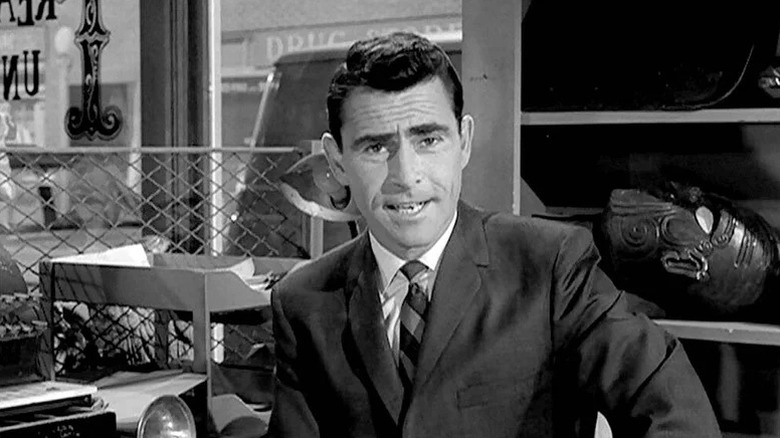
Rod Serling promised he'd take us to another dimension, and he wasn't kidding. "The Twilight Zone" set the tone in 1959, and not a single one of its peers has matched the sheer imagination that Serling's five-season series brought to the table. The best episodes of "The Twilight Zone" are still extremely effective, and their impressively outlandish narratives more than make up for the occasional dated special effect.
"The Twilight Zone" excels in rewatchable episodes that introduce a captivating setup and move toward an endgame twist that generally doubles as a lesson or social commentary. Serling's genius lies in the multitude of ways he can juggle those basic building blocks: What kind of strange scenario will he unleash this time? How will he reach that inevitable surprise ending? Which major movie stars appear in this episode of "The Twilight Zone"?
Serling was the kind of creator who could cook classic episodes from just about any ingredient. From Burgess Meredith's bullied book lover becoming humanity's last survivor ("Time Enough at Last") to William Shatner's harrowed plane traveler facing a hostile gremlin ("Nightmare at 20,000 Feet"), no premise was too strange or outrageous for "The Twilight Zone" to explore. There are certainly bad episodes of "The Twilight Zone," but the show's trailblazer status, unique atmosphere, and excellent hit ratio are enough to justify its place as the greatest sci-fi anthology of all time.