

10 Best Acting Performances On The Twilight Zone, Ranked
As incredible as it sounds, the acting on "The Twilight Zone" has always been relatively underrated or overlooked. While much of the show's celebrated status understandably stems from creator Rod Serling and other series writers, its rotating cast delivered standout performances from top to bottom. Given how outlandish some of the individual stories could get, the actors involved deserve more praise in bringing them to effective life. After all, a series doesn't get recognized as one of the best 1960s shows based on the strength of its writing alone.
With all that in mind, we're highlighting the best performances from the original 1959 "Twilight Zone" that started it all. Whether it's selling a shocking plot twist to close out a vignette or making us believe in the terrifying unknown, these actors fully understand their respective assignments. Haunting, heartwarming, terrifying, or sometimes all at once in the span of less than an hour, these actors made the sharply written material endure. Here are the 10 best acting performances on "The Twilight Zone" ranked, each helping elevate the show to its mythic reputation.
10. Robert Redford (Nothing in the Dark)
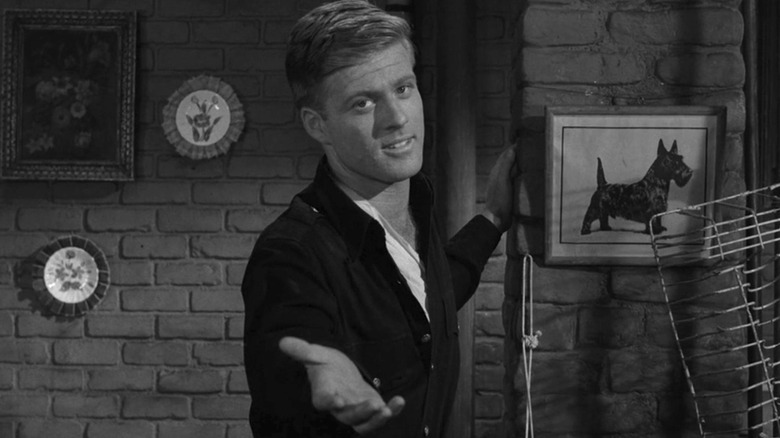
Plenty of major movie stars appeared on "The Twilight Zone," including Robert Redford, who was just starting out his on-screen acting career. Redford appears in the third season episode "Nothing in the Dark," initially introduced as wounded police officer Harold Beldon. The story centers on Wanda Dunn (Gladys Cooper), an elderly woman who lives alone in a basement apartment in mortal fear of death. Convinced death will come for her, Dunn lets Beldon into her home to recover when he turns up injured at her doorstep only for her suspicions to be realized.
Spoilers for a series that's over 60 years old, but Beldon is revealed as death personified, ready to come claim Dunn. But Redford makes that big turn work, not taking the twist in a sinister direction, but with surprising warmth and understated graciousness. Over the course of the story, Beldon goes from vulnerable to appreciative and then as a gentle portent of death, all while maintaining his underlying likability. Robert Redford's "Twilight Zone" episode remains a must-watch, hinting at the movie star magnetism he would bring to the big screen years later.
9. Buster Keaton (Once Upon a Time)
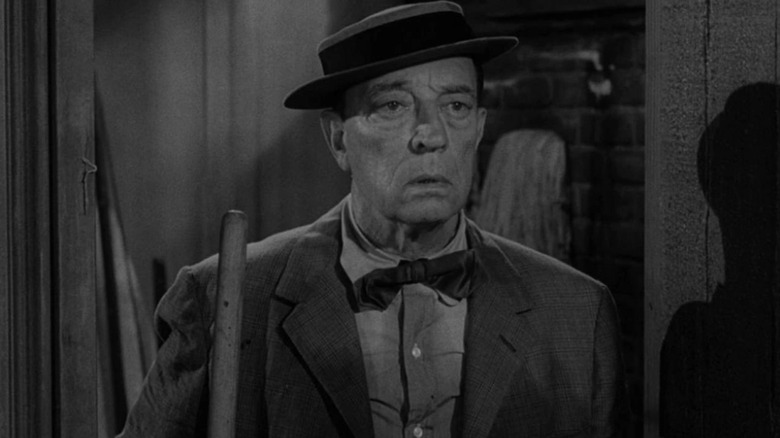
While slapstick and vaudeville-inspired comedy might not seem like a natural fit for "The Twilight Zone" at first glance, it works when it involves silent comedy legend Buster Keaton. The third season episode "Once Upon a Time" stars Keaton as Woodrow Mulligan, an elderly curmudgeon living in 1890. Frustrated by the contrivances of his time period, Mulligan agrees to try out an experimental device that transports him to the year 1961. Horrified by mid-20th century technology and society, Mulligan tries to find a way to return to his own time period.
"Once Upon a Time" wisely gives Keaton an extended slapstick sequence to showcase his comedic chops, proving that he hasn't lost a step. This is matched by the episode's overall aesthetics evoking the silent film era whenever the story is back in 1890, complete with intertitles. As whimsical as this all sounds, the episode works because of Keaton's performance, capturing the anxieties of a man out of time. Admittedly one of the stranger "Twilight Zone" stories, "Once Upon a Time" gives Keaton one last memorable platform for his considerable talents.
8. Gladys Cooper (Night Call)
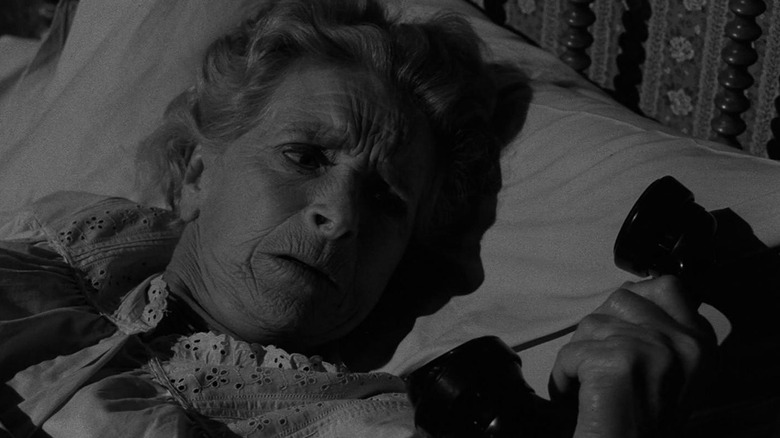
Though Cooper does a great job in the aforementioned "Nothing in the Dark," her best "Twilight Zone" performance is in the fifth season episode "Night Call." Cooper plays Elva Keene, a paraplegic elderly woman whose fiance was killed shortly before they were to be married in the accident that derailed her life. On a dark and stormy night, Keene receives repeated phone calls from a mysterious man, increasingly unnerving her. As Keene has the calls traced, she realizes that her caller not only appears to be someone that she knows, but is trying to reach out from beyond the grave.
"Night Call" plays out largely like a one-woman play, with most of the on-screen action revolving around Keene. Cooper holds the audience's attention expertly, capturing the helplessness and mounting terror of her role while releasing details about the character's backstory as the story progresses. This makes the episode's big reveal, predictable as it may be, all the more heartbreaking when Keene realizes what she just stumbled across and snuffed out. A locked chamber ghost story, "Night Call" gives Cooper meatier material to work with and she does so admirably.
7. Art Carney (The Night of the Meek)
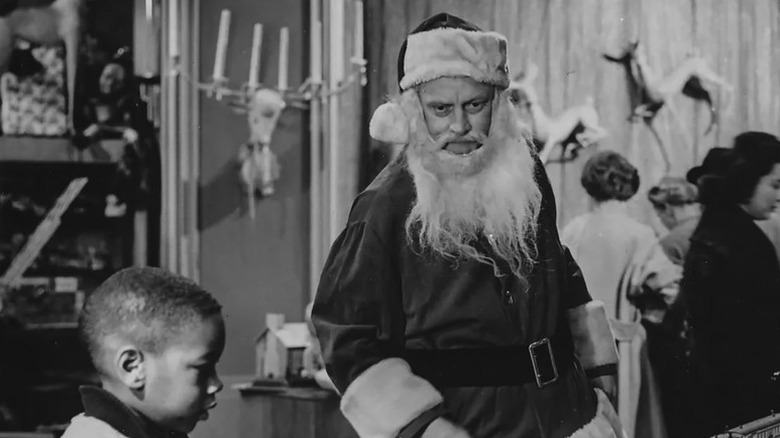
Every now and again, "The Twilight Zone" took the time to ring in the holidays, including the occasional Christmas episode. The best of this yuletide bunch is "The Night of the Meek," which aired as part of the classic series' second season. The story stars Art Carney as Henry Corwin, an alcoholic department store Santa Claus who's fired for coming to work drunk and is barred from his usual watering hole. Down on his luck on Christmas Eve, Corwin finds a magical trashbag that allows him to give gifts as the real Santa.
Carney was relatively fresh off his iconic role in the '50s sitcom "The Honeymooners" when he starred in "The Night of the Meek." The "Twilight Zone" episode gave audiences the chance to see Carney as a much more overtly flawed and nuanced character compared to his usual work. At the same time, in keeping with the Christmas themes, the episode also stands as the classic series at its most effectively sentimental. Another reminder that not every "Twilight Zone" story needs to be eerie, "The Night of the Meek" offers Carney the opportunity to bring a holiday redemption story to life.
6. Earl Holliman (Where Is Everybody?)
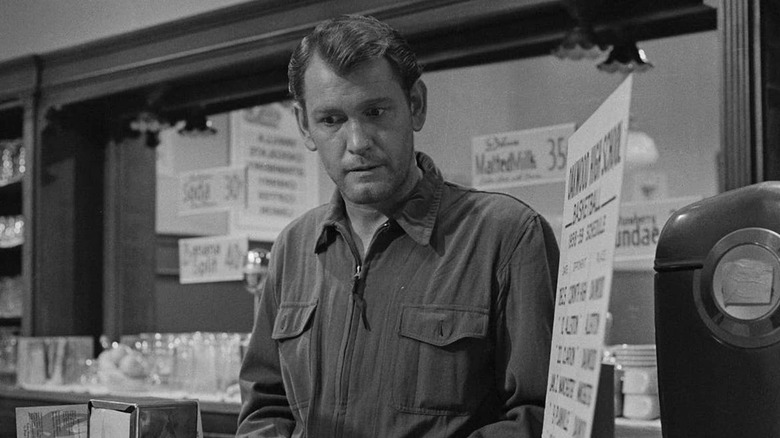
One of the most rewatchable "Twilight Zone" episodes is the very first for the entire show. The series premiere, "Where Is Everybody?" opens with lone drifter Mike Ferris (Earl Holliman) walks along a dirt road with no memory of who he is. Coming across a completely abandoned town, Ferris notices strange phenomena in the deserted community, despite the visible lack of inhabitants. This makes Ferris grow increasingly unstable as the prolonged solitude takes a clear toll on his mental health.
Looking back, it was relatively bold for "The Twilight Zone" to introduce itself to audiences with what basically amounts to a one-man show. Up until the final moments of the episode, Holliman is the only actor on-screen, guiding audiences into Rod Serling's haunting creation. Fortunately, the actor does a phenomenal job, bringing an earnestness to his role as he progressively becomes more unbalanced. A memorable start to one of the best anthology horror shows of all time, "Where Is Everybody?" excels because of Holliman's beleaguered everyman approach to the material.
5. Inger Stevens (The Hitch-Hiker)
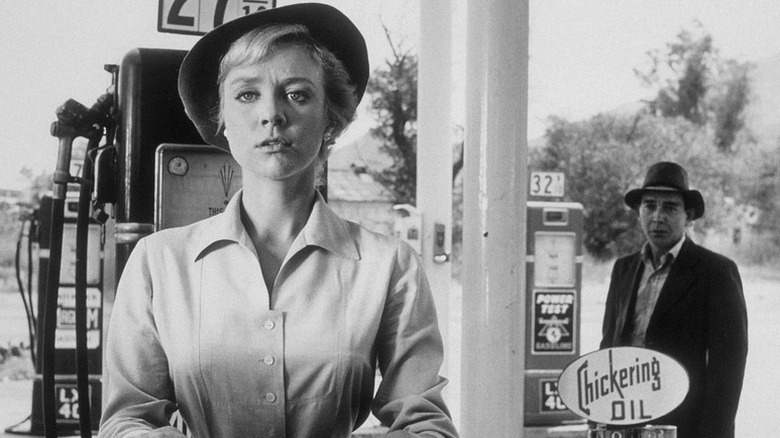
Another standout episode from "The Twilight Zone" Season 1 is "The Hitch-Hiker" starring Inger Stevens as cross-country traveler Nan Adams. During a long drive from New York City to Los Angeles, Adams endures a harrowing mishap on the road. Following this incident, the solitary driver begins to see a mysterious hitchhiker (Leonard Strong) seemingly following her throughout her journey. Adams becomes more unnerved each encounter, with the hitcher resurfacing whenever she stops her car, even for brief intervals.
As with Earl Holliman in "Where Is Everybody?" or Gladys Cooper in "Night Call," Inger Stevens is playing a character whose visibly fraying at the ends. In comparison to the other two cited episodes, there is an innocence and vulnerability that gives Stevens a slight edge with her performance. That fear eventually gives way to acceptance as one of the best "Twilight Zone" plot twists comes into focus. A thoroughly creepy episode centered on its protagonist's lonely drive to meet her final fate, "The Hitch-Hiker" is elevated by Stevens' work.
4. William Shatner (Nightmare at 20,000 Feet)
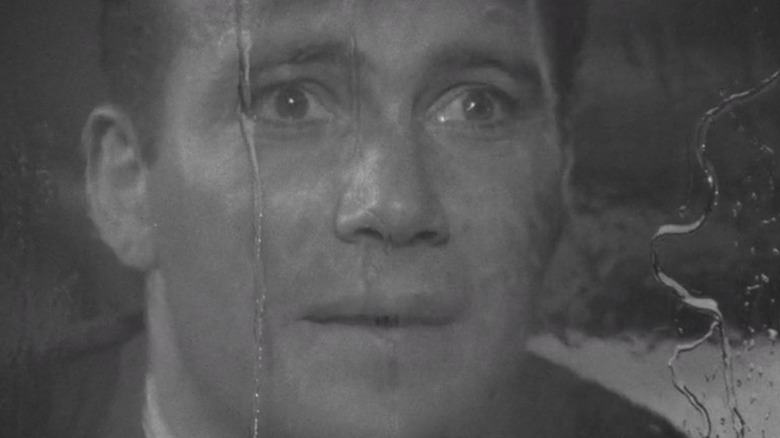
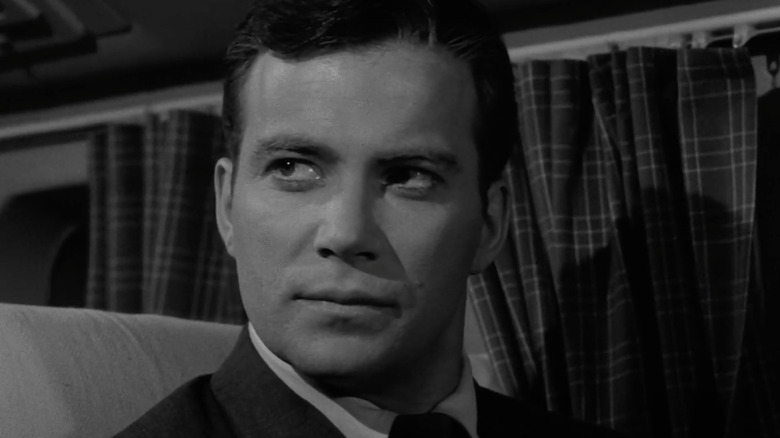
William Shatner actually starred in two "Twilight Zone" episodes, first appearing in the Season 2 installment "Nick of Time." However, his real standout performance is in his second appearance for the Season 5 episode "Nightmare at 20,000 Feet," playing airliner passenger Robert Wilson. Recovering from a severe mental breakdown, Wilson is shocked when he notices a gremlin sabotaging his plane's engines midflight. Unable to convince anyone else of the danger because of his history of mental illness, Wilson has to take drastic measures to stop the gremlin from crashing the plane.
Shatner's first role on "The Twilight Zone" had also been an anxiety-stricken character, but he perfects the approach in "Nightmare at 20,000 Feet." The mounting desperation he brings to his performance as Wilson feels the episode's growing urgency and stakes, selling the premise more than the admittedly goofy-looking gremlin. The execution of the story clearly struck a chord because the episode was later adapted in 1983's "Twilight Zone: The Movie" and the 2019 revival series. A highlight from the classic series' final season, "Nightmare at 20,000 Feet" demonstrates Shatner's range from the usual supremely confident characters he became known for.
3. Telly Savalas (Living Doll)
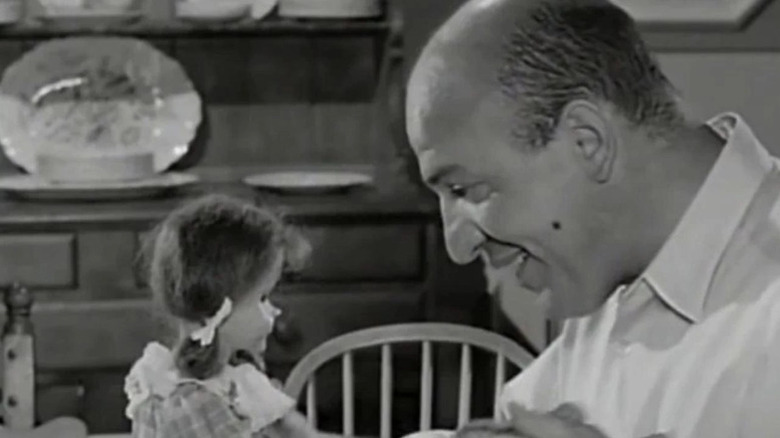
When "The Twilight Zone" leaned into the fearful possibilities of its imaginative storytelling, it solidified its status as one of the best horror shows of all time. One of the scariest stories the original series ever told was the Season 5 episode "Living Doll," starring Telly Savalas as abusive stepfather Erich Streator. Erich's cruel hold over his family is upended when his daughter obtains a Talking Tiny doll, which begins to reveal its sentience to him. When Talking Tiny threatens him over his treatment of her and his daughter, Erich becomes increasingly unnerved and obsessed with destroying the doll.
Telly Savalas has a particularly tricky assignment when it comes to the multifaceted dimensions of his role in "Living Doll." At once, he has to play an absolute cad of a stepfather that makes his toyetic retribution all the more warranted. At the same time, Savalas has to instill enough sympathy into his character that the terror surrounding what's happening to him is conveyed to the audience. Savalas balances all of those qualities well, making "Living Doll" one of the most overtly frightening episodes in the entire series.
2. Agnes Moorehead (The Invaders)
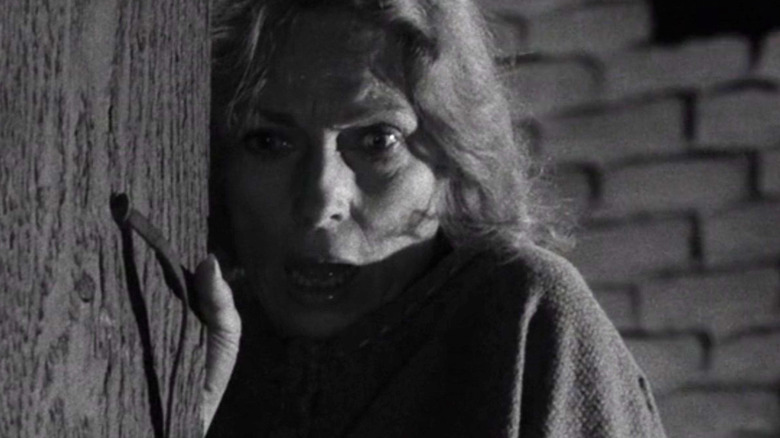
Another absolute chiller of a "Twilight Zone" story is the second season episode "The Invaders," starring Agnes Moorehead as the sole actor seen on-screen. Moorehead plays an unnamed woman living alone in a seemingly remote home that's visited by two pint-sized visitors from another world. After the two spacesuit-clad figures attack her, the woman is forced to defend herself to survive, going on the offensive as the violence escalates. This results in a lethal showdown as the origins of these otherworldly enemies are revealed in a shocking twist.
Moorehead has the challenge of not only being the only actor seen on-screen in "The Invaders," but performing her role without any dialogue. These creative constraints work to the episode's favor, with Moorehead expertly enhancing the story within these acting limitations. In less than 30 minutes, she captures the surprise, horror, and exhausted survivalist determination of her character as refuses to concede to her unwanted interplanetary guests. A terrifying showcase of what "The Twilight Zone" is capable of with an episode that's nearly entirely silent, "The Invaders" works because of what Moorehead brings to the table.
1. Burgess Meredith (Time Enough at Last)
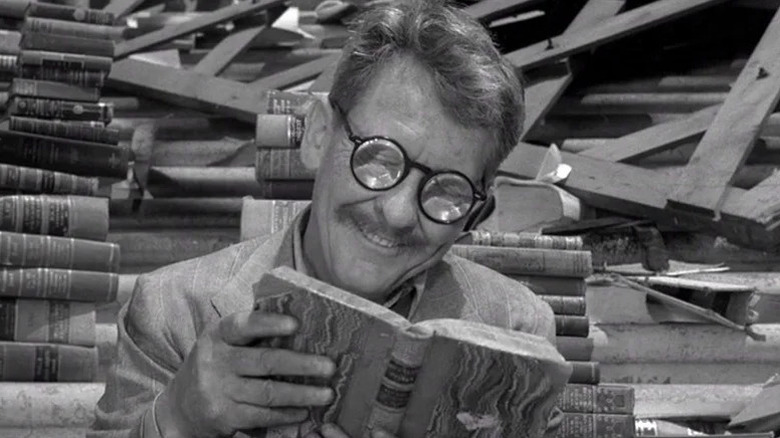
The performances we've gathered here demonstrate just how excellent and varied "The Twilight Zone" could be with the perfect marriage of sharp writing and acting performances. That creative synergy was never better than in the first season episode "Time Enough at Last," starring Burgess Meredith as bookish protagonist Henry Bemis. Ostracized at home and work for obsessively reading, Bemis happens to survive a nuclear apocalypse by seeking refuge at a bank vault to read undisturbed. Now free to read as much as he wants whenever he wants, Bemis prepares to live out his dream only for cruel tragedy to strike.
Outside of Serling himself, Meredith's coke-bottle glasses-wearing bookworm is as iconic as a single character gets on "The Twilight Zone." That comes from the venerable actor's show-defining performance, from his character's initial meek nature transforming from triumph to soul-crushing defeat in a flash. "Time Enough at Last" exemplifies what "The Twilight Zone" is all about, from cruel ironies to plot twists within plot twists. Those qualities hinge on Meredith's acting and he absolutely knocks it out of the park with a role that elevates the whole story.