

15 Best TV Shows Like Avatar: The Last Airbender
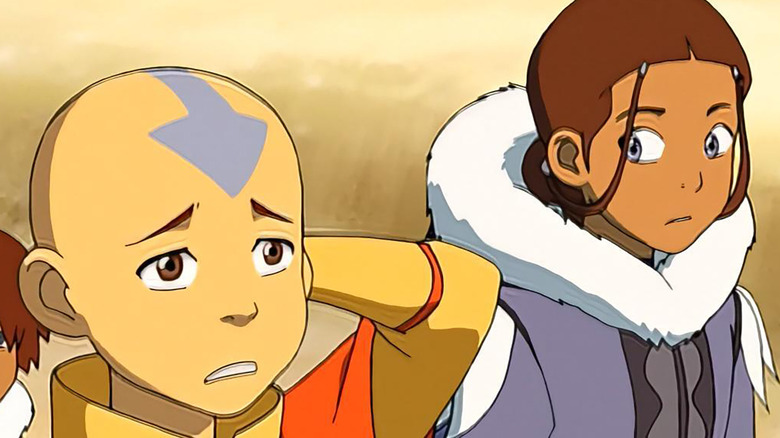
In the two decades since "Avatar: The Last Airbender" emerged as one of the greatest fantasy shows ever made, fans have hardly lost interest in the fictional world of the Four Nations. Opportunities to revisit it have been few and far between — and, at least with regard to the live-action adaptations, disappointing.
As we await the release of the sequel series, "Avatar: Seven Havens," on Paramount+, we've found some shows that have mastered the same storytelling elements as the Nickelodeon series. These are all gorgeous animated series — some genuinely satisfying the all-ages descriptor as "The Last Airbender" once did, some more appropriate for adults who grew up watching it. Each of them has some kind of fantastical, magical component, with war, justice, and imperial rebellion being the dominant recurring themes.
The Legend of Korra
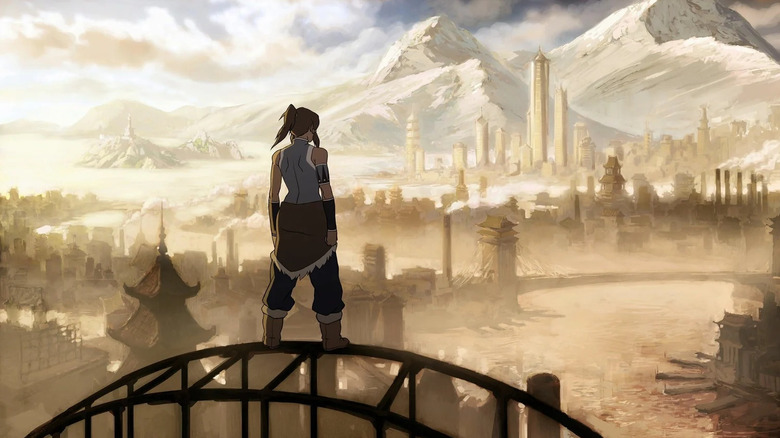
The most obvious and urgent successor to "Avatar: The Last Airbender" is its sequel series "The Legend of Korra." Created by the same duo of Michael Dante DiMartino and Bryan Konietzko, the series takes place about 70 years after Aang's defeat of Fire Lord Ozai. The previous Avatar is gone — in his place is a headstrong young woman (Janet Varney) from the Southern Water Tribe with immense raw bending potential. When she travels to the steampunk-inspired metropolis of Republic City to learn airbending from Aang and Katara's son, Tenzin (J.K. Simmons), she's confronted with a more complex, modern world than she (or the audience, for that matter) expected.
That's the structural elegance of "The Legend of Korra." Through her eyes, the "Avatar" universe ages into more mature, complicated themes both personally and politically. The overt evil of Ozai's imperial expansion is replaced by four seasonal antagonists who represent genuine ideological challenges to the sociopolitical order Korra is supposed to defend — from the anti-bending equalist Amon (Steve Blum) to the anarchist airbender Zaheer (Henry Rollins). Korra actually has to consider their worldviews and question the motivations of her allies throughout.
Adventure Time
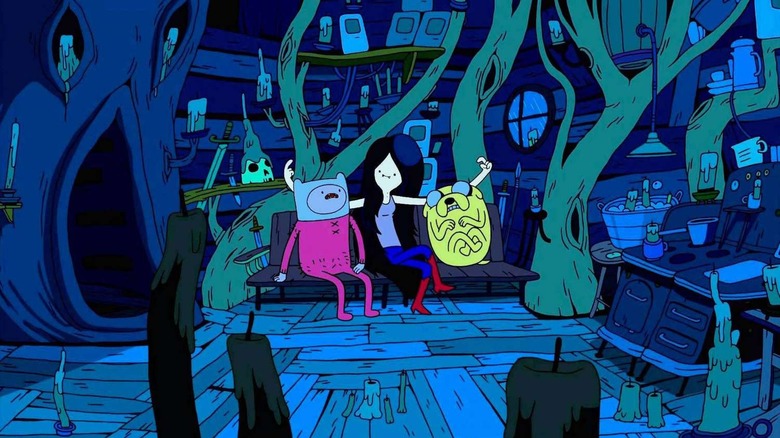
In contrast to "The Legend of Korra," "Adventure Time" does not immediately seem like an "Avatar" successor. When it first began airing on Cartoon Network in the early 2010s, the series was extremely broad, comedic, and intentionally ridiculous — animated comfort food in the form of mindless, colorful adventures with no lasting consequences.
That aspect of the series is entertaining enough on its own, its now-iconic animation style and juvenile sense of humor elevating episodes even when the story didn't. In this chaos, however, Pendleton Ward was gradually building an entire world that in many ways surpasses the depth of "The Last Airbender." A little under halfway through the 10-season run, "Adventure Time" begins to really take advantage of how vivid and populated the Land of Ooo had become. The storytelling becomes more serialized and consequential, and the relationships between key characters are taken seriously.
The last third of "Adventure Time" is everything a "The Last Airbender" fan would want in a follow-up series. The adventures reward long-term fan investment in the same ways the Nickelodeon show did.
Arcane
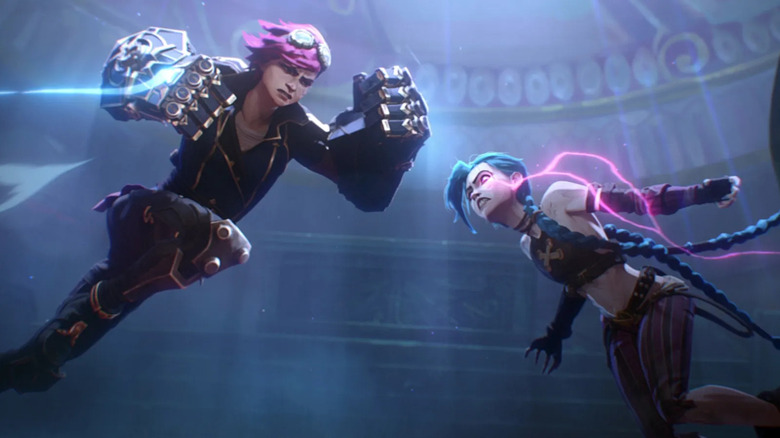
It's easy to see why "Arcane" is regularly described as the greatest video-game adaptation ever made. The animated series is based on "League of Legends," an online multiplayer game that is famous for being frustratingly difficult to master more so than for having adaptable lore. Creators Christian Linke and Alex Yee dove into this world and found the necessary pieces to tell a remarkable story about war and class divisions.
Hailee Steinfeld and Ella Purnell voice Vi and Jinx, respectively, two siblings driven to opposing sides of a conflict between haves and have-nots. The series is a perfect option for the many "Avatar: The Last Airbender" fans who most enjoyed the character arc of Prince Zuko. His perfectly paced and imperfect redemption arc resonated with viewers because the series asked them to sit with the reality of who he was and what he had done. His commitment to hunting Aang caused him to do horrible things, all of which he must atone for both externally (by earning the trust of the people he hurt) and internally (by reckoning with his guilt and lingering anger). "Arcane" asks its viewers to confront even more morally complex character arcs, centering antiheroes who cross several unforgivable lines in potentially righteous causes.
Blue Eye Samurai
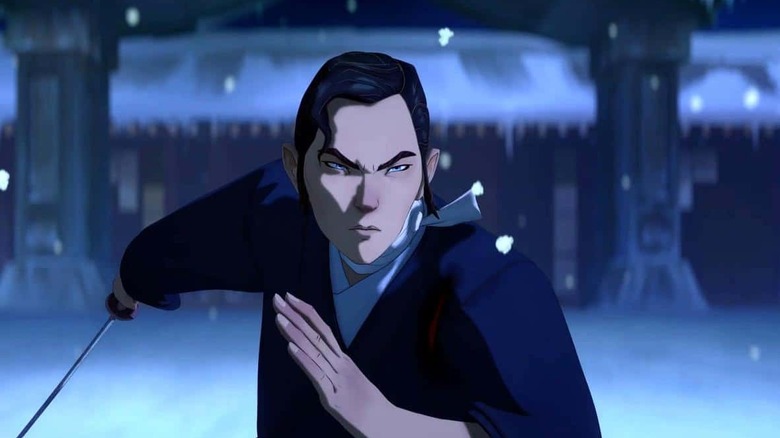
For those Prince Zuko fans with a particular affinity for his alter ego, the Blue Spirit, you may want to consider "Blue Eye Samurai." Included on Netflix alongside "Arcane," this grounded, historical action thriller departs from the fantasy setting of "Avatar: The Last Airbender," and is decidedly not kid friendly. Given that most of the series' original fans are now well into adulthood, however, we doubt this would be a turn-off for most.
In "The Last Airbender," the Blue Spirit persona embodied the self-destructive inner conflict that made Zuko so dangerous. "Blue Eye Samurai" explores a similar kind of character in Maya Erskine's Mizu, a mixed-race Japanese swordmaster on a quest to slay four white men illegally hiding in Edo Japan. One of them, responsible for assaulting her mother, is her biological father — as a result, Mizu's sympathetic thirst for revenge carries an element of self-hatred that blurs her motivations. This character-driven narrative serves as the vehicle for some of the most stylishly brutal violence we've seen in an animated series.
As of writing, "Blue Eye Samurai" has but one critically acclaimed season out on Netflix. A second season is currently in production.
The Dragon Prince
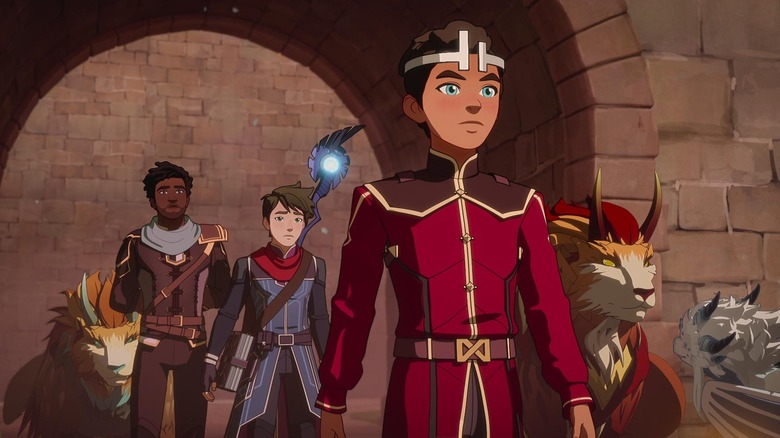
Ironically, and even though it's a perfect fit for this list, the worst thing you can do for a potential fan of "The Dragon Prince" is compare it to "Avatar: The Last Airbender." This isn't because the comparison is wrong, of course, but because they aren't nearly as identical as their shared creative DNA might imply.
Aaron Ehasz — a former writer and producer on "The Last Airbender" — co-created the series with Justin Richmond; character designer, writer, and director Giancarlo Volpe serves as an executive producer and director; Sokka voice actor Jack DeSena stars as a prince who wields special powers in his mission to restore peace and harmony to warring factions. And, for good measure, the seasons are called "Books."
Despite all of these similarities, "The Dragon Prince" just feels like an entirely different show in a way "The Last Airbender" fans should be prepared for (the computer animation style takes some getting used to). If you can accept it on its own terms, the show delivers a satisfying high-fantasy epic, carried by the inspiring optimism of its spiritual predecessor.
Frieren: Beyond Journey's End
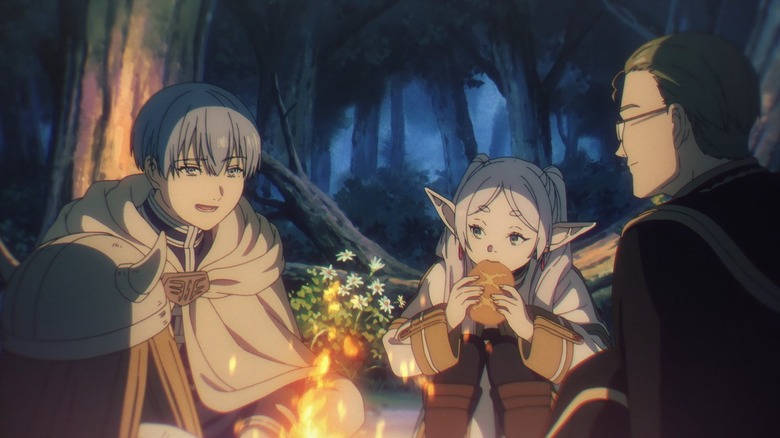
Most of the series we've mentioned so far are propulsively plot-heavy. There's nothing wrong with that by any means — "Avatar: The Last Airbender" drew significant praise for introducing young audiences to competent serialized storytelling. But that legacy overshadows its equally striking ability to create a mellow, almost meandering mood for the viewer. Team Aang's journey across the Four Nations lends itself to cozy fantasy storytelling — "Frieren: Beyond Journey's End" is a maturation of that same vibe, bolstered by a compelling genre subversion.
As its subtitle implies, "Frieren" is about what happens after a legendary hero's journey, told through the eyes of its most characteristically detached participant. The titular elf is over 1,000 years old, making a decade-long quest to slay the Demon King a blip in her life story — that is, until her companions begin to age and pass away. The series follows her attempt to better understand the lives that go by in the blink of an eye for someone like her, as well as to appreciate how they can have such a lasting impact regardless.
Fullmetal Alchemist: Brotherhood
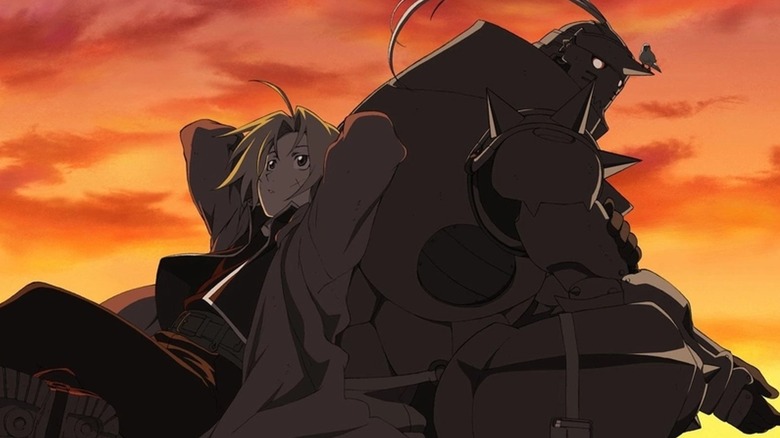
Part of what makes "Avatar: The Last Airbender" so immersive is its consistent magic system, via elemental bending. Tension frequently arises from benders being trapped by the natural constraints of their gifts, or, on the other hand, fighting for those slim opportunities to exploit a rare boost in power. "Fullmetal Alchemist: Brotherhood" boasts a magic system just as integral and rigorous, based in the sacrificial tradition of alchemy.
Based on the manga by Hiromu Arakawa, "Fullmetal Alchemist: Brotherhood" follows Edward and Alphonse Elric, two brothers on a mission to find the legendary Philosopher's Stone. They are driven by their desire to regain parts of their human bodies that were lost in an ill-fated attempt to alchemize their dead mother's resurrection. This leads them to discover dark secrets about the state they serve, their disillusionment arcs echoing the anti-imperial commentary seen in "The Last Airbender." "Fullmetal Alchemist" is a complete adaptation, and is frequently hailed as an essential entry in the popular anime canon.
Jackie Chan Adventures
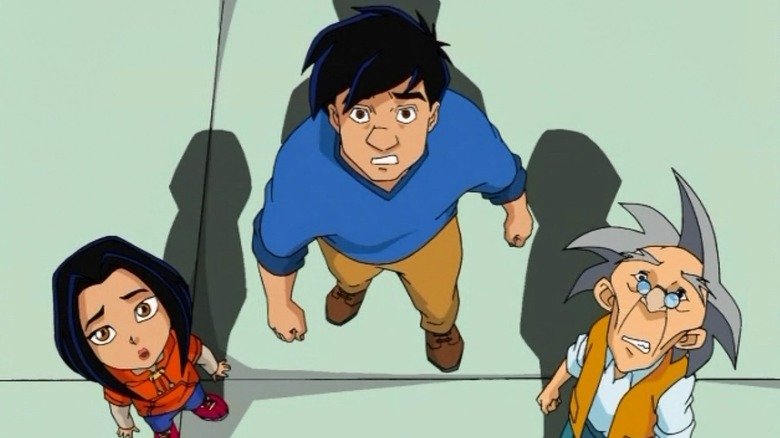
If the martial arts aspect of "Avatar: The Last Airbender" is what sticks with you the most, you're long overdue for a deep dive into "Jackie Chan Adventures." The early 2000s Kids' WB series is an odd thing to take seriously if you've never encountered it before — what could a kids' animated series based on the fictional life of a movie star be other than an exercise in brand synergy?
For starters, "Jackie Chan Adventures" folded elements of Chinese folklore and culture into a Western cartoon years before "The Last Airbender" made it popular. The fictional Jackie Chan (voiced by James Sie) is a Chinese-American archaeologist living in San Francisco, whose work puts him in conflict with a supernatural criminal organization working on behalf of a literal demon. Jackie — for the most part a normal, human martial artist occasionally using a magical item here and there — must hunt for the talismans of the Chinese zodiac with his niece (Stacie Chan) and uncle (Sab Shimono). The real Jackie Chan served as executive producer, ensuring the series' Chinese and martial arts influences resulted in uplifting, respectful entertainment.
She-Ra and the Princesses of Power
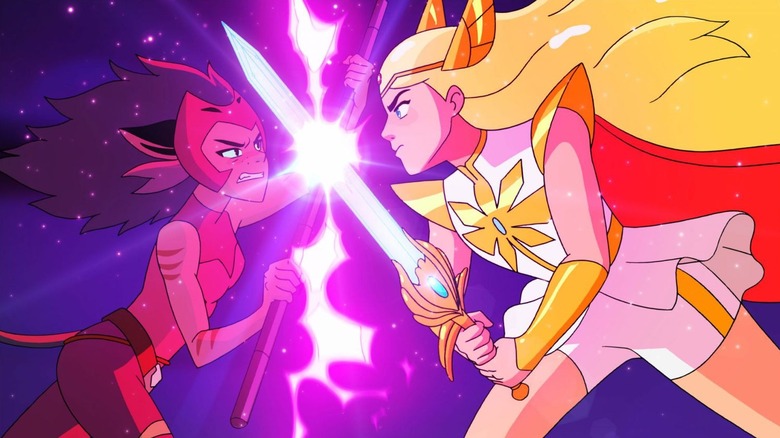
Alongside its world-saving narrative, "Avatar: The Last Airbender" boasts one of the most sustained and believable overarching romantic storylines in any children's show. We see throughout the series how Aang and Katara's feelings for one another develop from tiny intimate moments and goofy flirtations into something deep and dependable. Their relationship is ultimately defined by the hardships they survive together and the disagreements that force them to push each other to be better, all of which happen before they finally get together in the series finale.
"She-Ra and the Princesses of Power" hides a much more complicated love story in a similar tale. ND Stevenson's animated series focuses on Adora (Aimee Carrero), a soldier of an evil empire who defects after she discovers her true destiny as a sacred protector. In doing so, she turns her back on Catra (AJ Michalka), her closest friend, who stays behind to fight for the cause they'd both dedicated their lives to. Their relationship evolves with the series, and remains the most emotionally complex and engaging aspect of it throughout all five seasons. Sadly, it's nearly impossible to watch "She-Ra" now, as Netflix removed it from its library without a complete physical release.
Star Wars Rebels
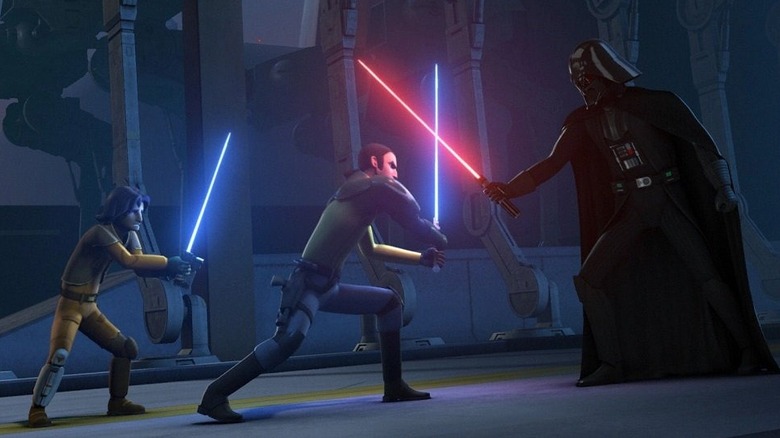
With its magic powers, evil empires, and persistent faith in chosen people and redemption, the "Star Wars" universe has plenty in common with "Avatar: The Last Airbender." The connection goes even deeper than you might realize. Back in 2005, when the Nickelodeon series was just starting to air, Lucasfilm Animation was looking for an artist to shepherd its flagship series "Star Wars: The Clone Wars." They ultimately decided to pursue the director behind several iconic "The Last Airbender" episodes (including the pilot, the Season 1 finale, "Jet," and "The Blue Spirit"): none other than Dave Filoni.
Filoni became a foundational voice in the future of "Star Wars" and is currently the co-president and chief creative officer of Lucasfilm. Many of his shows carry the spirit of "The Last Airbender," but none as completely as "Star Wars Rebels." The series is acutely structured around patience, training, and perseverance against imperial injustice, with Ezra Bridger (Taylor Gray) undergoing a deeply spiritual coming-of-age journey that resembles Aang's. It also similarly depicts military occupation, resistance fragmentation, and collective rebellion.
Steven Universe
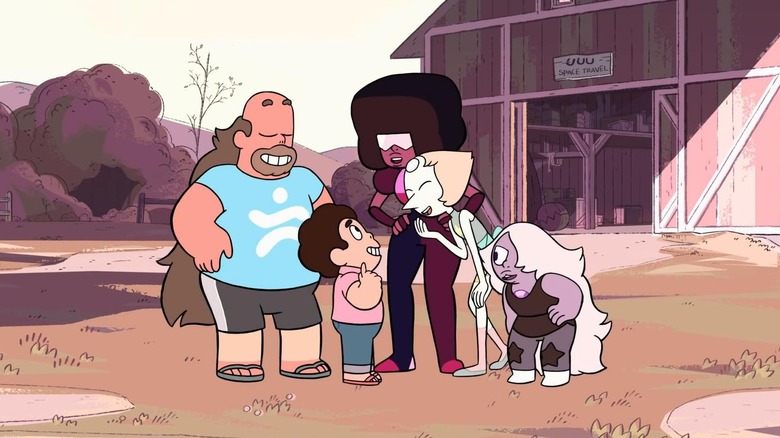
There's no doubt that "Steven Universe" has a similar shape to "Adventure Time" because Rebecca Sugar worked on the latter before creating her own boundary-breaking series for Cartoon Network. Perhaps she learned that the key to long-term success in the children's animation space was to hide the foundational elements of worldbuilding, serialized plotting, and progressive character development in early episodes before fully executing on more ambitious overarching narrative goals.
Once the series gets past the filler and commits, it becomes one of the most emotionally complex children's animated series you'll ever see. Steven (Zach Callison) is a subversion of the typical male fantasy hero, characterized as a radical pacifist who leads with empathy rather than lethal skill. You learn that his mother (Susan Egan) was an intergalactic anti-imperial freedom fighter who led a rebellion against her own empire. Like "The Last Airbender," the series boldly confronts the reality of military conflict and the struggle to maintain one's ideals in the process. At the end of its five-season run, it was immediately recognized as one of Cartoon Network's greatest series of all time.
Sym-Bionic Titan
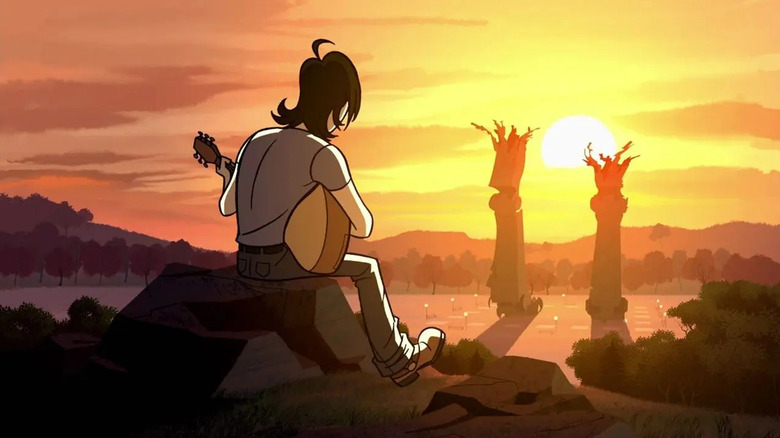
Cartoon Network gave "Steven Universe" 160 episodes to gradually grow into the special intergalactic epic it became. "Sym-Bionic Titan" came out of the gate swinging much harder, but got axed after just 20 episodes. Both shows had the same potential and fans are still waiting over a decade later for "Titan" to rise once more.
Co-created by the peerless animation master Genndy Tartakovsky (with Bryan Andrews and Paul Rudish), the 2010 series owes aspects of its unique style to anime, just like "Avatar: The Last Airbender." The show follows three intergalactic refugees hiding on the planet Earth after a military coup results in the takeover of their homeworld. By day, Princess Ilana (Tara Strong), her royal guard, Lance (Kevin Thoms), and their robot Octus (Brian Posehn) must hide as a typical American family — when threats arise, however, they essentially become giant mech superheroes.
"Sym-Bionic Titan" is the perfect series for "Avatar: The Last Airbender" fans who appreciated when the series slowed down and let the animation do the talking. True to Tartakovsky's style, the dialogue is minimal, while the action and visual storytelling are pushed to the max from start to finish.
Vinland Saga
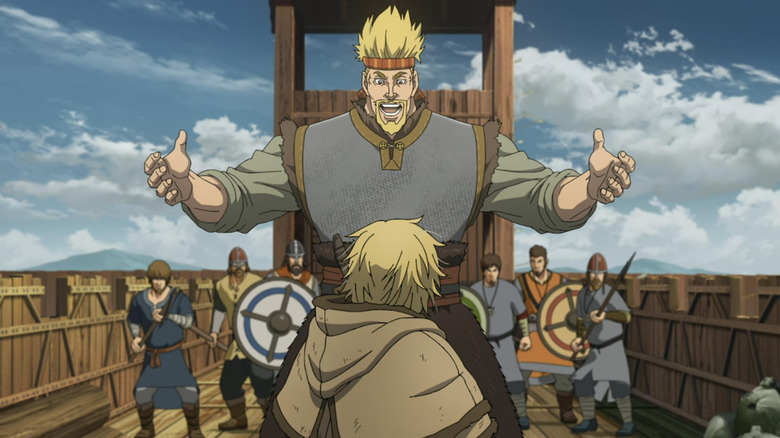
Especially in the final season of "Avatar: The Last Airbender," Aang's refusal to adopt the ruthlessness of his enemies becomes the series' thesis. His belief that executing Fire Lord Ozai will compromise his morality represents a pacifistic philosophy central to the thematic deconstruction of "Vinland Saga."
This action-adventure anime is infamous for two things — subverting the tropes of the revenge character arc and committing to the subversion on a structural level. The first season sets up its young hero, Thorfinn, to take up arms against his father's killer, Askeladd. The audience is led to believe, perhaps mostly through our past encounters with similar stories, that Thorfinn's righteous anger will lead him down a path of self-actualization and discovery – instead, it nearly destroys him. He is so spiritually taxed by the endeavor that the series hard-pivots from its war storyline to something quieter and isolated. It works because it's asking the same deeper questions posed by "The Last Airbender."
Voltron: Legendary Defender
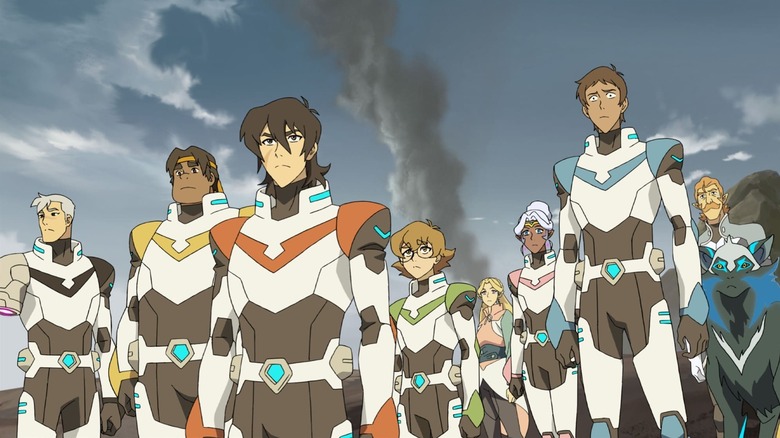
Next to "The Legend of Korra" and "The Dragon Prince," "Voltron: Legendary Defender" has the most creative connective tissue to "Avatar: The Last Airbender" of any show on this list. The series brings over several key "The Last Airbender" and "Korra" writers and directors, including Tim Hedrick, Joshua Hamilton, and May Chan, and was crafted by "Korra" animation house Studio Mir; co-showrunners Joaquim Dos Santos (future "Spider-Verse" director) and Lauren Montgomery (future director of 2026's "Avatar Aang: The Last Airbender") hail from the same creative team.
They bring the same anti-imperial sensibilities, all-ages tone, emphasis on emotional stakes, and serialized storytelling from their prior projects. This time, however, the setting is pure sci-fi fun, reviving the famous titular robot in an intergalactic adventure. What sticks out most of all is the action staging. Despite maintaining the massive scale (and cumbersome weight) of the mechs featured, "Voltron" keeps the fight sequences legible and thrilling by paying the same attention to simple choreography techniques as "Korra" and "The Last Airbender."
Young Justice
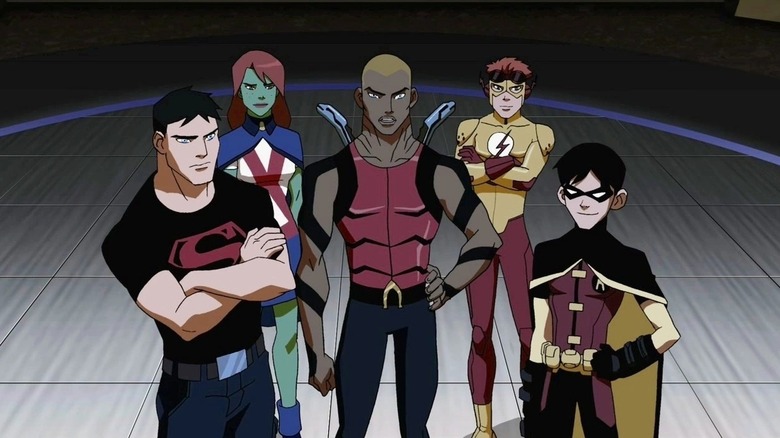
Where "Avatar: The Last Airbender" is consistently celebrated as one of the greatest children's TV shows of all time because of the formal risks it took, "Young Justice" was punished for committing to the same goals. An animated series based on comic book characters usually has to adhere to a different set of priorities to justify its support from the network — sell toys first, then worry about telling a great story.
Whether or not "Young Justice" could've done anything to boost its action-figure sales, it delivered some of the most memorable depictions of popular DC characters — many of whom now enjoy legacies built on memories rather than plastic. The series follows the former sidekicks of major Justice League members as they were aging into young adulthood. Dick Grayson (Jesse McCartney) has to decide what parts of Batman he's willing to carry; M'gann M'orzz (Danica McKellar) needs to find her own path to humanity; Conner Kent (Nolan North) must reckon with his distant relationship to Superman and his true inheritance from Lex Luthor.
The series is built on overarching storylines that invite young viewers to consider complicated questions of authority, responsibility, and identity. It also portrays marquee heroes in realistically unflattering scenarios, and is one of DC's best animated TV shows as a result.