

5 Most Important TV Showrunners Of The '90s, Ranked
The 1990s were a transitional era for television. The decade after would see the rise of so-called "Prestige TV," with the 2000s sometimes referred to as a "golden age" of television. That couldn't have happened without the foundations the '90s established, however, or without the showrunners behind many of the best TV shows of the '90s.
These showrunners helped pioneer new forms of serialized storytelling, many of which have since become the norm. They diversified the medium; they established new subgenres or revolutionized old ones. The following five names are the most important showrunners of the '90s, though they are, of course, not the only five creators to have made a lasting impact on the medium.
Before we begin, a moment to acknowledge some honorable mentions: Dick Wolf ("Law & Order"), Trey Stone and Matt Parker ("South Park"), Aaron Spelling ("Beverly Hills, 90210," "Melrose Place," "7th Heaven"), Joss Whedon ("Buffy the Vampire Slayer"), Larry David and Jerry Seinfeld ("Seinfeld"), David Chase ("Northern Exposure," "The Sopranos"), David Milch and Steven Bochco ("NYPD Blue"), and Matt Groening ("The Simpsons").
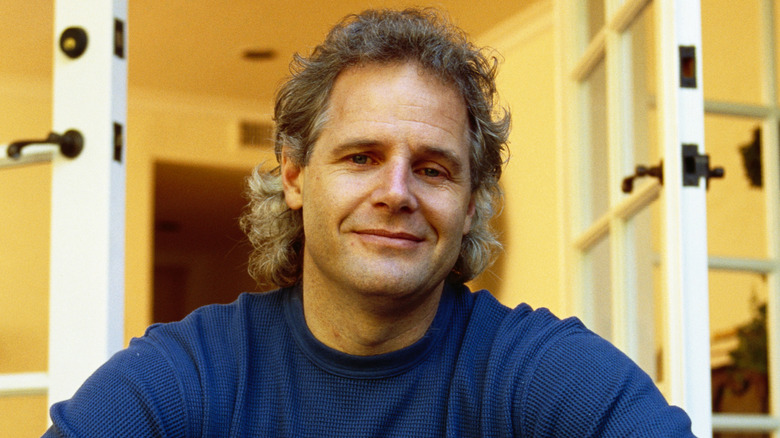
5. Bruce Timm

Officially, the era of DC superhero cartoons that began with "Batman: The Animated Series" is known as the DC Animated Universe, or DCAU. However, some fans have another name for it: the Timmverse. Bruce Timm, an animator who got his start working on some of the best cartoons of the '80s, is one of the main architects behind what might just be the best superhero adaptation of all time. (His collaborator, writer and producer Paul Dini, deserves a lot of credit too, to the point where "The Diniverse" is another fan name for the franchise.)
While there are plenty of other great superhero cartoons out there, "Batman: The Animated Series" is in a league of its own. Gorgeously animated with an aesthetic that deliberately harkens back to Batman's noir-inspired origins, this is one of the defining takes on the iconic character. Timm would also serve as the showrunner for "Superman: The Animated Series," "The New Batman Adventures," and "Batman Beyond" in the '90s before tackling "Justice League" and "Justice League Unlimited."
Timm's approach to superhero storytelling also helped inspire many, many superhero adaptations that would come later, and the way he established an ongoing, sprawling, and interconnected universe on the small screen would later be emulated by countless genre franchises. Considering how important that blueprint — and the superhero genre in general — later became, Timm's legacy is clear enough. And that's saying nothing of the fact that he and Dini created Harley Quinn, arguably one of the most popular comic book characters around today.
4. Yvette Lee Bowser
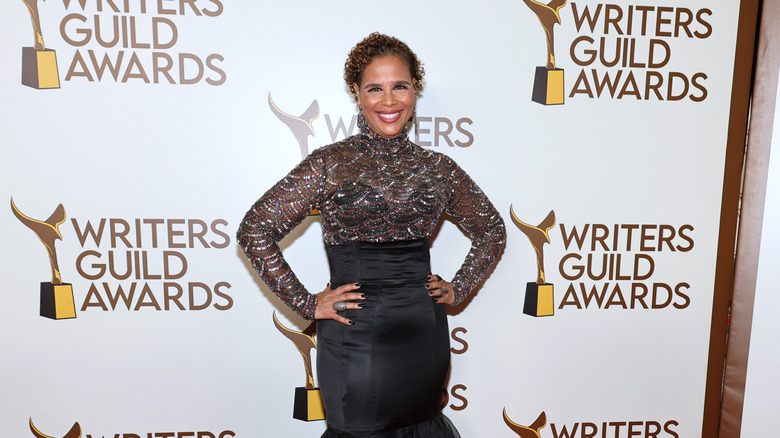
When "Living Single" premiered on Fox in 1993, Yvette Lee Bowser became the first Black woman to create, run, and produce a primetime series. The show, a sitcom about six friends who live in the same Brooklyn brownstone, was one of the defining Black shows of the decade and became a ratings hit (even if it didn't get as much promotion as "Friends" did, to Bowser's chagrin).
In an interview with Emmy Magazine, Bowser admitted that she hadn't initially known she'd achieved a historic first when "Living Single" premiered, but she has since come to be very proud of the accomplishment. "What a privilege to be that person, to have made history with a groundbreaking show," Bowser said. "Because there wasn't a show like it before it. It is the blueprint."
In addition to "Living Single," Bowser created another sitcom, NBC's "For Your Love," in 1998. After the '90s were over, she executive produced "Half & Half," served as a consulting producer on "Black-ish" (which was created by Kenya Barris, her former mentee), and executive produced "Dear White People."
3. John Wells
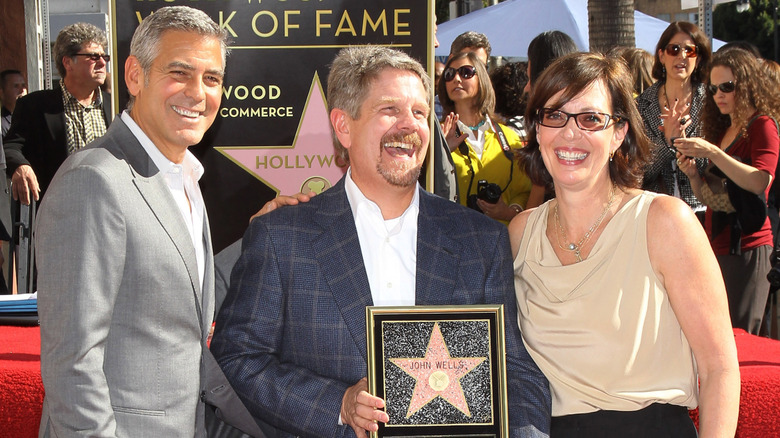
John Wells' first brush with the genre he would come to revolutionize was "China Beach," an ABC series set in an evacuation hospital during the Vietnam War. His next series, however, was arguably the ultimate medical drama. Created by "Jurassic Park" author Michael Crichton, "ER" follows the doctors inside Cook County General Hospital's emergency room as they deal with ongoing personal drama and the many patients they treat.
The fact that the main characters were doctors wasn't an ancillary detail in "ER" — rather, the grueling and traumatic work that they did was essential to the drama. "ER" did things better than any medical drama before it. The show was not the first TV medical drama to focus on the medical procedures — the '50s series "Medic" was ahead of its time in that sense — but it pushed the limits compared to earlier series like "M*A*S*H" or "Doogie Howser, M.D." And, unlike "Medic," the personal drama and character development was top-notch. The legacy of "ER," which went on to become one of the biggest shows of the decade, can be felt in just about every medical drama that followed it, from "Grey's Anatomy" to "The Pitt," the latter of which Wells also created.
"ER" was not the only major show that Wells was a part of in the '90s, either. He served as executive producer on "The West Wing," itself a massively influential series, though he only became that show's showrunner after creator Aaron Sorkin left in 2003.
2. David E. Kelley
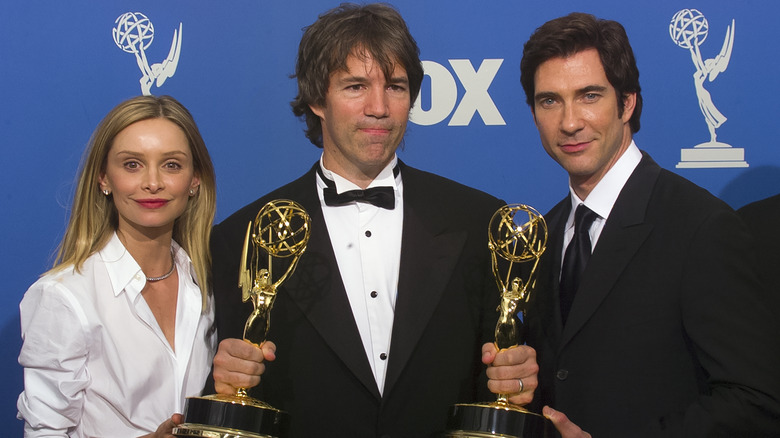
At the 1999 Emmys, David E. Kelley did something unprecedented. First, his legal drama "The Practice," which aired on ABC, won the Emmy for Outstanding Drama Series. That was something of a surprise in itself, given that many expected HBO's "The Sopranos" to win for its acclaimed first season. But, as soon as Kelley walked off the stage, he was summoned back — because his Fox comedy series "Ally McBeal" also won the Emmy for Outstanding Comedy Series.
Nobody else has ever won the "Outstanding Series" prizes for drama and comedy in a single season, which goes to show just how prolific Kelley was in the '90s — and how good his shows were. After getting his start writing for NBC's "L.A. Law" in the mid '80s, Kelley went on to create his first show, the medical sitcom "Doogie Howser, M.D.," which starred Neil Patrick Harris as a teenage doctor. He then created five more series in the decade, four of which were major successes. "Picket Fences," "Chicago Hope," "The Practice," and "Ally McBeal" were all defining shows of the '90s. The final show, a comedy-drama called "Snoops," only lasted one season – but even so, what an incredible batting average.
As evidenced by that historic pair of Emmy wins, Kelley had full command of both the comedy and drama genres, and his much of work in the decade helped lay the groundwork for the dramedy genre, which really took off in the 21st century.
1. Chris Carter
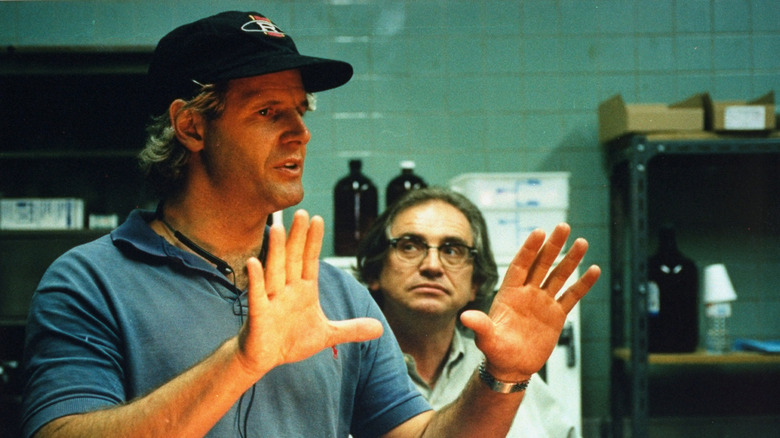
Unlike most of the other showrunners on this list, Chris Carter only helmed one TV show in the '90s — it just so happened to be one of the most influential TV shows of all time. "The X-Files" was a truly groundbreaking TV series. While it wasn't the first show to be serialized, the way it developed a dense mythology that fans could lose themselves in helped establish the mold that a lot of prestige TV would later follow. There are countless genre shows, like "Lost," "Fringe," "Supernatural," and "Westworld," all of which are clear descendants of "The X-Files." At the same time, "The X-Files" provided a bridge to an earlier, more episodic era of TV in that it featured tons of entertaining (and often creepy) monster-of-the-week adventures.
Carter also gets credit for launching Vince Gilligan's career and teaching the future "Breaking Bad" creator the tricks of the trade. On top of that, without Carter and "The X-Files," we wouldn't have the concept of "shipping," a fandom term for when the audience wants two characters (in this case, Mulder and Scully) to get together.