

15 Star Trek: Voyager Episodes To Skip On A Rewatch
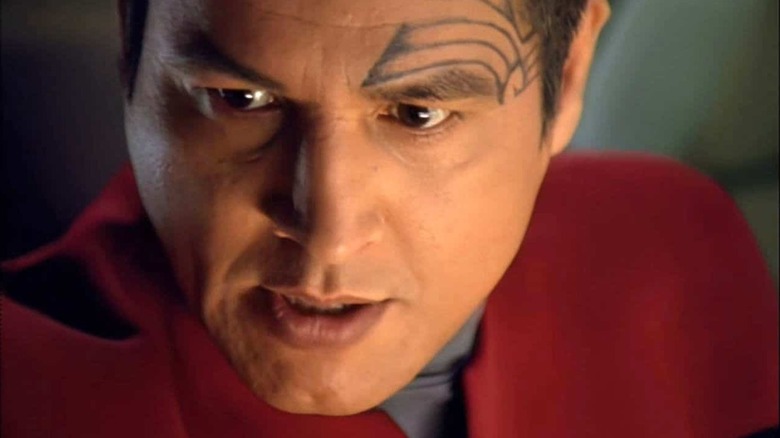
Premiering in 1995, "Star Trek: Voyager" ran concurrently with "Star Trek: Deep Space Nine" for most of its seven-season run. The show features a more stripped down approach to the franchise's tropes, with its titular starship stranded in the hostile Delta Quadrant. Led by Captain Kathryn Janeway (Kate Mulgrew), the crew embarks on a lengthy journey home, cut off from receiving direct support from Starfleet. While it may not rank as highly among "Star Trek" shows, "Voyager" is a solid entry in the franchise and brings many interesting stories to the table.
That said, not every episode in the series is worth watching more than once, with the show containing several lackluster stories. If you've already experienced "Voyager" in full and are looking to revisit the series, there are definitely episodes that aren't required repeat viewing. We're highlighting those weaker episodes that are best left to a single watch at most. These are 15 "Star Trek: Voyager" episodes to skip on a rewatch, avoiding the more mediocre stories.
Cathexis (Season 1, Episode 13)
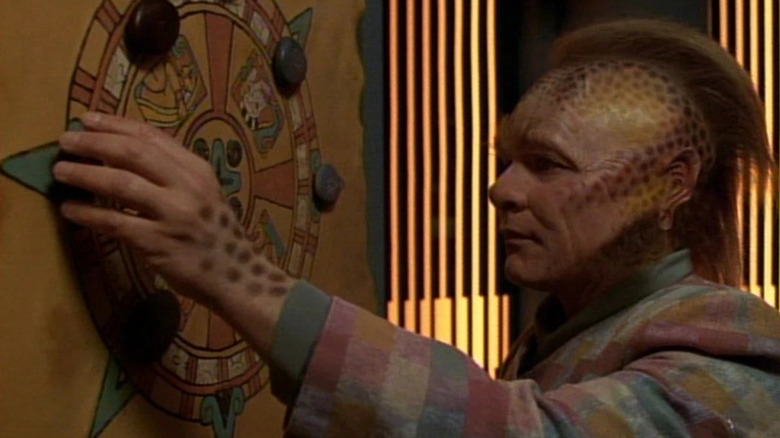
"Star Trek" has a history of featuring shows that recovered from bad seasons and that reputation extends to "Voyager." One episode to include from the show's shaky first season is "Cathexis," which focuses on Chakotay (Robert Beltran) and Tuvok (Tim Russ). The two crew mates are on an away mission in the shuttlecraft and incapacitated when they return to Voyager. This leads to a series of disturbances, revealing that a strange entity possessing Tuvok is affecting the crew.
"Cathexis" is a story that entirely revolves around crew members acting strangely, which isn't as compelling as it seems. Tuvok and Chakotay's incident being linked to the mystery is telegraphed from the beginning and the incident's solution feels almost like an afterthought. Worse yet, the crew initially uses a cultural device reflecting Chakotay's heritage to try and heal him which really adds nothing to the story other than reinforcing a shallow stereotype. The most inconsequential episode from the first season, "Cathexis" is relatively harmless but also utterly forgettable.
Elogium (Season 2, Episode 4)
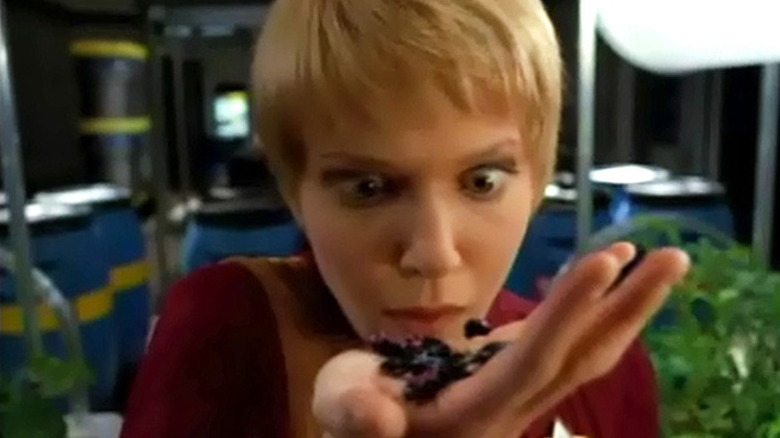
One main character on "Voyager" who could've benefitted from much better narrative material is Kes (Jennifer Lien). An Ocampan native to the Delta Quadrant, Kes' unique physiological abilities come into play in several stories throughout the series. One of the weaker instances of this is in the second season episode "Elogium," which has her prematurely undergo hormonal changes when the ship is exposed to an alien swarm. This leads Kes and her husband Neelix (Ethan Phillips) to debate if they are ready to become parents.
While "Elogium" brings some interesting concepts to the table, so much of it is bogged down by how it handles its motherhood debate. Whether intentional or not, one of the messages that the episode seems to suggest is that women's worth is measured by their ability to bear children. This is an incredibly tone-deaf statement to make and one exacerbated by Neelix's perspective on the issue. Kes deserved far better before departing early in Season 4 and "Elogium" is a cogent example of how they fumbled the character.
Tattoo (Season 2, Episode 9)
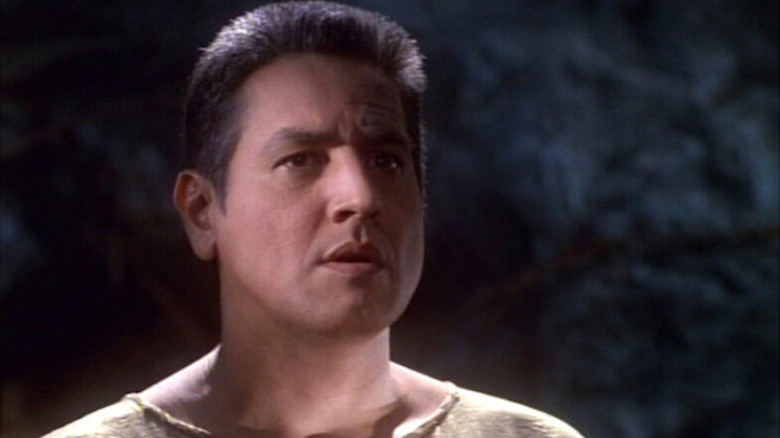
One of the recurring shortcomings in "Voyager" is that it has trouble figuring out what to do with several of its supporting characters. The most egregious of these is Chakotay, with many stories focusing on him being tied haphazardly to the character's indigenous cultural heritage. This certainly informs the second season episode "Tattoo," with Chakotay discovering a symbol familiar to his tribe back on Earth. This prompts him to investigate further, eventually finding a civilization with facial tattoos similar to his own.
"Tattoo" is one of those "Star Trek" episodes that have aged poorly, awkwardly trying to spin a meaningful story from Chakotay's cultural background. The very premise is as contrived as they come and the reasoning behind this episode's central mystery don't really make all that much sense. Chakotay walks away from this mission feeling more whole and proud of heritage, but we're left scratching our heads wondering what we just saw. Unfortunately, "Tattoo" is not the only subpar episode centered around Chakotay that's going to make this list.
Cold Fire (Season 2, Episode 10)
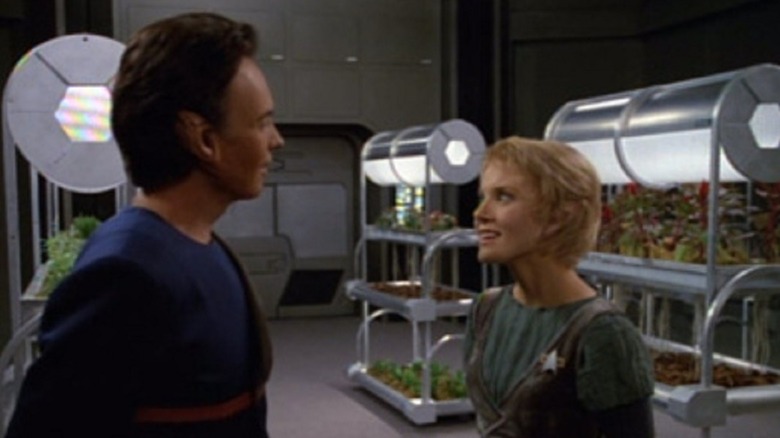
Another middling episode centered on Kes is the second season story "Cold Fire," which has Kes reunite with other Ocampans. As Kes hones her psionic powers with Ocampan leader Tanis (Gary Graham), the Ocampan community's cosmic patron Suspiria (Lindsay Ridgeway) remains distrustful of Voyager. This misunderstanding quickly escalates when Suspiria makes it clear she plans to destroy Voyager based on rumors she's heard about the ship throughout the quadrant. In order to save her friends, Kes is forced to step up against her people and put her powers to the test.
One of the best things about "Cold Fire" is that it features a guest-starring performance from late "Star Trek" actor Gary Graham. Everything else about the episode feels like a forced conflict between the main characters, Suspiria, and the Ocampans. Kes' powers have also been inconsistent in their sheer potential throughout the series and that unfortunately starts here. And, frankly, if you're looking for better "Star Trek" work from Graham, check out his recurring role on "Enterprise" instead.
Threshold (Season 2, Episode 15)
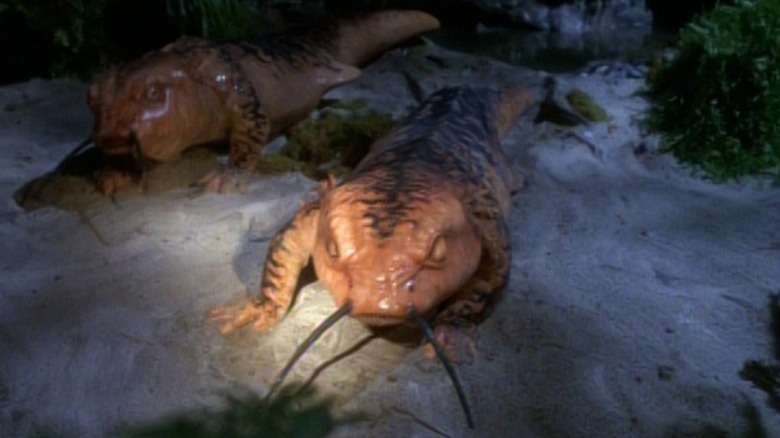
Kathryn Janeway may be one of the best "Star Trek" captains of all time, but even she has her off days. The biggest example of this occurs in the infamous second season episode "Threshold," which has one of the series' most ludicrous premises. Helmsman Tom Paris (Robert Duncan McNeill) leads a test flight going faster than Warp 10 but this unexpectedly transforms him into an amphibian. Paris kidnaps Janeway to make her undergo the transformation with him, mating and leaving amphibian offspring on a remote planet before being restored to normal.
"Threshold" is just as ridiculous as that brief synopsis sounds, with no particular plot point making a whole lot of sense. From why traveling at a high velocity would change Paris' physiology so drastically and the sight of two main characters being turned into salamanders, there's a lot to process here. Thankfully, Paris and Janeway's otherworldly coupling is never really mentioned again in the series, nor is the offspring that they leave behind. That makes "Threshold" all the easier to skip unless you want to be reminded of just how bizarre it is.
False Profits (Season 3, Episode 5)
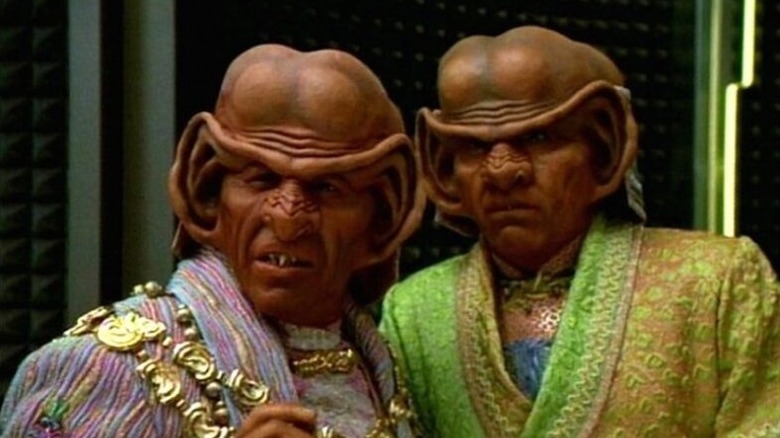
Some of the worst episodes of "Star Trek: Deep Space Nine" involve the Ferengi and this remains true of "Voyager" as well. The Ferengi's first appearance in the series is in the third season episode "False Profits," which serves as a loose sequel to the "Next Generation" episode "The Price." The Voyager comes across the two Ferengi characters from that story stranded on a planet in the Delta Quadrant where they're revered as gods. Janeway tries to find a way to stop the Ferengi from exploiting the local populace without further disrupting their society.
Mileage may vary depending on how well the viewer can tolerate the usual money-grubbing antics that the Ferengi are known for. For us, especially in a series that's darker than "TNG," the Ferengi feel even more out of place here than they typically do. That makes "False Profits" something of a goofy outlier to the show and a link to "TNG" that feels more tangentially tedious than intriguing. Unfortunately, look for another episode prominently featuring the Ferengi in "Voyager" to appear later on this list.
The Q and the Grey (Season 3, Episode 11)
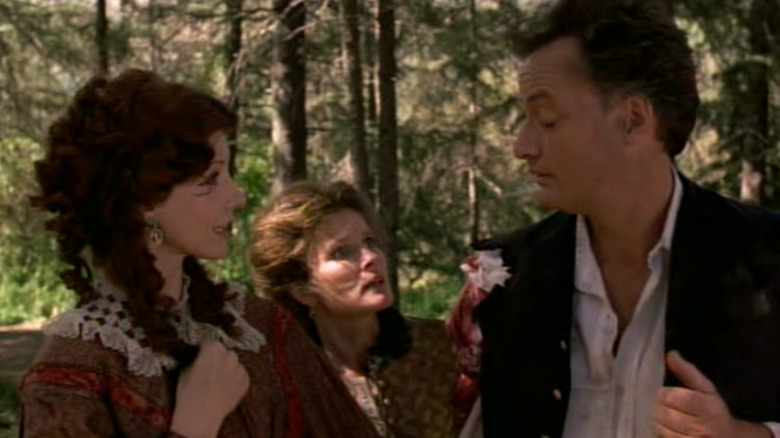
Q (John de Lancie) is one of the strongest "Star Trek" characters in the franchise, an omnipotent cosmic trickster with an unhealthy fixation on humanity. After meeting Janeway in the second season episode "Death Wish," Q becomes visibly infatuated with her, which is followed up in Season 3 story "The Q and the Grey." Returning to the Voyager, Q insists that Janeway bear his child to end a civil war within the Q Continuum. It's only when Q's former lover (Suzie Plakson) reconciles with him that Janeway is finally spared his unwanted amorous advances.
Fortunately, Q works a lot better in "Voyager" than he did in his one-off appearance in "Deep Space Nine." That said, "The Q and the Grey" is easily the weakest Q story in the series, if not of all his classic '90s era appearances. While the idea of a civil war between the Q Continuum is a fascinating plot point, the focus is Q uncomfortably propositioning Janeway throughout the story. There had to have been a better way to explore the fallout of "Death Wish" and give Q a child because "The Q and the Grey" definitely botched its potential.
Favorite Son (Season 3, Episode 20)
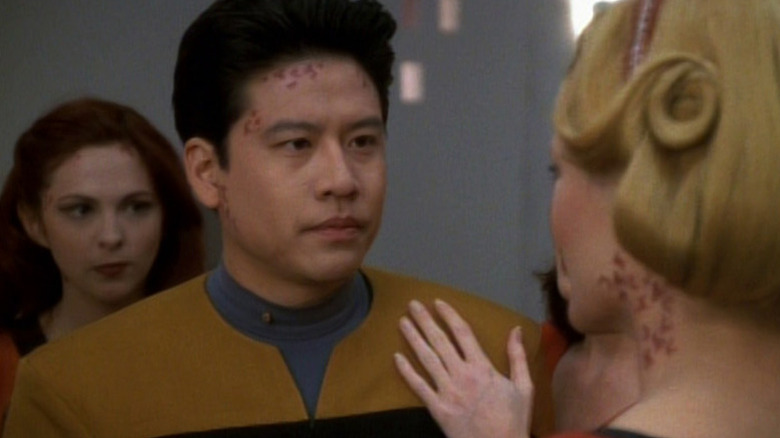
Another character that "Voyager" struggled to utilize whenever he was in the spotlight is Harry Kim. Played by Garrett Wang, Kim has his world rocked in the third season episode "Favorite Son," opening with revelation making him rethink his heritage. Encountering a race of extraterrestrials known as the Taresians, Kim is shocked by the claim that he isn't actually human but one of them. As Kim is rushed into a marriage with a group of Taresian women, the Doctor (Robert Picardo) discovers the elaborate deception at play.
"Favorite Son" is almost more interesting when it suggests that Harry Kim has been an extraterrestrial all along, at least offering a mid-series plot twist. Instead, the story backpedals hard towards restoring the status quo for Kim, robbing the episode of any sense of stakes or consequence. Even with this twist spoiled, what the story does with Kim isn't all that original, revealing his benefactors just to be looking for a human stud to harvest for DNA. Like many of the other supporting characters in "Voyager," Harry Kim deserved better than his time center stage in "Favorite Son."
Once Upon a Time (Season 5, Episode 5)
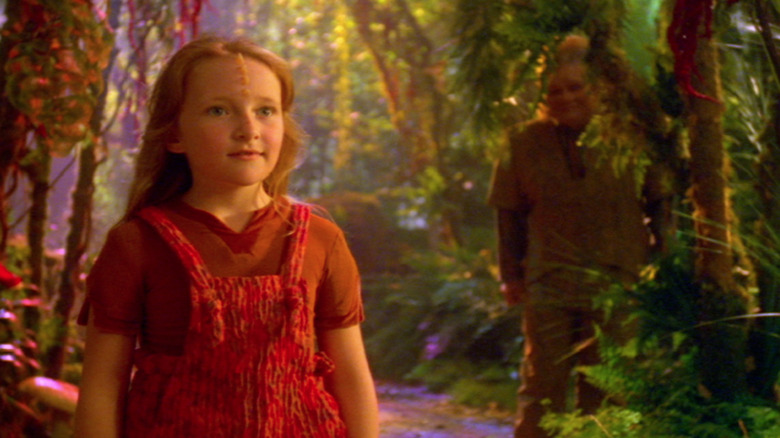
One of the recurring characters in "Voyager" is Samantha Wildman (Nancy Hower), a Starfleet officer on the ship who gives birth to a daughter. With her husband back in the Alpha Quadrant, Wildman raises her daughter as a single mother for the majority of Voyager's return journey. This recurring plot point becomes the focal point of the fifth season episode "Once Upon a Time." With Wildman lost on a mission, Neelix teaches her daughter Naomi (Scarlett Pomers) about the nature of loss.
To be clear, the issues with "Once Upon a Time" aren't with Ethan Phillips' performance, who is actually in fine form as Neelix. But the entire episode's premise feels a bit "Sesame Street" in its presentation and messaging with how it unfolds. If it were a children's television episode, it'd be better off titled "Neelix Teaches Us About Death," with how awkward it's staged. We've already seen plenty of "Voyager" episodes exploring how dangerous the story is, with "Once Upon a Time" treading tritely familiar water.
The Fight (Season 5, Episode 19)
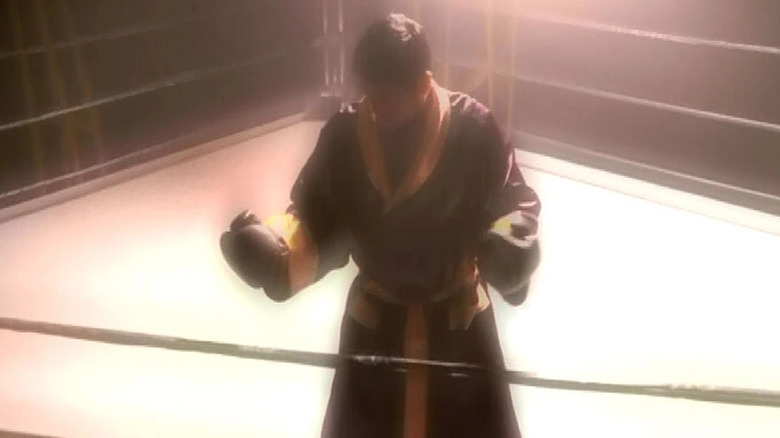
The Season 5 episode "The Fight" is another clumsily handled story centered around Chakotay and tied to his backstory. While not quite as culturally insensitive as "Tattoo," this particular tale explores the character's apparent love of boxing, which had never really been mentioned before. Opening with Chakotay undergoing a vision quest, starting the story off on an awkward note, as he tries to communicate with mysterious extraterrestrials. This leads to Chakotay having to enter a boxing match to save his sanity from this disastrous telepathic connection.
"The Fight" solidifies that "Voyager" never really quite knew what to do with Chakotay outside of his first officer role on the starship. Outside of the vision quest elements, this is a story that feels like it could've happened to any of the other characters and still would've felt just as forced. Somehow, "Tsunkatse," an episode that revolved around professional wrestling, felt less tedious than one centered on boxing. "The Fight" gives "Tattoo" a run for its money as the worst Chakotay-centric episode in "Voyager" and a forgettable story overall.
11:59 (Season 5, Episode 23)
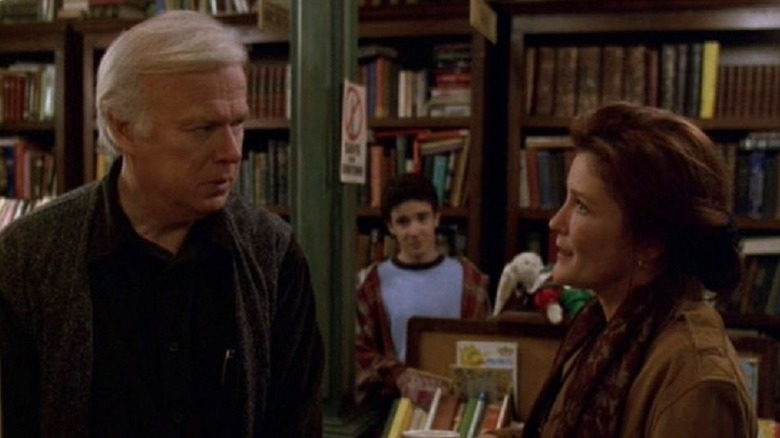
Not every skippable episode is weakly executed but just a matter of them feeling wholly superfluous to the overarching narrative and character arcs. This is the case with Season 5's "11:59," which has Kathryn Janeway share a bit of her family history to Neelix. This spurs an episode largely told in flashback, with Kate Mulgrew also playing her ancestor Shannon O'Donnell, who reputedly helped with a crucial NASA project in the early 2000s. However, Seven of Nine (Jeri Ryan) reveals to Janeway what her ancestor's actual role on that fateful project was centuries ago.
"11:59" isn't necessarily a bad episode, but it doesn't really bring anything interesting to the table. More tediously, it doesn't really add anything to Janeway as a character despite her learning a major revelation about her family. On the one hand, not every "Star Trek" episode has to matter but an extended time in a flashback with little to show for it is another thing entirely. A bit of cost-cutting filler, "11:59" isn't even pleasant enough to warrant your time during a rewatch.
Fair Haven (Season 6, Episode 11)
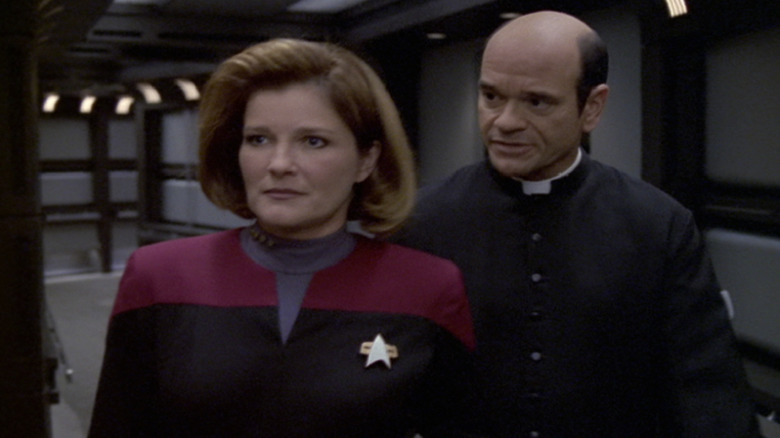
The sixth season of "Voyager" had Paris create an elaborate Holodeck program called Fair Haven, which simulated a rustic Irish village. Introduced in the episode "Fair Haven," Janeway explores the program and strikes up a romance with the town's simulated bar owner Michael Sullivan (Fintan McKeown). However, as Janeway redesigns Sullivan's programming to better match her romantic preferences, this creates unintended consequences. This is exacerbated by Voyager being caught in a storm, with many of the crew spending time in Fair Haven until the starship can proceed.
"Star Trek" has had a surprisingly extensive and odd history depicting Irish characters and culture throughout the franchise's legacy. That said some "Star Trek: The Next Generation" episodes to skip on a rewatch involve the series reinforcing negative Irish stereotypes and that's true of "Voyager" too. "Fair Haven" isn't as egregious as the "TNG" episode "Up the Long Ladder" but it does feel like an exceedingly weird story for the series to tell. While it's nice to see Janeway get a love interest, virtual or not, "Fair Haven" is just a late-series oddball story.
Spirit Folk (Season 6, Episode 17)
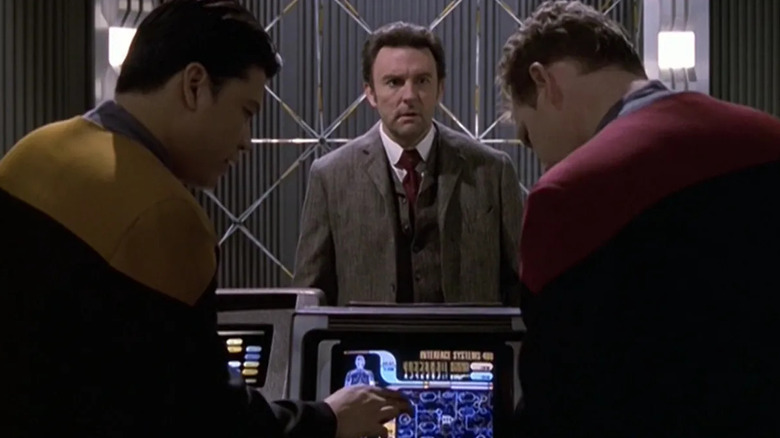
The saga of Fair Haven comes to an overdue conclusion with the sixth season episode "Spirit Folk." With the Irish village simulation running continuously for a prolonged period, the program begins to malfunction and the virtual residents begin to fear the crew for their seemingly reality-shaping abilities. This leads the townsfolk to kidnap Paris and Kim to learn more about the crew and how they can apparently bend the laws of nature. With little options, the crew has to come clean with the increasingly self-aware town about the true nature of their digital community.
While the Holodeck is one of the best "Star Trek" gadgets, it does have a nasty tendency of malfunctioning. "Spirit Folk" is just one of many episodes in the franchise where the Holodeck acts up, putting its living characters in peril. The idea of simulations becoming self-aware has been done before and done better, with Fair Haven not interesting enough to explore those implications in a new way. That the best thing that can be said about "Spirit Folk" is that it ends Fair Haven for good is not a great sign.
Fury (Season 6, Episode 23)
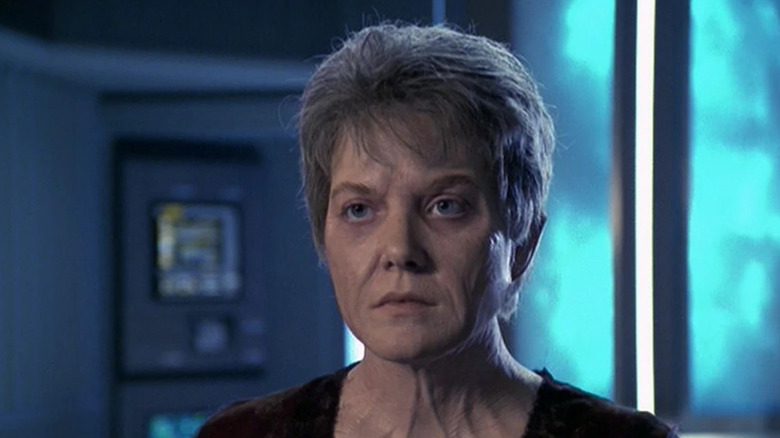
Kes seemingly died early in the fourth season, using her psionic powers to fling Voyager light-years ahead of its journey as she heroically sacrificed herself. However, this noble exit was tarnished somewhat with her brief return in Season 6's "Fury." An older, vengeful version of Kes attacks Voyager, angry that the crew ruined her life by encouraging her to develop her mental powers. This assault is waylaid by a younger version of herself encouraging her older counterpart to remember how history actually unfolded.
On the one hand, it's nice seeing Jennifer Lien reprise her role as Kes in any capacity but "Fury" feels like a final insult to the character. Kes' reappearance makes less sense the more one thinks about it, with the entire premise feeling like a particularly contrived way to bring her back. To make matters worse, Lien can't capture the nuances of playing an older and embittered version of Kes, leaving her as a shallow, villainous variation of her usual role. Fans should pretend Kes' story ended with Season 4's "The Gift" rather than whatever "Fury" was trying to do with the character.
Inside Man (Season 7, Episode 6)
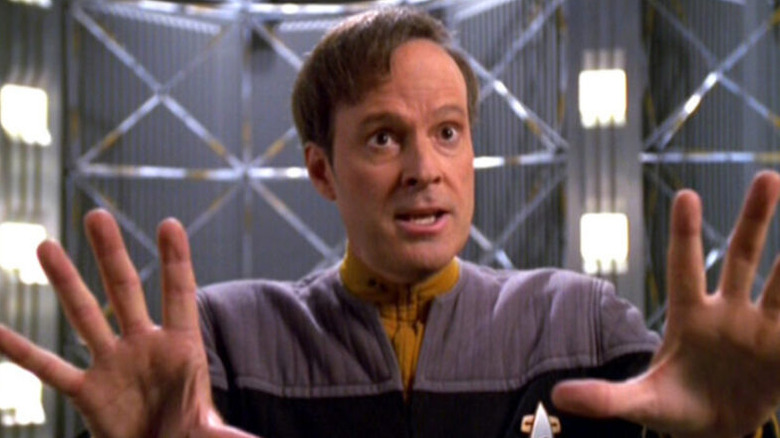
Yes, the only other episode in "Voyager" to feature the Ferengi also earns dubious recognition on this list. Season 7's "Inside Man" has a projection of the Enterprise's Reginald Barclay (Dwight Schultz) seemingly guiding Voyager back from the Alpha Quadrant. The real Barclay, along with Deanna Troi (Marina Sirtis), realize that this is actually an elaborate ruse by the Ferengi endangering the Voyager crew. Barclay tries to stop the deception as the Doctor begins to separately develop suspicions of his own about his holographic guide.
The best thing about "Inside Man" is it continues Barclay assisting Voyager's return trip home which began in the preceding season. It's always nice to see Dwight Schultz and Marina Sirtis back reprising their respective fan-favorite roles, but that's not enough to save this story. Previous "Star Trek" shows had enough trouble making the Ferengi effective antagonists and "Voyager" can't pull it off either. "Inside Man" has the road home advance but feels like an odd pit stop during that prolonged journey.