

15 Best Sci-Fi Shows Of The '70s, Ranked
The 1970s were a good time to be a science fiction fan. From books like Larry Niven's "Ringworld" and Douglas Adams' "The Hitchhiker's Guide to the Galaxy" to movies like "Solaris" and "Star Wars," pop culture offered a smorgasbord of sci-fi flavors for the ever-expanding fandom to savor. The same applied to TV, as networks rolled out a laundry list of 1970s sci-fi shows that still hold up today.
Necessity is often the mother of invention, and the decade's sci-fi shows were often stellar examples of this. Many of the era's series had to deal with a severe lack of budget and resources, yet they managed to deliver memorable stories — and, on occasion, even surprisingly impressive special effects. The following 15 shows are some of the finest examples of 1970s sci-fi television.
15. Logan's Run
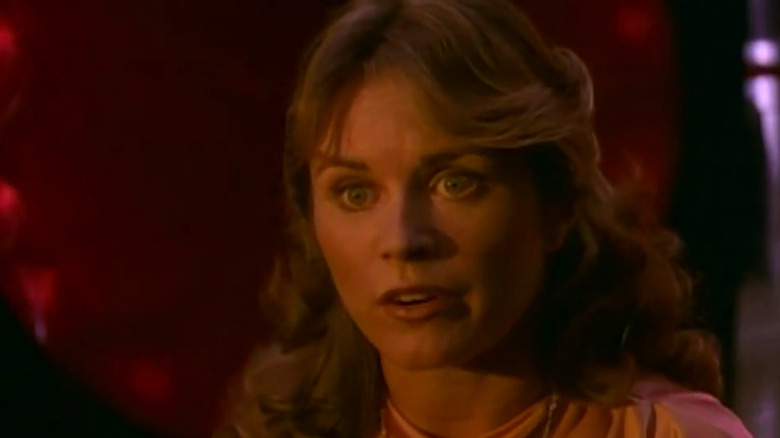
Michael Anderson's dystopian 1976 sci-fi flick "Logan's Run" made a pretty penny at the box office, bringing in $25 million against a $7 million budget. CBS didn't wait long to capitalize on the film's success; "Logan's Run" the TV series started airing in 1977.
The show is generally content to do its own thing, but it maintains the same central premise as the film: The futuristic City of Domes is a wonderful place to live, but the catch is that you must die when you turn 30. For those who learn of their society's brutal resource conservation strategy before it's too late, the only hope for escape is a mythical location known as Sanctuary.
Gregory Harrison and Heather Menzies take over the roles of runaways Logan 5 and Jessica 6 from the film's Michael York and Jenny Agutter, and are accompanied by a new android character called Rem (Donald Moffat). The show does a great job capturing the movie's visuals and atmosphere, and the world of "Logan's Run" supports the serialized format well. While the series didn't make it past its first season, it remains a worthy watch for fans of classic sci-fi adventures.
14. Survivors
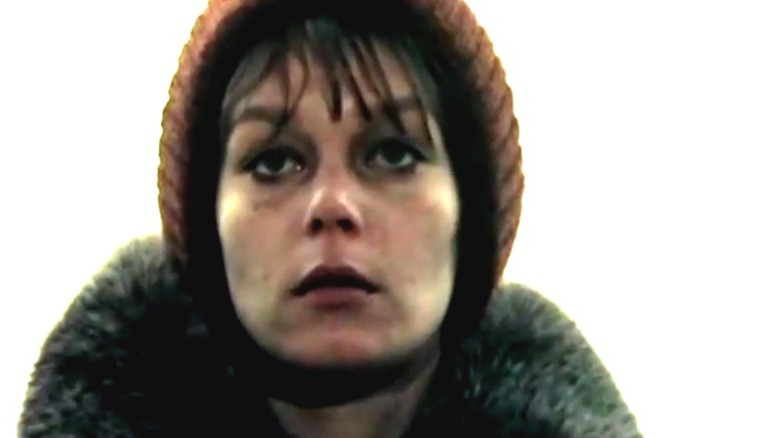
If you've seen the infinitely hopeless 1984 TV film "Threads," you know that British sci-fi television is very good at sucking all hope out of the air. The country's 1970s crown jewel in the dystopian science fiction category is Terry Nation's' "Survivors," which sees the world in tatters after an incredibly deadly pandemic kills almost all of the world's population.
"Survivors" doesn't mess around. The disease that virtually wipes out humanity is simply called Death. The people who survive aren't necessarily immune — instead, some of them only survive by the skin of their teeth. The small group of survivors that manages to band together understands that they have no chance of rebuilding the civilization that once was. In order to survive, they voluntarily become a primitive farming community instead.
The three seasons of "Survivors" feature plenty of development, as the titular survivors learn what it takes to live in this new world. However, the show delivers its biggest blows right at the beginning, as the characters slowly realize the nature of their predicament. If you thought that the opening moments of "The Walking Dead" are a masterclass in post-apocalyptic dread, you owe it to yourself to see the stunned Abby Grant (Carolyn Seymour) wander through a town where everyone else is dead, desperately praying that she's not the only person left alive.
13. The Fantastic Journey
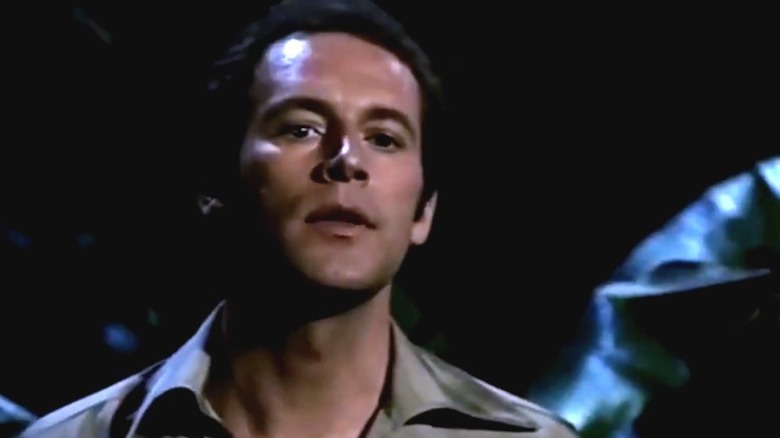
The Bermuda Triangle is always good for some imaginative science fiction, and few vintage shows have approached the theme better than Bruce Lansbury's "The Fantastic Journey." Here, a group of contemporary scientists and a man from the 23rd century (Jared Martin) find themselves trapped on a strange island within the Triangle. There, many different eras intertwine, magic and advanced science are equally real, and ancient Greek mystics find themselves trapped right next door to telekinetic aliens.
The show is basically "Lost" on steroids, and there's absolutely no way of knowing what the premise of any given episode is going to be. Since everyone on the island is effectively its prisoner and can essentially be from any era (or planet), "The Fantastic Journey" has a wild amount of plot potential at its disposal — and the show isn't afraid to use that potential to tell extremely outlandish stories.
Unfortunately, the show's journey ultimately wasn't all that fantastic. While its Primetime Emmy nomination for sound editing is a testament to its production quality, "The Fantastic Journey" ran for just 10 episodes before it came to an end.
12. Blake's 7
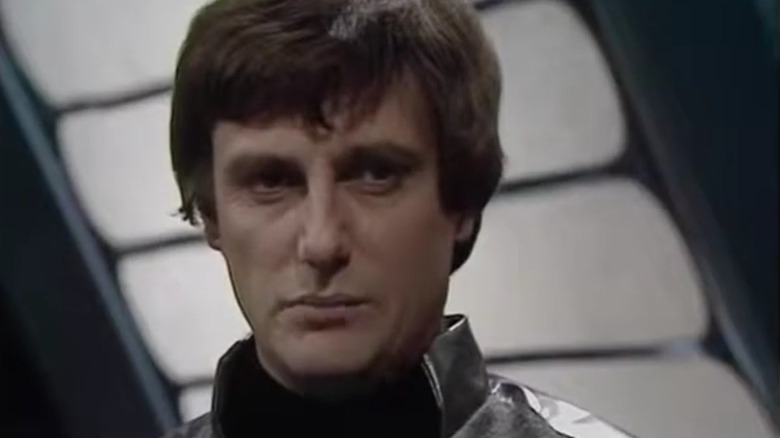
Where "Star Trek: The Original Series" depicts the future of humanity as a space-faring utopia that can focus on exploration and peacekeeping, Terry Nation of "Survivors" fame gives us "Blake's 7." The four-season show adopts a more cynical — but perhaps more realistic – viewpoint. Here, the ruling body is the Terran Federation, a totalitarian Big Brother government of Earth and a number of other planets. Our heroes are a group of freedom fighters led by Roj Blake (Gareth Thomas), a tormented dissident who starts waging war against the Federation using a powerful spaceship.
The twist: Blake is kind of a jerk, too. Though the Federation is clearly extremely shady, the protagonist soon grows into an unbalanced fanatic who's just one bad cup of coffee away from throwing the whole crew's lives away. Said crew's subscriptions to the cause vary, too. There are cowards, criminals, and cynics on board. Co-protagonist Kerr Avon (Paul Darrow) alone routinely clashes with Blake, and has way too much chemistry with the show's big bad, Servalan (Jacqueline Pearce).
All of this gives "Blake's 7" an edge that few sci-fi shows of the era had an answer to. While the Federation is an obvious and uncontested villain, Blake and his seven are anti-heroes at best, and their reckless rebellion often struggles to make a dent in the Federation's operations.
11. Planet of the Apes
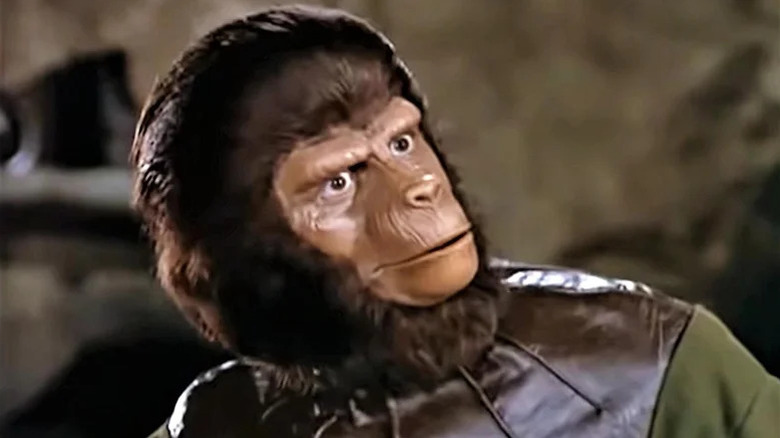
The Planet of the Apes franchise was already into its fifth movie sequel by the time CBS got around to making a TV series. Impressively, Anthony Wilson's 1974 "Planet of the Apes" series retains the services of franchise veteran Roddy McDowall, who plays the chimp Galen after previously portraying Dr. Cornelius and Caesar in the films.
Implied to take place a decade after the events of the first movie, the show remixes themes and story arcs from the original 1968 film and its sequels. The plot revolves around Colonel Virdon (Ron Harper) and Major Burke (James Naughton), two human astronauts who discover that they're on a future Earth. Convinced that the pair's long-term possibilities for survival amount to zero, Zaius (Booth Colman) sends Galen to bring them in for studying, with the fearsome gorilla Urko (Mark Lenard) muddying the waters.
The show only ran for one season, but that doesn't make it a bad time. On the contrary, the escort mission premise allows "Planet of the Apes" to explore different corners of this world and tackle various interesting themes, so fans of the franchise are liable to have great fun.
10. The Bionic Woman
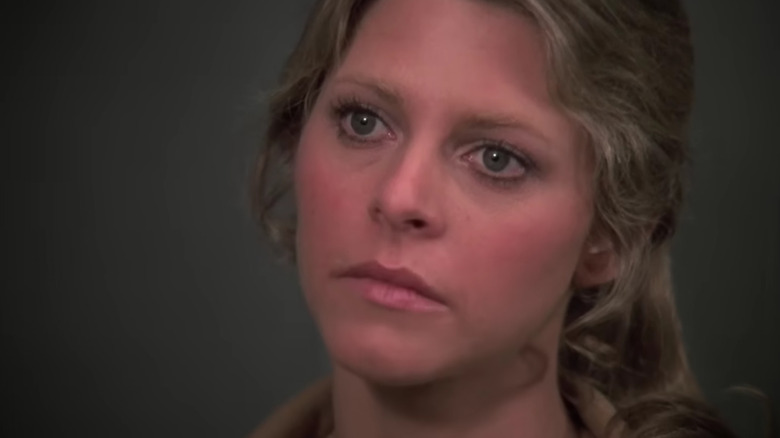
The 1970s hit show "The Bionic Woman" was inspired by a classic horror movie. Kenneth Johnson's ABC/NBC series drew its premise from James Whale's 1935 film "Bride of Frankenstein," and specifically its core idea of creating a female counterpart to Lee Majors' Steve Austin from parent show "The Six Million Dollar Man." The end result of this novel approach was three seasons of sci-fi adventure goodness, spearheaded by tennis player-turned-superpowered cyborg Jaime Sommers (Lindsay Wagner).
Jaime debuts in "The Six Million Dollar Man" Season 2 two-parter "The Bionic Woman" as Steve's old flame who suffers an awful skydiving accident and can only be saved with copious cybernetic implants. Her fate in the episode is grim ... but that didn't stop a Jaime-centric spin-off from materializing in 1976.
"The Bionic Woman" is both extremely entertaining and deliberately more restrained than Steve's over-the-top antics. Whether she's struggling with her identity or conducting demanding investigations on evil geniuses, Jaime is a compelling heroine. This is in no small part thanks to Wagner's smart portrayal, which paints the protagonist as a down-to-Earth person instead of a larger-than-life superhero.
9. Land of the Lost
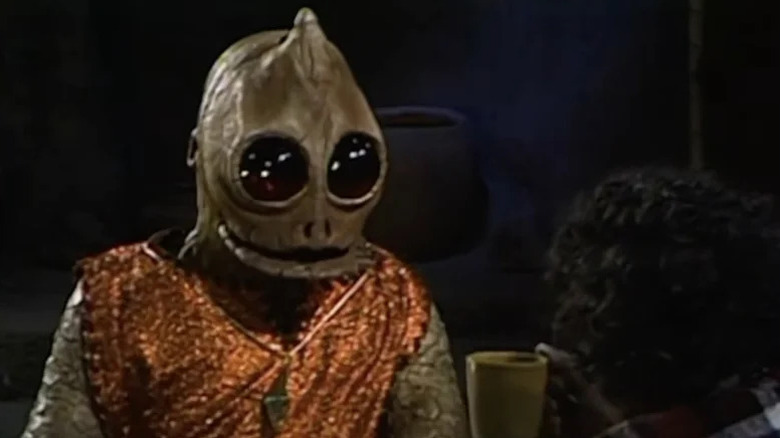
NBC's "Land of the Lost" features a live-action family stranded in a strange world full of stop-motion dinosaurs, and honestly? That sentence alone should make the show worth your time. As a bonus, though, "Land of the Lost" also happens to be very good.
"Land of the Lost" kicks off when the Marshall family's quick camping trip turns into a fight for survival after a strange portal sends them into a mysterious world that resembles prehistoric Earth ... at first, that is. The emergence of mysterious races and advanced technology soon reveals that things are far more complicated than that.
From 1974 to 1977, the three-season show introduced a series of peculiar characters and events, along with a truly massive scale and production values that leave most other titles on this list in the dust. Reliably family-friendly and rarely bothering to fully explain its secrets, "Land of the Lost" has deservedly become a cult classic kids' show that still holds up surprisingly well. With scripts from the likes of Larry Niven, how could it not?
8. Buck Rogers in the 25th Century
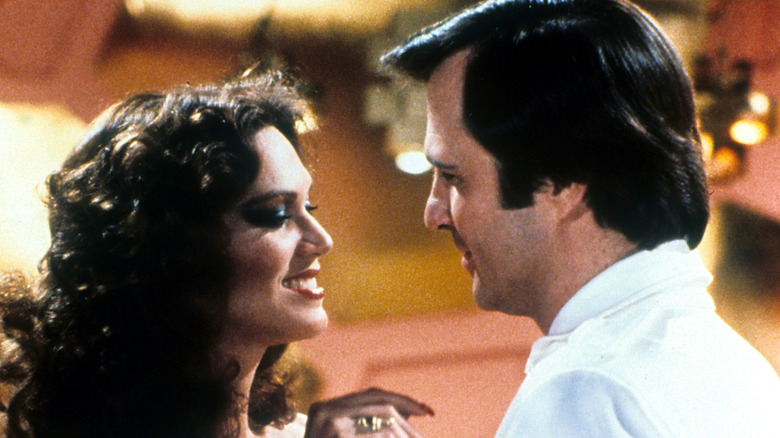
"Buck Rogers in the 25th Century" star Gil Gerard died in 2025, but his memory lives in the hearts of fans who prefer their science fiction with a glint in its eye. The show is a gleeful melting pot of sci-fi tropes that Gerard's titular astronaut is thrown into when a stint at suspended animation causes him to wake up five centuries into the future.
Glen A. Larson and Leslie Stevens' series followed a namesake movie-slash-pilot in 1979. Unashamedly inspired by "Star Wars" and the pulpy leanings of the comic strip it's based on, "Buck Rogers in the 25th Century" aims to entertain, and does precisely that with all of its two-season might. If your brand of sci-fi is all about thrilling adventures, imaginative alien costumes, robots, and cool spaceships, this is the 1970s show for you.
7. Mork & Mindy
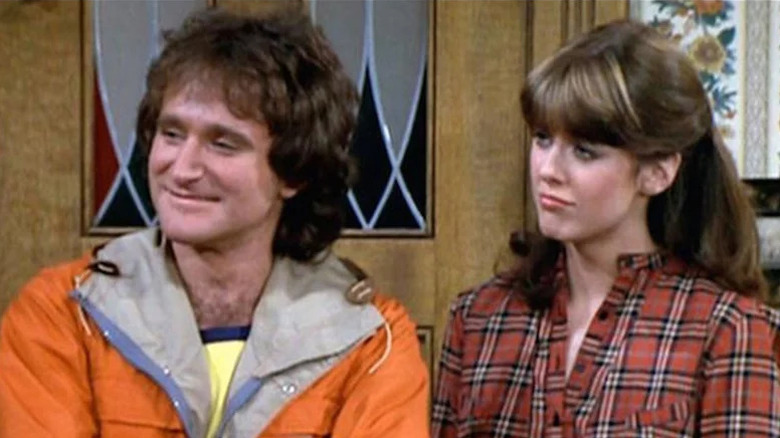
Young Robin Williams' winning turn as Mork from Ork in the "Happy Days" Season 5 episode "My Favorite Orkan" was virtually begging for a repeat, and that's precisely what happened with the Season 6 episode "Mork Returns." Between the two, of course, Mork also got a spin-off show of his own.
Set in the late 1970s instead of the 1950s of "Happy Days, "Mork & Mindy" depicts Mork as a clueless alien who's sent on a mission to observe Earth and its denizens — largely because Orkans want to get rid of him. On our planet, Mindy McConnell (Pam Dawber) encounters Mork and takes him under her wing. She becomes his guide to human behavior, and the two eventually fall in love.
"Mork & Mindy" is understandably at its strongest when it remembers to let Williams as loose as a network TV show possibly can. While it doesn't always succeed, the sci-fi sitcom is self-aware enough to correct course whenever it steers too far from its core. This helps "Mork & Mindy" retain a considerable overall charm throughout its four-season run.
6. Kolchak: The Night Stalker
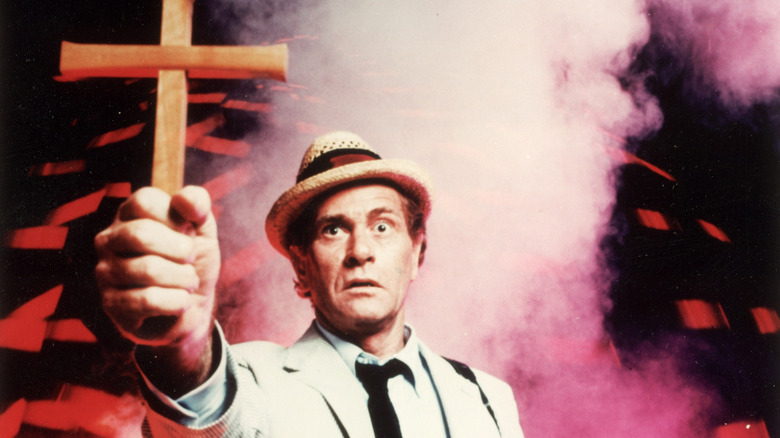
TVLine has already summed up the impressiveness of Jeffrey Grant Rice's "Kolchak: The Night Stalker" in one sentence: "Supernatural" began life as a "rip off" of this classic horror TV show before the CW series evolved into its own thing. A blend of supernatural and good old sci-fi, "Kolchak: The Night Stalker" follows the adventures of Carl Kolchak (Darren McGavin), a reporter and paranormal aficionado who keeps ending up in the middle of supernatural cases. From bone marrow-sucking aliens and deadly androids to zombies and possessed suits of armor, Kolchak runs the full gamut of genre ghastliness, often ending his investigations with an amazing story but little in the way of tangible evidence.
The show followed the vampire-themed 1972 TV movie "The Night Stalker" and its alchemy-themed 1973 sequel "The Night Strangler," both of which also feature McGavin as Kolchak. Unlike "Supernatural" and the other major show "Kolchak" inspired – a little-known thing called "The X-Files" – the 1974 series only lasted for one season. But it's a magnificent season that will entertain sci-fi and horror fans alike.
5. Space: 1999
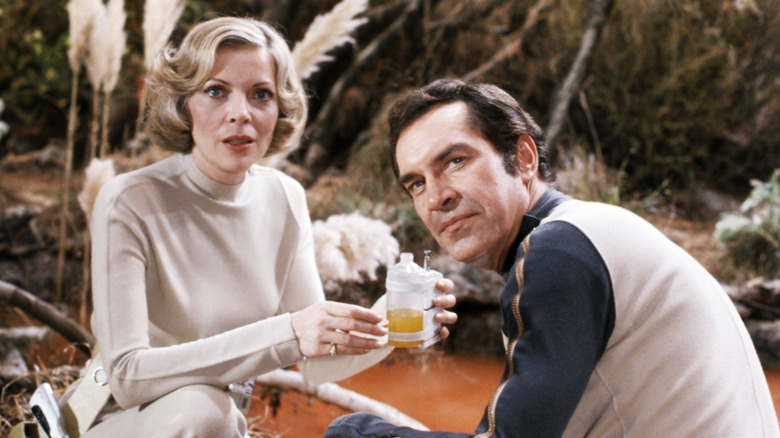
The title of Gerry and Sylvia Anderson's "Space: 1999" might be a little bit dated, but don't hold that against the 1975 series. The year plays a very small part in the proceedings, after all.
"Space: 1999" begins when a thermonuclear explosion sends the entire moon flying through space at a great velocity, which is a problem for the people living and working on Moonbase Alpha. Torn away from their home planet, the station's residents have no choice but to see where their journey takes them.
Starring real-life husband and wife Martin Landau and Barbara Bain as Moonbase Alpha's Commander John Koenig and Dr. Helena Russell, "Space: 1999" starts out as a thoughtful and measured series about space survival before morphing into a Star Trek clone with its second and final season. Both iterations of the show have their charms, but Season 1 is easily the better of the pair. Still, even at its worst, "Space: 1999" is inherently watchable. It also serves as a reliable game of "spot the actor." After all, its stellar guest star list includes names like Ian McShane, Christopher Lee, Peter Cushing, and "Doctor Who" star Patrick Troughton.
4. The Six Million Dollar Man
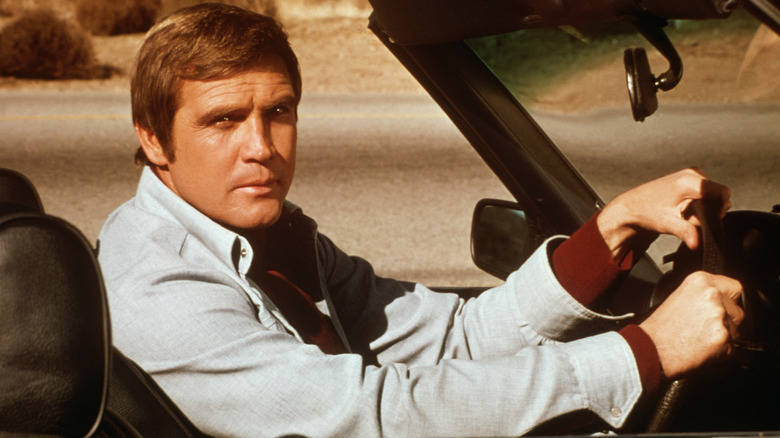
"The Six Million Dollar Man" is a bombastic show, and that's exactly what it should be. It starts by turning Lee Majors' ex-astronaut Steve Austin into a superpowered cyborg, and proceeds to spend five seasons having every bit of fun that can possibly be squeezed out of that premise.
Based on Martin Caidin's 1972 novel "Cyborg," the ABC show is a blast from start to finish, and it produced numerous classic moments. The sound effect that plays whenever Steve uses his powers is probably playing in your head right now, and the show as a whole remains so iconic that it actually managed to become a streaming hit in 2026. "The Six Million Dollar Man" might not be the single best sci-fi show made in the 1970s, but its specific combination of scowling superhero action and silly science fiction might just make it the one that best defines the decade.
3. Battlestar Galactica
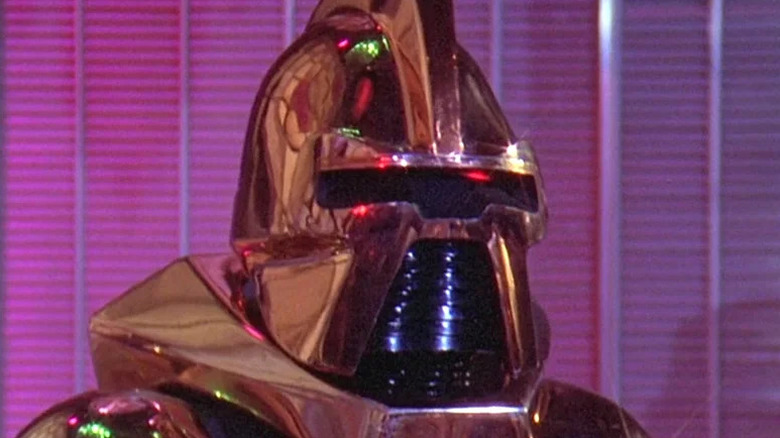
The 1978 "Battlestar Galactica" series tells a thrilling story about the titular ship's desperate struggle to find the mythical colony called Earth, in order to find a safe haven for a fleet of survivors from the Twelve Colonies of Mankind. The problem is that the alien robots called Cylons want none of that, and they pursue the Galactica-led fleet in order to destroy every last human.
Newer fans remember the admittedly excellent reboot, but every "Battlestar Galactica" aficionado should also check out the show that started it all. For fans who are only familiar with the 2004 series, Glen A. Larson's original has a few details that need some mental adjustment — for instance, Starbuck is played by future "The A-Team" star Dirk Benedict instead of Katee Sackhoff. Still, all of that's just icing on one of the most beautiful and enticing 1970s sci-fi cakes out there.
2. Star Trek: The Animated Series
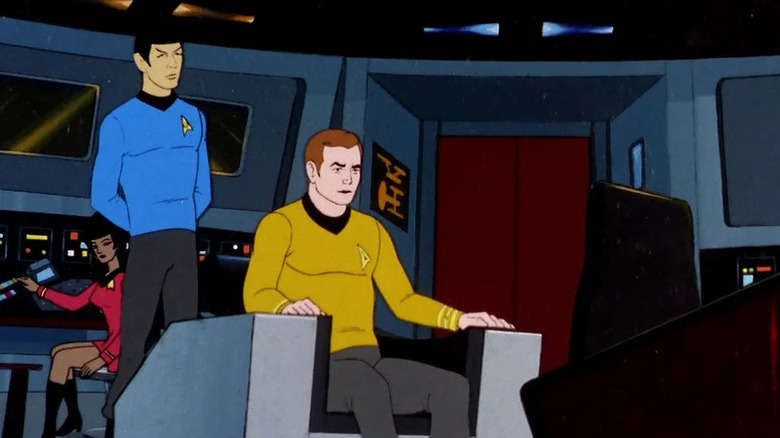
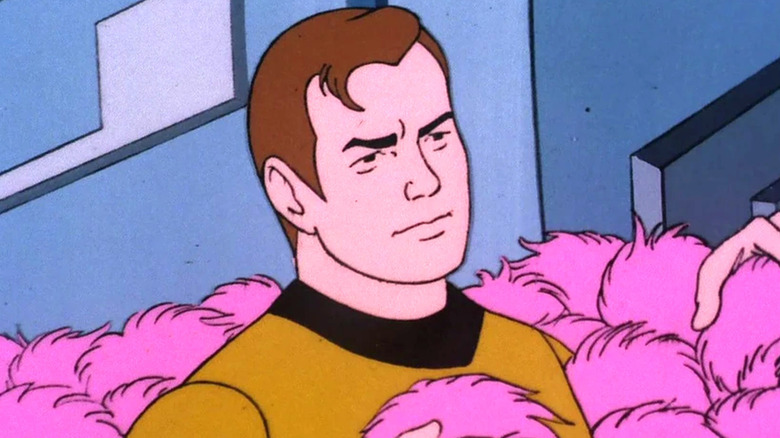
"Star Trek: The Animated Series" is obviously the kind of cartoon that every Star Trek fan needs to watch. But it's more than that, too; it's legitimately a great Star Trek show. Created by Gene Roddenberry and featuring the voice talents of "The Original Series" key cast, the Emmy-winning "The Animated Series" is pure old school Star Trek — only, the stories it tells are often so immense that its live-action predecessor could only dream of tackling them. Planet-consuming clouds, clones, shrinking incidents, psychedelic space vessels, and inventive alien designs join forces with classic Star Trek storytelling in the show's two seasons of sheer sci-fi bliss.
For a modern viewer, the show's choppy Filmation animation might not always cut the mustard. Still, even that is a comparatively small blemish on a series that hands us some of the wildest adventures of James T. Kirk's (William Shatner) USS Enterprise crew. "The Animated Series" might sometimes slip out of the conversation when great Star Trek shows are discussed, but that doesn't stop the series from being one of the finest 1970s sci-fi shows out there.
1. Doctor Who
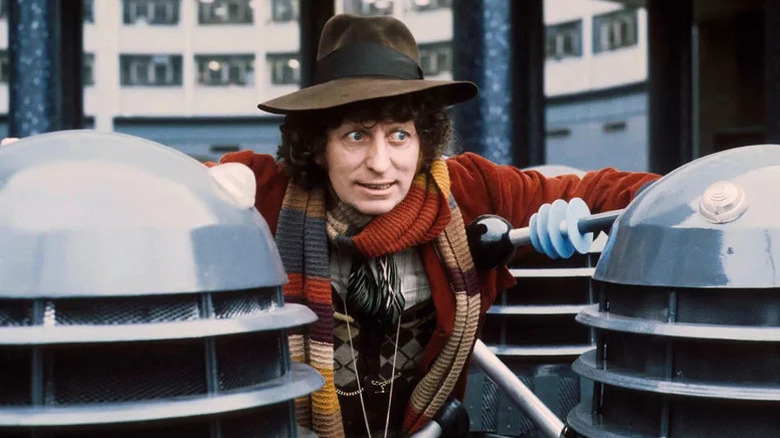
One of the best sci-fi shows with more than 100 episodes, the British time travel gem "Doctor Who" has a lengthy tenure that can be divided into three parts so far: the classic era that ran from 1963 to 1989, the BBC revival era from 2005 to 2022, and the brief fling with Disney from 2023 to 2025. Your mileage may vary on which particular seasons and episodes of the sci-fi titan are the finest, but as far as entire decades go, it's very hard to top the 1970s tenure of "Doctor Who."
The decade coincided with the run of two particularly excellent incarnations of the Doctor. The Third Doctor was Jon Pertwee's marvelously haughty, Earth-based, secret agent-coded master of Venusian aikido. His follow-up was Tom Baker's long-serving, scarf-rocking, jelly baby-loving Fourth Doctor, who's a common choice for the single best Doctor in the entire history of the show.
"Doctor Who" is a show that constantly changes. Everything from its cast to its central premise tend to shift, as budgets fluctuate and showrunners come and go. The only constant is the very basic tenet of a rogue Time Lord in a blue Police Box TARDIS, committed to protect the Earth from alien threats only he (or she) knows how to deal with. The 1970s era of the show offers two very distinct, very tasty flavors of this. The Baker years, in particular, can easily be called the definitive ones of classic "Doctor Who" — and with that, the definitive years of 1970s sci-fi TV.