

10 Best TV Shows Like Stuart Fails To Save The Universe
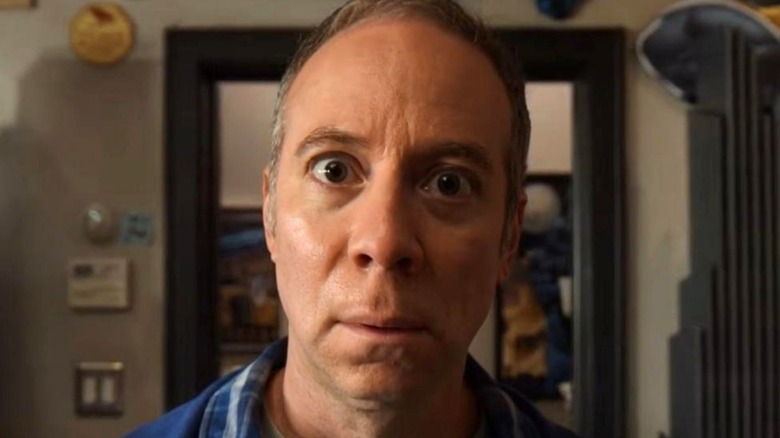
"The Big Bang Theory" continues to grow its sitcom franchise, with the show's third spin-off "Stuart Fails to Save the Universe" as its most ambitious yet. The show centers on put-upon comic book store owner Stuart Bloom (Kevin Sussman), who finds himself thrust into the multiverse. There, he encounters not only alternate versions of himself but also variants of returning "Big Bang Theory" legacy characters. "Stuart Fails to Save the Universe" takes its familiar characters and plunges them into a wacky science fiction adventure.
There are plenty of other lighter takes on sci-fi television, from shows set across parallel universes and alternate timelines to those indulging in general cosmic mischief. With that in mind, we're highlighting the best shows that sci-fi fans should check out next. Some are overt sitcoms, while others operate with bigger stakes but maintain a noticeably lighter tone than their more self-serious genre contemporaries. These are the 10 best TV shows like "Stuart Fails to Save the Universe" for even more quirky sci-fi antics.
Sliders
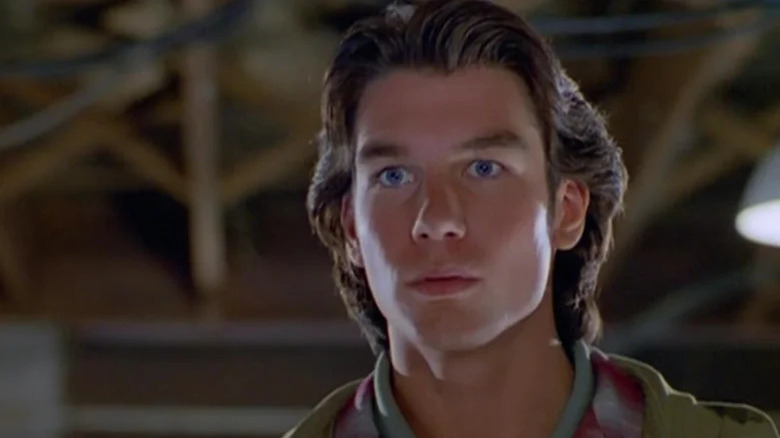
Of all the breezy '90s sci-fi shows that involved parallel universes, one of the most memorable is "Sliders." The 1995 series leans a bit more into conventional action than most of the other shows on this list, but maintains a relatively lighthearted energy. The show follows physics student Quinn Mallory (Jerry O'Connell), who invents technology that lets him and his friends travel to alternate universes. However, Quinn and his small reality-sliding group find themselves separated from their home dimension, scouring the multiverse as they try to get back.
"Sliders" is a '90s sci-fi show that still holds up today, largely thanks to a charmingly wide-eyed performance from O'Connell. Even when the show becomes uneven, his rapport with the rest of the cast, particularly John Rhys-Davies, helps carry the series. "Sliders" also has plenty of fun with its premise, sending the ensemble everywhere from dinosaur-filled worlds to an alternate reality where World War II never occurred. Its limited production budget sometimes shows, but the sheer possibilities afforded by the premise help "Sliders" retain its appeal.
Eureka
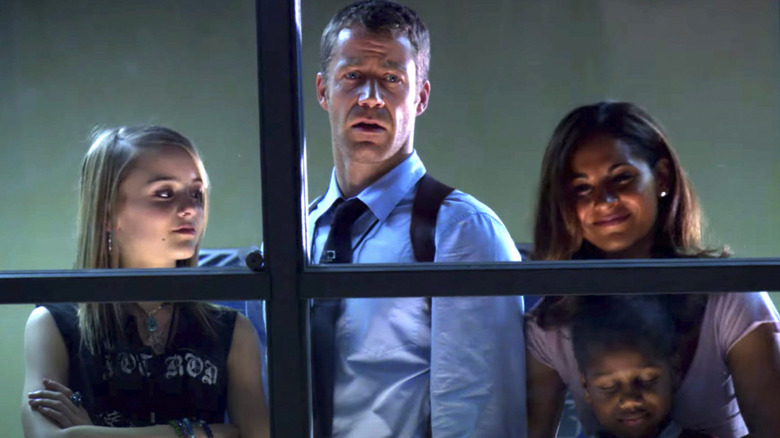
The quirky 2006 series "Eureka" inverts the standard main-character dynamic present in many of its genre counterparts. Rather than positioning its protagonist, Sheriff Jack Carter (Colin Ferguson), as the undisputed genius, the town he finds himself protecting is full of extraordinary individuals. Despite his relatively normal intellect, Jack's everyman status comes in handy given the community's propensity for producing sci-fi accidents. This dynamic fuels much of the show's humor and spectacle as Jack tries to keep his newfound jurisdiction safe.
Running for five seasons on Syfy, "Eureka" offers an overt sci-fi subversion of strange small-town stories like "Twin Peaks." But whereas the David Lynch and Mark Frost series veered into the sinister and surreal, "Eureka" offers something closer to mad-scientist suburbia. There is a wholesomeness to the stakes, particularly illustrated by the dynamic between Jack and his teenage daughter, that elevates the show beyond its weird-science trappings. With every episode bringing its own sci-fi mischief and adventure, "Eureka" is an easy recommendation for viewers looking for a lighter genre series.
The Big Bang Theory
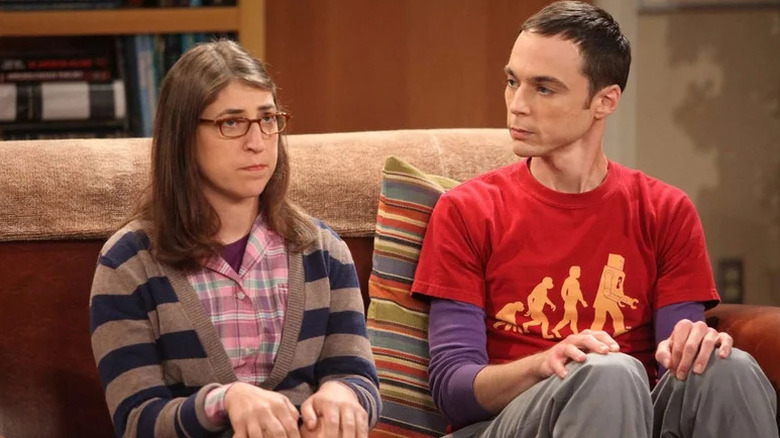
While it's an obvious choice, "The Big Bang Theory" belongs on a list of shows to revisit either before or after watching "Stuart Fails to Save the Universe." The show introduces Stuart Bloom, whose comic book shop becomes a recurring hangout for the 2007 sitcom's main characters. While the CBS sitcom is much more grounded in its stakes and storytelling, there is plenty of shared DNA in the kinds of jokes it tells. A big part of that comes from an overlap in the creative team and, of course, familiar faces that later resurface in the HBO Max spin-off.
"The Big Bang Theory" makes the cut over "Young Sheldon" and "Georgie & Mandy's First Marriage" because it's the only one that features Stuart. Beyond Kevin Sussman's role, the original series contains the most references to weird science through its genius characters' occupations and interests. And really, "The Big Bang Theory" became such a massive success because it's a well put-together sitcom with a likable ensemble cast, including Sussman. Nearly 20 years after its premiere, "The Big Bang Theory" remains the foundation of a franchise that continues to expand.
Rick and Morty
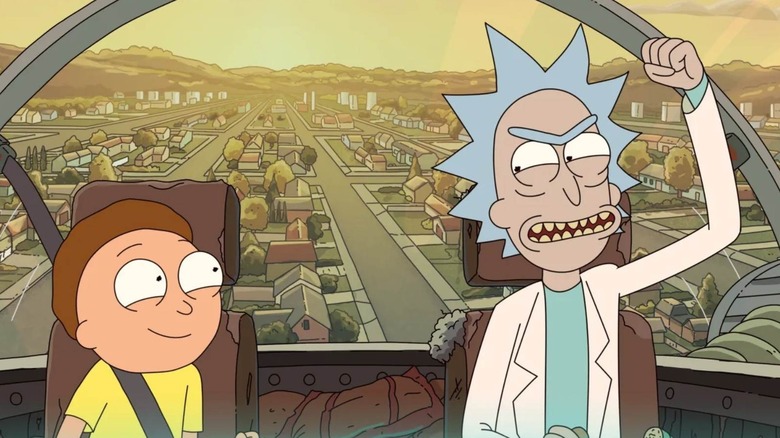
When it comes to wacky sci-fi comedies about alternate universes, few shows have embraced the concept as thoroughly as "Rick and Morty." Premiering in 2013, "Rick and Morty" has been renewed through 2029, giving the animated series remarkable longevity. The Adult Swim series centers on mad scientist Rick Sanchez and his grandson Morty Smith as they explore the multiverse together. These expeditions primarily veer into surreal humor, but occasionally land emotional gut punches as Morty's dynamic with his family is explored.
Full of pop culture references and armed with a wickedly sharp sense of humor, "Rick and Morty" takes full advantage of the anything-goes possibilities of its premise. From visiting a world riffing on "The Matrix" to featuring Werner Herzog in a guest voice role, its gags can be wildly unpredictable. At the same time, the series doesn't pull its punches with the disturbing implications of its premise, with several dark "Rick and Morty" episodes delving into truly twisted narrative territory. Across its lengthy run, "Rick and Morty" has made full use of its multiversal scope while gleefully deconstructing cosmic sci-fi conventions.
The Last Man on Earth
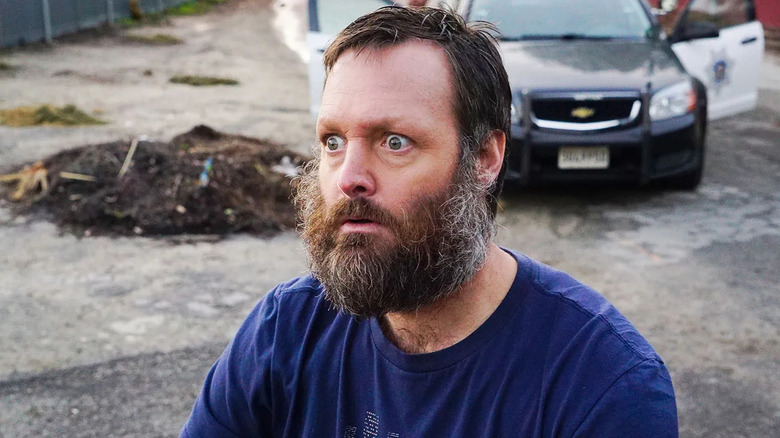
One relatively recent sitcom that also revolves around armageddon is the 2015 Fox series "The Last Man on Earth." Created by and starring Will Forte, the show has a contagion wiping out much of humanity by 2020, which is admittedly eerie in hindsight given the timing of the COVID-19 pandemic. The story's protagonist is Phil Miller (Forte), who returns to his hometown of Tucson, initially as its sole surviving resident. The show steadily brings other survivors into Phil's makeshift community, hilariously proving that, even with the population nearly eradicated, our hero is still a self-centered loser.
"The Last Man on Earth" is one of the best post-apocalyptic shows of all time, finding laughs at the end of the world. Much of that comes from Forte's willingness to take the comedy in increasingly absurd directions, often at Phil's expense. Whereas "Stuart Fails to Save the Universe" is about trying to cancel the apocalypse, Forte's sitcom is about dealing with its existential implications in funny ways. Though "The Last Man on Earth" ends on an unresolved cliffhanger, its mix of apocalyptic stakes and offbeat comedy still makes it an easy recommendation for "Stuart" viewers.
Legends of Tomorrow
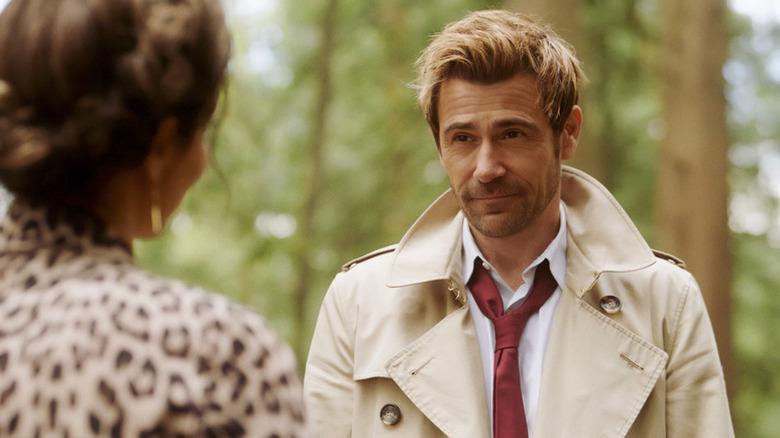
While "Legends of Tomorrow" started out as a relatively serious superhero series within The CW's Arrowverse, the show got considerably lighter in tone as it progressed. Premiering in 2016, the series focused on the quirky misfits of the DC Universe as they traveled through time to preserve reality. By the show's third season, the superhero spectacle remained, but the show developed a much more pronounced sense of humor. This memorably included everything from the characters finding themselves in an overt parody of "Star Trek" to John Noble appearing as himself on the set of "The Lord of the Rings."
It's fascinating to watch how quickly "Legends of Tomorrow" pivots toward sci-fi comedy after its first season. The fate of reality still regularly hangs in the balance, but our time-traveling heroes can't help but have some fun along the way. After all, it's not every day that you see a fiery demon defeated by a gigantic adorable plush doll, but the show finds a way to make it work. One of the lightest depictions of DC's superheroes on live-action television, "Legends of Tomorrow" embraces the comedic possibilities of its time-traveling sci-fi premise.
The Orville
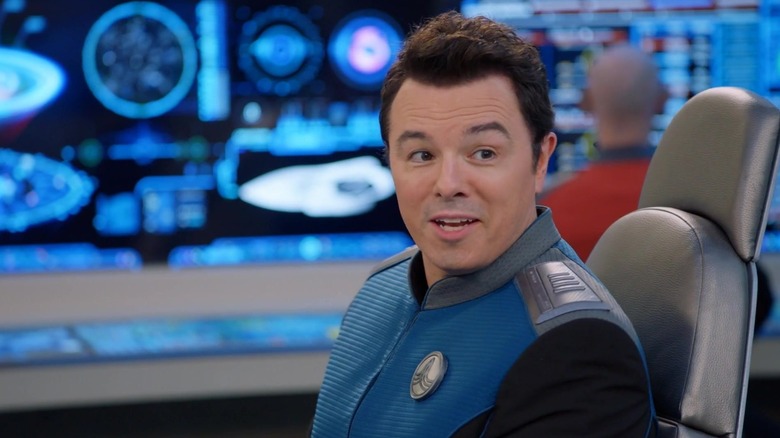
While Seth MacFarlane may be better known for his empire of animated shows like "Family Guy," his live-action comedy "The Orville" showcases a different side of his creative sensibilities. Premiering in 2017, MacFarlane stars as Captain Ed Mercer, who commands the titular starship alongside his ex-wife, Commander Kelly Grayson (Adrianne Palicki). Though the show initially received mixed reviews during its first season, it quickly found its groove as it progressed, more deftly balancing its different tones and alternating between sci-fi gags and genuinely emotional storytelling with its ensemble cast.
Standing as a clear "Star Trek" spoof, "The Orville" offers its own take on plenty of hard sci-fi tropes. This includes stories involving time travel and alternate realities as early as the series' first season, while the Season 2 finale revolves entirely around a divergent timeline. This is often done for laughs, but the show explores the more serious creative possibilities of these temporal changes, too. Though we remain hopeful about "The Orville" Season 4 coming to pass, the three seasons that we do have demonstrate MacFarlane's broader storytelling strengths.
Future Man
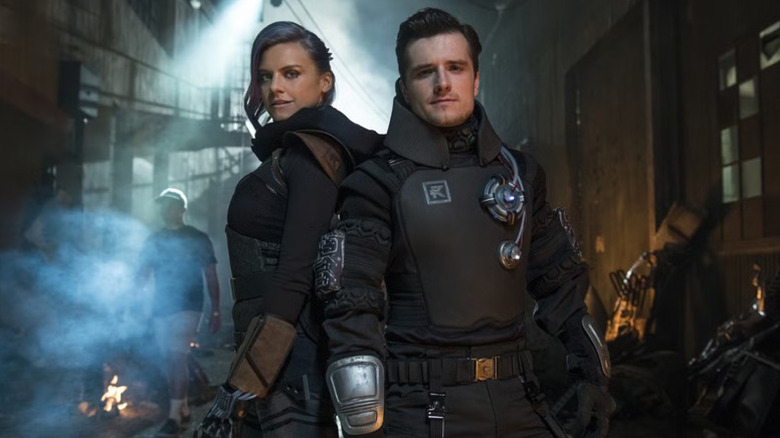
Another Hulu sci-fi comedy series worth revisiting, "Future Man" combines time travel with video game sensibilities. Also debuting in 2017, the show opens with slacker and gaming enthusiast Josh Futturman (Josh Hutcherson) being recruited by characters from his favorite video game. Learning that the game's premise is based on a real conflict in the future, Josh is named humanity's best hope to keep this war from taking place. Of course, even after learning about his destiny, the more immature aspects of Josh's personality are as apparent as ever, fueling much of the humor.
An overt mix of "The Terminator" and "The Last Starfighter," "Future Man" playfully subverts expectations surrounding similar sci-fi stories. A lot of those laughs come from Hutcherson being willing to play a buffoon, juxtaposed with Eliza Coupe's hyper-competent freedom fighter. The show also boasts a geek-friendly supporting cast, including Seth Rogen, Keith David, and Haley Joel Osment, while doubling down on its time travel premise. Across three complete seasons, "Future Man" offers plenty for fans of irreverent sci-fi comedy to enjoy.
Miracle Workers (2019)
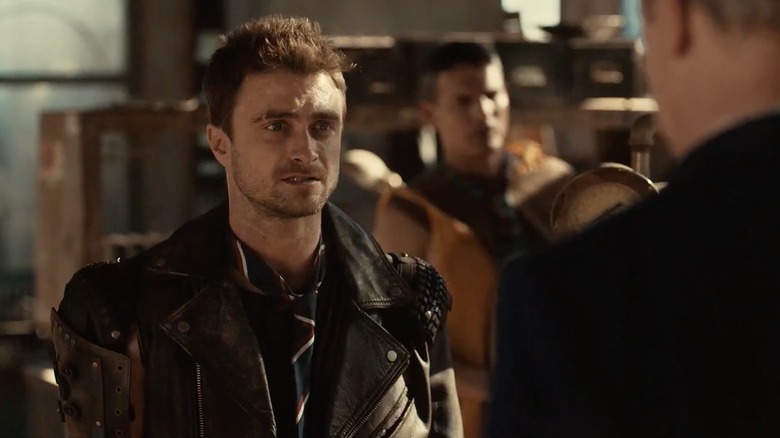
Daniel Radcliffe's pivot to screwball comedy after starring in the "Harry Potter" movies has been a lot of fun to watch. This extends to his 2019 TBS show "Miracle Workers," a wacky anthology series that rotates its premise each season while retaining much of the ensemble cast. The opening season has Radcliffe playing Craig, a low-ranking angel joined by Eliza Hunter (Geraldine Viswanathan) as they try to prevent the destruction of Earth. Steve Buscemi completes the comedic trifecta, playing an indifferent God in the show's first season.
It's really the first and fourth seasons' apocalyptically themed narratives that earn "Miracle Workers" a spot on this list, but the whole show is worth watching. Seeing what gonzo personas the main cast takes on next, be it in a post-apocalyptic wasteland or the Old West, is half the fun. Radcliffe clearly relishes his comedic roles, while Buscemi brings his trademark dry humor to his own rotating characters each season. Powered primarily by the charms of its ensemble cast, "Miracle Workers" is another quirky comedy worth checking out.
Resident Alien

When it comes to fan-favorite comedic actors, Alan Tudyk has been appearing in geek-friendly projects for decades. With the 2021 series "Resident Alien," Tudyk took center stage as an extraterrestrial who assumes the identity of small-town doctor Harry Vanderspeigle while hiding in a remote Colorado town. The show delivers plenty of sci-fi laughs, largely derived from Harry's awkward attempts to fit in with humanity, while also exploring more emotional territory with its ensemble cast. As the story advances, it incorporates time-travel elements, including Harry trying to prevent an apocalypse he glimpses in an alternate future from coming to pass in his own timeline.
A sci-fi TV show without a single bad season, "Resident Alien" only improved as it progressed across its four-season run. Tudyk is a big part of that, including his standout performance in the series finale, but the ensemble cast around him is in fine form, too. As far out as the story gets, series creator Chris Sheridan never loses sight of his eclectic characters, raising the emotional stakes along the way. Unfailingly wacky without sacrificing its sentimental heart, "Resident Alien" balances character-driven comedy with an out-of-this-world premise.