
How Scrubs Pulled Off The Ultimate Comeback — And Why This TV Revival Actually Worked
"Scrubs" spent much of its original run fighting for another season. The former NBC comedy survived time-slot changes, a network switch, and so many trips to the proverbial bubble that uncertainty became almost as much a part of the fabric as J.D.'s fantasies and Dr. Cox's rants about everything from his underlings' ineptitude to his hatred of Hugh Jackman.
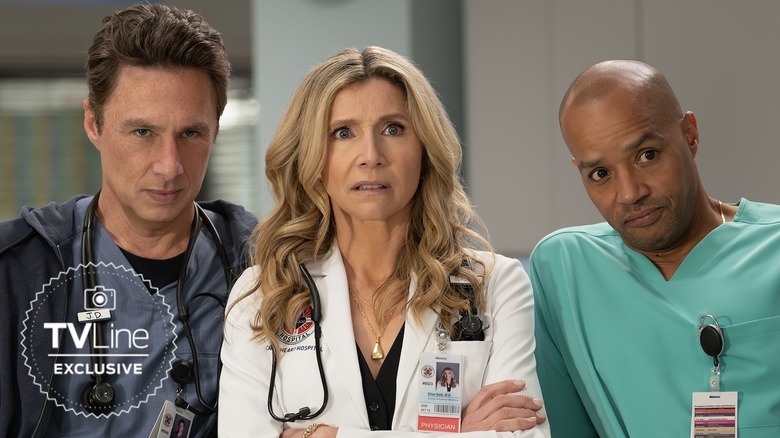
Sixteen years after the original series signed off, the situation couldn't be more different: The ABC revival launched earlier this year to strong ratings and quickly secured a renewal (see an exclusive photo from the Season 2 premiere above). But perhaps more encouraging to the network than the size of its debut was what happened afterward.
"We were thrilled to see that it punched above its weight at launch, but more pleased that over the course of the season, it really held up," ABC Entertainment SVP of Content Strategy and Scheduling Ari Goldman tells TVLine. "That's been something you've observed over many of the revivals: They start big and then the air is kind of let out of the tire a bit and people move on." But "Scrubs," he says, "really maintained all the way through the season."
So how did one of TV's most famously endangered comedies return more than a decade and a half later on considerably firmer ground? The answer involves a COVID-era podcast, a surprisingly durable ad campaign, years of behind-the-scenes negotiations, a streaming library that never stopped attracting viewers, and one very important mandate: If "Scrubs" was going to come back, it couldn't simply pretend that no time had passed.
The Long Road Back to Sacred Heart
Talk of a "Scrubs" reunion never really stopped. Creator Bill Lawrence floated the possibility of a movie. Zach Braff spoke over the years about potentially doing a limited run. The cast continued reuniting at conventions and anniversary panels, where the inevitable question was always some variation of: "When are you coming back?"
The first domino, Braff says, fell almost accidentally. On the first day of COVID lockdown in March 2020, Braff and Donald Faison began recording what became the "Fake Doctors, Real Friends" rewatch podcast. Neither actor expected it to explode.
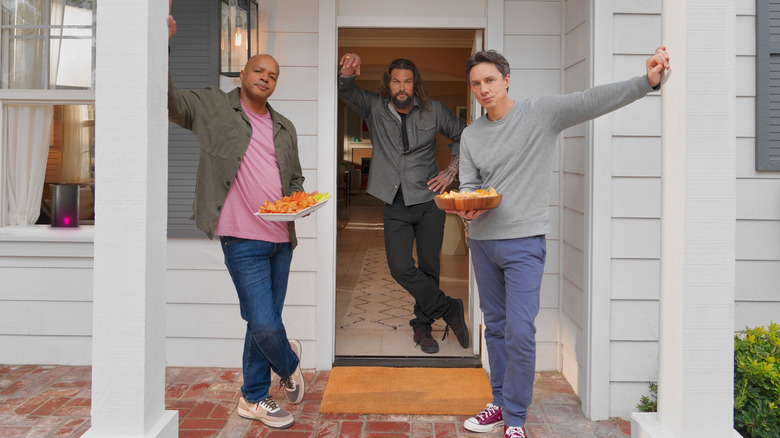
"We had no idea if anyone was really listening to it," Braff recalls. Then they heard from iHeart that the show was reaching listeners around the world. That was followed by Braff and Faison's T-Mobile campaign, which similarly grew beyond what either actor initially expected.
Those commercials also blurred the line between J.D. and Turk and the actors who played them. "People [were] being reminded not only of the characters, but of our friendship," Braff says.
But there was still one enormous obstacle: Lawrence's overall deal was at Warner Bros. — where he's gone on to create "Ted Lasso," "Shrinking," and "Bad Monkey" for Apple TV, and "Rooster" for HBO — while "Scrubs" belonged to Disney.
Giving Scrubs 2.0 a Reason to Exist
Suzanna Makkos, Head of Comedy for ABC Entertainment and Hulu Originals, arrived at Disney in January 2025 with the revival already in development. A longtime fan of the original series, she had spent years at Warner trying to develop a medical comedy. Then suddenly, she recalls thinking, "Oh my gosh, we can just do the one I've been wanting to do."
But affection for the old show wasn't enough: "This is not my first revival that I've been involved in. And to me, it must have a reason for being."
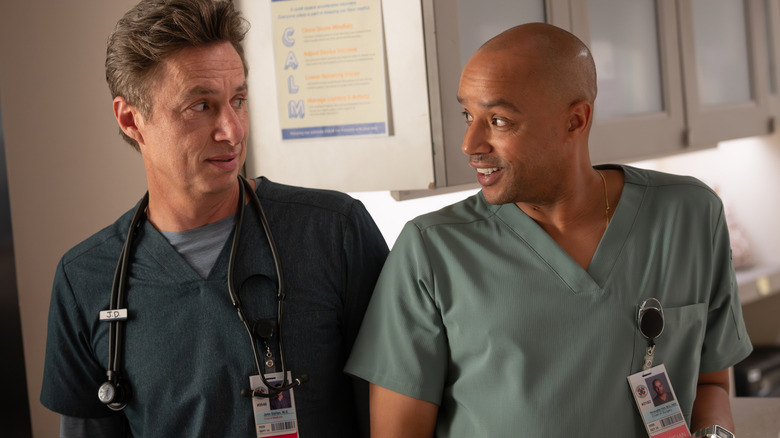
In "Scrubs," she saw two. Medicine itself had changed dramatically over the intervening years, from the healthcare system to hospital culture to what is expected of doctors. At the same time, J.D., Turk, and Elliot would no longer be the inexperienced young physicians learning from Cox. They'd return as the senior doctors responsible for mentoring the next generation.
"That to me felt like two very good ways in where we could do fresh stories, but with the same beloved characters," Makkos says. And then she read the script. "It was so good, so undeniable. Even if it had been a pilot script for another show that didn't have those same characters, the story was great" — and that made moving ahead "a no-brainer decision."
That passage of time became central to Lawrence's approach to the revival. Bringing back the old gang was one thing; figuring out who they would be after 16 years away was another.
"If we were still having J.D., Turk, and Elliot having the same problems that they had when they were young," he says, the revival simply wouldn't work. The key was figuring out how those characters had changed in the years since viewers last saw them. J.D. had once needed everyone at Sacred Heart to help shape him. What if he now returned to be that person for everyone else?
Turk was burned out. Cox was retired and would soon become a patient. And J.D. would become Chief of Medicine, further complicating his relationship with ex-wife Elliot. Once they had those pieces in place, all systems were a go. Lawrence, who was on set in Vancouver as they shot the pilot, felt confident that the revival was already striking the right tone.
"It felt like a continuation more than a reboot," he says. "It just felt like, oh, this show has been going on for these 20 years in between, and now somebody's back filming it again."
There was, of course, another previous attempt to continue "Scrubs." ABC had swooped in and rescued the medical comedy in 2008, ordering an eighth and final season complete with a finale often hailed as one of the best series finales of the 21st Century. But the network ultimately renewed it for a ninth season, which hit "reset" and sent J.D., Turk, Cox (and, occasionally, Elliot and Kelso) to teach at med school.
If Lawrence had had his way, Season 9 would've been rebranded as a spin-off. Instead, it lasted just 13 episodes, ending to little fanfare in March 2010 — and Faison makes no attempt to dance around his feelings about it.
"I didn't want it to be Season 9 all over again," he says of coming back. "That just didn't feel like what we had done for so long."
Braff agrees that getting the tone right was paramount. The original "Scrubs" packed broad comedy, fantasy, drama, and surrealism into just over 21 minutes. The revival needed to get back to Sacred Heart — jettisoning Season 9 lore that the hospital had been torn down — and reclaim that balance.
"Scrubs, although it has its dramatic moments, is a hard comedy show," Braff says. "We want lots of jokes per minute. We want to make people laugh."
Lawrence, for his part, has softened considerably on the much-maligned ninth season. He still likes plenty of it and remains proud of its cast, which included future stars Kerry Bishé ("Halt and Catch Fire"), Michael Mosley ("Ozark"), Dave Franco ("The Studio"), and Season 8 holdover Eliza Coupe ("Happy Endings"). But the original intention, he says, was to make an offshoot centered on a new generation of med students. When the network got nervous and wanted Braff, Faison, McGinley, and others more heavily involved while continuing to call the show "Scrubs," Lawrence now thinks he should have responded: Then let's actually make "Scrubs."
That experience appears to have informed the current revival, which introduces younger doctors without asking them to replace the characters audiences came back to see. Goldman says that's a major part of the "revival recipe": staying true to the essence of the original rather than building around "a whole new cast with just one person who's tangentially a part of the canon."
Turning Nostalgia Into Staying Power
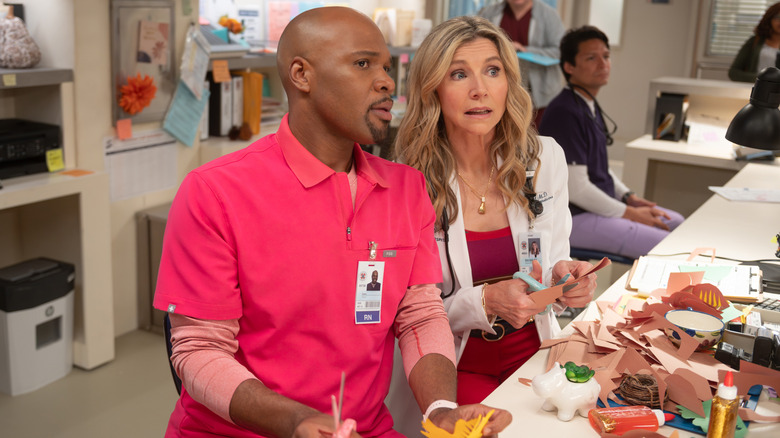
Even with all those ingredients in place, there was no guarantee viewers would show up. Braff certainly wasn't taking it for granted.
"None of us expected Season 1 to do so well," he says. Once the critical and viewer response became clear, Braff began to view the first season — just nine episodes, eight if you exclude the pilot — as "research and development" for Season 2, giving the creative team a better sense of what viewers embraced and what they still wanted from the show.
Showrunner Aseem Batra says one piece of feedback came through particularly clearly: With so many characters to service in just 21 minutes, Season 1 could sometimes move too quickly. So in Season 2, the writers are making a conscious effort to give characters more screen time and tell smaller stories that are easier to follow. "We're slowing down and taking time to give them fuller stories and not just moments," she says, particularly when it comes to the show's younger generation. "It is fun to be able to slow down and explore their characters more."
As for ABC, the size of the initial audience wasn't the real test: "For a lot of these revivals, it's like week three, week four [before you know if you have an audience that will remain]. It's a pretty quick curve," Goldman says. "The fact that this one did, again, stay really quite strong each week, was music to our ears."
And its arrival didn't merely generate interest in the new episodes. According to Goldman, the original series' streaming library "sprung to life quite a bit" after the revival was announced and again when it premiered.
"You can sort of watch, it's like a wave, people going through Season 1 all the way through to about Season 9," he says.
Though Goldman explains that the available data does not allow ABC to determine precisely how many revival viewers are discovering "Scrubs" for the first time, the age profile of its streaming audience strongly suggests that this isn't strictly the same group that watched NBC two decades ago returning older. But whether viewers are new to "Scrubs" or returning to Sacred Heart after all these years, the response hasn't been lost on the cast.
"Oh, it makes my heart flutter. It makes my eyes well," Braff says. "This is all for the fans. It's all for the fans."
Faison says the success doesn't relieve the pressure as they head into Season 2. "Every shot counts," he says. "Every moment counts. We're not trying to throw away anything."
And Sarah Chalke still can't quite believe they got a second chance at all.
"It's not common to get a job like that once in a lifetime, let alone twice," she says. "So every day when I'm driving to work, I'm like, how did this happen? How do I get to do this again with my friends? This makes no sense. And the writers really care about everything the fans are saying about what they love, what they're missing, and what they still want to see, and are trying to incorporate all of that into this next season."
Judy Reyes, who balances "Scrubs" with her work on ABC's "High Potential," has similarly found herself appreciating the experience in a way she couldn't the first time around. The original "Scrubs" was her first series, and only after moving on to other sets did she realize how unusual its creative environment had been. Now, she says, "I just live and revel in every moment and every word, and every chance that I have to be a creative part."
That enthusiasm has also extended behind the scenes. Lawrence says one of the most gratifying parts of the revival is watching the show's long-running mentorship theme play out in real life: Batra, who now runs "Scrubs," got her first writing job on the original series, on which she also recurred as squeaky-voiced intern Josephine.
"To see her running the show," Lawrence says, alongside a new generation of writers and performers, gives him "great pride."
And after spending so much of its original run on the bubble, "Scrubs" may finally have the luxury of looking beyond its next season. As long as the people making it remain interested, and the audience remains loyal, Makkos sees no reason to put an endpoint on the revival.
"I want this to go," she says. "I don't have that much power, but I want this to go forever."
Goldman is only slightly more measured. "If the team is still looking to do more and the show's still cranking out these great episodes, I don't really see any reason why it couldn't just continue on for as long as they would like to."
"Scrubs" Season 2 premieres Wednesday, September 30, with back-to-back episodes starting at 8 p.m. on ABC (and streaming next day on Hulu).