

10 Best Cyberpunk TV Shows Of All Time, Ranked

With a variety of titles across multiple mediums, cyberpunk has cemented itself as one of the most popular sub-genres within science fiction. These stories are set in clearly dystopian societies that have often descended into technocracies. A lot of cyberpunk narratives align naturally with neo-noir themes, following morally compromised protagonists in an unforgiving world, usually facing a no-win scenario. As you can imagine, cyberpunk has had a strong presence on television, and we're highlighting the greatest shows it has to offer.
From anime series making the most of the cyberpunk aesthetic to live-action sci-fi with a visibly dystopian undercurrent, there are a lot of shows to choose from. The sub-genre has an extensive television history and is showing no signs of slowing down. For this article, we're ranking the series that not only are of impressive quality, but speak the most eloquently to core cyberpunk themes. These are the 10 best cyberpunk TV shows of all time, exemplifying what the genre is all about.
10. The Peripheral

Just like "Ready Player One," the Prime Video original series "The Peripheral" provides audiences with a video game approach to the genre. Loosely based on the novel by prolific cyberpunk author William Gibson, the show follows Flynne Fisher (Chloë Grace Moretz), who supports her family by playing virtual reality games. When Flynne discovers her latest game is actually connected to a war raging in the future, she becomes targeted by shadowy figures in her present. This places Flynne and her associates on the run while she continues to fight for the fate of the future.
Virtual reality gaming and time-displaced war aside, the cyberpunk elements in "The Peripheral" are apparent from the beginning. Flynne is living in a dystopian world that's eerily similar to our own before she even gets the gaming prototype that changes her life forever. Unfortunately, "The Peripheral" was cancelled at Amazon after a single season, leaving its cliffhanger ending unresolved. But in its brief run, the show illustrates a world where common people use tech however they can to survive in a futuristic dystopia indifferent to their plight, a cyberpunk hallmark.
9. Almost Human

Offering a slightly less cynical take on the cyberpunk genre is the Fox series "Almost Human," which premiered in 2013. Set in 2048, the show features a future where the sudden and relatively unchecked advancement of technology has fueled crime rates nationwide. In response, police officers are assigned lifelike android partners to assist them in the field as they try to restore law and order. The series revolves around the burgeoning partnership between human police detective John Kennex (Karl Urban) and his new android companion Dorian (Michael Ealy).
"Almost Human" is a sci-fi show that was canceled way too soon, just as audiences were growing accustomed to this futuristic vision of New Pittsburgh. But throughout that single season, the rapport between Urban and Ealy is an enjoyable constant. While corruption is a recurring element in the series, its dystopian elements are mitigated; this is a bright and relatively clean portrait of the future. Providing a lighter cyberpunk story to follow, "Almost Human" mixes buddy-cop dynamics with sci-fi storytelling as it builds its future.
8. Blade Runner: Black Lotus
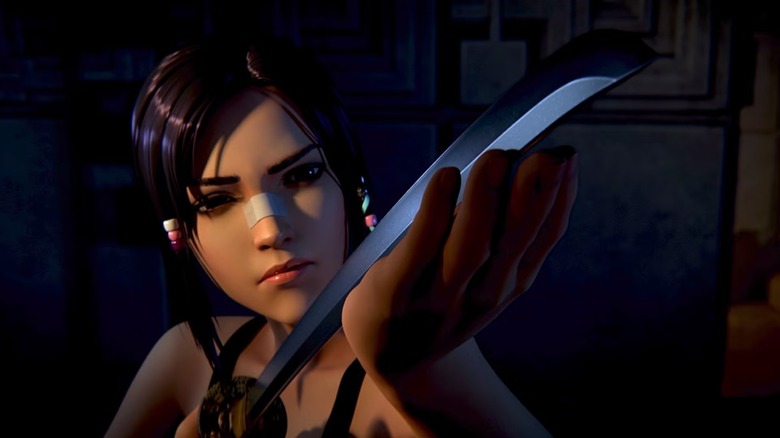
"Blade Runner: Black Lotus" marked the first time the fan-favorite movie property came to television. An anime show that ran on Adult Swim before going to Crunchyroll, it centers on a replicant named Elle in 2032. As the series progresses, Elle's true purpose comes into focus, including her intentions for the sinister Tyrell Corporation. The story serves as something of a prequel to the movie "Blade Runner 2049," particularly the role of genius technocrat Niander Wallace, Jr.
When it comes to depictions of cyberpunk in pop culture, "Blade Runner" is one of those stories that encapsulates what the genre is all about. With the real estate of having 13 episodes to tell its story, "Black Lotus" is able to really dive into its sprawling vision of Neo Los Angeles, setting the mood. Helping bring this vision to life is creative producer Shinichirō Watanabe, who previously directed the essential anime series "Cowboy Bebop." Relatively accessible if you're unfamiliar with the world of "Blade Runner," "Black Lotus" takes its cyberpunk world into a more shadowy direction.
7. Altered Carbon
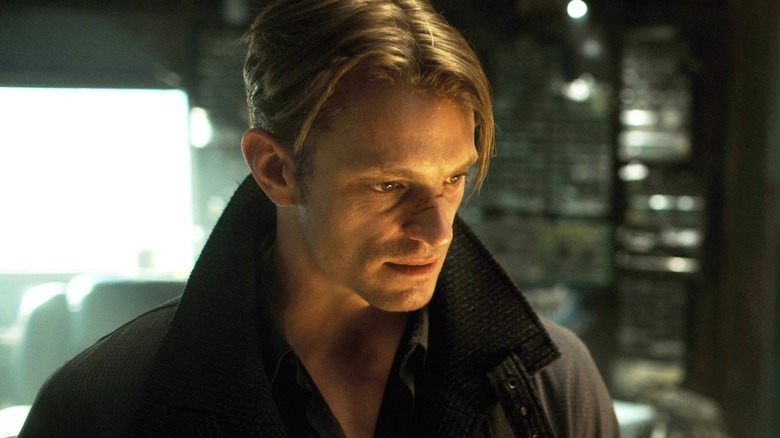
How memorable a cyberpunk story is so often depends on how immersive and distinct its art design is. That trait is a recurring element across the series on this list, but "Altered Carbon" is particularly visually stunning in its presentation. The show is set in a future where humanity has gained the ability to digitally store consciousnesses and implant them in new host bodies. "Altered Carbon" follows Takeshi Kovacs, played by Joel Kinnaman in the 1st season and Anthony Mackie in the 2nd, a detective who gets caught up in a revolutionary movement.
Boasting some of the highest production values for any Netflix original of its time, "Altered Carbon" presents audiences with an ambitious look at the future. The show takes full advantage of its futuristic premise, with heavy doses of neo-noir made all the more apparent by Season 1 revolving around a murder mystery. While the story itself may be a bit convoluted in its execution, it's hard to argue against this being one of the most impressive looking live-action cyberpunk shows around. Running for two seasons before Netflix pulled the plug, "Altered Carbon" gets a lot of points for running so heavily on genre vibes.
6. Æon Flux
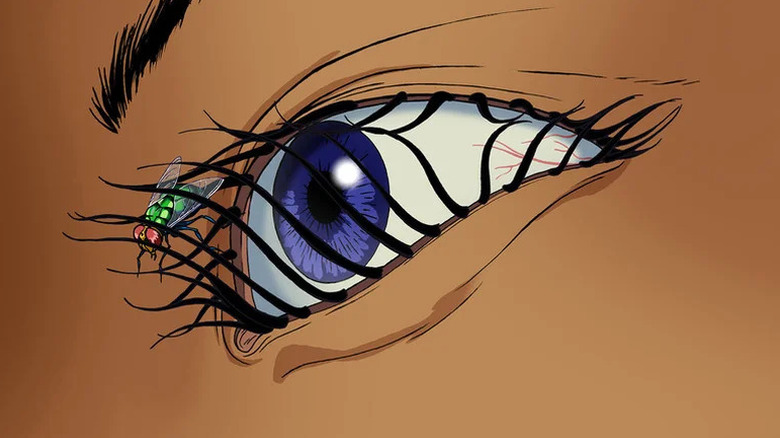
One of the best animated TV shows of all time is also something that feels like it could've only worked in the '90s. 1991's "Æon Flux" aired on MTV of all places, and almost feels like an arthouse project in its bold presentation. For much of the series, there is a conspicuous lack of conventional dialogue, with the story conveyed through visuals and diegetic noise. The narrative revolves around two cities in the future, with one being a repressive police state that keeps its population under constant surveillance.
With plenty of sex and violence (daring for its time on basic cable television, and certainly for an American animated series), there was nothing else like "Æon Flux." The show's primary setting is a more sinister dystopia than many of the shows on this list, or at least more overt in its dystopian qualities. The animation is also striking in its expressionist design, evoking harsher environments than one might expect from its contemporaries. One of the boldest shows MTV ever broadcast in its extensive history, "Æon Flux" is a landmark achievement for American animation with its own bleak look at the future.
5. Max Headroom
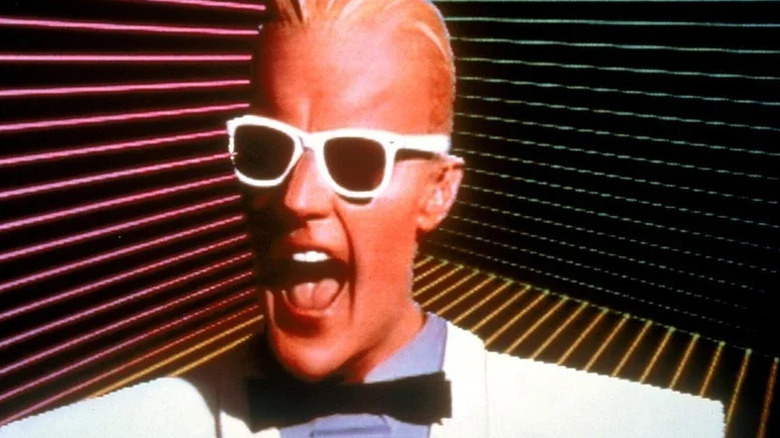
The '80s were definitely one heck of a decade, mixing tones and subverting pop culture expectations wherever it could. 1987's "Max Headroom" is a trippy sci-fi series that was ahead of its time, and it still holds up beautifully today. The show is set in a near-future where the government is effectively run by a cabal of powerful television networks, with media tightly controlled. Max Headroom is a digital personality whose incendiary broadcasts shine a light on the rampant corruption. They're allowed to continue due to high viewership.
"Max Headroom" feels even more relevant now than it did during the series' initial broadcast run. There is a punk-rock sense of defiance that permeates throughout the show, embodied by its zany titular character. This is juxtaposed with an investigative reporter thriller narrative, delving into just how flawed the dystopian society has become. An '80s sci-fi series that redefined the genre on television, "Max Headroom" serves as a reminder about the enduring importance of speaking truth to power.
4. Mr. Robot
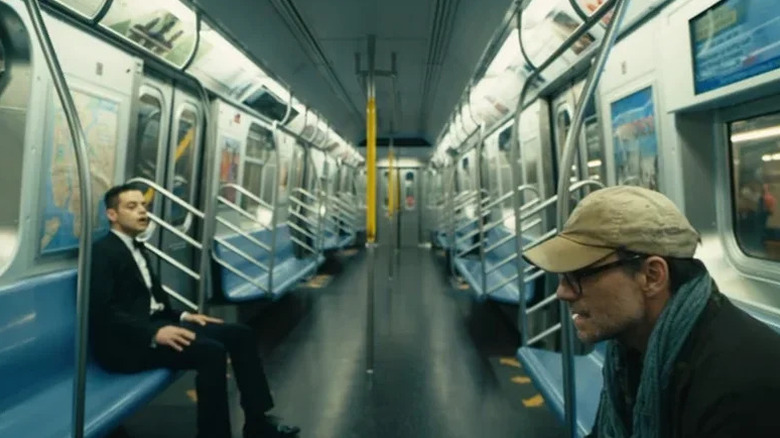
Arguably the most grounded show on this list, "Mr. Robot" offers a more pragmatic twist on the cyberpunk genre while still retaining its themes. The show is named for a techno-anarchist and hacktivist, played by Christian Slater, who recruits his cybersecurity engineer Elliot Alderson (Rami Malek) to join his cause. Becoming part of a hacktivist collective, Elliot uses his skills to take on everything from unscrupulous megacorporations to cyber-terrorists for the betterment of society. While cyberspace often serves as the primary battlefield for these conflicts, the peril also spills out into the real world as Elliot becomes increasingly bolder.
"Mr. Robot" is a cyberpunk show without the usual neon-lit trappings, instead set recognizably within our own world. But the ideas of mega-corporations and other shadowy entities actively manipulating and exploiting the general public certainly aligns with cyberpunk themes. The idea of the story's heroic characters, including its protagonist, being scrappy and flawed individuals also is a key genre trope that figures prominently into its narrative. For audiences looking for a cyberpunk show without the usual techno glitz and glamor, "Mr. Robot" certainly gets the job done.
3. Ghost in the Shell: Stand Alone Complex
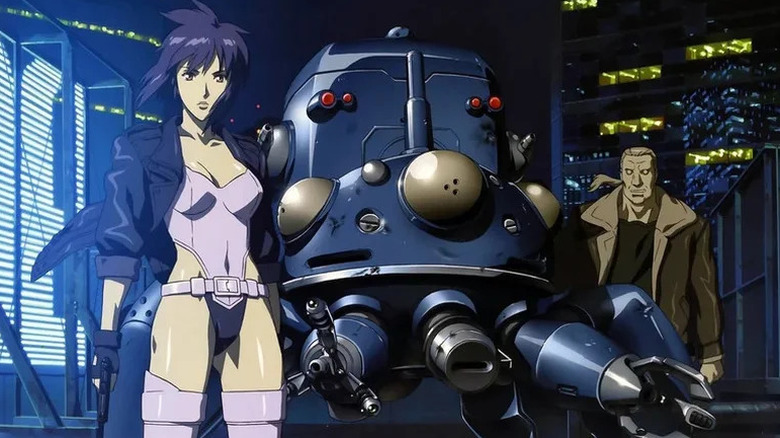
While "Akira" may be the best-known cyberpunk anime movie, it's certainly not alone, with 1995's "Ghost in the Shell" providing its own spin on the genre. Masamune Shirow's manga, which the movie is based on, was adapted into a standalone anime series in 2002 under the title "Ghost in the Shell: Stand Alone Complex." The show takes place in a near-future where much of humanity has opted to be fitted into prosthetic bodies, essentially making them cyborgs. The story follows a special task force that uncovers deep-seated corruption within the Japanese government.
"Ghost in the Shell: Stand Alone Complex" delivers an engrossing futuristic environment around its central techno-thriller narrative. In a world where humanity and machinery are increasingly becoming blurred together, the show thoroughly explores the implications of this synthesis. These existential themes punctuate the thriller stories while setting the sweeping cyberpunk mood, elevated by an atmospheric score composed by Yoko Kanno. Offering a deeper dive into Masamune Shirow's dystopian world than the 1995 movie, "Ghost in the Shell: Stand Alone Complex" provides a dark ride.
2. Westworld
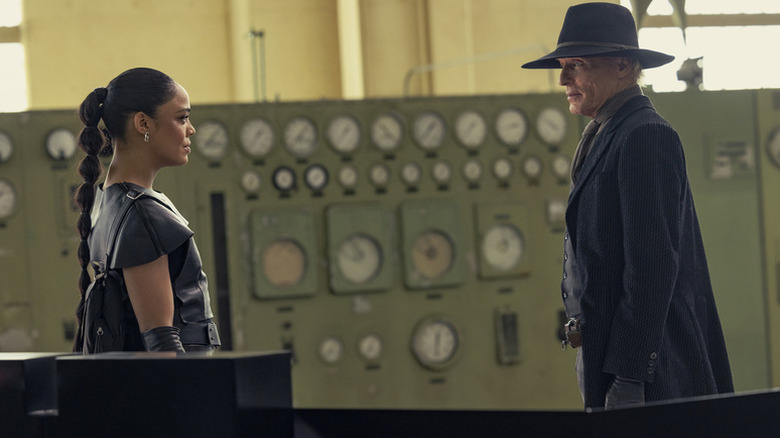
Though "Westworld" starts out in its titular theme park populated by androids in a facsimile of the Wild West, it's clear that the outside world has become a cyberpunk dystopia. This comes into increasing focus in the later seasons of the HBO series, as humanity realizes they are subtly under control by an expansive artificial intelligence program. Things come to a head by the 3rd season, with humanity and sentient androids going to war over the fate of the planet. Ironically, once in control, the androids become even more oppressive than the artificial intelligence that dominated both them and humanity.
The most fascinating bits of "Westworld," once you get past Season 1's meditation on sentience and humanity, are its glimpses of the outside world. Seeing humanity as unwitting prisoners in their own world like the androids adds a nuanced dimension to the story's central conflicts. This quickly returns to a humanity versus androids narrative, but seeing that dystopia before everything breaks loose gives the show its second wind. Hopefully, "Westworld" isn't as over as we thought so we can see where that story goes and how this bleak future is ultimately decided.
1. Cyberpunk: Edgerunners
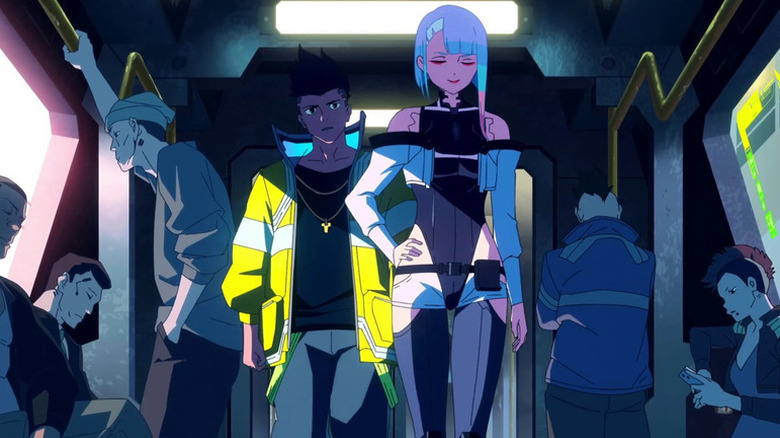
Go figure that the show with cyberpunk in its title would be crowned as the best cyberpunk television series. Based on the hit video game "Cyberpunk 2077," the Netflix original anime series "Cyberpunk: Edgerunners" takes place in the sprawling futuristic metropolis of Night City. In this dystopia, mega-corporations engage in widespread and overt malfeasance unchallenged, street crime runs rampant, and people with cybernetic implants are commonplace. "Cyberpunk: Edgerunners" is centered on teenager David Martinez, who joins a street gang after he suffers a horrific tragedy, receiving a rare implant in the process.
With its sweeping tour of Night City and tale of a group of underdogs getting in over their heads, "Cyberpunk: Edgerunners" perfectly exemplifies what the genre is all about. This is a story where conventional victory is never possible, but survival on one's own terms against such overwhelming odds is its own reward. This becomes clear in the final episodes, as David and his friends' activities finally garner unwanted corporate attention, reminding everyone — audience included — where the balance of power truly lies. Embracing its vibrant setting with a freewheeling journey through its underbelly, "Cyberpunk: Edgerunners" is a visual marvel and one of the best TV shows based on a video game.