

15 Star Trek: Deep Space Nine Episodes To Skip On A Rewatch
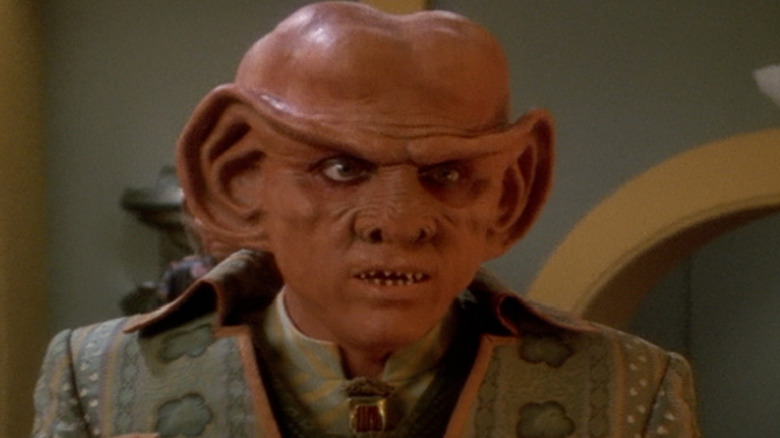
"Star Trek: Deep Space Nine" had the daunting task of following the acclaimed "Star Trek: The Next Generation." Nonetheless, the former managed to build its own enduring legacy with a devoted fanbase. Debuting in 1993, the show's titular space station finds itself in the middle of a war for the fate of the galaxy. This premise adds a darkness and intensity to the overarching stakes in a way few "Star Trek" shows have been able to replicate. That said, not every episode of "DS9" is crucial to the space station's seven-season saga and can be omitted from a revisit of the series.
While every episode has its own fans, we're citing the "DS9" stories that you can probably avoid watching more than once. These episodes aren't as vital to the larger story being told and its individual character arcs. We've already covered the must-watch episodes of "Star Trek: Deep Space Nine," and now we're going with its most forgettable. These are 15 "Star Trek: Deep Space Nine" episodes to skip on a rewatch and make that binge watch all the more palatable.
Q-Less (Season 1, Episode 6)
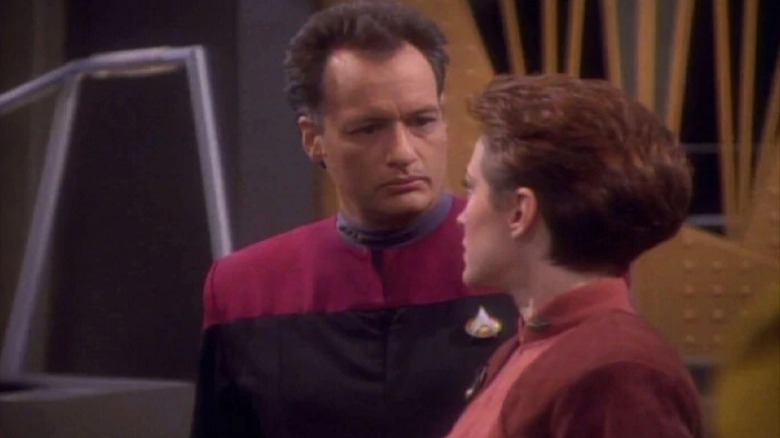
Introduced in "The Next Generation," the omnipotent trickster Q is one of the strongest characters in the "Star Trek" franchise. John de Lancie reprised his fan-favorite role in the first season episode "Q-Less," though his appearance is one of his least memorable. The story has Q in pursuit of another recurring "TNG" character, Vash (Jennifer Hetrick), who is in possession of a strange crystal affecting DS9's power. To his surprise, Q finds Commander Benjamin Sisko (Avery Brooks) far less fun to play with than his usual foils on the USS Enterprise.
There's a reason why Q only appears once on "Deep Space Nine" compared to his multiple appearances in "TNG" and "Star Trek: Voyager." Q just doesn't really work as well with the "DS9" characters tonally and, as the series progresses, narratively. With all the war crimes and subterfuge going around the station, the characters just don't have time to entertain Q's antics. After "Q-Less," the mischievous cosmic demigod set his sights on the USS Voyager and "DS9" was all the better for it.
Move Along Home (Season 1, Episode 10)
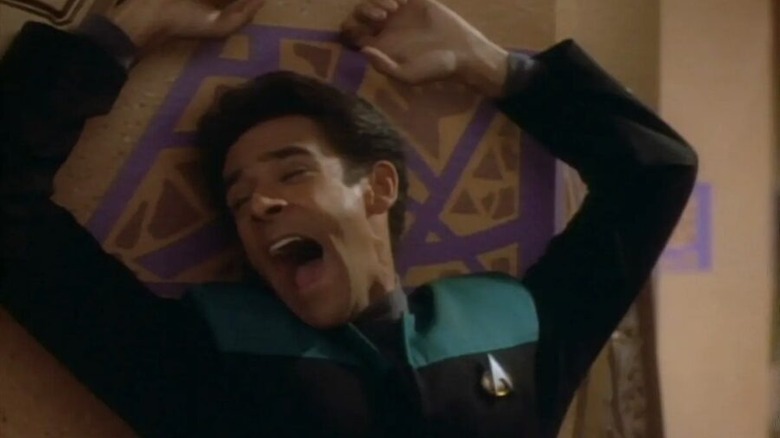
Another odd first season story bending the rules of reality is "Move Along Home," forcing Sisko to play along this time. A visiting group of extraterrestrials known as the Wadi challenge Quark (Armin Shimerman) to a seemingly innocent game. This places Sisko and his senior officers in a gigantic board game to traverse filled with deadly obstacles every step of the way. Quark realizes he's effectively gambling with the crew's lives as the stakes of the game are raised.
"Move Along Home" feels like a Q-inspired episode and, unfortunately, a poorly executed one at that. There really is no sense of peril at any stage of the story, even when Quark is forced to choose what characters to sacrifice to complete the game. The challenges the crew has to endure are similarly more tedious and childish than anything else, including reciting nursery rhymes while playing hopscotch. A story that feels straight out of the weaker seasons of "Star Trek: The Next Generation," "Move Along Home" is totally out of place in "Deep Space Nine."
The Storyteller (Season 1, Episode 14)
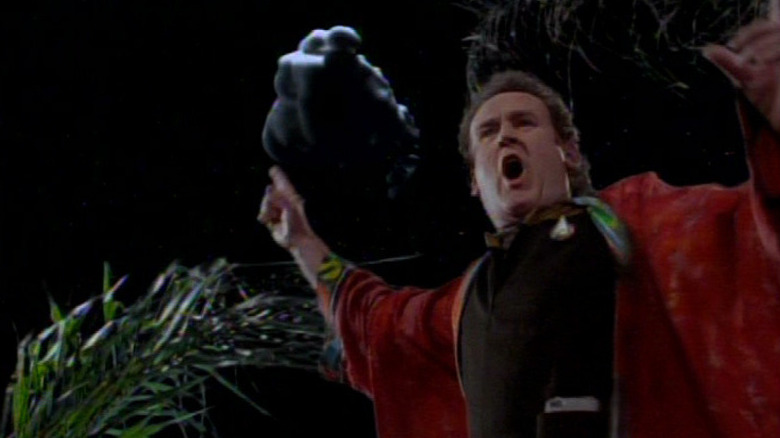
Like "The Next Generation" before it, "Deep Space Nine" is a show that recovered from a bad season, or at least a significantly weaker one. One of the worst episodes in the first season is "The Storyteller," which places the narrative focus on the station's engineer and perpetual everyman Miles O'Brien (Colm Meaney). While on an aid mission in a remote Bajoran community, O'Brien inadvertently becomes recognized as its respected storyteller. Meanwhile, back on the station, Nog (Aron Eisenberg) learns the meaning of compromise while playing with Sisko's son Jake (Cirroc Lofton).
While the spiritual elements are a thematic undercurrent through "DS9," stories centered around them really can be hit or miss. "The Storyteller" is a decided miss, something that commits the cardinal sin of being a largely boring affair. Similarly, the B-plot revolving around Jake and Nog just feels like a tedious way to break up the action on Bajor. A top-down case of an episode fruitlessly spinning its wheels, "The Storyteller" is a mundane tale for all parties involved.
If Wishes Were Horses (Season 1, Episode 16)
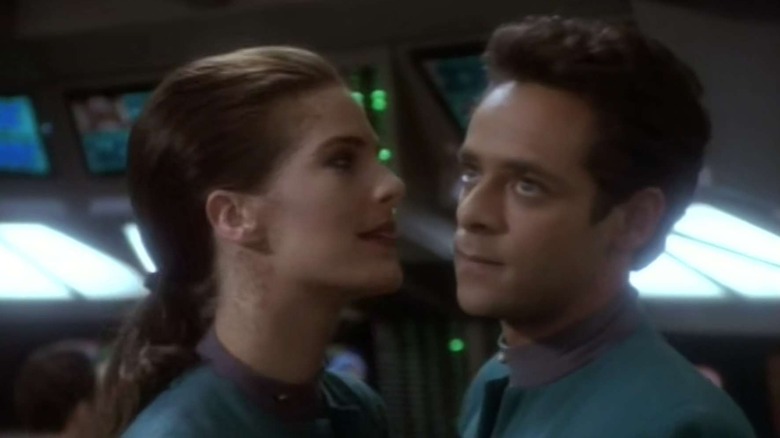
One last Season 1 episode to include here, "If Wishes Were Horses" weaves another strangely fantastical story. Strange emissions emitting from the wormhole near the space station begin granting people's deepest wishes. This includes Jake Sisko meeting one of his baseball idols to the romantic fantasies Julian Bashir (Alexander Siddig) has about Jadzia Dax (Terry Farrell) seemingly coming true. Sisko and Odo (René Auberjonois) try to maintain order amidst the growing chaos while trying to stop the situation from escalating.
One of the more uncomfortable recurring elements from the early seasons of "Deep Space Nine" is Bashir's unrequited romantic intentions for Jadzia, despite her clearly and vocally expressing her disinterest. That dynamic appears prominently in "If Wishes Were Horses" along with more nonsensical developments given the episode's premise. This story has a silliness like "The Naked Time" or "The Naked Now" in previous "Star Trek" series, but out of place in "DS9." By the second season, the show had largely settled on its more markedly serious tone, with a few notable exceptions.
Second Sight (Season 2, Episode 9)
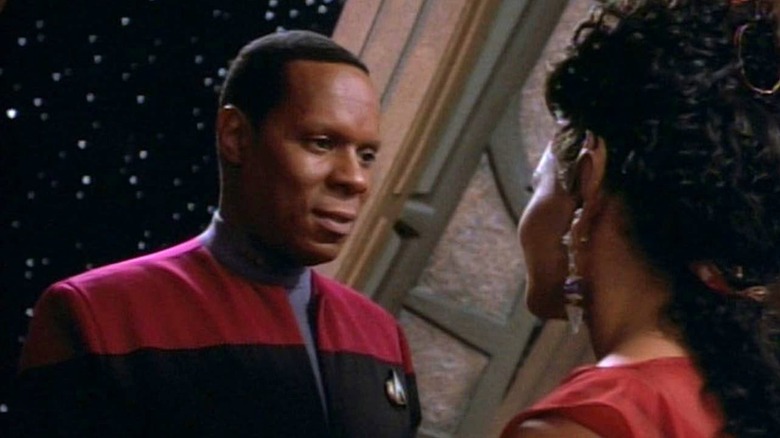
So many of the weaker "Deep Space Nine" episodes involve one-off love interests for the main characters. An early example of this is the second season episode "Second Sight," which provides a love interest for Sisko visiting the station. Encountering a mysterious woman named Fenna (Salli Elise Richardson-Whitfield), Sisko finds himself falling in love with her but is unable to learn who she is. The enigma grows deeper when Sisko discovers Fenna is identical to a woman on the station with her boorish husband Gideon Seyetik (Richard Kiley).
To put it more bluntly, "Second Sight" is one of the worst episodes of "Star Trek: Deep Space Nine." While it's nice to finally see Sisko move beyond the death of his first wife, this love story is so thoroughly convoluted that it robs it of any emotional investment. Similarly, Seyetik is such an unlikable character that his final send-off to save his wife also feels devoid of any pathos. "Second Sight" is at least an interesting idea to help Sisko move on but, like many romances in "DS9," feels forced at best.
Rivals (Season 2, Episode 11)
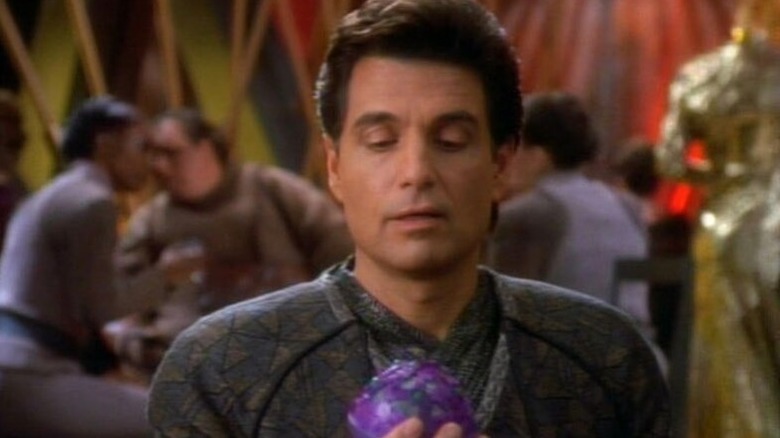
Quark's bar and lounge is a staple throughout "Deep Space Nine" as a location where characters can blow off steam between missions. This establishment comes under threat in the second season episode "Rivals," which revolves around the station receiving a competing bar and casino. The story begins with an El-Aurian con artist named Martus Mazur (Chris Sarandon) being arrested by Odo before acquiring a device that alters probabilities. Upon his release, Martus opens his own business on the station, frustrating Quark due to its growing popularity.
While it's nice to see Sarandon guest star in an episode "DS9," his character takes up an inordinate amount of screen time. This is a story that would've been better told from Quark's perspective, if it was a story that needed to be told at all. That O'Brien and Bashir walk away from this situation before it's fully resolved speaks to how utterly inconsequential the whole thing is to the other characters. That lightweight nature to the narrative extends to the audience, with us wondering why this clear B-plot was expanded to take center stage.
Meridian (Season 3, Episode 8)
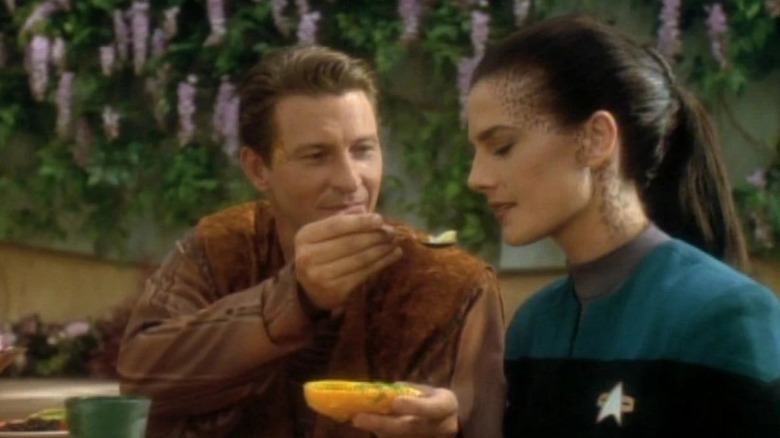
Jadzia Dax has her own lackluster romance take center stage in the third season episode "Meridian." The story revolves around Jadzia and the Defiant crew investigating an ephemeral world that phases in and out of its placement in the galaxy. Falling in love with one of the inhabitants, Jadzia vows to make the planet permanently remain in her dimension no matter what. Back on the station, Quark tries to make a sensual Holodeck program utilizing a program resembling Kira Nerys (Nana Visitor) without her consent.
There are a lot of things going on in "Meridian" and, frankly, none of them are particularly good. Jadzia's tragic romance feels even more awkwardly staged, making the lengths she goes to preserve it all the more hollow. And while Quark can be a greedy creep, him making a sensually exploitative program based on Kira feels especially icky. Jadzia may come out of "Meridian" looking heartbroken, but she seems to have completely gotten over it by the next episode and so have we.
Fascination (Season 3, Episode 10)
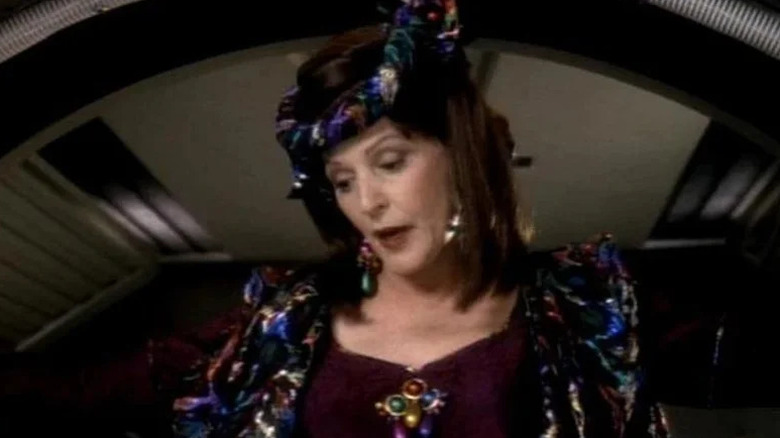
Majel Barrett had a role in six different "Star Trek" shows including "Deep Space Nine," where she played two different characters. As celebrated as Barrett's legacy in the franchise is, one of her more divisive characters is that of Lwaxana Troi, an empath introduced in "The Next Generation." Often presented as a comedic relief with varying levels of effectiveness, Lwaxana appeared three times throughout "DS9," the second of which being in the Season 3 episode "Fascination." Infatuated with Odo, Lwaxana returns to the station only for her out of control empathic powers to cause the personnel to descend into amorous shenanigans.
As you may have surmised, I'm not the biggest fan of when "DS9" tries its hand at lighter, funnier episodes. There are exceptions to that, like "Trials and Tribble-ations" and "Take Me Out to the Holosuite," but "Fascination" is not it. The premise feels extraordinarily contrived and the romantic confusion that takes place is more cringey than laugh-inducing. On top of that, the domestic strife between O'Brien and his wife Keiko (Rosalind Chao) just feels unpleasant, underscoring how forgettable "Fascination" is.
The Muse (Season 4, Episode 21)
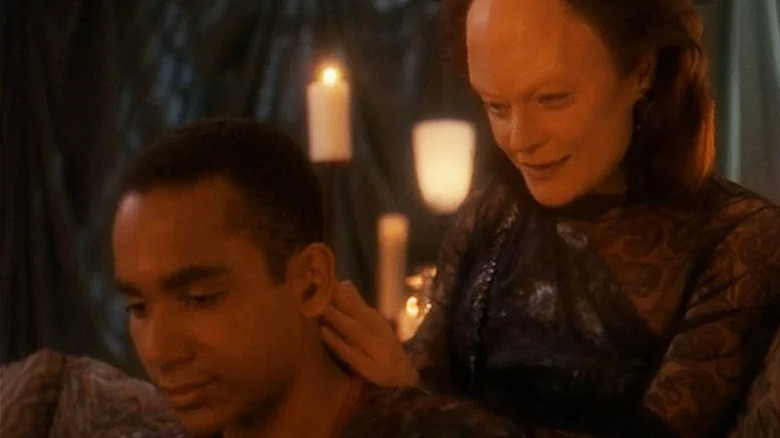
Let's just get the third and final Lwaxana Troi appearance on "Deep Space Nine" out of the way, because it's the weakest of the three. Season 4's "The Muse" has Lwaxana seeking refuge on the station from her overbearing husband Jeyal (Michael Ansara) while pregnant with his child. Lwaxana's harebrained scheme to get out of this marriage is by marrying Odo, complicated when Jeyal himself pursues his wife on the station. Meanwhile, Jake is targeted by a mysterious femme fatale (Meg Foster) who drains the lifeforce out of creative minds, intrigued by Jake's writing skills.
When love is in the air on DS9, the results are usually some of the most tedious episodes in the series. "The Muse" maintains that dubious track record with both its main and B-plots eye-rolling in their premise and execution at best. Odo's marriage of convenience is quietly brushed under the carpet for the remainder of the series and Lwaxana is never seen again in any live-action "Star Trek" series. Majel Barrett has an extensive legacy in the greater "Star Trek" franchise and her final on-screen appearance should've been handled much better.
Let He Who Is Without Sin... (Season 5, Episode 7)
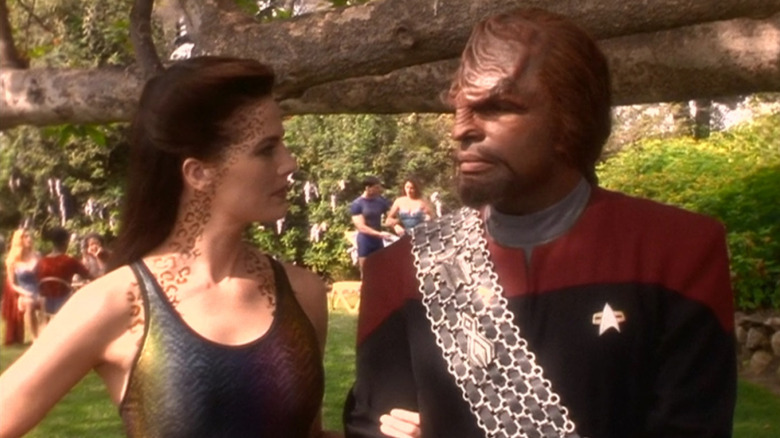
The best romance in all of "Deep Space Nine" goes to the ill-fated love story that forms between Jadzia Dax and Worf (Michael Dorn). This couple hits a rough patch in the fifth season episode "Let He Who Is Without Sin...," with the duo taking a vacation together on the pleasure planet Risa. The romantic getaway is spoiled by tensions between the couple as they visibly have trouble being honest with each other. Complicating this dynamic further is the presence of Arandis (Vanessa L. Williams), one of the former lovers of a previous host to the Dax symbiont.
While "Star Trek" can certainly handle the occasional screwball comedy story well, "DS9" usually struggles with its lighter episodes. While there are exceptions to this, like the preceding episode "Trials and Tribble-ations," "Let He Who Is Without Sin..." unfortunately is not. The lengths that Worf goes during his stay on Risa feel frustratingly out of character and a forced way to generate conflict. Fortunately, Worf and Jadzia bounce back stronger than ever but "Let He Who Is Without Sin..." marks a low point for the fan-favorite couple.
Ferengi Love Songs (Season 5, Episode 20)
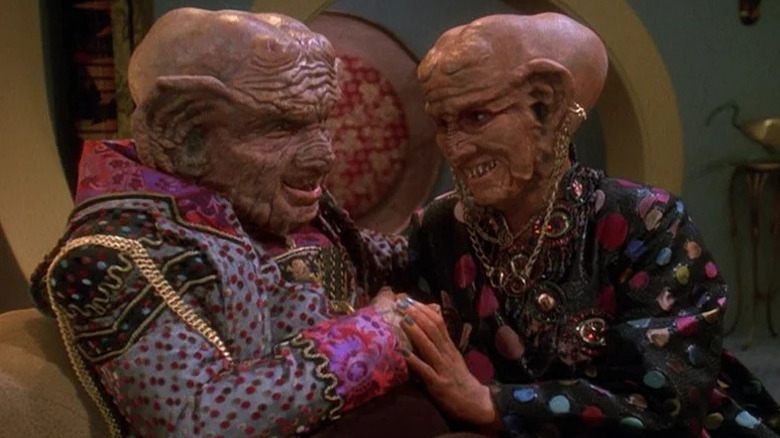
As great as Armin Shimerman's performance is as Quark, the Ferengi are characters that usually operate best on the sidelines. The fifth season episode "Ferengi Love Songs" gives "Deep Space Nine" the romantic comedy that nobody really wanted. Quark discovers that his mother Ishka (Cecily Adams) has entered a romantic relationship with Zek (Wallace Shawn), the Ferengi's revered Grand Nagus. While trying to break the couple up, Quark realizes that they truly love each other and are best suited to lead the Ferengi.
Your enjoyment of "Ferengi Love Songs" varies based on how well individual viewers can tolerate the Ferengi themselves. If you find them to be more grating than funny, well, this is an episode that can definitely be omitted from a rewatch. The story really is straight out of a formulaic rom-com, with a son trying to get his mom to break up with her boyfriend only to come to his senses. The problem is, of all the "Star Trek" shows to try this kind of story, "Deep Space Nine," particularly with the impending Dominion War, is not it.
Resurrection (Season 6, Episode 8)
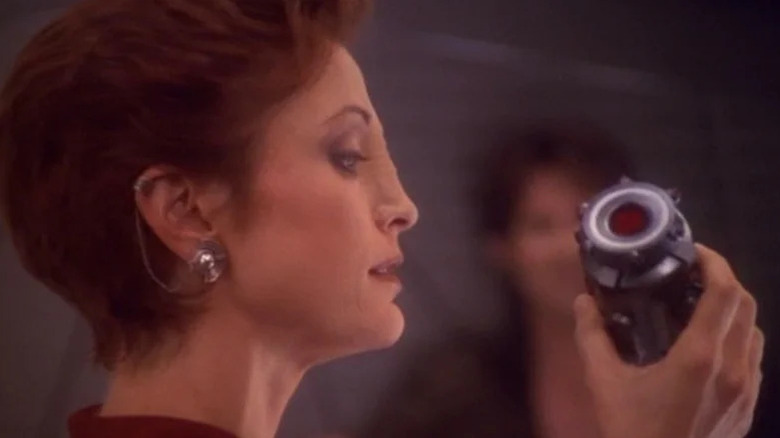
One more poorly handled love story to round out this list is the sixth season episode "Resurrection." The story revisits the Mirror Universe, which was reintroduced in Season 2, with that universe's version of Kira's deceased lover Bareil Antos (Philip Anglim) arriving on the station. Taking advantage of Kira's lingering feelings for his counterpart, Bareil and his universe's Kira try to steal a Bajoran holy relic to bring back to their world. This culminates in a climactic plot twist with Bareil genuinely caring for Kira and turning on her Mirror Universe doppelganger.
The existence of the Mirror Universe is one of the best "Star Trek" tropes that shaped the sci-fi genre. That said, "Resurrection" finds a way to make the morally inverted reality more contrived, intruding on the overarching flow of the Dominion War narrative. The evil versions of familiar characters chew the scenery throughout a half-baked plot to outsmart our heroes that never feels all that dangerous. This completely undercuts the Mirror Universe's Bareil's change of heart, ending "Resurrection" with a half-hearted shrug more than anything else.
Profit and Lace (Season 6, Episode 23)
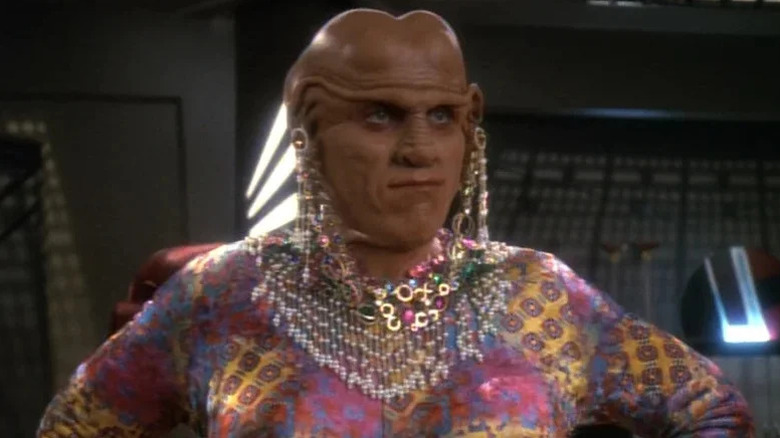
Another lackluster Ferengi episode to add to the pile, Season 6's "Profit and Lace" offers a particularly bizarre story for Quark. It features the Grand Nagus Zek facing unrest and a threat to his leadership position when he improves gender equality for the Ferengi. With a rival commissioner poised to depose Zek and become the new Grand Nagus, Quark decides to undergo a temporary sex change to beguile Zek's political opponent. Naturally, chaos ensues as Quark's grand deception unfolds, especially as he's affected by the changing hormones as part of his transformation.
Simply put, "Profit and Lace" is a "Star Trek" that has aged poorly, to say the least. Gender politics and the premise of having Quark undergo a sex change are all played for slapstick laughs, although the gags are not particularly funny. And for an episode that purports to be in support of institutionalized gender equality, the story feels like anything but. An odd comedic interlude in the midst of the Dominion War, "Profit and Lace" is a definite low point for the series.
Time's Orphan (Season 6, Episode 24)
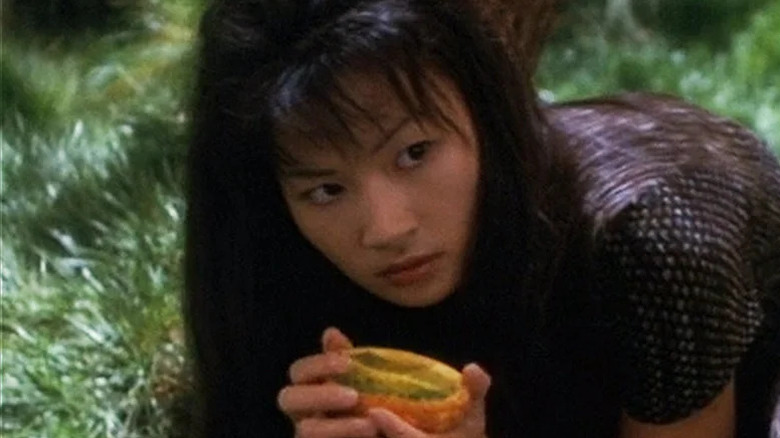
As the most well-balanced main character in "Deep Space Nine," Miles O'Brien often suffers through his family throughout the series. The oddest tale focusing on the O'Briens is Season 6's "Time's Orphan," involving Miles and Keiko's daughter Molly (Hana Hatae). Caught in a temporal anomaly while visiting a planet, Molly is rescued but aged into a teenager (Michelle Krusiec) and grown feral from her prolonged time alone in the wilderness. Miles and Keiko try to rehabilitate Molly, only for her to face Starfleet scrutiny because of her violent nature.
"Time's Orphan" gins up some largely unnecessary family drama for the O'Briens that, by the end, amounts to little in the grand scheme. Perhaps underscoring the story's insignificance is its cop-out happy ending, an overly convenient moment in the episode's final moments restoring the status quo. While we're not advocating that Miles and his family suffer any more than they already do, it does feel far too tidy. There are much better stories featuring the O'Briens than "Time's Orphan," making this one the most skippable of that particular bunch.
Prodigal Daughter (Season 7, Episode 11)
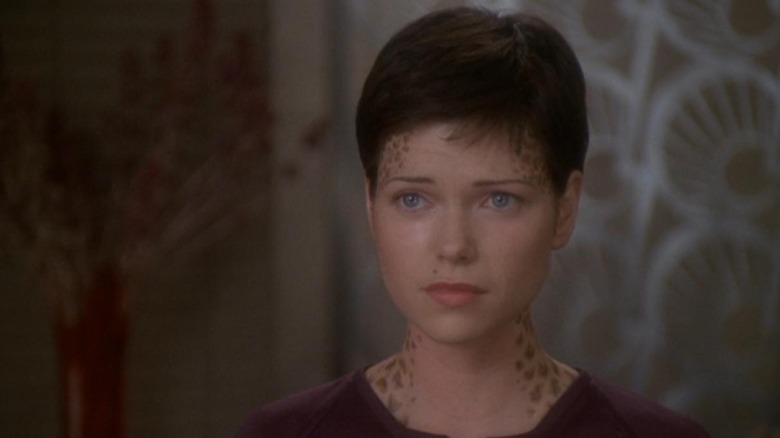
The seventh and final season of "Deep Space Nine" introduces Ezri Dax (Nicole de Boer), the Dax symbiont host after the especially sad death of Jadzia. Ezri's background is explored in the episode "Prodigal Daughter" as she reunites with her estranged family. Reconnecting with them to locate a missing Miles O'Brien, Ezri's visit reopens old wounds with her mother and one of her brothers. This unhappy family reunion leads to a murder mystery with the true culprit uncomfortably close to Ezri herself.
The worst thing about a murder mystery is when the case becomes wholly predictable in its end result. That's certainly how "Prodigal Daughter" unfolds, with this enigma being the least interesting thing about the story. And while it is informative to see where Ezri comes from, the dynamic between her and her mother feels generically dysfunctional. That robs "Prodigal Daughter" of both its closing twist and any sense of emotional investment, with Ezri deserving far better treatment.