

15 TV Shows To Watch If You Like The Queen's Gambit
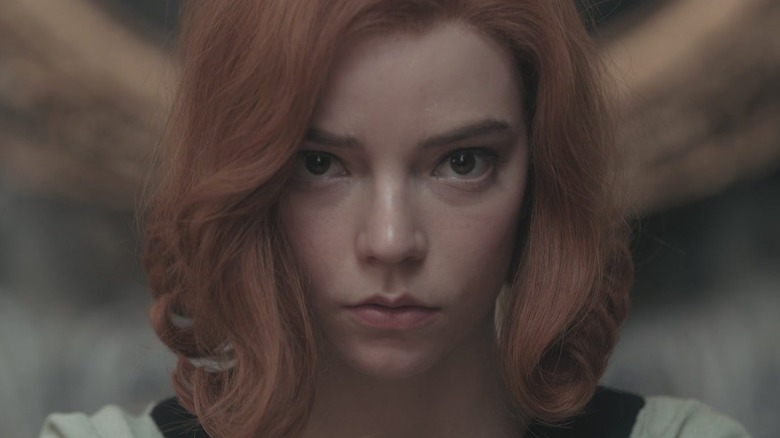
There was a lot of great television released in 2020, but one show defied expectations and made a larger cultural impact still felt to this day. That show is "The Queen's Gambit," Netflix's adaptation of Walter Tevis' 1983 novel about an orphaned chess prodigy named Beth Harmon, played by the ever-alluring Anya Taylor-Joy. Her performance not only turned Harmon into a television icon, but also became a benchmark for modern adaptations by elevating its narrative into a sexy, transfixing story about a young woman coming into her power.
Although there are hopes for "The Queen's Gambit" Season 2, nothing's come to fruition yet. In the meantime, there are plenty of shows that capture the same vibe that turned a niche 1980s novel into one of Netflix's biggest hits. Some are deeply specific period pieces that double as in-depth character studies, while others explore the niche worlds of sports through the eyes of unlikely stars. These 15 shows from across television history might not scratch the itch you have to see where Beth Harmon's story goes next after "The Queen's Gambit," but they'll definitely give you a similar enough viewing experience to obsess over.
Mildred Pierce
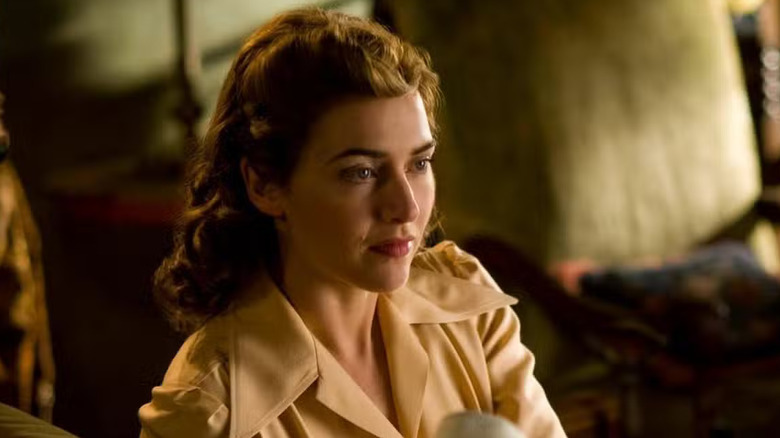
James M. Cain's 1941 novel had already been adapted into a movie shortly after its release, but it wasn't until 2011 that "Mildred Pierce" got a far more accurate adaptation starring Kate Winslet in the titular role. One of the best miniseries on HBO, "Mildred Pierce" follows a single mother in the Great Depression who manages a fraught relationship with her daughter Veda (Evan Rachel Wood) while also running a restaurant. The series tackles topics such as wealth, motherhood, and gender roles with the same intensity as the source material, literally adapting its scenes word for word in many instances. It turns the age-old source material into a sexy, alluring tale about female independence and familial love.
It shouldn't be all that surprising that Winslet eats up every moment of her screen time in this role, and she manages to find new ground to tread in a role that won Joan Crawford an Oscar in the film. By capturing Pierce in all of her contradictions, Winslet quickly established herself as a darling of HBO limited series. In its five episodes, "Mildred Pierce" paints a complex picture of an economically tense period of time, which is a credit to director Todd Haynes and his socially conscious attention to detail, which fans of "The Queen's Gambit" will certainly appreciate.
Peaky Blinders
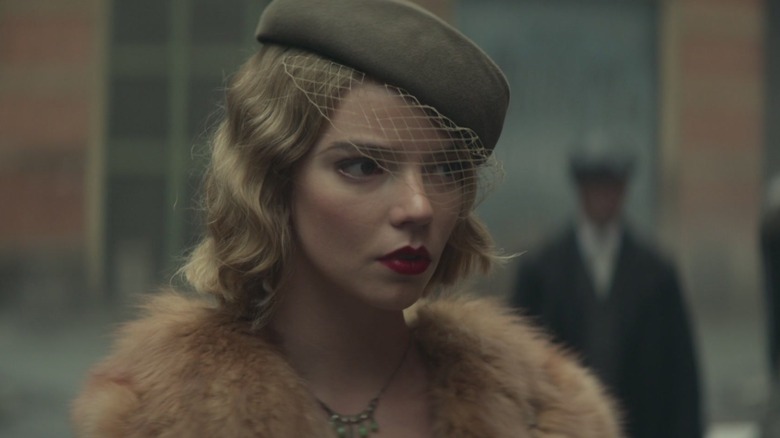
Anya Taylor-Joy plays a much smaller role in "Peaky Blinders" than in "The Queen's Gambit," but her performance is just as memorable and shows how well she fits in period pieces. "Peaky Blinders" aired on the BBC from 2013 to 2022, and Taylor-Joy joined the main cast for the final two seasons as Gina Gray, the conniving wife of Tommy Shelby's (Cillian Murphy) business rival, Michael Gray (Finn Cole).
Aside from what "Peaky Blinders" gets wrong about the history of late-19th-century and early-20th-century crime, the show does an outstanding job of entrenching viewers in another era. Like "The Queen's Gambit," its visual style is grim and pessimistic, depicting a fashion-forward society, albeit drained of color and charm thanks to the poor economic state of the world. Although Tommy Shelby is a far more nefarious protagonist than Beth Harmon, viewers might be just as enthralled watching his descent into darkness over the course of its six total seasons, plus a feature film for Netflix.
Fleabag

When it comes to TV shows starring complicated women, it really doesn't get better than "Fleabag." Phoebe Waller-Bridge's BBC series, adapted from her one-woman show, follows a fourth-wall-breaking basket case struggling to keep her cafe afloat following the death of her best friend and business partner. Along the way, she grapples with addictions to sex and alcohol, a fraught relationship with her family, and her own lack of accountability for her past mistakes.
Though there's no chess or gallivanting around the world like there is in "The Queen's Gambit," "Fleabag" tonally strikes a balance between dark comedy and melodrama that fans of the Netflix series may recognize. From one of the best cold opens in TV history onward, "Fleabag" manages to toe the line between laugh-out-loud funny and some of the most emotionally resonant writing on television. Season 1 especially feels the most analogous to the character study of "The Queen's Gambit," but Season 2 elevates the story by giving her an incredible foil in Andrew Scott's Hot Priest.
GLOW
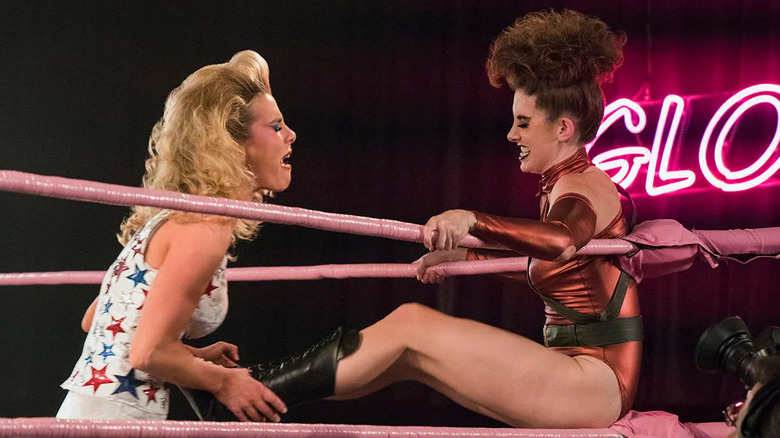
Wrestling might be the polar opposite of chess as a sport, but, surprisingly, they both make pretty great backdrops for female-focused Netflix series. "GLOW" takes its inspiration from "Gorgeous Ladies of Wrestling," a niche '80s wrestling show that features women as competitors and fictionalizes its behind-the-scenes story. Marc Maron plays the curmudgeon Sam Sylvia, a B-movie director assembling a hodgepodge of struggling actresses and models in Los Angeles, including Alison Brie's highly opportunistic Ruth Wilder and her ex-best friend Debbie Eagan, played by Betty Gilpin.
"GLOW" features similar themes about ambition and fame as "The Queen's Gambit." Several subplots involve the ensemble cast spiraling as a result of their commitment to their new job, with some developing nasty dependencies on drugs and alcohol, much like Anya Taylor-Joy's Beth Harmon. The '80s aesthetic might be a stark contrast to the mid-20th-century setting of "The Queen's Gambit," but the way they portray two distinct, albeit highly idyllic, decades as dark and grimy makes them feel more alike than not.
The Marvelous Mrs. Maisel
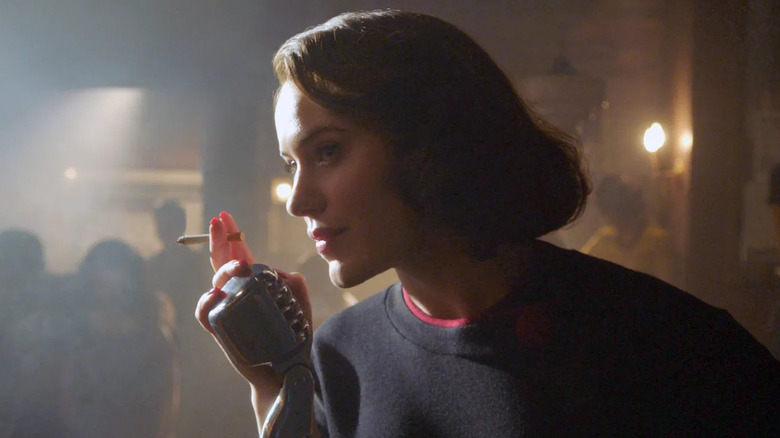
Although "The Marvelous Mrs. Maisel" takes place during the same time period as "The Queen's Gambit," their representations of the mid-20th century couldn't be more different. The Amy Sherman-Palladino show stars Rachel Brosnahan as Midge Maisel, a New York housewife whose husband suddenly leaves her. On a drunken spiral in the West Village, Midge ends up on stage at a comedy club, brings the house down, and is shoved in the back of a cop car with Lenny Bruce (Luke Kirby). From there, her knack for public speaking leads her to pursue a career in stand-up comedy under the mentorship of comedy club manager Susie (Alex Borstein), while her nuclear family deals with the blow-up of her seemingly perfect marriage.
Trade Midge's gift at comedy with Beth Harmon's proclivity for chess, and you'd be forgiven for mistaking one show for another. Though the finale of "The Marvelous Mrs. Maisel" trails Midge's journey farther into the future than "The Queen's Gambit" ever goes, both shows dramatize the highs and lows of women chasing success in a field and historical era largely dominated by men. Plus, you'll be as swept off your feet by Brosnahan's performance, just as "The Queen's Gambit" viewers were by Anya Taylor-Joy's.
Godless
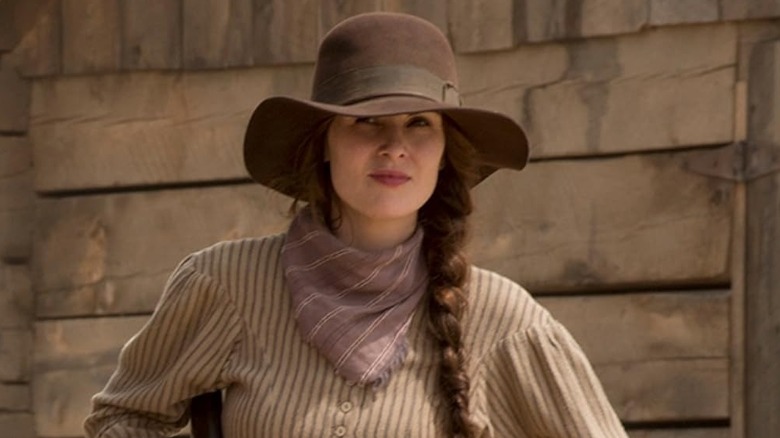
On paper, "Godless" doesn't share much in common with "The Queen's Gambit," aside from being a period piece that mainly centers on female characters. The show follows Jack O'Connell as an outlaw who ends up sheltering in a town populated mostly by women after a majority of the men died in a mining accident. There, he relies on their resources and protection against his former gang leader, whose arrival looms over the seven-episode miniseries. Sure, it might be more of an action Western than a coming-of-age sports drama, but the main creative force behind the camera is the same.
Namely, Scott Frank wrote and directed all the episodes of "Godless" for Netflix, just as he did for "The Queen's Gambit." The director even cast Thomas Brodie-Sangster in both series; in "Godless" he plays a devoted deputy, and in "The Queen's Gambit" he's just as devoted to winning at chess. Knowing the same director behind "The Queen's Gambit" also made one of the best Western miniseries ever made checks out when you consider how he made watching a chess match feel like a duel at high noon.
Patrick Melrose
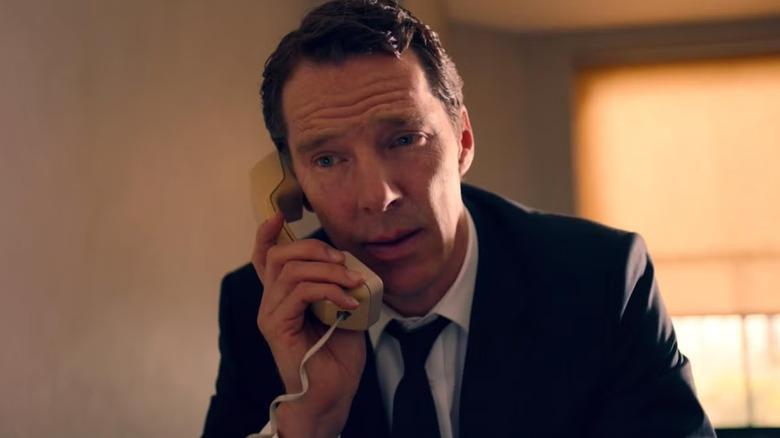
"Patrick Melrose," like "The Queen's Gambit," is a gripping TV miniseries adapted from the page; in this case, Edward St Aubyn's series of semi-autobiographical novels released from the early '90s to the late 2000s. For Showtime's drama, Benedict Cumberbatch takes the titular role of a wealthy Englishman struggling with parental neglect, drugs, and depression throughout several decades. Although Melrose's vices are at times way more dangerous than anything Beth Harmon gets involved with in "The Queen's Gambit," the shows have a similar approach to depicting how their protagonists sink themselves deeper into the hole of addiction.
Of all the TV shows you need to binge-watch, "Patrick Melrose" is an easy one, given it's only five episodes total. Though Cumberbatch's performance is mesmerizing, the supporting cast is even more fleshed out, including a top-form Jennifer Jason Leigh as Patrick's mother. "Patrick Melrose" is an especially scathing indictment of British nobility and its corrupting wealth, which makes it as decadent as "The Queen's Gambit" and its similarly corrupting world of competitive chess.
Russian Doll
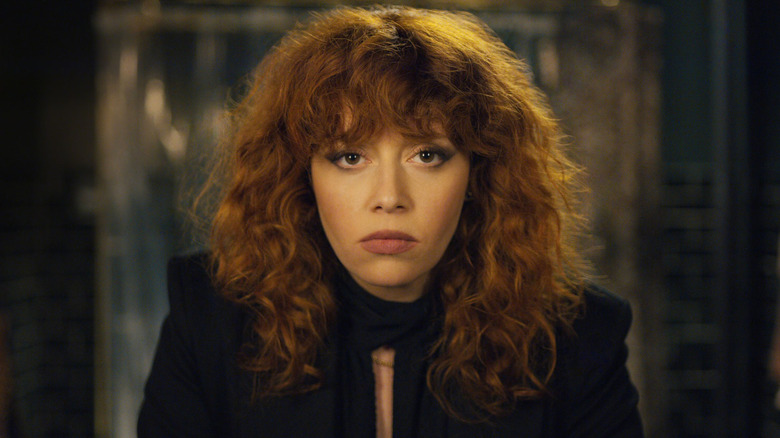
Another Netflix series, "Russian Doll" is a big tonal shift from "The Queen's Gambit," but the two shows have more in common than a feisty redheaded lead. The show was created by Leslye Headland, Amy Poehler, and Natasha Lyonne, with the latter starring as Nadia, a woman who finds herself caught in a time loop at her birthday party ... and that's just Season 1. In Season 2, Nadia travels back in time to relive her mother's experiences from before Nadia was born in the early 1980s.
Though it has more of a sci-fi edge to it than "The Queen's Gambit," "Russian Doll" is, at its core, a show that cares deeply about exploring a woman's inner turmoil. Obviously, Lyonne is a treasure in the Netflix comedy, but the way the writing and directing all center around putting audiences not just in her shoes, but in her head, makes for one of the more transfixing viewing experiences in recent memory. Maybe there's a world in which it comes back for a 3rd season.
The English Game
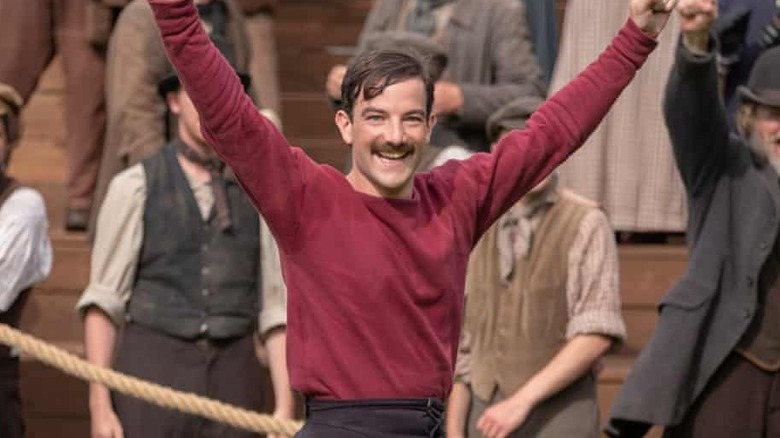
Sure, football is not as ancient a pastime as chess, but its origin makes for as juicy a drama miniseries as "The Queen's Gambit." Releasing on Netflix in the same year as "The Queen's Gambit" was "The English Game," which explores the reclamation of association football (known in America as soccer) from an upper-class society to a sport for the common people. Edward Holcroft and Kevin Guthrie star as Arthur Kinnaird and Fergus Suter, respectively, both of whom are considered among the first football stars in the world.
Though the show dramatizes real events to the point of fictionalization, fans of "The Queen's Gambit" will enjoy how it weaves the sport's history with heart-wrenching interpersonal drama. It may not have as much of a feminine point of view as the other Netflix series starring Anya Taylor-Joy, but its deft juggling of themes of class struggle and trauma makes it an underrated sports TV show.
Mrs. America

"Mrs. America" may not be as intimate of a singular character study as "The Queen's Gambit," but its cast includes some of the very best actors to grace the screen. Set in America in the 1970s, the show follows the equal rights movement through the eyes of prominent female activists, such as conservative opponent Phyllis Schlafly (Cate Blanchett), groundbreaking African-American politician Shirley Chisholm (Uzo Aduba), Republican ally Jill Ruckelshaus (Elizabeth Banks), and, of course, feminist icon Gloria Steinem (Rose Byrne).
Despite the sprawling and ensemble nature of the FX series, "Mrs. America" hinges primarily on a powerhouse lead performance from Blanchett as the most ambitious of activists who oppose the second-wave feminist push for equal rights in voting, abortion, and same-sex marriage. Though "The Queen's Gambit" fans might miss the tense chess matches, "Mrs. America" trades those for political intrigue made all the more interesting by its powerful performances and deep entrenchment in the glitz and glam of the '70s aesthetic.
The Great
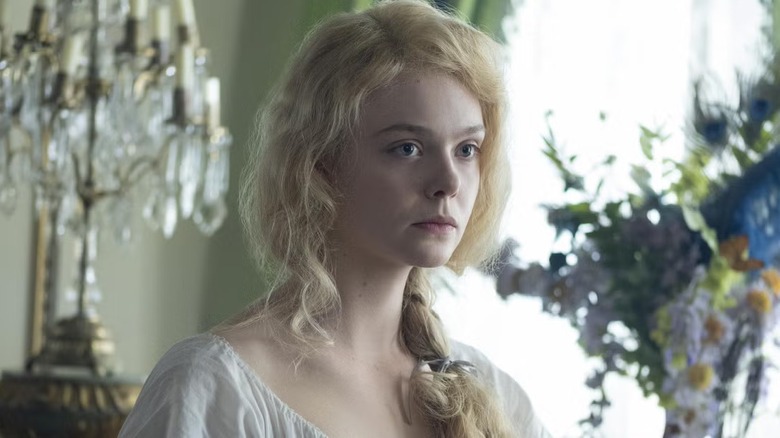
You wouldn't think that the history of Russian monarch Catherine the Great's marriage to Peter III would make for one of the funniest Hulu shows in recent history, but leave it to Yorgos Lanthimos collaborator Tony McNamara to do just that. "The Great" stars Elle Fanning as Catherine, who plots to kill her husband (Nicholas Hoult) in an ambitious attempt to seize full power of the throne. Although Hulu cancelled "The Great" after three seasons, it remains a must-watch series, no matter how historically inaccurate it may be.
While "The Great" has a lot more comedic edge to it than "The Queen's Gambit," Fanning's performance as Catherine is no less chaotic and wild than Anya Taylor-Joy's as Beth Harmon. The love-hate relationship that Fanning forms with Hoult's Peter (who also plays Peter's body double Pugachev) may also remind "The Queen's Gambit" fans of the competitive romance between Harmon and Thomas Brodie-Sangster's Benny. If anything, "The Great" and "The Queen's Gambit" prove that with the right leads, you can make a juicy TV drama out of even the most boring real-world history, whether that's competitive chess or Russian royalty.
The Man Who Fell to Earth
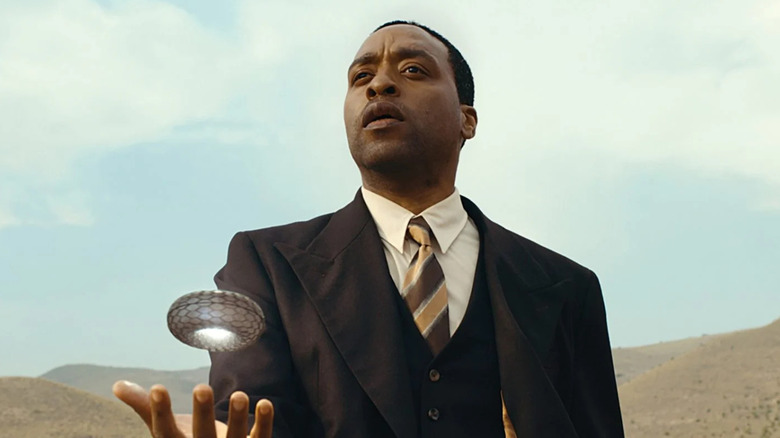
On the surface, "The Man Who Fell to Earth" doesn't share too much in common with "The Queen's Gambit." The sci-fi series is a follow-up to the 1976 film of the same name starring David Bowie. Chiwetel Ejiofor plays an alien named Faraday, who arrives on Earth to find a way to save his species from extinction. He connects with another extraterrestrial, Thomas Newton (Bill Nighy), who was originally played by Bowie in the movie. Although the show also didn't return for a 2nd season, its real connection to "The Queen's Gambit" is more in its behind-the-scenes.
Namely, "The Man Who Fell to Earth" and its cinematic predecessor are both based on a novel by Walter Tevis, who also authored "The Queen's Gambit." In fact, "The Man Who Fell to Earth" was published a full two decades earlier, so in a sense, its tone and genre are precursors to the themes Tevis would later explore with "The Queen's Gambit," including the feeling of being an outsider and an alcoholic. With this connection in mind, it's fascinating to watch the two series back to back because at times, Beth Harmon's characterization in it borders on the supernatural.
Lessons in Chemistry
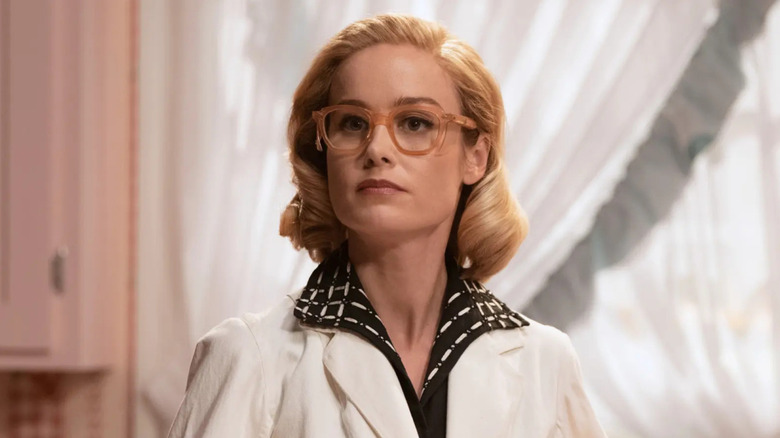
It's easy to draw comparisons between Anya Taylor-Joy's portrayal of Beth Harmon's complicated genius and Brie Larson's embodiment of a similar archetype in Apple TV's 2023 series "Lessons in Chemistry." Based on a novel by Bonnie Garmus, "Lessons in Chemistry" centers on Larson's Elizabeth Zott, a chemist struggling to succeed in the male-dominated field of scientific research in the 1950s. Not only does she unexpectedly fall in love with a fellow ostracized chemist Calvin Evans (Lewis Pullman), she's also courted by a television producer (Kevin Sussman) to host a cooking show catered to housewives.
Though Larson plays Zott with more emotional stuntedness than Taylor-Joy gives to Harmon, both shows are incredibly intricate stories about the lengths women had to go to in order to earn respect and achieve success in the mid-20th century. Aside from big twists and turns that won't be spoiled here, it's an incredibly unique show whose narrative breaks from the usual period drama formula, whether that be through major book changes in the "Lessons in Chemistry" finale, point of view switches, or non-linear storytelling that always keeps audiences hooked.
Palm Royale
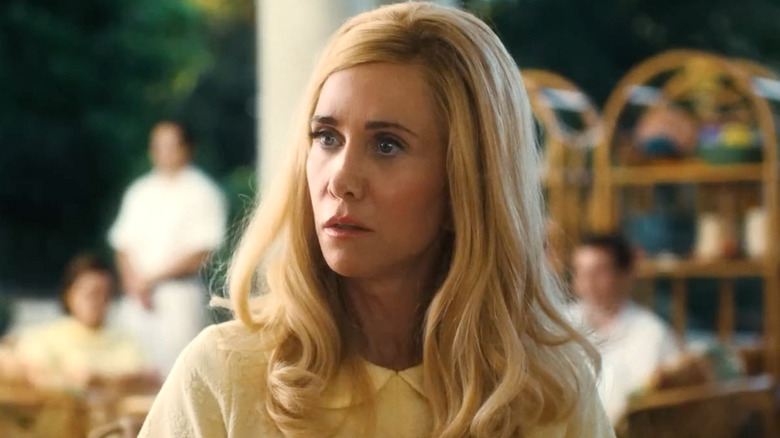
"Palm Royale," compared to "The Queen's Gambit," has a more visually arresting cinematic style, given that it's set in Palm Beach, Florida, at the dawn of the 1970s. The Apple TV series follows the highly ambitious and enigmatic Maxine Dellacorte-Simmons (Kristen Wiig), whose scheming to ingratiate herself into Floridian high society courts attention both good and bad from the powerful women of the community, including her comatose mother-in-law Norma (Carol Burnett), women's liberation activist Linda (Laura Dern), and country club socialite Evelyn (Allison Janney).
Though there's no focus on competitive chess, "Palm Royale" balances a female-heavy ensemble with mouth-watering drama that slowly reveals who Maxine is at her core. Sure, she's less prone to drugs and downward spirals than Beth Harmon, but her unpredictability and fiery drive are parallels to Anya Taylor-Joy's performance. With a deeply charismatic turn from one of the best "Saturday Night Live" cast members of all time, "Palm Royale" promises audiences a TV experience worth gossiping about.
Lucky

Of course, we couldn't end this cavalcade of shows like "The Queen's Gambit" without a shout-out to another standout Anya Taylor-Joy project. Apple TV's "Lucky" is an action-packed chase thriller that, despite being more crime-focused than the coming-of-age drama that is "The Queen's Gambit," centers on a similarly arresting performance from Taylor-Joy as the titular con woman who gets a target on her back after a heist gone wrong. Not only is Lucky forced to confront what she will or won't do to escape accountability, but she also must confront her own past, relationship mistakes, and moral ambiguity.
With only seven episodes, "Lucky" is a hard show to turn off once you've started watching, and not just because of how deliciously dangerous Taylor-Joy gets to be. Like "The Queen's Gambit," it's a show that's primarily focused on the actions of a singular, independent woman with less of a moral compass than you might hope for, trading the chess matches for having to outsmart federal agents and crime bosses. It's a stark reminder that the actress behind Beth Harmon hasn't lost her allure since rocketing to mainstream success after the Netflix series.