

15 Best TV Villains Of The 2010s, Ranked
The 2010s were a paramount decade for television. With the rise of social media and the abundance of streaming services, it's harder for a show to completely capture the public's attention like the 2010s' most iconic series. As a result, we find ourselves missing those big shows of the 2010s and their memorable casts of characters. Of those casts, it's often the antagonists who are the most memorable characters.
While the best TV protagonists of all time prove that audiences love an antihero, there's nothing quite as fun as watching a villain who will stop at nothing to sabotage the hero's goals. From one-off villains who made an impact with only a little bit of screen time to characters whose slow descent into evil takes up much of their show's run, these 15 TV villains from the 2010s are some of our favorite characters to hate. Their methods and motivations may differ wildly, but each left a lasting impression on the shows they helped define.
15. Sue Sylvester (Glee)
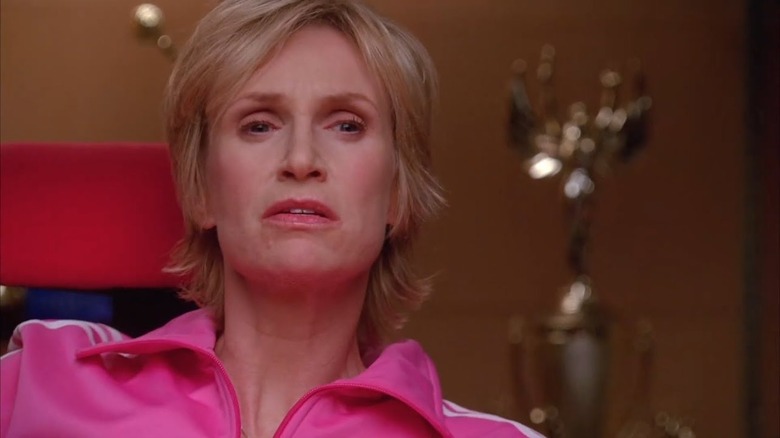
She said it herself: Sue Sylvester from "Glee" is the type of person to make environments toxic. The musical comedy centers on the eclectic glee club at William McKinley High School, but their biggest opponent is Jane Lynch's verbally abusive cheerleading coach. Sue is often at odds with Will Schuester (Matthew Morrison) for the school's extracurricular funding. Her aggressive personality and borderline evil treatment of the "Glee" kids made Lynch a standout of the show's cast, an honor she maintained across six seasons.
Sue's most devious moments include acts of physical violence, blackmail, and endangering coaches, students, and teachers. The character also showcases an intolerance towards students for their race, sexuality, or economic backgrounds, but the only reason she doesn't rank higher on this list is because of her surprising capacity for change. From claiming credit for a student's accidental gunshot to supporting her sister Jean, who has Down syndrome, Sue's not always as evil as she'd like to make herself seem. With Ryan Murphy opening the door for a "Glee" reboot, maybe there's a possibility for Sue to have an even more insidious villain arc.
14. Madeline Wuntch (Brooklyn Nine-Nine)
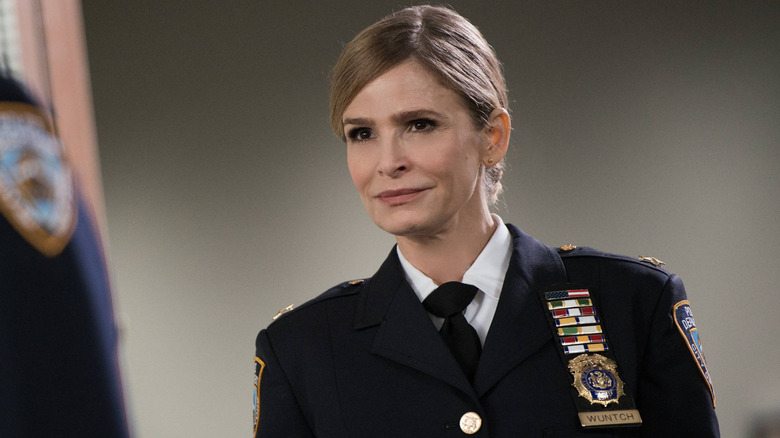
There's an argument to be made that, in today's political climate, there are no real heroes among a cast of police officers. However, in "Brooklyn Nine-Nine," the well-intentioned detectives have a proper antagonist in Madeline Wuntch (Kyra Sedgwick), a high-ranking NYPD official and longtime rival of the Nine-Nine's captain, Raymond Holt (Andre Braugher). In addition to exerting power over the Nine-Nine through intimidation, corruption, and psychological warfare, Wuntch's presence results in some of the best one-liners from the normally stoic captain, such as "If you're here, who's guarding Hades?"
Though her appearances throughout "Brooklyn Nine-Nine" are always welcome as an opportunity to see new sides of Andre Braugher's critically acclaimed character, Wuntch's schemes reach a new level of evil in her final episode. Season 7's "Ding Dong" sees the Nine-Nine shocked by Wuntch's sudden passing, but she manages to one-up Holt even in death by arranging for him to deliver her eulogy. In said eulogy for her, Holt ends up remarking on how much he'll genuinely miss having a real arch-nemesis in Wuntch.
13. White Diamond (Steven Universe)
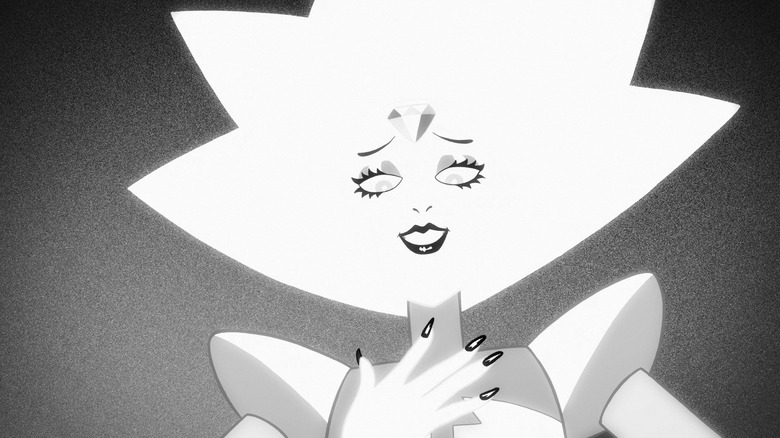
A lot of television cinephiles might roll their eyes at a Cartoon Network character making it onto a list of TV's best villains, but if you understand the subtext behind "Steven Universe," the inclusion of White Diamond makes perfect sense. "Steven Universe," one of the best animated TV shows, follows a carefree young boy (Zach Callison) who lives with the Crystal Gems, helping them protect humanity from evil. White Diamond (Christine Ebersole), along with Yellow (Patti LuPone) and Blue (Lisa Hannigan), rules the Gem empire, enforcing rigid standards of perfection and conformity across Gem society.
Akin to a narcissistic maternal figure, White Diamond is a controlling force in the Gems' lives, but Steven challenges her belief that imperfections make someone inferior during the original series' finale. Given the wider LGBTQ+ themes of "Steven Universe," White Diamond stands out as analogous to oppressive family dynamics, making this ageless intergalactic ruler as relatable a villain as any character on TV.
12. Meg Abbott (The Leftovers)
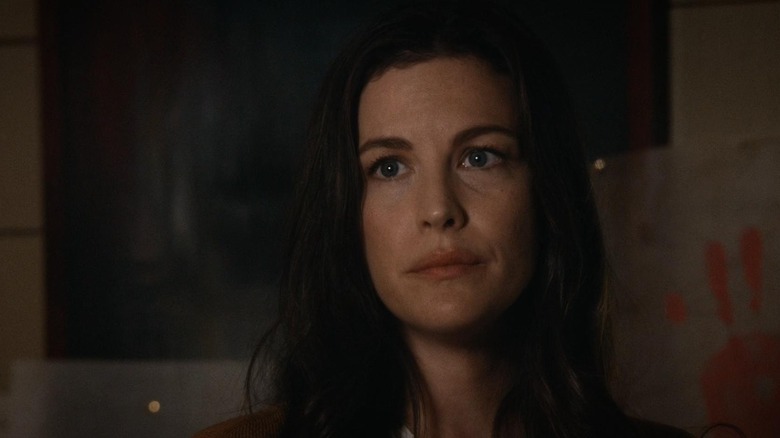
There are plenty of despicable characters on HBO's "The Leftovers" who could earn their spot on this list, like Ann Dowd's terrifying Patti Levin or Bill Camp's enigmatic David Burton. However, the character who truly deserves this spot is Liv Tyler's Meg Abbott, who joins the Guilty Remnant after the Departure and eventually becomes one of the cult's most radical and violent members. Tyler's soft-spoken and timid performance, despite her inhumane actions, is part of what makes Meg such an interesting villain to watch.
As one of the best characters in HBO's sci-fi series, Meg feels representative of the harsh reality of apocalypses. Namely, the Season 2 episode "Ten Thirteen" offers an in-depth window into Meg's psychology after her mother died the day before the Departure, leaving Meg feeling that the world's response to the larger tragedy had overshadowed her own grief. Even as Season 3 of "The Leftovers" challenges the reality viewers have come to know, the residual effects of her morally bankrupt actions in previous episodes make any scene starring Tyler all the more eerie to watch, knowing how even the most unsuspecting people can be capable of so much evil.
11. Teddy Perkins (Atlanta)
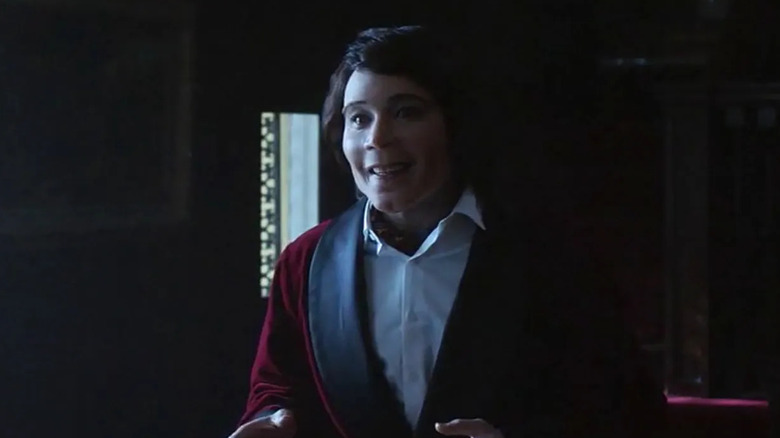
"Atlanta" gained a reputation for one-off episodes examining different aspects of the African-American experience, such as Season 2's "Teddy Perkins." The episode sees Darius (LaKeith Stanfield) venturing into the dilapidated mansion of the titular Teddy (played by series creator and star Donald Glover in unrecognizable prosthetic makeup), the eccentric brother of a famous musician, Benny Hope. Sure, it's humorous to see the normally unfazed Darius interact with this emotionally delicate stranger, but the layers revealed about Teddy make this an all-time episode of "Atlanta."
Namely, Darius discovers a wheelchair-bound Benny (Derrick Haywood), who warns him that Teddy intends to kill them both, adding an undercurrent of tension to Teddy's seemingly benign interactions with his guest. What makes "Teddy Perkins" one of the best sitcom episodes of all time, however, is Teddy revealing that he and Benny were victims of abuse from their father, maintaining admiration for the "sacrifices" that were made in pursuit of their music careers. Ultimately, it ends up being one weird afternoon for Darius, but one that nearly threatens his life because of an enigmatic, pale-skinned man who believes pain begets good art.
10. Bill Cipher (Gravity Falls)
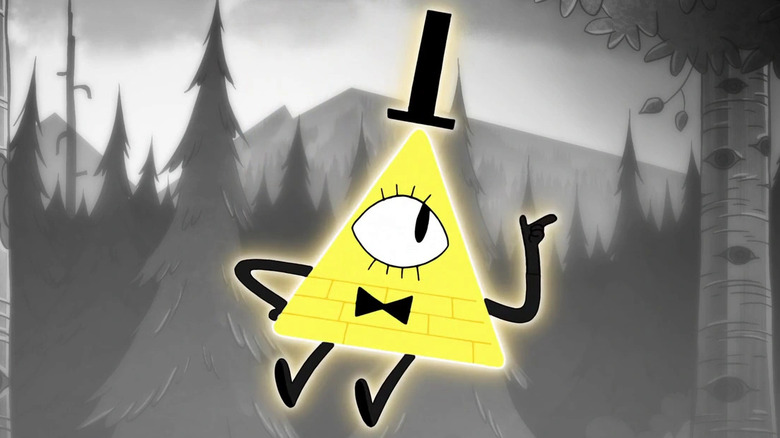
Alex Hirsch's series "Gravity Falls" contains so much underlying lore and world-building across two seasons that it gives way to one of the best antagonists in any animated series. Though much of the show explores monsters, small-town folklore, and paranormal occurrences, its overarching mythology becomes increasingly important as Bill Cipher, an interdimensional dream demon, emerges as a major threat to the titular town.
It's impressive that "Gravity Falls" takes as dark a turn as it does post-Bill Cipher without losing its overall spirit of absurd humor and fantastical whimsy. He's conniving, manipulative, and frankly terrifying for a triangle with an eye and a stovepipe hat, though not even the series itself gets into how deep the lore behind Bill goes. Expanded "Gravity Falls" lore reveals Bill's role in the destruction of his home dimension, Euclydia, long before he nearly unleashes an apocalyptic event known as Weirdmageddon on Gravity Falls. Ultimately, the Pines family and their allies manage to stop him. It's only more eerie when you start to notice how many episodes of "Gravity Falls" feature Bill hidden in plain sight.
9. Wilson Fisk (Daredevil)
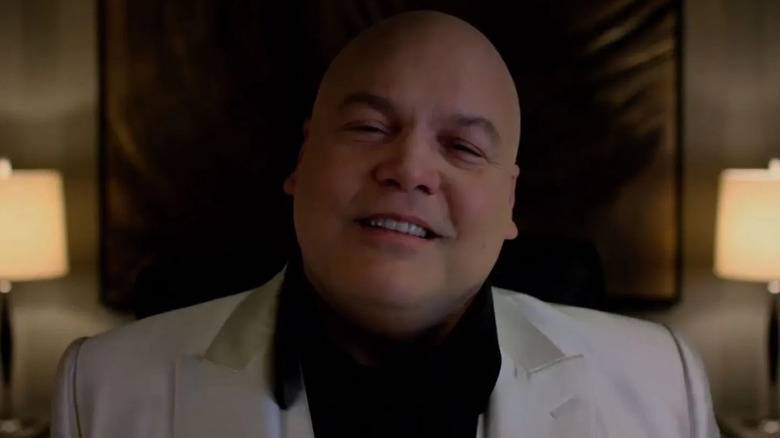
Superhero stories are known for memorable villains, but in Netflix's "Daredevil," the main antagonist is as integral to the show's success as Charlie Cox's titular vigilante-lawyer. Vincent D'Onofrio plays Wilson Fisk, a.k.a. "Kingpin," the ruthless New York City crime lord whose criminal operations quickly draw the attention of Matt Murdock and his legal associates. However, as Fisk uses his wealth and influence to evade legal consequences, Murdock also takes him on as Daredevil, though this is far from the end of their rivalry.
Throughout the original "Daredevil" series in the 2010s, D'Onofrio portrays this iconic street-level Marvel Comics villain with a calm intensity, battling inner turmoil related to Fisk's traumatic past and stunted emotions. His violent tendencies and rage are sparingly shown throughout the series, making the moments when he does snap feel all the more terrifying, knowing how much restraint he employs. While Fisk can't be used in Marvel movies, his presence on the Netflix series was more than enough to establish him as one of Marvel's best and most emotionally complex antagonists.
8. Hannibal Lecter (Hannibal)
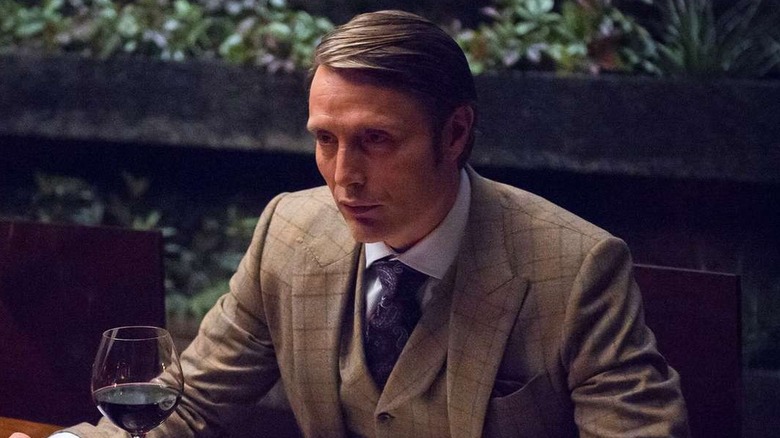
Maybe it's unfair to include Hannibal Lecter here, given the character has so much credibility on-screen thanks to films like "The Silence of the Lambs," in which Anthony Hopkins gives a generation-defining performance as the sophisticated serial killer. However, NBC's "Hannibal" explores the character's earlier years as a psychiatrist who assists the FBI with serial murder investigations while secretly committing murders of his own. Mads Mikkelsen perfectly embodies the character's trademark brilliance and sadistic pleasures, especially as a foil to protagonist Will Graham's (Hugh Dancy) highly empathetic criminal profiler.
What re-establishes Dr. Lecter as an all-time villain on television, not film, isn't just Mikkelsen's alluring performance but the character's development over the course of the series. The introduction of Gillian Anderson as Dr. Bedelia Du Maurier, Lecter's psychiatrist who sees him for who he truly is, adds another layer to the character as he encounters someone capable of matching him intellectually. There's plenty of future storylines we wish we'd gotten to see in "Hannibal" if it hadn't been cancelled after three seasons, but at least we got a great reinterpretation of an iconic movie villain out of the NBC series.
7. Cersei Lannister (Game of Thrones)
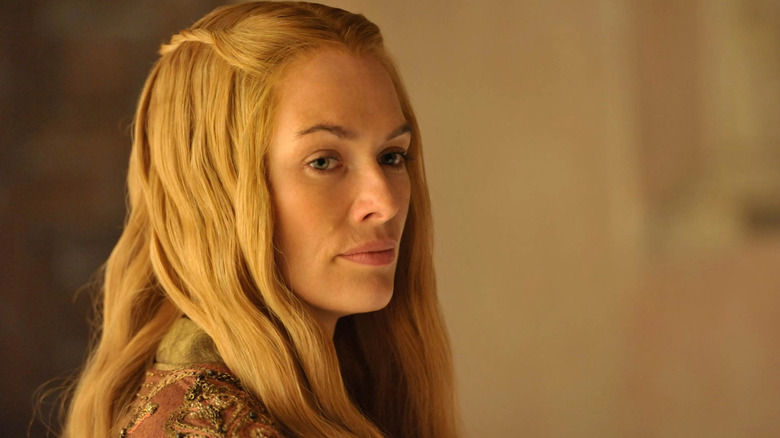
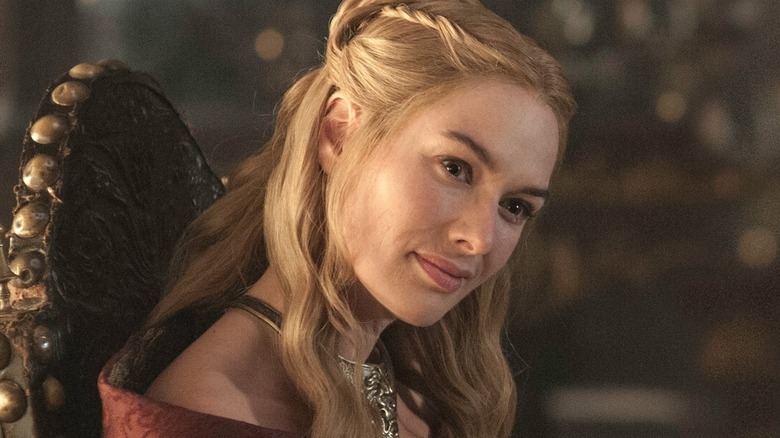
We could spend all day going over all the incredible villains in "Game of Thrones," from King Joffrey to Daenerys Targaryen, but it's hard to pinpoint one specific villain in the fantasy series that stands above all the rest. That is, if you forget about Cersei Lannister. Lena Headey spent eight seasons of "Game of Thrones" giving a masterclass in evil by fleshing out this hateful, conniving, hypocritical Queen of the Seven Kingdoms, making her as easy to root for as she is to root against.
Cersei's villainy is present from the very first episode of the show, which establishes her as the spiteful and incestuous wife of Robert Baratheon. As the show continues, her relationship with her twin brother and lover Jaime becomes increasingly strained as her pursuit of power takes precedence. What's most transfixing about Headey's performance is how much more pitiful Cersei gets with every death in her family, slowly chipping away at all the humanity she had little of to begin with. After all, she's even the character who name-drops the show's title: "When you play the game of thrones, you win, or you die; there is no middle ground."
6. Mary Louise Wright (Big Little Lies)
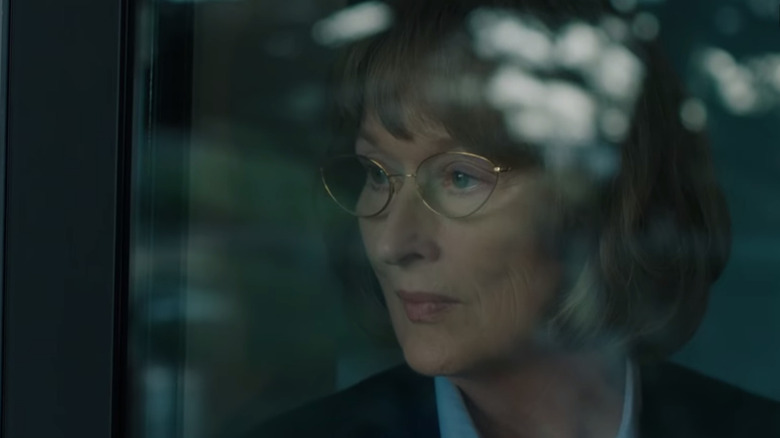
"Big Little Lies," a drama based on Liane Moriarty's novel, was a massive hit for HBO from the moment it premiered, but the decision to renew it for a second season was risky given the lack of source material. Thankfully, that decision was justified by introducing Mary Louise Wright, the mother of Alexander Skarsgård's abusive Perry, who (spoiler alert!) is pushed to his death by Bonnie (Zoë Kravitz) during an altercation involving his wife Celeste (Nicole Kidman) and her friends at the end of Season 1. She's the perfect element of chaos for Season 2, coming to town with questions about her son's death.
Of course, it helps that Mary Louise is portrayed by the one-of-a-kind Meryl Streep, who imbues every single interaction she has with guilt and tension. One scene in which she demonstrates her own grief by letting out a piercing scream at the dinner table is both a shuddering portrayal of loss and a terrifying turn for a character who's been otherwise stoic and conservative. Despite criticism of "Big Little Lies" Season 2 for failing to live up to the first, Streep's embodiment of Mary Louise showcases that the abusive behavior from Perry is always part of a larger cycle of generational trauma.
5. Chuck McGill (Better Call Saul)
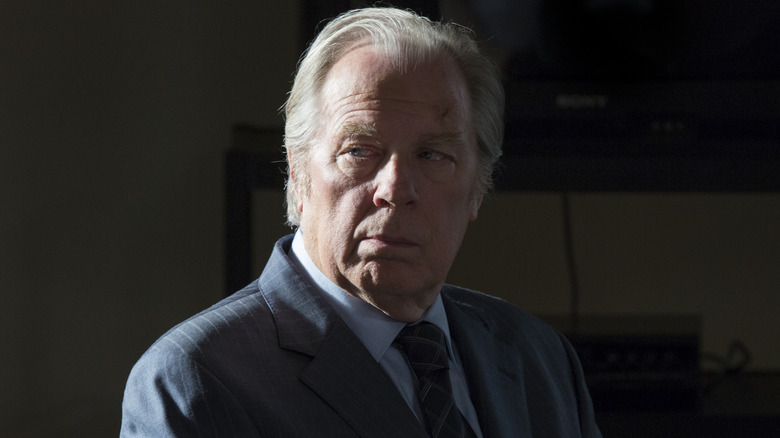
"Better Call Saul" had impossible standards to live up to compared to "Breaking Bad," and yet, the story of Jimmy McGill's (Bob Odenkirk) descent into Saul Goodman made for a show just as good, if not better. Part of that was giving Jimmy his own Niles Crane in Chuck McGill (Michael McKean), whose belief that Jimmy is incapable of change only sends his brother further down the path of becoming Walter White's future lawyer. Chuck's role in the series is largely defined by his perceived electromagnetic hypersensitivity, which raises questions about his mental health as the show progresses.
Although he takes several extreme measures, risking his own health in the pursuit of foiling Jimmy's schemes, what makes Chuck such a great villain is that he's unfortunately right. Sure, his suspicion that Jimmy tampered with Mesa Verde's paperwork to undermine HHM is influenced by personal bias, but it does also happen to be completely correct, making Jimmy's fall from grace an inevitable tragedy. Ultimately, Jimmy's outsmarting of him is achieved by exploiting Chuck's own pride and denial of his condition, resulting in one of the series' best episodes, "Chicanery."
4. Jim Moriarty (Sherlock)
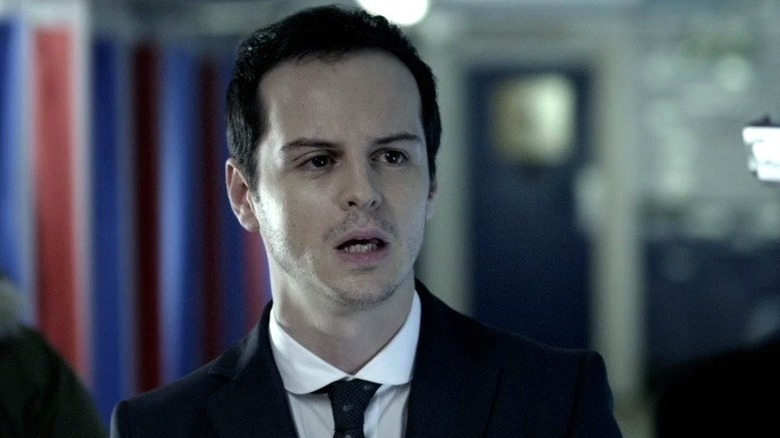
There have been plenty of Sherlock Holmes TV shows that have attempted to capture the iconic rivalry between Holmes and Jim Moriarty on screen, but few as successfully as the BBC's "Sherlock." Andrew Scott proved to be the perfect foil to Benedict Cumberbatch's take on the arrogant-but-brilliant detective, with Moriarty's petulance and sadistic fascination with creating chaos making him a one-of-a-kind TV villain. Moriarty doesn't even reveal his identity until the final episode of the show's first series as the mastermind behind a series of seemingly unrelated crimes, all meant to particularly challenge Holmes' weaknesses as a detective.
For a character who's got a genius-level intellect like Holmes, Moriarty's personality in "Sherlock" is designed not just to stay steps ahead of the detective, but simply to get under his skin. Scott's performance is incredibly charismatic at times, with a coy smile that only goes away when Holmes proves not as smart as Moriarty wishes he were. Even after his death, Moriarty remains a haunting presence in Holmes' mind as proof that the world's greatest detective is fallible, which is everything the character of Moriarty needs to be in a Sherlock Holmes adaptation.
3. Logan Roy (Succession)
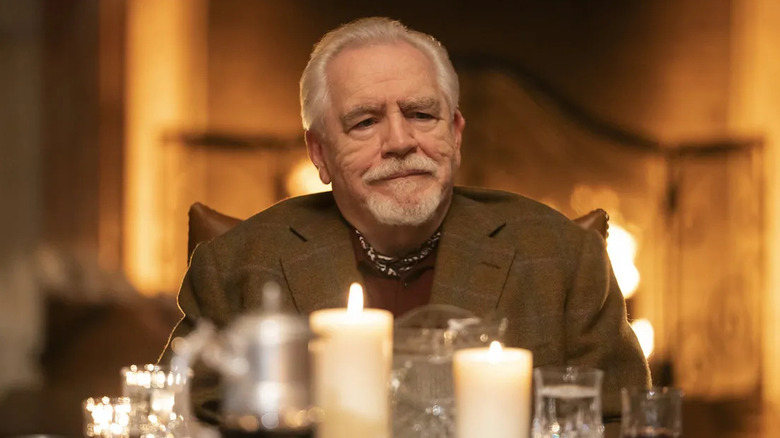
"Succession" aired two of its four seasons in the late 2010s, and although it finished with one of the best series finales of the 2020s, there's enough of Brian Cox's Logan Roy in the first two seasons to cement him as one of TV's great villains. Logan is the patriarch of a massive media conglomerate that's to be passed down to his children when he dies, or, as Logan would probably prefer it to be said, if he dies. From the series' first episode, Logan's health and future at Waystar RoyCo are up in the air, but regardless, he refuses to step down and let his son Kendall (Jeremy Strong) take over.
As Logan keeps leading Waystar amid health concerns, it becomes obvious why he doesn't trust his children with his legacy. His love for Shiv (Sarah Snook) is patronizing at best, while he views Roman (Kieran Culkin) as a misfit and Connor (Alan Ruck) as an afterthought. Through the first two seasons, Logan proves himself to be unbothered by exerting physical and psychological torment on anyone in his inner circle, best exemplified in Season 2's "boar on the floor" game. Ultimately, he's a terrible father and a corrupt businessman, but he makes for a Shakespearean villain.
2. Fleabag's Godmother (Fleabag)
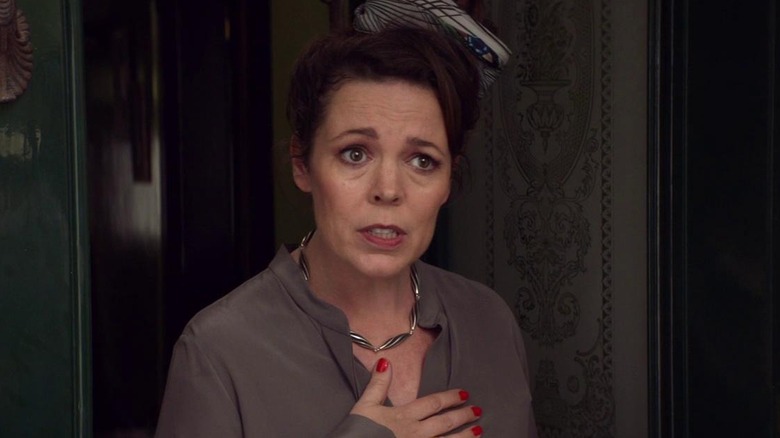
There's something so simplistically evil about a character like Fleabag's godmother, who approaches nearly every interaction with Fleabag with passive-aggressiveness and patronization. The BBC series stars Phoebe Waller-Bridge as the wayward titular young woman, who resents her father for beginning a relationship with her godmother following her mother's death. Olivia Colman portrays this woman with a faux-kindness and overt positivity that makes for a glorious contrast with Fleabag's cynicism, practicality, and feminine rage.
Sure, she might not be responsible for large-scale political corruption or genocidal murder like others on this list, but her viciousness towards Fleabag feels grounded in real-life dysfunctional family dynamics. For a show without a single bad season, the godmother is so much fun to hate-watch, especially as Fleabag discovers how controlling she is and how determined she is to ostracize Fleabag from her own family. The worst part is she's nearly successful at that, too, given the Season 1 finale, but who knows why she even bothers to invite Fleabag to her engagement dinner at the start of Season 2. Maybe to rub her new ring in her future stepdaughter's face?
1. Gus Fring (Breaking Bad)
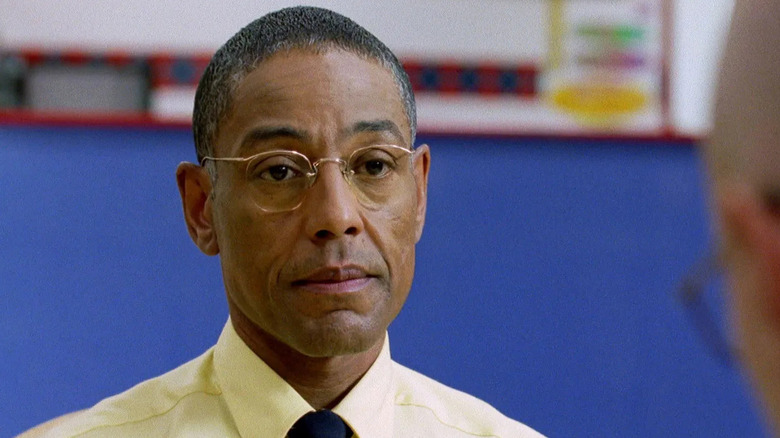
There's really no other character in 2010s TV who deserves this spot more than Gus Fring. Introduced late in Season 2 of "Breaking Bad," Giancarlo Esposito's mild-mannered and stoic fried chicken restaurateur is revealed to be a secretive drug kingpin who, against his better judgment, enters into business with Walter White (Bryan Cranston). However, in a major contrast to the likes of Tuco Salamanca (Raymond Cruz), Gus is pragmatic, smart, and humble, making him the perfect antagonist for the reckless, violent, and prideful Heisenberg and his "junkie" cooking partner.
While "Better Call Saul" takes more time to flesh out Gus as his own character, in "Breaking Bad" he makes for a truly intimidating force to be reckoned with. Moments like Gus slitting Victor's (Jeremiah Bitsui) throat in front of Walt and Jesse linger in the audience's mind during any rewatch, demonstrating just how capable this careful man is of committing heinous crimes to maintain control. Though Gus eventually leaves "Breaking Bad" early via the most iconic death scene, his presence was a major part of the show's DNA for three straight seasons.