

10 Best TV Shows Like Widow's Bay
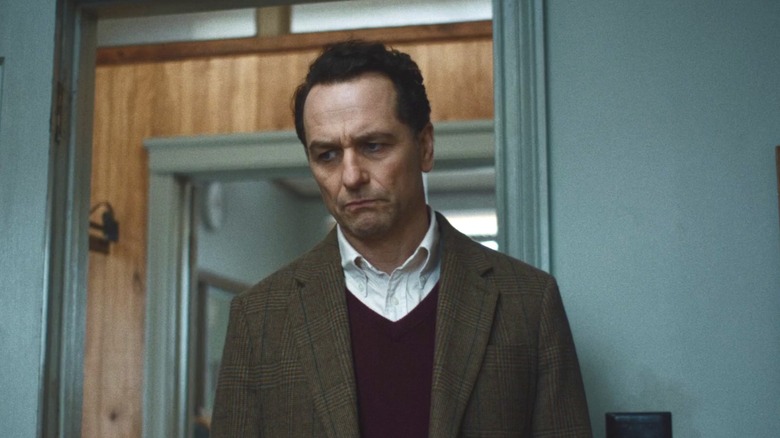
It might not necessarily have been expected for Katie Dippold, who cut her teeth writing for "Mad TV" and "Parks and Recreation," to become the mastermind behind TV's newest horror sensation, but such is the unlikely creative circumstance that brought "Widow's Bay" into being. An Apple TV horror comedy series with Guillermo Del Toro's approval, "Widow's Bay" finds Dippold — along with a brilliant writing team — channeling her comedy chops into a parody-slash-sincere-exercise in small-town spookiness, to enthralling results that couldn't possibly have come about without a hefty sense of humor.
"Widow's Bay" stars Matthew Rhys as Tom Loftis, the mayor of the titular New England island town. Tom's stringent skepticism notwithstanding, Widow's Bay has been historically plagued by a number of seemingly supernatural tragedies that seem to point to a centennial curse; when a heavy fog overtakes the island just as a New York Times article brings in an unprecedented wave of tourism, it's a harbinger of untold chaos.
The ten-episode inaugural season of "Widow's Bay" has become a critical success and an audience hit, sparking fascination with its lore, its humor, and its utterly wild tonal shifts. It's one of the most refreshing horror series to come out in years — which doesn't mean that there aren't other excellent shows you can turn to if you're looking for television that scratches a similar itch. From kindred small-town mysteries to improbable blends of comedy and suspense, here are the 10 best TV shows like "Widow's Bay."
Midnight Mass
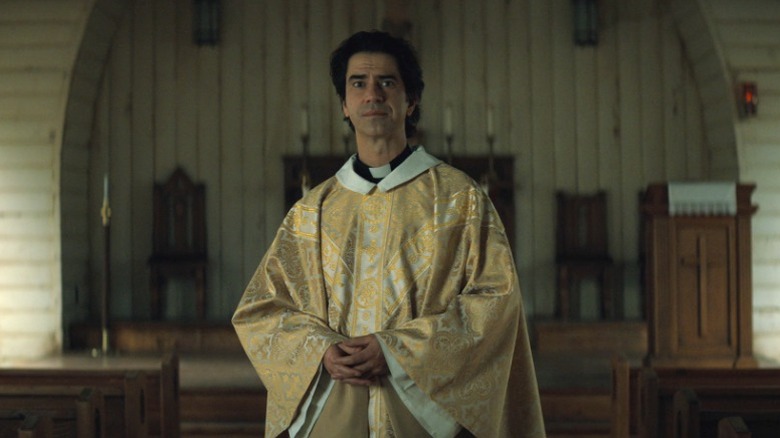
Created and entirely directed by contemporary horror luminary Mike Flanagan, "Midnight Mass" is an original horror drama miniseries that shares more than a few thematic, tonal, and narrative similarities with "Widow's Bay." Released in 2021 on Netflix and already an example of something that probably couldn't be made today, the series takes place in the fictional island village of Crockett Island and follows a large ensemble of characters, with an initial primary focus on Riley Flynn (Zach Gilford).
A former venture capitalist and recovering alcoholic, Riley returns to Crockett Island after serving four years in prison for a fatal drunk driving accident. Now an atheist, he arrives just as the staunchly Catholic town is being rattled by Father Paul Hill (Hamish Linklater), who has come to temporarily replace the elderly Monsignor Pruitt while he's out on pilgrimage. A series of bizarre events begin to occur around the town, ranging from the foreboding to the seemingly miraculous — all while questions swirl around the figure of Father Paul and his mysterious identity.
Although "Midnight Mass" does not share the comedic vein of "Widow's Bay," it's otherwise a strikingly similar example of somber supernatural horror focused on a creepy island town afflicted by strange happenings. Both shows exist within the same aesthetic ballpark, and unfold with a similarly deliberate, slowly-enveloping pace. And both also feature small-town Christianity as a key topic, albeit with different denominations. If you're a fan of the "serious" portion of "Widow's Bay" and would be interested in a show that plays the same ideas fully straight, you could scarcely do better than "Midnight Mass."
Twin Peaks
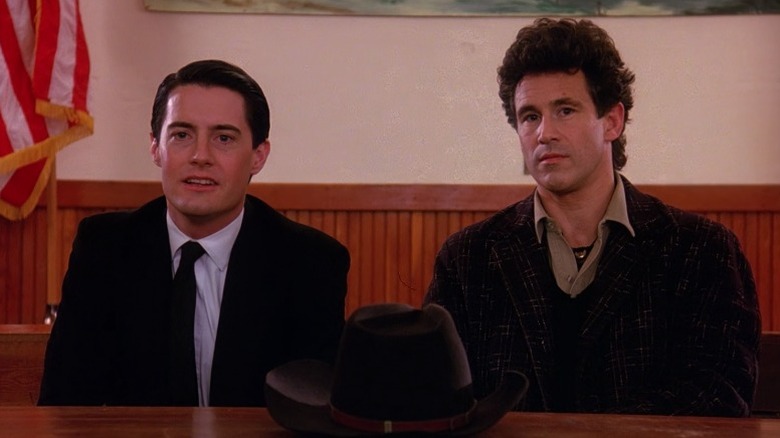
You could make an argument for "Twin Peaks" as the starting point of all contemporary television across all genres, but, when it comes to horror-tinged mystery thrillers set in small towns, it's as literal and self-evident a blueprint as there can be. Created by David Lynch and Mark Frost and originally aired between 1990 and 1991 as the best ABC show of all time, the series begins with the relatively straightforward hook that made it an audience phenomenon: In the pine-strewn Pacific Northwest town of Twin Peaks, model teenager Laura Palmer (Sheryl Lee) is found dead in a riverbank, prompting a murder investigation that brings in the eccentric and resourceful FBI agent Dale Cooper (Kyle MacLachlan).
As Agent Cooper plunges into the mystery of Laura's murder, the secret intricacies of her life leading up to it, and the eerie sociocultural landscape of Twin Peaks, it gradually emerges that the criminal case is just the tip of a gargantuan iceberg of darkness and evil. True to the all-American neo-surrealist style that Lynch would continue to develop in his subsequent films, the mundane tragedies and melodramatic conflicts of "Twin Peaks" exist in liminal contact with the paranormal and the uncanny — and, as the show's dense mythology unfolds before the viewer, so does a quaint, disarming sense of humor and a stunning proclivity for tonal whiplash. All of this makes "Twin Peaks" an absolute must-watch for any fans of "Widow's Bay," but really, this is one of those shows that qualify as essential viewing for anyone with any interest in the medium of television and its boundless potential.
Castle Rock
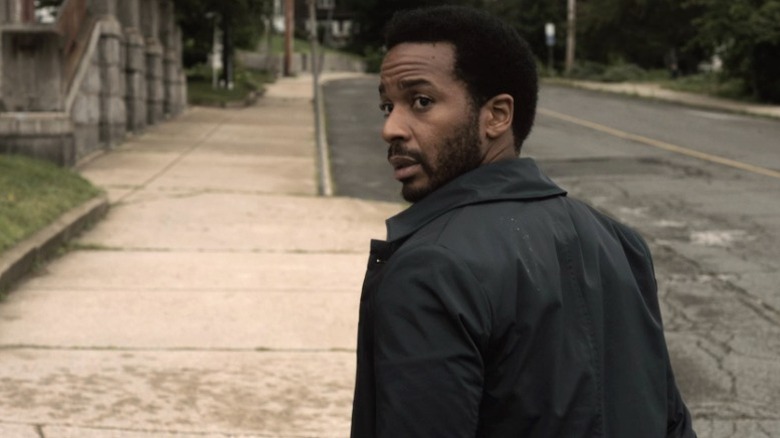
Created by Sam Shaw and Dustin Thomason, the Hulu series "Castle Rock" takes its name from the fictional Maine town in which Stephen King sets several of his most celebrated novels. Blending sci-fi, fantasy, horror, and drama much like King's literary work, the show shrewdly uses the recurrence of Castle Rock in various different pieces of fiction to spin a web of intersecting King-inspired tales.
Rather than directly adapt any single King novel, each of the two seasons on this anthology show weaves different characters and elements from various books into an original story. Season 1 centers on criminal attorney Henry Deaver (André Holland), who returns to Castle Rock on the request of a mysterious Shawshank State Penitentiary inmate known as The Kid (Bill Skarsgård). During Season 2, meanwhile, we follow a young Annie Wilkes (Lizzy Caplan) as she and her daughter Joy (Elsie Fisher) become stranded in Castle Rock due to a car accident.
Both seasons share the same fascination with the hypnotic power of well-wrought mystery, and an exceedingly smart touch in their handling of horror and fantasy elements. Their storytelling is laden with well-though-out King references and easter eggs, but, above any direct textual allusions, they are faithful to the spirit of King's oeuvre in the way that they bridge mythological and existential intrigue, always foregrounding the emotional pull of every grisly twist and turn. This, coupled with the sprawling small-town horror lore, the wide array of eccentric characters, and the centrality of King's work to the pool of genre inspiration that "Widow's Bay" draws from, makes "Castle Rock" an apposite companion watch.
FROM
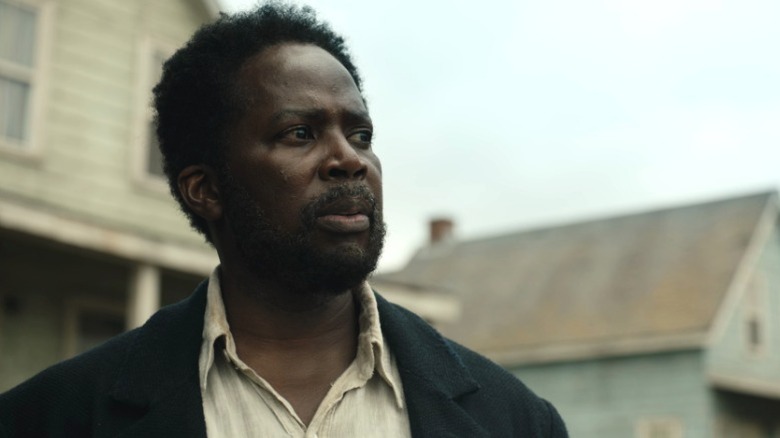
The highly underrated MGM+ (previously known as Epix) series "FROM" has established itself as one of the most consistent and engaging sci-fi mystery series of the 2020s, and, as it airs its fourth season with a fifth and final one already ordered, it's as good a time as any to hop on the bandwagon. Created by John Griffin, this claustrophobic, pulse-pounding mélange of creature horror, conspiracy thriller, and survival drama begins with an ingeniously mean premise: For indecipherable reasons, a small American town now traps everyone who passes through it.
By some wicked supernatural design, every road out of the Township leads back to the same place. To make matters worse, murderous shapeshifting creatures lie waiting in the woods, eager to kill anyone they come across in the nighttime unless a set of bizarre esoteric rules are followed. The main thrust of the show is the conflict between Boyd Stevens (Harold Perrineau), the town sheriff who struggles to strongarm everyone into following the rules, and the waves of people who keep futilely thinking they can uncover the town's secrets and save the day.
At once a deconstruction and an electrified iteration of the "small town with creepy secrets" genre to which "Widow's Bay" and other shows on this list belong, "FROM" draws immense power from the savvy deployment of its own terrifying hook, expertly layering twists and cliffhangers so that there's always dynamism in the characters' suffocatingly unchanging predicament. Don't be surprised if you find yourself getting swept into its maze of maddening mysteries and tantalizing theories right alongside the characters.
Wayward Pines
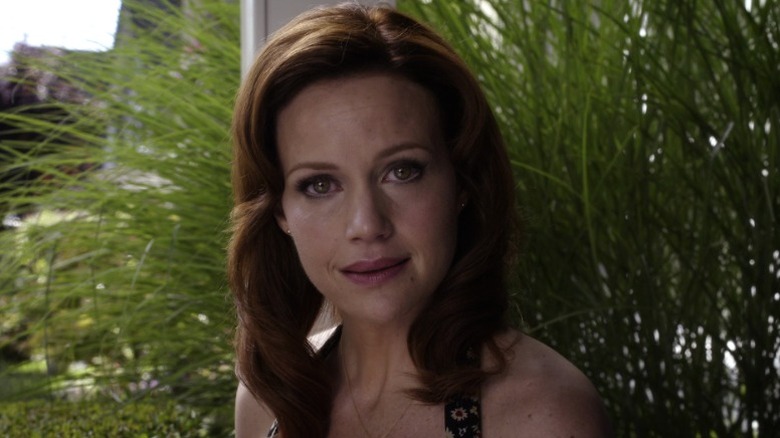
Developed by Chad Hodge from the eponymous novel series by Blake Crouch, Fox's "Wayward Pines" is a fantastic and highly underappreciated small-town mythological thriller, as well as one of the best post-apocalyptic TV shows of all time. M. Night Shyamalan acts as executive producer and directs the first episode, and his brand of riveting, intensely persuasive genre storytelling is all over the series, which is at times so strange and mind-bending in the early going that it takes a while to even get a handle on what you're watching.
Even before that point comes, however, "Wayward Pines" announces itself as an entrancing watch from the get-go. The first episodes operate in a mode of willful enervation and befuddling folk horror, as U.S. Secret Service agent Ethan Burke (Matt Dillon) travels to the chilly town of Wayward Pines, Idaho to investigate the disappearances of two colleagues, only to find himself trapped in the town and continually gaslit by its strange-acting populace. As Ethan investigates the nature of Wayward Pines and comes upon reveal after shocking reveal, the show slowly untethers itself from everything it initially appears to be doing.
What comes of this conga of upended expectations is a show that never quite settles into something you can easily predict, yet remains feverishly watchable through and through. Aided by a pitch-perfect ensemble of character actors who amp up the eeriness and the dark humor alike, "Wayward Pines" offers a lot of the same rewards as "Widow's Bay," and manages to get enormous mileage out of its lore-building even at just two seasons and 20 total episodes.
Lovecraft Country
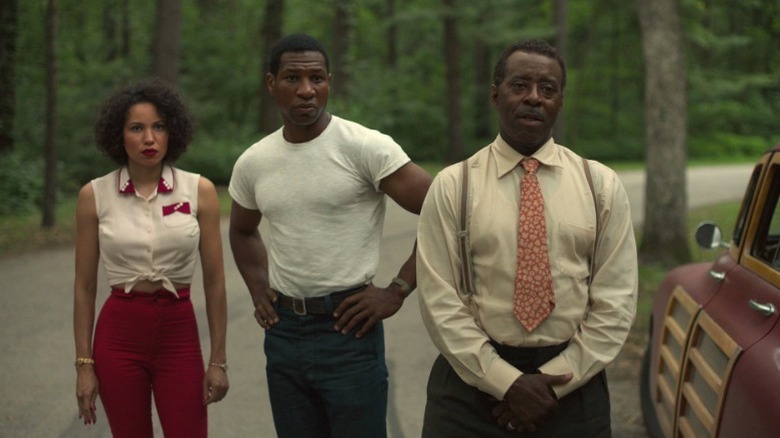
"Lovecraft Country" remains one of the most extraordinary one-and-done TV shows of the 21st century if not ever. It's also one of the definitional examples of fantasy horror in contemporary television: As developed and run by Misha Green from the eponymous novel by Matt Ruff, which in turn draws from the oeuvre of horror author H. P. Lovecraft, "Lovecraft Country" offers exuberantly-assembled thrills and indelibly terrifying imagery while placing genre devices in service of a thoughtful investigation of racism and its history in the United States.
Set in the 1950s, the series centers on Atticus (Jonathan Majors) and Letitia (Jurnee Smollett), childhood friends who embark on a road trip from Chicago to rural Massachusetts alongside Atticus' uncle George (Courtney B. Vance) in search of Atticus' missing father Montrose (Michael K. Williams). Along the way, they deal with vicious, murderous racism, as well as a series of monsters and supernatural terrors hailing from various cultural and folkloric sources, but primarily ripped from the pages of multiple Lovecraft novels and stories.
The key to the show's bridging of those two forms of horror lies in its willingness to confront the white supremacist ideas pervasive in Lovecraft's work — and therefore pervasive in the formation of American cosmic horror fiction. It's a work of enormous intellectual severity and boundless imagination all at once, and a can't-go-wrong watch for anyone who appreciates the dense, lore-heavy, history-charged provincial horror of "Widow's Bay."
Gravity Falls
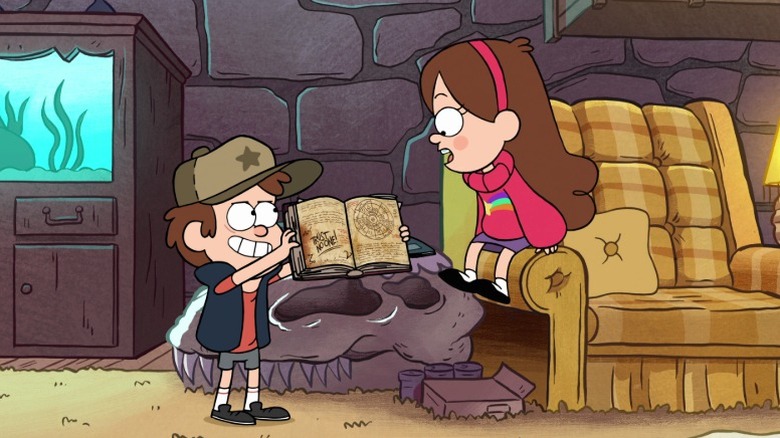
One of the shows that most vividly recapture the unique experience afforded by "Widow's Bay," in its gleeful combination of gravelly seriousness and affectionate genre ribbing, is also one of the best animated Disney shows of all time. Indeed, "Gravity Falls" became a cult hit among grown-up audiences for a reason: Simply put, it's one of the very best supernatural mystery shows of its era, animated or otherwise.
Created by Alex Hirsch, "Gravity Falls" follows 12-year-old twins Dipper (Jason Ritter) and Mabel Pines (Kristen Schaal), who travel to the small (fictional) town of Gravity Falls, Oregon to spend a summer with their great-uncle Stanley (Hirsch). Grunkle Stan's local business, the Mystery Shack, is a shady tourist trap that promises awe-inspiring wonders while delivering the benefits of a rundown roadside gift shop — but, upon arriving in town, Dipper and Mabel soon discover that Gravity Falls really is teeming with mystery, adventure, and labyrinthine mythology.
Cozily episodic in structure but full of rollicking serialized excitement, the show follows Dipper and Mabel through various absurd predicaments inspired by all corners of the fantasy genre. The underlying sense of humor is as sharp and unrelenting as any cartoon of the 2010s — enough to make "Gravity Falls" an irresistible watch just on the level of breezy fun. But even more significant is the attention that Hirsch and company pay to their characters, and to the potential of the fantasy-adventure plotting to express Dipper and Mabel's growing-up process. Even amid all the gags and lore dumps, you'd be hard-pressed to find another 2010s kids' show with more emotionally compelling storytelling.
The Leftovers
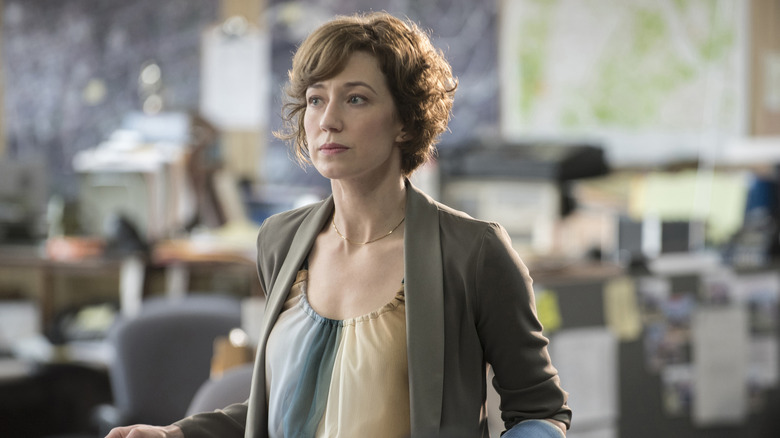
For a series that takes a more oblique approach to the basic "supernatural phenomena as observed from a quirky small town" idea, but yields enormous emotional rewards nonetheless, look to HBO's "The Leftovers." Created by Damon Lindelof and Tom Perrotta, the show adapts — in its first season, anyway — Perrotta's eponymous novel, and transposes its high-concept premise: What if one day, with no explanation and for no discernible reason, 2% of the Earth's human population simply vanished into thin air?
In "The Leftovers," the "Sudden Departure," as it's called, takes on the weight of an immutable, unassailable canon event for humanity at large. People around the world try endlessly to figure out what happened, why it happened, what it means, whether it can be reversed, whether the vanished are still out there, and what life amounts to in the aftermath — but everyone is lost, confused, and neck-deep in a mire of uncertain grief that just can't seem to subside. We follow all this from the perspective of the citizens of Mapleton, New York, for whom daily existence has become a prolonged tussle with ennui, and later through the eyes of Jarden, Texas, a town that mysteriously counted zero disappearances — which comes with its own set of existential problems.
Instead of concrete answers or explanations, "The Leftovers" uses its endless reserve of supernatural lore as a power source for dark humor, surrealism, and full-blown philosophical contemplation. Though it skews more abstract than "Widow's Bay," its characterizations and moments of terrifying bafflement cut just as deep; it's an all-timer show for connoisseurs of unrestrained weirdness, and for everyone else.
The Chair Company
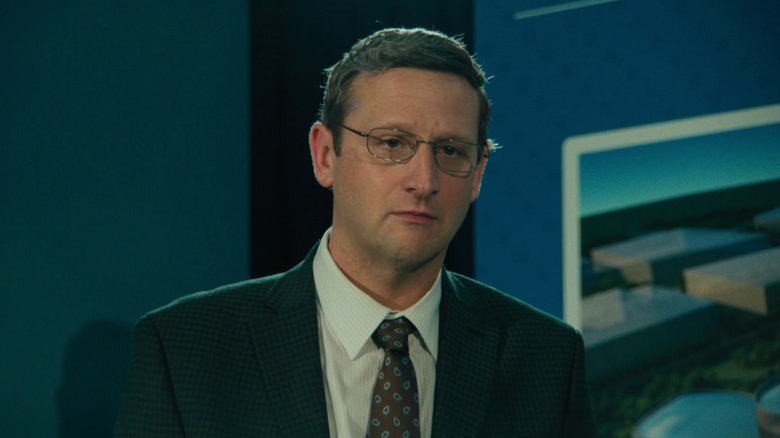
Created by Tim Robinson and Zach Kanin, "The Chair Company" is an HBO series that puts forth a fascinating proposition: Finessing the skin-crawling yet explosively funny cringe comedy that Robinson and Kanin became known for with "I Think You Should Leave with Tim Robinson," but this time combining it with earnest mystery and intrigue, in such a way that one tonal space counterintuitively augments and energizes the other.
To put it another way, "The Chair Company" is both one of the funniest and one of the most gripping TV shows of 2025, and, with Season 2 already a go at HBO, it's likely to get even wilder, more convention-defying, and more bizarrely addictive going forward. The eight-episode debut season follows Ron Trosper (Robinson), a project manager at a property development corporation, whose upward career curve gets tangled up when he turns his attention to Tecca, a mysterious chair manufacturing company. Puzzled by the company's opacity and the seeming impossibility of reaching out to it about a malfunctioning product, Ron becomes obsessed with figuring out the truth about Tecca, and uncovers a dense, far-reaching, and altogether preposterous conspiracy in the process.
While there isn't a lot of overt horror to be found on "The Chair Company," its silly-yet-serious navigation of paranoia thriller elements closely resembles the way "Widow's Bay" destabilizes its own darkness with comedy and vice-versa. Both are postmodern shows that understand the potential of a good laugh to first undercut, and then amplify, a stomach-churning escalation of despair; fittingly, both also share the directorial contribution of habitual Robbins collaborator Andrew DeYoung.
Deadloch
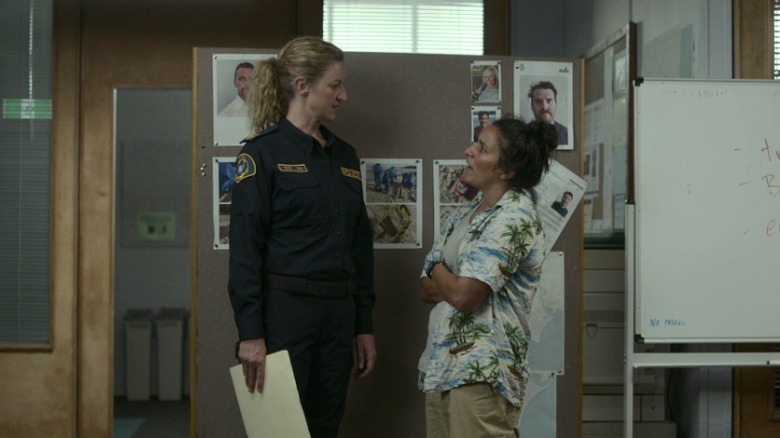
The Australian Prime Video series "Deadloch" does for the gritty crime procedural genre something akin to what "Widow's Bay" does for supernatural horror. Set in a tiny fictional town on the coast of Tasmania on Season 1, the Kate McCartney and Kate McLennan-created show outwardly plays into many of the conventions of moody murder-mystery thrillers situated in sleepy provincial communities — but it's all just an elaborate ploy to send up and subvert the genre as thoroughly as possible, while still taking advantage of its gut-punching capabilities.
The first season begins with the discovery of a body on the beach. An investigation into the murder of Trent Latham is thus opened, pitting the radically different styles of seasoned Senior Sergeant Dulcie Collins (Kate Box) and rebellious Darwin-dispatched Detective Eddie Radcliffe (Madeleine Sami) against each other. Their plunge into the simmering tensions of Deadloch unveils a chasm between the town's conservative longtime residents and its many recent lesbian arrivals — and that's just the tip of the iceberg when it comes to Deadloch's secrets.
Curt, proudly foul-mouthed, and consistently hilarious, the show hews to the same central philosophy as "Widow's Bay" — i.e. that no matters are severe enough, not even life-or-death ones, to be above the narrative defibrillation that can be supplied by a few well-placed laughs. And, on top of being an excellent black comedy series, "Deadloch" is also a first-rate crime thriller, laced with exactly the kind of genuine, well-wrought, intellectually stimulating intrigue that you'd want from any of the drearier shows it's mocking. And it retains both aptitudes in its move to Darwin in Season 2.