

15 Best TV Shows Like Young Sherlock
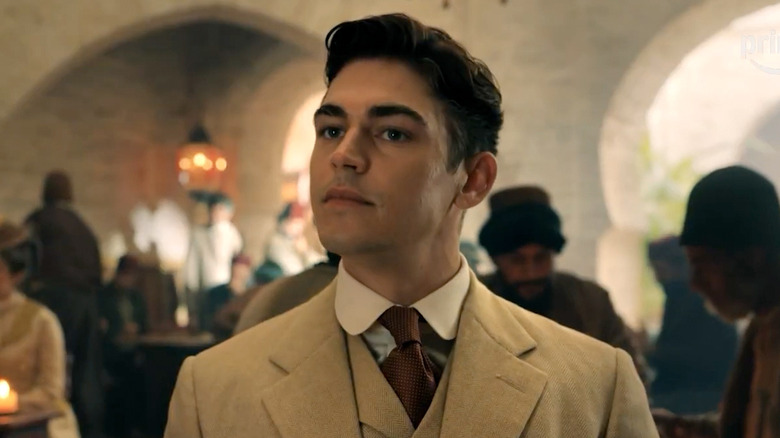
One of the most revived and remixed fictional characters of all time, it's safe to say that, for as long as television exists as a medium, every generation of viewers will get their own Sherlock Holmes. It remains to be seen whether or not Amazon Prime Video's "Young Sherlock" will prove to be the definitive adaptation for today's audiences — given the first season was streamed for over 670 million minutes in its first week, we'd say it has a fair shot.
It's an explosive, devious, and refreshingly free adaptation of Sir Arthur Conan Doyle's iconic detective novels that expands what a "Sherlock Holmes" story can be. We've taken this expansive quality to heart in this list. Rather than simply recommend the many popular "Sherlock Holmes" series out there for your next watch, we've included a slew of Victorian thrillers, period dramas with lively, modern presentations, and a few crime dramas with the same sleek style Guy Ritchie brought to "Young Sherlock."
Alias Grace
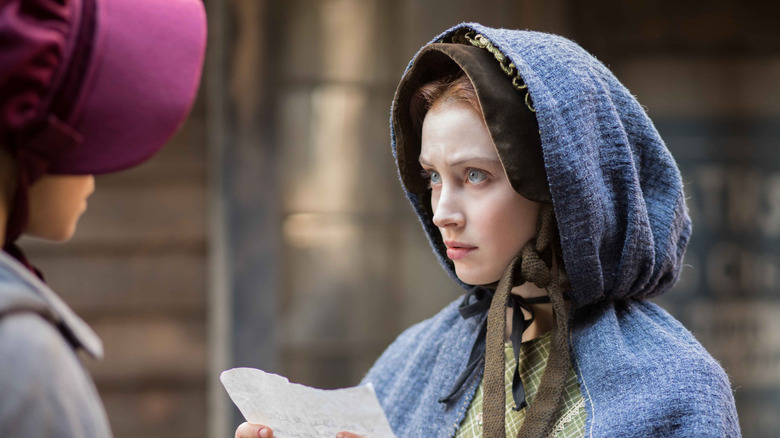
Modern incarnations of "Sherlock Holmes" have rarely portrayed the titular detective as a pure, law-abiding boy scout. "Young Sherlock Holmes" uses the character's immaturity to narratively justify a uniquely dangerous take. The series unravels through his own flawed perspective, the viewer left to determine the psychology of a young man emboldened to go to such lengths as he does to solve murders. The famous director Mary Harron captures a similar (yet more disturbing) mixture of wit, period drama, psychological complexity, and murder in the 2017 miniseries "Alias Grace," which is based on a true story.
Helmed by the "American Psycho" director and adapted from Margaret Atwood's 1996 novel by Oscar-winning "Women Talking" scribe Sarah Polley, this underseen period true crime thriller interrogates the controversial case of Grace Marks (Sarah Gadon). Marks was a real 19th-century housemaid convicted of killing her abusive employers. It keeps the viewer guessing until the last moment as to whether or not this woman — ostensibly an amnesiac resigned to a life of ignorance and captivity — really committed the crime. For "Young Sherlock" fans interested in another period mystery with a bit more edge than your average BBC program, "Alias Grace" will cut deep.
The Alienist
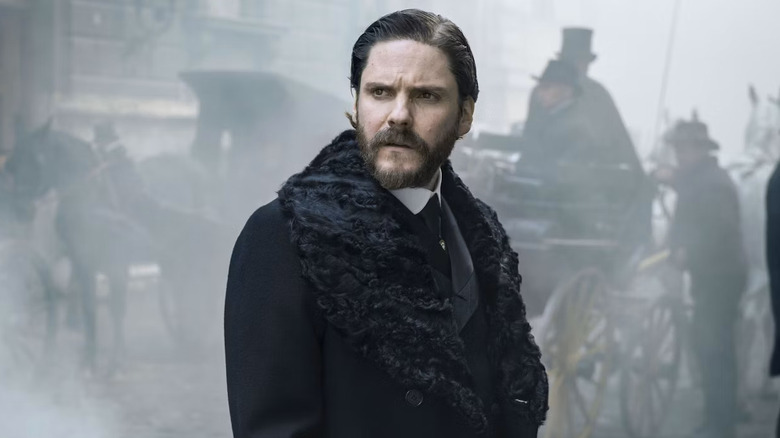
Like "Alias Grace" and "Young Sherlock," "The Alienist" was especially exceptional when it was released in 2018. It remains one of very few period mystery programs to breach the expected moral distance and embrace disturbing and visceral danger realistically associated with such gruesome subject matter. On the other hand, it was just as rare for a show aimed at the crime thriller audience to fold in elements of a historical drama, both aesthetically and narratively. "Young Sherlock" and "The Alienist" are distinct examples of why such genre combinations can hook an audience.
The all-star cast revolves around Daniel Brühl who plays an "alienist" — essentially treated, for the purposes of the series' plot, as a 19th-century criminal profiler. He's got the psychological complexity and edge of Holmes, alienated himself from his fellow New Yorkers with more socially acceptable careers. His personality is off-putting as well to say the least, his mannerisms similar to most versions of Holmes and characters like Will Graham from "Hannibal," for that matter. Few period crime thrillers have a protagonist as psychologically engrossing, a quality vital for viewers who've just spent several hours inside the head of the world's greatest detective.
Copper
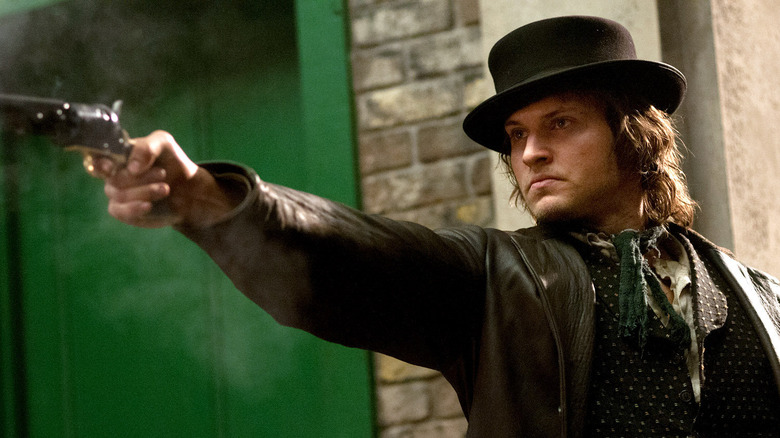
In the wake of the unprecedented transatlantic success of "Sherlock," BBC America set its sights on its first original scripted series. The balance they were likely aiming for is not unlike the one "Young Sherlock" achieves — the sophisticated period drama longtime BBC fans had come to expect, against the electric, pulpy sensibilities of American audiences. The result was "Copper."
Running for just two seasons before its cancellation in 2013, "Copper" is best pitched as America's take on the British period crime drama. Kevin "Corky" Corcoran (Tom Weston-Jones, who played a similar role in the underrated series "Warrior") is an Irish detective patrolling the Five Points neighborhood (a historically significant landing point for 19th-century immigrants in America) in Civil War-era New York City. Corcoran's unique status as both an immigrant himself and a person of authority is key. It allows the series to explore questions of class, race, institutional corruption, and justice in surprisingly nuanced ways, similar to "Young Sherlock."
Dracula (2020)
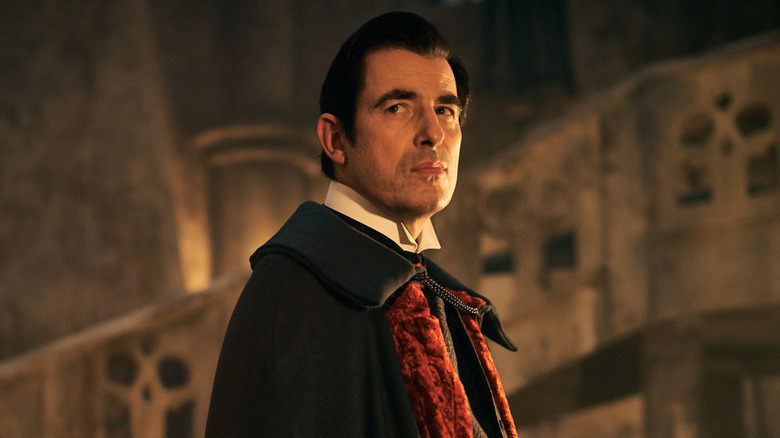
Speaking of "Sherlock," Mark Gatiss and Steven Moffat's 2010s adaptation is such an obvious and oversaturated choice as follow up to "Young Sherlock" that it hardly warrants discussion (its modern-day setting and internet-fluent writing might actually repel some fans, to be honest). That being said, the same creators teamed up for another adaptation of a classic Victorian literary character, resulting in a modern-feeling period thriller that strikes the same tone as "Young Sherlock." At least, for the first half of its runtime.
In the 2020 miniseries "Dracula" (a collaboration between Netflix and BBC One), "The Square" actor Claes Bang stars as the titular count. His entire life is reimagined as a streamlined moral and existential epic. Each of the three episodes concerns a pivotal chapter in Dracula's unnaturally long life — the series finale infamously deviates from the source mythology in a way that will register as either brave or deeply misguided. Without spoiling anything, we're willing to forgive the tonal swing as an attempt at elevating "Dracula" above countless previous TV adaptations by adding something new. It also ranks as one of the best gothic horror TV shows, without losing the necessarily liberal approach to the source material that "Young Sherlock" also adopted.
The Gentlemen
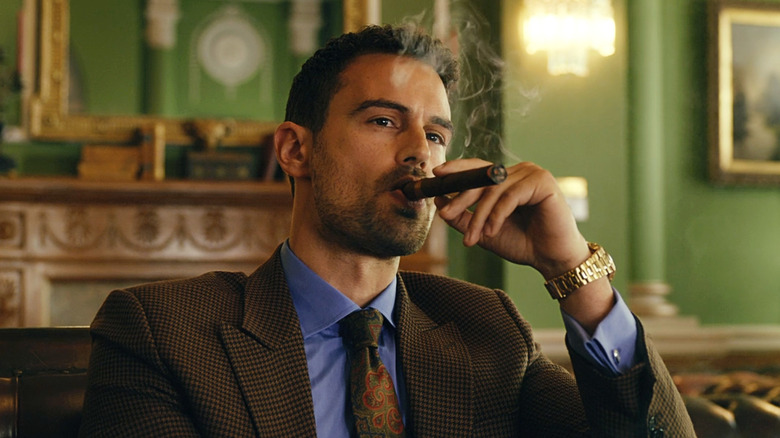
At first glance, "The Gentlemen" might appear to be an outlier on this list. It's no Victorian period drama — the Netflix series takes place in the present-day United Kingdom, wherein an eroding aristocracy has fallen prey to vulturous drug lords. But where it ditches the mystery elements of "Young Sherlock" for more explicitly criminal thrills, viewers will find the pacing, energy, humor, and visual style strikingly similar, owing to the shared creative DNA of creator-slash-producer-slash director Guy Ritchie.
Similar to "Young Sherlock," Netflix's "The Gentlemen" is a small-screen translation of a Ritchie flick, in this case the 2019 film "The Gentlemen." (In addition to developing "Young Sherlock," Ritchie helped establish the series' style by directing the first two episodes.) The series and the movie share a continuity and similar settings — illicit British cannabis empires, run by posh and untrustworthy criminal co-conspirators — though their stories can be enjoyed independently of one another. Theo James stars as an unlikely duke who unexpectedly inherits the title, the estate, and its role in a criminal underworld.
"The Gentlemen" was one of the most underrated shows of 2024 when it first premiered. As of this writing, we are eagerly awaiting the release of Season 2.
The Irregulars
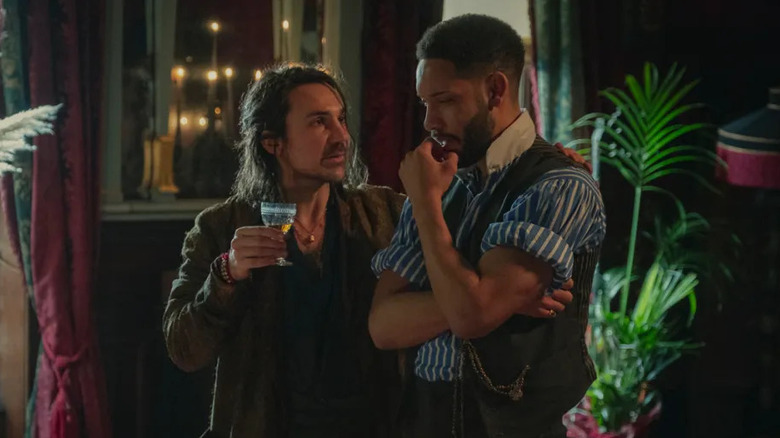
Also on Netflix is "The Irregulars," a Victorian crime drama that has the similar aim of "Young Sherlock" to examine the mythos, tropes, and mysteries of "Sherlock Holmes" through a younger point of view. Here, however, it isn't the titular detective who has been made younger — in fact, an older Holmes (Henry Lloyd-Hughes) only appears in a diminished capacity as a lost ghost of a bygone era. His legacy is carried on by a band of adolescents working under the influence of John Watson (Royce Pierreson) — and one of them kind of has super powers.
"The Irregulars" is an admittedly strange show, but it's also one of the most novel "Sherlock Holmes" riffs you're going to find out there apart from the bombastic "Young Sherlock." If you're a big enough fan of this character to entertain something like the Amazon Prime Video series, mixing in a few supernatural elements shouldn't be that much of a stretch. It isn't as fantastical as Joss Whedon's Victorian supernatural series "The Nevers," with the paranormal elements serving to enhance the atmosphere and stakes rather than transform "Sherlock Holmes" into something unrecognizable. By the time you finish the first season, you'll likely be disappointed Netflix declined to give it a second chance.
Jonathan Strange and Mr. Norrell
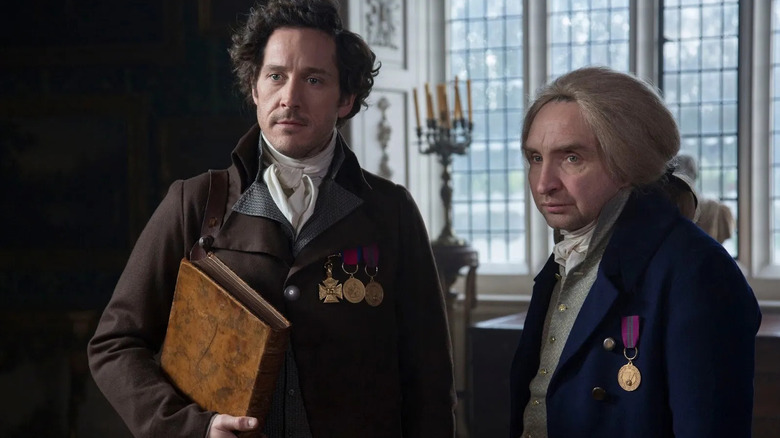
A decade before Peter Harness developed "Young Sherlock" with Guy Ritchie, the writer adapted Susanna Clarke's alternate history novel "Jonathan Strange and Mr. Norrell" for BBC America. Though it's set in 19th-century England, the period charm is reminiscent of "Young Sherlock" with regard to how the series balances historical accuracy and contemporary dramatic tastes.
Eddie Marsan (who readers might recognize as Inspector Lestrade from Ritchie's "Sherlock Holmes" films) stars as Gilbert Norrell. He's a publicly recognized magician whose extraordinary abilities are actually quite out of fashion in this version of history. Hoping to revive magic, Norell takes as an uneasy protégé the privileged and naturally talented Jonathan Strange (Bertie Carvel, who played both Tony Blair in "The Crown" and Baelor Targaryen in "A Knight of the Seven Kingdoms").
The curious relationship between the two characters is what makes "Jonathan Strange and Mr. Norrell" an appropriate follow-up for those who have finished "Young Sherlock," beyond the period setting and the Harness connection. From the start, there's a sense that, as much as they need and are drawn toward one another, their friendship is built on a fundamental misalignment that will reveal their true natures only when it's too late.
The Knick
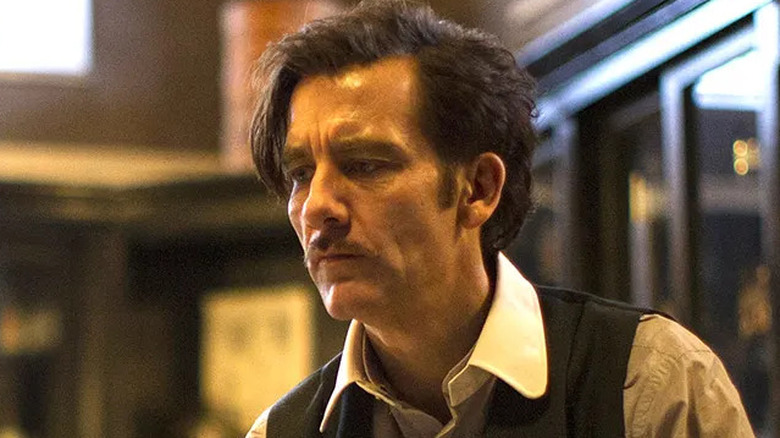
Kicking things up to the early 20th century, readers will find plenty to dissect in the oft-overlooked 2010s series "The Knick." Directed by Steven Soderbergh (fittingly one of Guy Ritchie's filmmaking contemporaries in the crime genre), this Cinemax period drama follows Dr. John Thackery, a brilliant but troubled surgeon fighting his own demons and the bounds of known medical science at the same time. It's kind of like "The Pitt," but with a greater sense of danger and way less sanitary precautions.
"Young Sherlock" and "The Knick" take only glances from the period drama's visual style guide, using only the most immersive elements while approaching every other dramatic aspect the genre customarily takes for granted (sound, camera movement, color, dialogue) to make that immersion total for a contemporary audience. And in the same way that "Young Sherlock" bends the conventions of the British mystery formula to do something more exciting, "The Knick" brings the best the medical drama has to offer as a genre while splicing in its own unique elements.
Miss Scarlet and the Duke
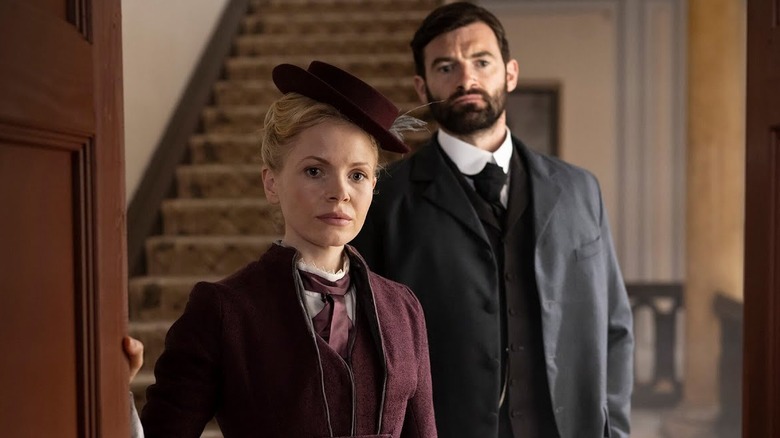
A huge part of the charm of "Young Sherlock" — and indeed most modern interpretations of the Sherlock Holmes character — is the idea that his genius exists as an unwanted yet undeniable force of nature within his universe. Despite being repelled by much of polite society and the police force that often relies on him, he fights for his place by working each case from the outside inward. That's exactly the spirit "Miss Scarlet and the Duke" captures, albeit from a slightly different point of view.
In this ongoing PBS period mystery drama, Eliza Scarlet ("Wolf Hall" alum Kate Phillips) is the first woman to open a detective agency in Victorian London. When the series begins, she effectively inherits the business from her father and must find alternative means of solving crimes in a time where gender defines access and opportunity. The "Duke" is Stuart Martin's William Wellington, an inspector who quickly comes to respect Eliza's knack for crimefighting. Their dynamic is totally Holmes-Watson coded, while her frequent partnership with charming career criminal Moses Valentine (Ansu Kabia) reveals the same flexible morality "Young Sherlock" delights in specifically.
Murdoch Mysteries
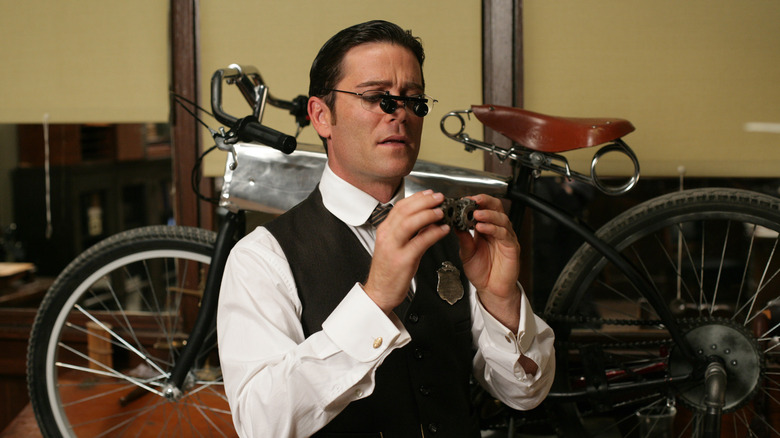
America and the U.K. have a long history of dominance in the period crime drama space. "Murdoch Mysteries" is the rare Canadian entry to break through the noise, thanks to its comforting tone, anachronistic twists, and unique take on the trope of the singular genius detective. And, as a bonus for "Sherlock Holmes" fans specifically, Sir Arthur Conan Doyle is actually featured in the series as one of the many historical figures the cast encounters, alongside Nikola Tesla, the Wright Brothers, and Harry Houdini.
Why would a show that deviates from history include such figures in its cast? Where "Young Sherlock" imagines a detective whose genius outgrows the bounds of his society, "Murdoch Mysteries" is about a detective whose genius outgrows the bounds of his time — a premise you can only execute by blending history and fiction intentionally. Yannick Bisson's William Murdoch is basically re-inventing forensic investigation through 19th-century first principles, with the writers using the advantage of broad, retroactive historical context to imagine how a genius might solve crimes with such foresight. It's an inventive way of making Murdoch a more credible genius than most Sherlocks out there.
Peaky Blinders
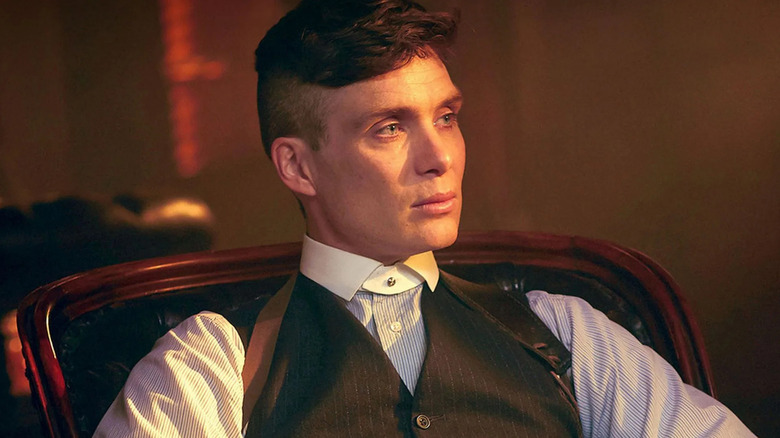
It's hard to imagine anyone — including the series' producers, developers, or creators — pitching "Young Sherlock" without name-checking "Peaky Blinders." Steven Knight's post-World War I crime thriller serves as a stylistic ancestor for "Young Sherlock" in several ways — namely, the use of contemporary music, the distinctly modern use of a period setting, the charm of morally grey characters bristling against the rich and powerful. (Knight is every bit a master in making this specific kind of period-punk story as Guy Ritchie, and is featured twice on this list as result.)
Though earlier shows (some of which are featured above) may have felt similar to "Peaky Blinders," none of them have the kind of cultural longevity and impact the Netflix series continues to enjoy. Over 10 years after the series premiered, it was beloved enough to warrant a sequel film good enough to entice the talents of recent Oscar-winner Cillian Murphy, who reprised his iconic antiheroic role Thomas Shelby.
Penny Dreadful
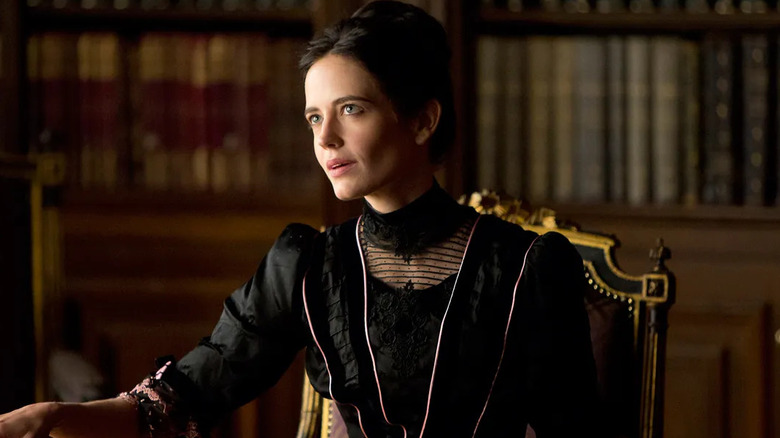
Why reimagine just one piece of classic Victorian IP when you can totally upend the entire canon? Throughout its brief life on Showtime, "Penny Dreadful" was tragically overshadowed by the far more accessible and crowd-pleasing "Once Upon a Time" on ABC. Both were built on the idea of throwing various public domain characters into a shared universe and premiered at a time when Marvel Studios had made such crossovers the universal agenda for production studios across the board.
"Penny Dreadful" always stood out, albeit quietly, for being far weirder and artistically exceptional than any project with superficially similar aims. It accomplishes the same feat as "Young Sherlock," showcasing a clear understanding of the characters and their history while employing enough narrative irreverence to create unexpected yet respectful twists. Despite being one of the best shows on Showtime throughout its run, "Penny Dreadful" is criminally underseen and underappreciated. If you enjoyed the world of "Young Sherlock" and have an appetite for something a little darker, this is the hidden gem you're looking for.
Ripper Street
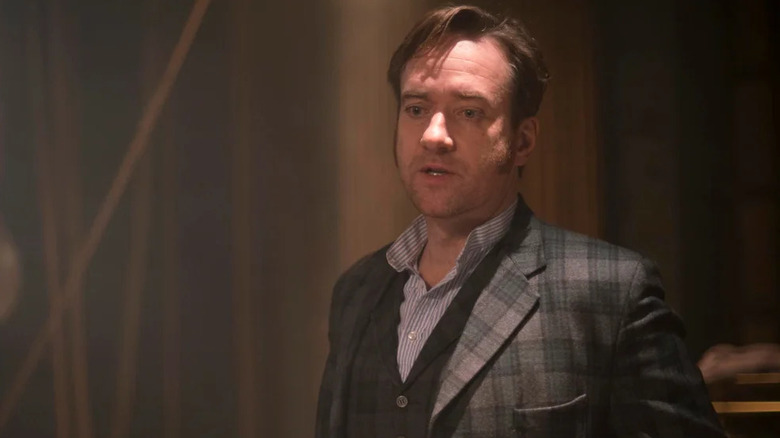
When "Ripper Street" first hit BBC One in 2012, it felt a lot like Guy Ritchie's "Sherlock Holmes." What it lacked in Robert Downey Jr.'s eccentric, amusing protagonist, it made up for in its grimy aesthetic, obsessive pace, kinetic and dramatic visual style, and gruesome subject matter. And that's not to say the series is missing talent or charisma at its heart — on the contrary, "Ripper Street" stars a pre-"Succession" Matthew Macfadyen, proving at the time that the "Pride and Prejudice" actor could bring a sense of danger and psychological complexity to the period drama as well.
Macfadyen plays real historical investigator Edmund Reid, a detective responsible for the Whitechapel district of London that Jack the Ripper terrorized in the 19th-century. "Ripper Street" picks up with Reid coming to terms with the fact that he failed to stop history's most notorious serial killer, and must now redeem himself by protecting the impoverished citizens of Whitechapel from danger at all personal costs. The series ran for five seasons before being canceled.
Taboo
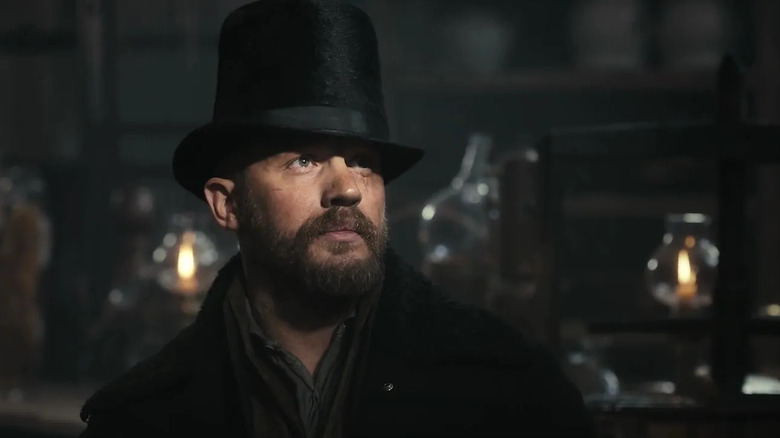
Created by Steven Knight, Tom Hardy, and the actor's father Chips Hardy, "Taboo" is strangely one of the lesser-known titles on this list by a wide margin. Maybe it just got lost in the "Peaky Blinders" of it all (Hardy recurred throughout the series), though it's also significantly darker and a little more brutal — which might be the perfect tonal register for specific fans of "Young Sherlock."
Specifically, "Taboo" takes way more seriously the moral ambiguity and the general theme of governmental conspiracy seen in "Young Sherlock." Hardy stars as James Delaney, an early 19th-century adventurer who essentially returns from the dead after the mysterious death of his father. Ruthless, persuasive, and deeply vengeful, he arrives at his father's funeral in London with the intent of taking on the invasive East India Trading Company.
The fate of "Taboo" was left in limbo after its first season. Given how busy Hardy will be with "MobLand," this series might remain a single, solid one-off for the foreseeable future.
Vienna Blood
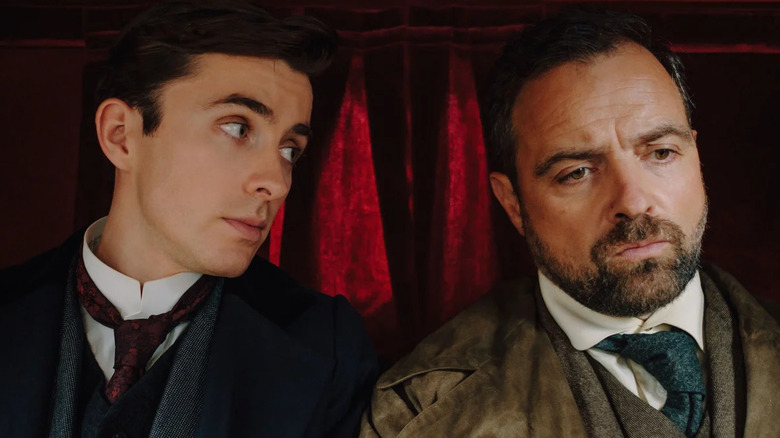
Finally, we'll bring our list to a close by highlighting one last underseen mystery drama for fans of "Young Sherlock" — the BBC procedural "Vienna Blood." Based on the detective novels of Frank Tallis, the series follows a young Freudian psychologist (Matthew Beard's Max Liebermann) who partners with Vienna police detectives to combine 20th-century forensic methods with the then-burgeoning world of criminal psychology. (The series is entirely written by Steve Thompson, who penned several episodes of BBC's "Sherlock," including the infamous Season 2 finale "The Reichenbach Fall.")
"Vienna Blood" offers a new version of the classic institutional might meets raw intellect dynamic that "Sherlock Holmes" fans have long enjoyed — though, here, psychoanalysis plays the role deduction normally would. Like "Young Sherlock," it's proof that, even when you remix the setting and characters dramatically, there's no beating the thrill of watching a brilliant, unproven mind working within a stagnant justice system.