

25 Best Sci-Fi TV Shows Ever Made, Ranked
Science fiction has always been an innovative genre, stretching the limits of human imagination to explore concepts such as time travel, extraterrestrial life, artificial intelligence, and alternate universes. However, well before the first-ever television was even invented, the best sci-fi always cared more about the present than the future. When science fiction is done right, it utilizes grandiose special effects and technological complexities to explore the human condition and the absurdity of modern life.
In television especially, sci-fi has been as prominent a genre as sitcoms or crime procedurals since the very beginning of the medium. Each era has been defined by its hit sci-fi series, not only acting as time capsules of the period in which they were made, but also prophecies about how humans and technology would continue to evolve over the next several decades.
These 25 shows not only span the history of television, but their stories also cover the entire spectrum of human experiences. There's science fiction that feels personal and grounded, as well as science fiction that feels relevant and meaningful. Whether comedic, dramatic, satirical, terrifying, nostalgic, or dystopian, these sci-fi shows aren't just some of the best of their genre — they're some of the best television shows ever made.
25. Outer Range
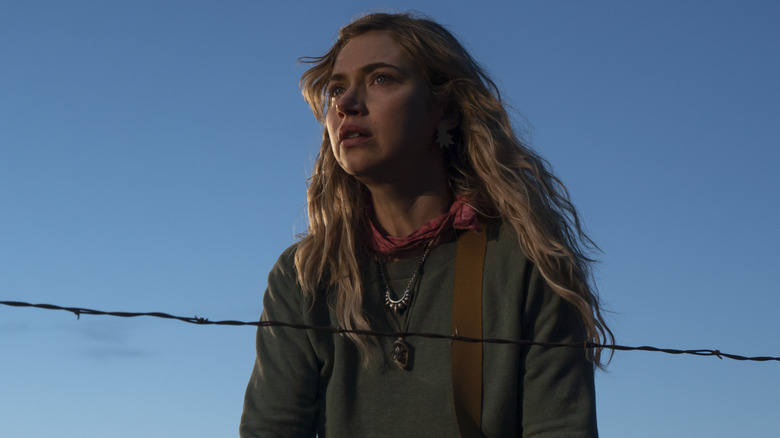
"Outer Range" may have only aired for two seasons before it was cancelled by Prime Video, but those two seasons feature some of the most transfixing visuals in all of sci-fi television. Josh Brolin stars as Royal Abbott, the owner of a Wyoming ranch who discovers an ominous black void on his property after being visited by Autumn (Imogen Poots), an enigmatic young woman.
From there, the series spirals into a pseudo-mystery regarding the disappearance of individuals into this void, including Royal's family, revealing deeper truths not only about themselves but about this strange Autumn. It's simultaneously a Western about cowboys controlling land as much as it is about what we still have yet to learn about the universe, brilliantly tying science fiction elements and tropes into its rural setting. However, it's not a breezy watch; the show can be notoriously slow and methodical at times, but it's all in service of something tonally unique in its genre.
Although it may be tempting to spoil all the sci-fi twists and turns that lurk underneath the surface of "Outer Range," even in the first episode alone, it'd ruin the fun of spending the entire runtime sitting on the edge of your seat. Between the outstanding directing and alluring performances from all involved, it's a shame Prime Video didn't maintain faith in the series' future to give it another season.
24. The Orville
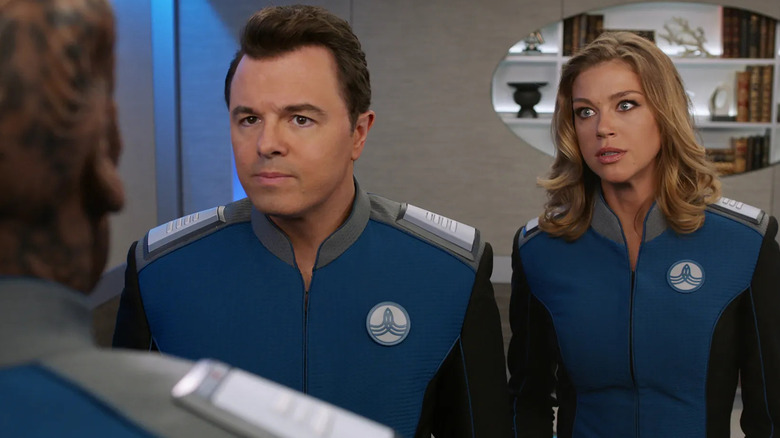
"The Orville" was a huge departure for Seth MacFarlane, best known for his contributions to adult animation. Not only was this his first live-action series, it was also his first foray into more dramatic territory. "The Orville" clearly takes its cues from the Star Trek franchise, focusing on the crew of the titular starship captained by the negligent Ed Mercer (MacFarlane), which includes Mercer's ex-wife Kelly (Adrianne Palicki) as his first officer.
As much as "The Orville" parodies the likes of serialized sci-fi shows like "Star Trek" or "Battlestar Galactica," it's a love letter at its heart, featuring some of the best character-driven narratives of MacFarlane's career. Despite critical disapproval of the first season and its tonal dissonance, it was renewed for both a second and third season, both of which won over critics through mature storytelling and thematic richness. Oh, and did we mention there's a Dolly Parton cameo in Season 3?
Conceptually, the show may have started as a pastiche of more influential science fiction on TV, but as the best episodes of "The Orville" proved, it was most successful when leaning toward homage rather than spoof. If anything, it's refreshing to see MacFarlane stretch his acting capabilities beyond voice acting, even if there are better performers in this show, like Palicki and Scott Grimes.
23. The Mandalorian
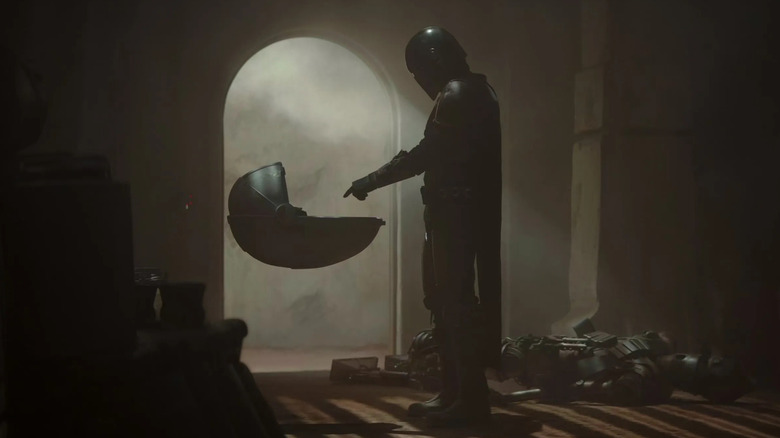
As the first live-action Star Wars series, "The Mandalorian" had a lot to live up to. Not only are animated shows like "Star Wars: The Clone Wars" and "Star Wars Rebels" beloved by fans, there's a cinematic quality to the Skywalker saga that is simply much tougher to capture on television compared to the big screen. However, creator and showrunner Jon Favreau didn't disappoint with his neo-Western following devout Mandalorian bounty hunter Din Djarin's (Pedro Pascal) adventures across the galaxy.
Depending on who you ask, "The Mandalorian" may be the best Star Wars TV show, capturing the adventurous, pulpy spirit of the original trilogy better than any animated series — or even the prequel and sequel trilogies. It may not always be perfect or consistent in quality, but at its best, it makes the galaxy far, far away feel more colorful and diverse than it's been in decades. However, as a Star Wars series, "The Mandalorian" can't help but stake its claim in the wider franchise lore.
Across its three-season run, not even including a feature film and spin-off series, "The Mandalorian" incorporates the aftermath of the original trilogy, featuring characters and plotlines from the animated series, and positioning Din Djarin as the savior of his fragmented people. Despite the fun to be had from isolated adventures, "The Mandalorian" misses the potential promised by its best episodes, which stray from the serialized narrative in favor of missions-of-the-week and epic monster fights.
22. Star Trek: The Original Series
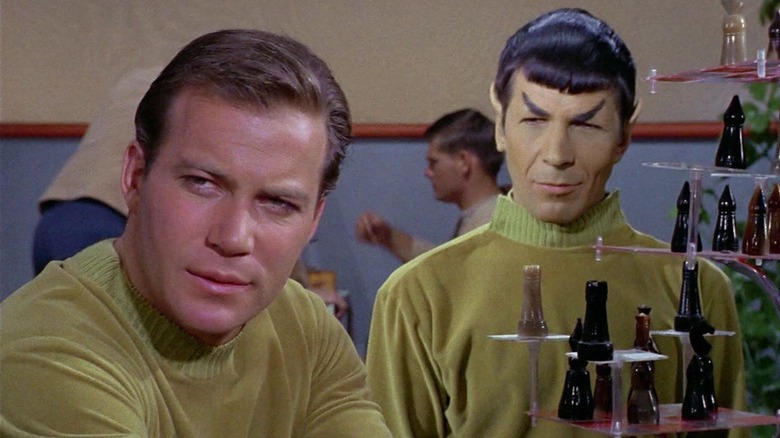
It was inevitable for "Star Trek: The Original Series" to show up on this list, considering it's not just a seminal work in science fiction but one of the most groundbreaking and influential television series ever made. Airing from 1966 to 1969, "Star Trek" follows the procedural adventures of the U.S.S. Enterprise, a galactic exploration unit led by human James T. Kirk (William Shatner), with a crew including lieutenant Spock (Leonard Nimoy), communications officer Uhura (Nichelle Nichols), chief medical officer Dr. McCoy (DeForest Kelley), helmsman Sulu (George Takei), and more.
Although "Star Trek" languished in obscurity during its original run, syndication slowly turned it into one of the most popular science fiction franchises ever made. Among countless spin-offs, feature films, and comic book adaptations, few entries in the Star Trek franchise have introduced characters as iconic or meaningful to fans as the likes of Kirk, Spock, Uhura, and the rest of the Enterprise crew. Rewatching the original series, it's clear that "Star Trek" shaped the sci-fi genre with its light-hearted episodic romps, but also holds up thanks to great usage of archetypes and dynamic storytelling.
There's a reason why we still get pastiches of the original Star Trek aesthetic, from the "U.S.S. McCallister" episode of "Black Mirror" to films like "Galaxy Quest." It's not just the futuristic inventiveness of warp speed, holograms, and teleportation, but the explorative energy that defined the late '60s that keeps this product of its time a product of all time.
21. For All Mankind
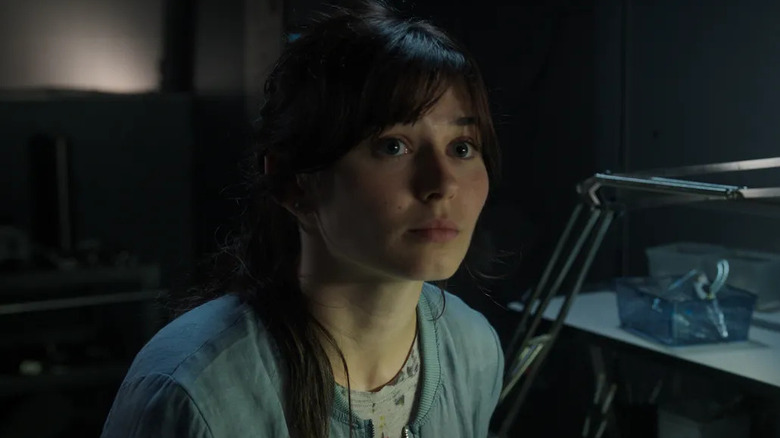
"For All Mankind" was always going to be a slow burn of a television show, but five seasons in, the slow burn has proven to be well worth the wait. The Apple TV sci-fi show takes place in an alternate history where the Soviet Union was the first to land on the moon in 1969. This forces a competitive United States to keep up, resulting in faster modernization, a lack of a climate crisis, and a quicker acceptance of civil rights as the decades progress.
The show spans the entire history of human development since 1969, with each season jumping 10 years into the future while retaining many of the same characters, including Joel Kinnaman's Ed Baldwin, Wrenn Schmidt's Margo Madison, and Jodi Balfour's Ellen Wilson. While the show may not always stick the landing with these huge time jumps and rotating casts, even in its fifth season, "For All Mankind" continues to employ strong actors to explore fascinating sci-fi concepts that, even in a utopian reality, resemble the strife of our actual present.
Although the upcoming sixth season of "For All Mankind" is set to end the series, the finished product will possibly be one of the most interesting sci-fi shows on television, examining a changing world through the lens of a massive ensemble cast of differing generations. At the very least, it's an easy show to recommend for non-sci-fi fans, too, due to how grounded and realistic it's stayed over its entire run.
20. The Man in the High Castle
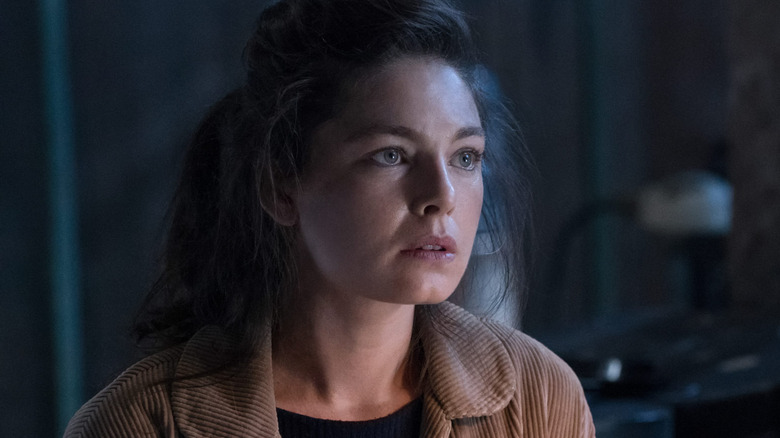
Sometimes, the most interesting science fiction doesn't peer into the future, but the past. "The Man in the High Castle" is set in 1962, in an alternate timeline where the Axis Powers won World War II. As a result, the United States is split into a Japanese-controlled West and a Nazi-controlled East, South, and Midwest. The series becomes science fiction through the story of Juliana Crain (Alexa Davalos), a young woman who uncovers a vast conspiracy involving footage depicting alternate worlds in which the United States won the war.
Since it's based on a novel by Philip K. Dick, "The Man in the High Castle" never skimps on detail in fleshing out this massively complicated and rich world. While simultaneously following Juliana's own awakening as a revolutionary, the show follows Rufus Sewell's Nazi commander John Smith, who investigates the New York-based Resistance, despite his American heritage. Both characters, who don't even meet on-screen until the second season, ground the show as foils on opposite sides of a divided country, anchored by outstanding performances from Davalos and Sewell.
As one of the best alternate history TV shows of all time, "The Man in the High Castle" is rather light on typical sci-fi tropes. However, with a fascinating premise and incredible supporting cast to keep you invested, by the time you get to the point in the show that involves hopping across the multiverse, you're as invested in the resistance as the characters.
19. Doctor Who
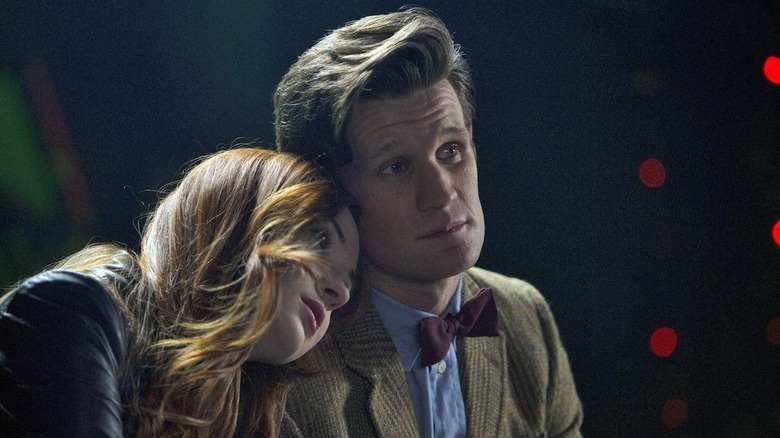
"Doctor Who" is a difficult show to recommend, even for hardcore science fiction fans, given it's been on TV for over 60 years and has amassed approximately 1,000 episodes in total. For the sake of the argument, however, we'll focus on the revival that began in 2005 with Christopher Eccleston and has continued into the present with several actors inheriting the title of the Doctor: David Tennant, Matt Smith, Peter Capaldi, Jodie Whittaker, Ncuti Gatwa, and (most recently) Billie Piper.
For people living under a rock who aren't familiar with the series' premise, the Doctor is an extraterrestrial being who navigates time and space in the covert TARDIS, frequently encountering monsters and villains that plague the universe with the help of human companions. Although these adventures sometimes cross genres into historical fiction and horror, each actor who plays the Doctor brings their own spin, making any approach to a time period feel unique. However, those fluctuations can also mean that certain takes on the Doctor or storylines fall flat with fans.
Although its current status is in limbo after the canceled Christmas special and Russell T. Davies' exit, "Doctor Who" will always be well regarded by fans for its high highs, not its low lows. Simply put, the show is as influential to science fiction in British television as "Star Trek" was for American audiences, and as is the case with most procedural adventure shows, its best moments are isolated episodes, not season-long arcs.
18. Mrs. Davis
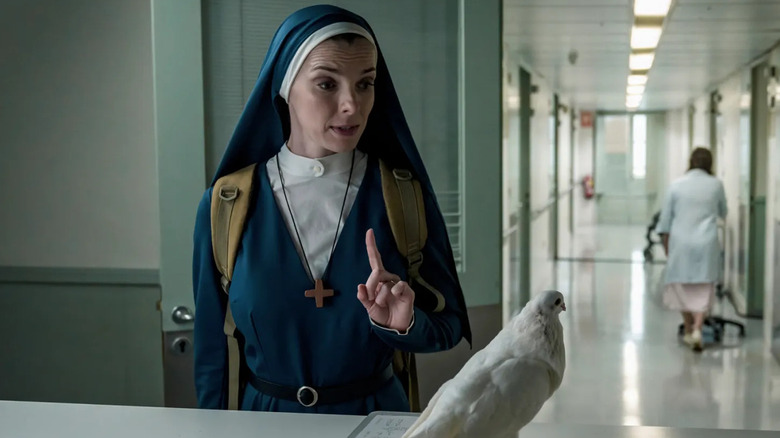
Although it only ran for one season on Peacock, "Mrs. Davis" is one of the most prescient science fiction series in recent years. Betty Gilpin stars as Sister Simone, a nun living her life in opposition to an omnipotent artificial intelligence known as Mrs. Davis. Simone goes on a mission to find the Holy Grail in an effort to force the malevolent A.I. to destroy itself. The show is as much a satire of modern-day technology as it is an indictment of religious fundamentalism, consumerism, and politics, resulting in a show that's as meaningful as it is genre-bending fun.
At the center of it all is a brilliantly layered performance from Gilpin, who has been putting in the work as one of the best TV character actors of all time. "Mrs. Davis" is among her best work, giving her the perfect vehicle for comedic weirdness, punchy action, and a gripping message about the lengths people will go to surrender their own individuality and freedom for artificial intelligence. Had this unique and thrilling show come out just a few years after its initial release, it might've completely captured the cultural zeitgeist.
With only eight episodes total, "Mrs. Davis" is among the more underrated shows of the streaming era, combining comedy, sci-fi, fantasy, and religious horror all in one series. Hopefully, there's a renaissance to be had as sci-fi fans rediscover it.
17. Severance
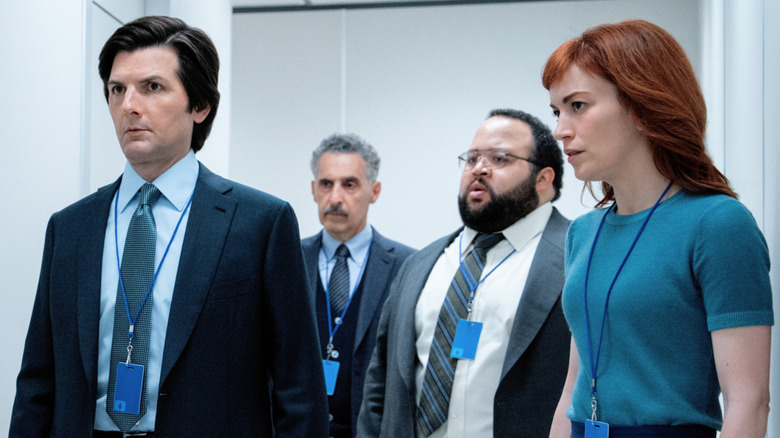
Apple TV's "Severance" evokes 2000s sci-fi television, keeping fans hooked on a mystery-box narrative that only pays off if you pay attention to the tiniest details. It centers on four employees at the enigmatic Lumon Industries, who have all undergone a medical procedure that separates their consciousness at work from their outside life. As a result, all that Mark S. (Adam Scott), Helly R. (Britt Lower), Dylan G. (Zach Cherry), and Irving B. (John Turturro) know are the halls of their offices, while Mark's "outie" persona begins to uncover a vast conspiracy regarding Lumon's true practices.
The first season of "Severance" is near-perfect television, building towards a truly gripping climax as the Lumon employees slowly awaken to the nightmarish purgatory they're accustomed to and begin to revolt against their superiors. There are plenty of twists and turns that made the wait for Season 2 grueling for fans, even if the list of burning questions going into Season 3 has grown. But even at its worst, "Severance" features outstanding performances, fascinating explorations of how humans process trauma, and the kind of mystery-box storytelling that hasn't captured the TV zeitgeist for over a decade.
Though you might end up waiting a long time for the next season, the episodes of "Severance" that already aired are among the best sci-fi on TV. It's the type of show where you can't see what's coming next, thanks to a beautifully crafted visual language courtesy of creator Dan Erickson and director Ben Stiller.
16. Loki
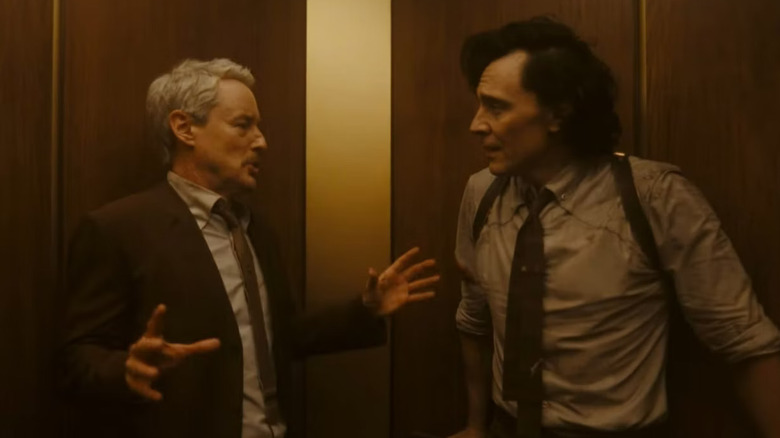
Say what you want about Marvel's foray into long-form storytelling on Disney+, but the effort has produced some of the best projects in the entire Marvel Cinematic Universe. A prime example is "Loki," a series that explores the consequences of Loki's (Tom Hiddleston) escape from captivity during the events of "Avengers: Endgame." He's quickly captured by the Time Variance Authority, a bureaucratic police force outside space and time that maintains order in the Sacred Timeline and recruits the trickster god to help them chase a rogue variant of himself, Sylvie (Sophia Di Martino).
Though much of the series sets up larger stakes for the MCU's divisive Multiverse Saga, the core story of "Loki" is a beautiful exploration of morality and free will. Although Hiddleston had been playing the role for nearly a decade when the first season of "Loki" was released, both seasons contain some of his best moments as the character, especially when paired with TVA agent Mobius (Owen Wilson). In the span of only a few episodes, you get outstanding character development for one of Marvel's best villains, awe-inspiring cinematic set pieces (like the climax of "Lamentis"), and massive twists that alter the course of the MCU without feeling meaningless for non-fans.
Ultimately, the questions posed by this series regarding A.I. and autocracy are especially resonant in the current political climate. Of all the Marvel TV to rewatch before seeing "Avengers: Doomsday," odds are, "Loki" is going to be one of the most important.
15. Sense8
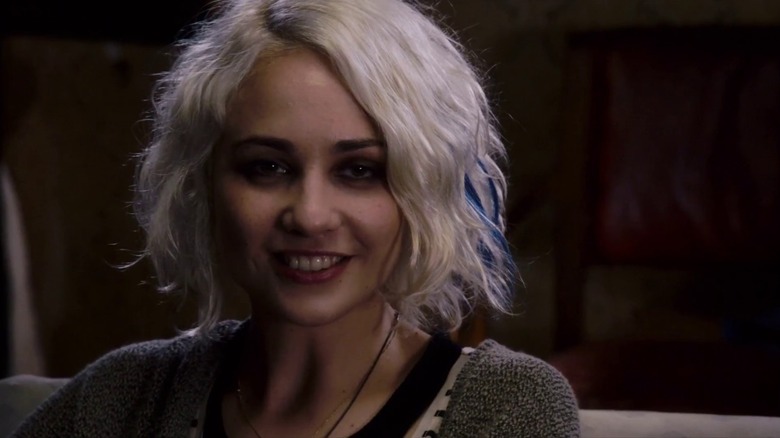
"Sense8" might be one of the most underrated sci-fi shows of all time, especially knowing it was created, written, and directed by the Wachowski sisters, who completely changed the sci-fi genre as we know it with "The Matrix." "Sense8" combines science fiction, action, and dystopian drama to tell a story about eight strangers across the globe who are psychically linked, causing them to be hunted by an organization determined to eradicate humans with heightened senses.
What makes "Sense8" such an engaging show is how each of those eight strangers is uniquely fascinating and worthy of their own solo series: Korean kickboxer Sun (Doona Bae), Kenyan taxi driver Van Damme (Aml Ameen), Icelandic DJ Riley (Tuppence Middleton), Mexican movie star Lito (Miguel Ángel Silvestre), trans hacktivist Nomi (Jamie Clayton), troubled police officer Will (Brian J. Smith), Indian pharmacist Kala (Tina Desai), and German criminal Wolfgang (Max Riemelt) all make for gripping characters to follow individually. Once they're altogether, however, the show never loses sight of making them all feel equally important.
Though the series was a critical and ratings hit for Netflix, the streamer unfortunately put an abrupt end to it after the second season. That is, until fan outcry convinced them to revive it for a feature-length finale. Thankfully, this only further proved how one-of-a-kind this show was by not only capping the arcs of eight different characters but also containing some of the best action directing in the Wachowskis' iconic career.
14. Pluribus
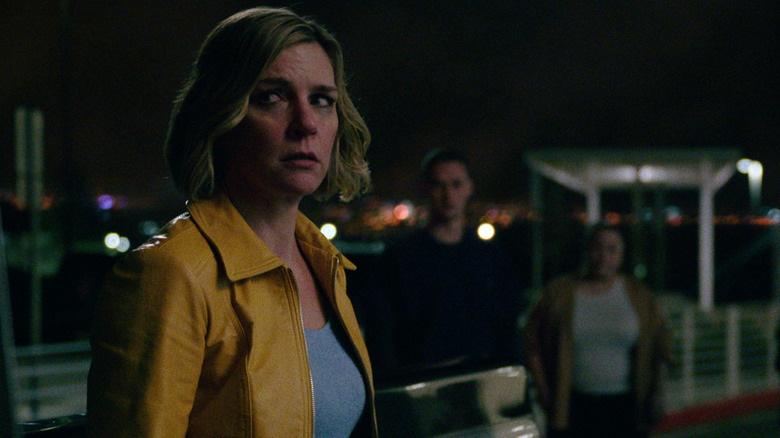
"Pluribus" may seem like a huge departure for Vince Gilligan, until you remember that the "Breaking Bad" and "Better Call Saul" creator cut his teeth as a writer and director on "The X-Files" in the '90s. The Apple TV show, having only aired one season thus far, makes a strong case as one of the most thematically rich and thrilling science fiction shows on television. Though some criticized its slow pace, that methodical approach to storytelling is among Gilligan's greatest strengths as a showrunner, and it pays off in dividends by the end of Season 1.
"Pluribus" centers on Rhea Seehorn as Carol Sturka, a misanthropic romantasy novelist who mysteriously ends up immune to an extraterrestrial virus that assimilates everyone on Earth into a mild-mannered, benevolent hive mind. Along with 11 other survivors, Carol not only must adapt to this post-apocalyptic scenario, but also covertly work to reverse their enslavement of mankind as the "Others" speedily figure out how to get her to join them.
Gilligan's defiantly weird sci-fi tale isn't just deftly written and gorgeously shot, but hinges on a brilliant performance from Seehorn, who spends numerous episodes completely carrying it all by herself. Like "Severance," we may be waiting a while for a Season 2 to drop, but even as it stands, the nine episodes that have already aired make most modern television pale in comparison.
13. Silo
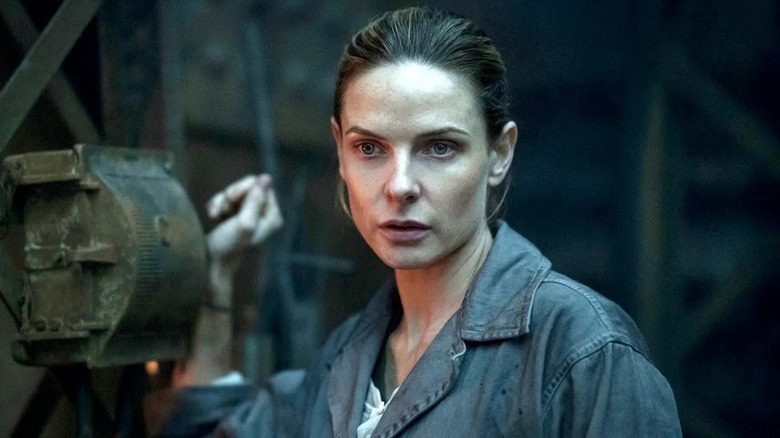
Among the impressive roster of science fiction on Apple TV is one of the platform's best shows in years: "Silo." Based on a trilogy of novels by Hugh Howey, "Silo" is set in a dystopian future where humanity has retreated into a vast, segregated underground silo. Rebecca Ferguson plays Juliette, an engineer in one of the lower levels who begins to uncover the mystery of how humanity ended up there, sparking a class revolt when they discover the outside is not as inhabitable as they thought.
With a sprawling scale and a tremendously powerful ensemble cast including Tim Robbins, Harriet Walter, and Jessica Henwick, "Silo" has spent most of its run on Apple TV becoming must-watch television for any sci-fi fanatic. Ferguson's star turn is long overdue, obviously, but the entire cast helps make even the most mundane scenes feel just as thrilling as the show's more action-packed climaxes. Though it feels similar in DNA to shows like "Fallout" or "Snowpiercer," "Silo" resonates better as a series due to the intriguing mysteries that have kept audiences hooked for three seasons thus far.
Season 4 of "Silo" might be a year away at this point, but the show's steady release every year has been a rarity in modern television. Even if you have yet to get on the hype train for this series, by the time it ends, we might be ranking it high among the best sci-fi series of the 2020s.
12. Firefly
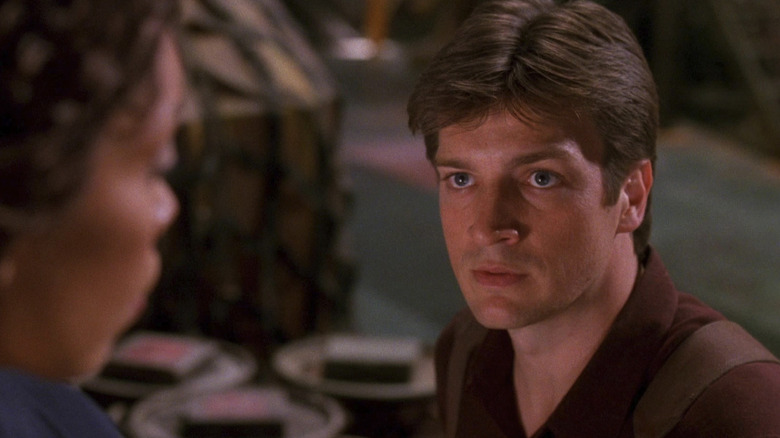
Of all the television shows that have sparked fan outcry over their cancellation throughout the medium's history, "Firefly" remains the most relevant for a good reason. The Fox series centers on the crew and passengers of a spaceship known as Serenity, helmed by rebellious captain Malcolm (Nathan Fillion), loyal officer Zoë (Gina Torres), pragmatic pilot Hoban (Alan Tudyk), and devout Companion Inara (Morena Baccarin). Their adventures across the galaxy make up all 14 episodes of "Firefly," as they navigate a universe torn apart by civil war and inhospitable tensions.
This short selection of episodes showcases sharp, politically conscious writing by merging a familiar sci-fi setting with Western tropes nearly two decades before "The Mandalorian." It's like a cross between the camaraderie that defined "Star Trek" and the complex, morally gray characters of "The Magnificent Seven." Its blend of large-scale world-building with small-scale story arcs and themes sets it apart from other science fiction of the early 2000s, notably having a massive impact on future sci-fi TV series and their appeal to cult fanbases.
Sadly, "Firefly" was a major ratings disappointment compared to creator Joss Whedon's other hit series, "Buffy the Vampire Slayer." The show's success also wasn't helped by Fox deliberately airing the season out of order, so by the time "Firefly" was canceled, it felt like the network hadn't even given the sci-fi series a fair shot with audiences.
11. The Expanse
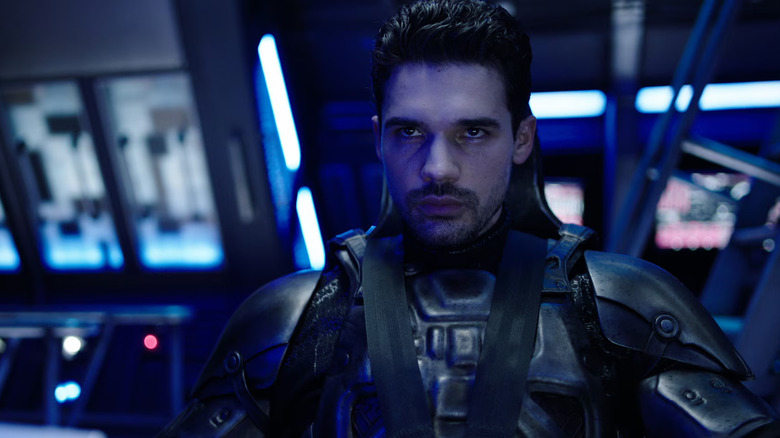
Compared to other shows on this list, "The Expanse" is lucky to have gotten a second chance after its initial cancellation. The science fiction drama is set in a conquered Solar System, whose peace is threatened by the discovery of the United Nations' destruction of industrial spaceships by the crew of a Martian police vessel. Among that crew are captain James Holden (Steven Strait), engineer Naomi Nagata (Dominique Tipper), pilot Alex Kamal (Cas Anvar), detective Joe Miller (Thomas Jane), and mechanic Amos Burton (Wes Chatham).
Trading the pulpy, Western edge of "Firefly" for a grittier, detective noir tone sets "The Expanse" apart from most science fiction of the 2010s. Paired with rich galactic visuals and incredibly intricate character arcs, the show especially appeals to fans of the more accurate and niche hard science fiction genre, without losing all the spectacle that makes us love shows like this so much. As distant as its future feels, keeping things so grounded in real scientific logic only influences how realistic all the characters feel.
After initially airing on Syfy for three seasons, "The Expanse" was canceled but thankfully picked up for an additional three seasons by Prime Video. It may have never been an Emmy darling or massive ratings hit, but fans of science fiction will attest it's one of the best TV shows set in space.
10. Stranger Things
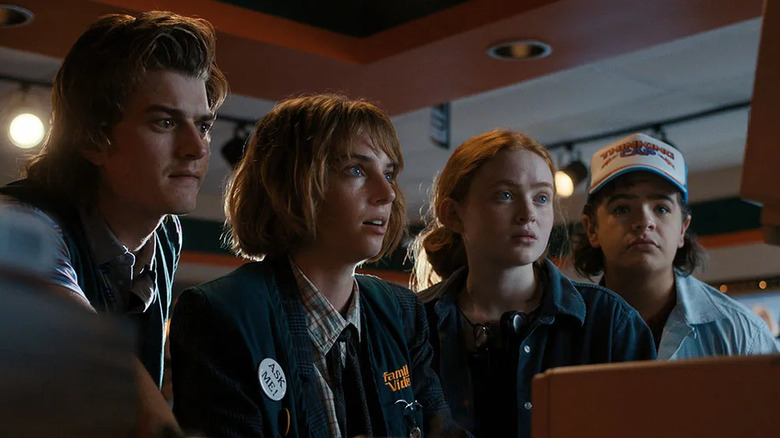
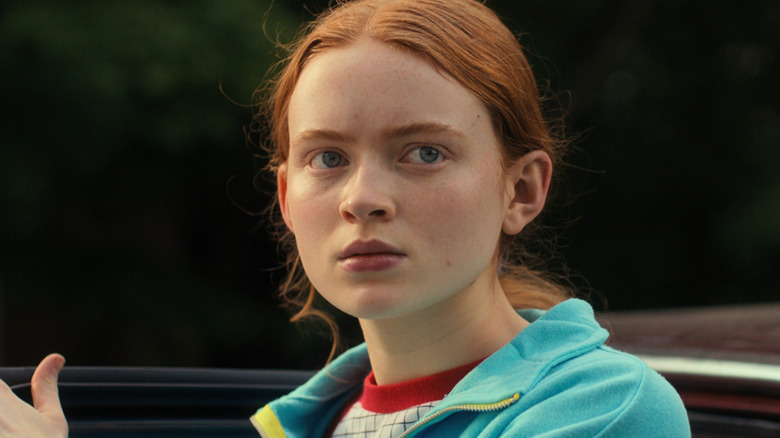
Having a fondness for the characters of Hawkins, Indiana, has gotten a lot more controversial following the question-inducing series finale of "Stranger Things." Love it or hate it, it can't be denied that "Stranger Things" captured the mainstream zeitgeist for good reason: It brilliantly weaves sci-fi pastiche, '80s aesthetics, and horror homages into a beautiful coming-of-age story featuring incredibly lovable characters. Whether it's the complex growth of Mike Wheeler (Finn Wolfhard) and Max Mayfield (Sadie Sink), the stunted adulthood of Joyce Byers (Winona Ryder) and Jim Hopper (David Harbour), or the teenage angst of Robin Buckley (Maya Hawke) and Steve Harrington (Joe Keery), the genre-bending of "Stranger Things" always played second fiddle to its stellar character development.
The primary narrative of "Stranger Things" involves how the close-knit outsiders of this small Midwestern town navigate the emergence of monsters coming from the Upside Down, an alternate dimension created after covert scientific experiments pushed a young girl with telekinetic powers, Eleven (Millie Bobby Brown), to her limits. Each season deftly juggles its ensemble cast without ever feeling too overstuffed, forging some of the best character dynamics in modern TV that survive even the show's most ridiculous or contrived plot movements.
Namely, "Stranger Things" earns its spot in the top 10 of this list on the strength of its unique first season alone. While the quality fluctuates in the subsequent four seasons, episodes like "Dear Billy" and "The Wizard" are among the series' highlights visually, narratively, and of course, tonally.
9. Futurama
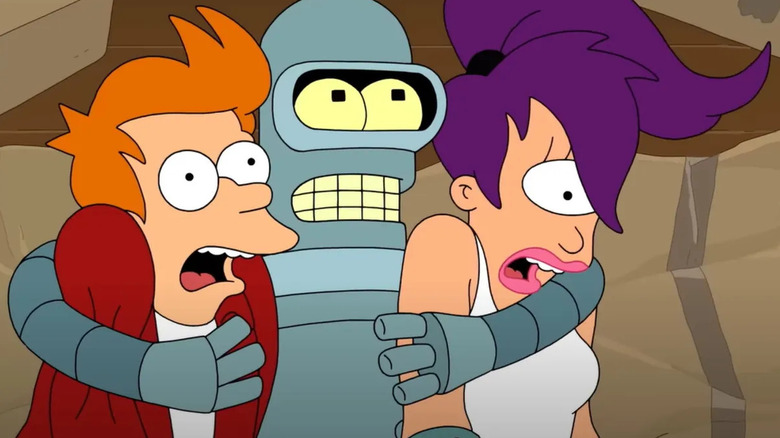
Matt Groening may be most renowned for creating "The Simpsons," but for some fans of adult animation, "Futurama" is the better sitcom. The sci-fi satire premiered in 1999, following the crew of an interplanetary delivery service, Planet Express, including cryogenically frozen pizza boy Philip J. Fry (Billy West), captain Turanga Leela (Katey Sagal), and belligerent robot Bender (John DiMaggio), among others. Though it has been canceled and revived numerous times in the past 27 years, "Futurama" has recently had a renewed life on Hulu for four seasons so far.
Though "Futurama" has never been a cultural centerpiece like "The Simpsons," its cult status has been what's kept the show alive. As much as "Futurama" tonally and comedically explores the weirdness of science fiction tropes, its satire also covers real-life political and social issues like late-stage capitalism, climate change, and nuclear armageddon. At the same time, the show eschews its futuristic setting to comment on hot-button moments like the release of the iPhone and the controversies regarding transgender athletes.
The best "Futurama" episodes, which often feature the characters confronting absurd sci-fi threats in a painfully mundane world, notably get way more prolific and deep about the human experience than you'd expect from an adult animated show before "BoJack Horseman." In that regard, "Futurama" is thousands of years ahead of its time in more ways than one.
8. Lost
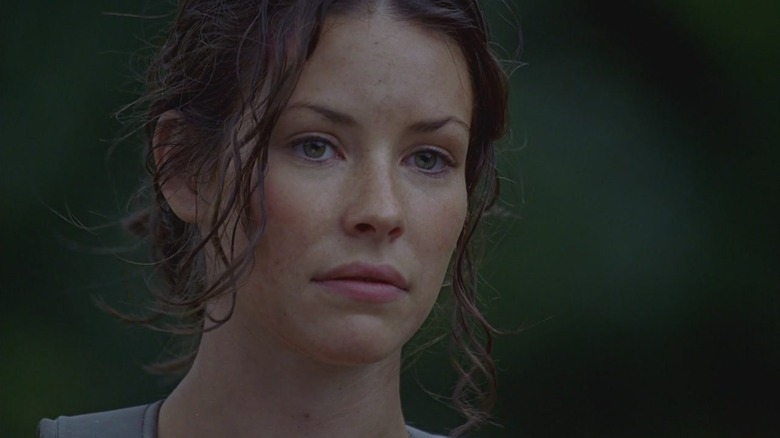
Every episode of "Lost" was must-watch television during its prime in the mid-2000s, fueling six seasons' worth of water cooler conversations and online speculation. Created by J.J. Abrams, Damon Lindelof, and Jeffrey Lieber, "Lost" follows the passengers on a commercial flight who crash-land on a remote island plagued by unknown entities and an increasingly complicated mystery about its origins and inhabitants. Not all of the mysteries revealed by the series finale of "Lost" satisfied its massive audience, but for this show, it's more about the journey than the destination.
Some of the biggest mysteries that enticed fans episode to episode include the identity of the evil Smoke Monster, the anachronistic fauna, and the non-linear storytelling. If you're desperate for a neat, tied-up plot, "Lost" is not the show for you, but for science fiction fans, it has been among the most influential television series of the 21st century. To this day, we remember where we were when we first watched the show's biggest plot twists, such as in the first season, when John Locke (Terry O'Quinn) was revealed to be paralyzed before the events of the pilot.
That being said, the science fiction aspects of "Lost" are not entirely obvious until you delve deeper into the mythology behind the series. Though popular fan theories suggested the characters were living in a simulation or being influenced by extraterrestrial life, the show's actual themes involved time travel, parallel universes, and corrupt scientific researchers.
7. The X-Files
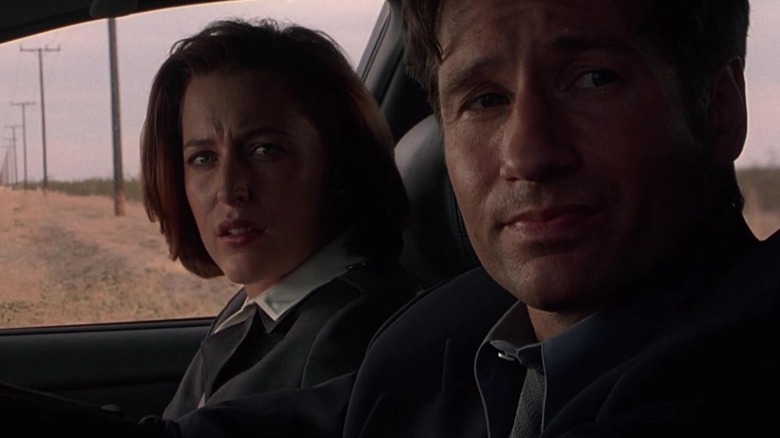
In terms of television premises, it's hard to find a flaw in the concept of "The X-Files": Two FBI agents, one a skeptic and the other a conspiracy theorist, investigate cases-of-the-week involving paranormal activity, extraterrestrial contact, and supernatural phenomena. As endlessly rewatchable as that premise is, "The X-Files" succeeds mainly due to the performances and chemistry of its leads, Dana Scully (Gillian Anderson) and Fox Mulder (David Duchovny), whose tension as personality opposites and, eventually, romantic partners complicates their ability to explore the truth behind America's most unsolvable cases.
Tonally, "The X-Files" balances many genres. Some of the creepiest episodes of "The X-Files" border on straight-up horror, while others take a more comedic approach to pitting its FBI agents against silly monsters or uncanny misunderstandings. Different eras of the show have even differed vastly in style; hardcore science fiction fans are enthralled by early seasons, while newer seasons feature Mulder and Scully in soapier storylines dependent more on grounded, interpersonal drama.
Whether the threats Mulder and Scully face are real or not, "The X-Files" always takes an interesting approach by investigating the ordinary as intricately as it investigates the extraordinary. Sometimes, the real supernatural phenomenon is how human beings behave, not the existence of folkloric creatures or aliens.
6. Star Trek: The Next Generation
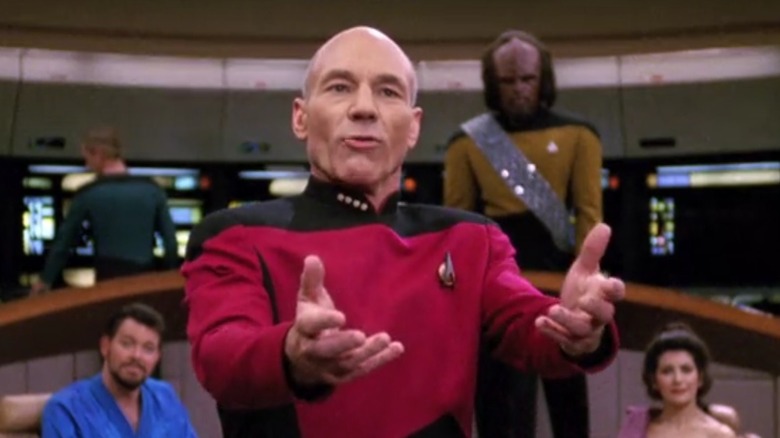
It's always an impossible task for a spin-off series to surpass its original in quality, but not if that spin-off series is "Star Trek: The Next Generation." Premiering over two decades after the original series, "The Next Generation" focuses on a new Enterprise crew. In place of the rebellious, womanizing Captain Kirk, the distinguished Captain Picard (Patrick Stewart) leads them to where no man has gone before. The stark contrast between Picard and Kirk makes all the difference in establishing "The Next Generation" as the older, wiser, and more mature of the two Star Trek series.
Outside of its relevance to the wider franchise, "The Next Generation" is also a far superior science fiction series than the original "Star Trek." The characters are less two-dimensional than in the previous series, evidenced mostly by the near-Shakespearean gravitas of Picard. Additionally, episodes like "Yesterday's Enterprise" and "I, Borg" are far darker in tone than the rest of the franchise, dealing with more complex philosophical topics such as economic struggle, temporal displacement, and political corruption.
As one of the biggest shows of the 1980s, "The Next Generation" is the reason why Star Trek evolved past its original series and produced countless spin-offs afterward. Many of those spin-offs include tie-ins to "The Next Generation" itself, such as the sequel show "Picard," but all those series prove that "The Next Generation" was canceled too soon for one of the most original and influential sci-fi series on TV.
5. Counterpart
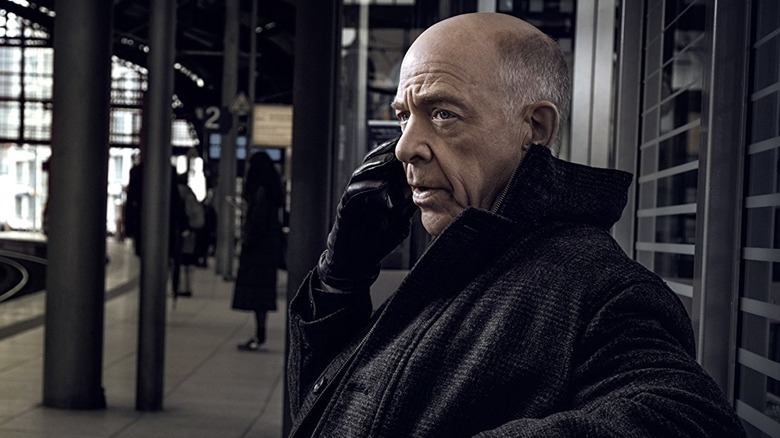
There's only one thing better than a sci-fi series starring J.K. Simmons: a sci-fi series starring two J.K. Simmonses. Before Starz cancelled "Counterpart" prematurely, it was one of the 2010s' most thrilling science fiction series, building an incredibly intricate world in only two seasons. Simmons stars as Howard Silk, a United Nations employee who helps oversee a checkpoint between two parallel universes known as "Alpha" Earth and "Prime" Earth. When a rebellion kicks off between the Earths, Alpha Silk finds himself in the midst of the conflict, given the ruthless importance of his doppelgänger to the multiversal cold war.
Though on the surface, "Counterpart" functions as a vehicle for Simmons to showcase his acting chops opposite himself, the show also feels surprisingly relevant even though it was released back in 2017 and 2018. The aftermath of a pandemic on Earth Prime spiraling into a tense environment feels incredibly prescient, while the series' other themes of global terrorism, identity, and political bureaucracy are much more resonant for a post-COVID audience.
Whether you're a fan of science fiction that toys with the idea of the multiverse, or simply just want to see Simmons act circles around his fellow cast members, there's something refreshingly simple about this two-season-long espionage thriller with a sci-fi twist. While it may not have had the legacy or decades-long runs as other shows on this list, "Counterpart" is among the most successful sci-fi television series in terms of executing on its premise.
4. The Twilight Zone
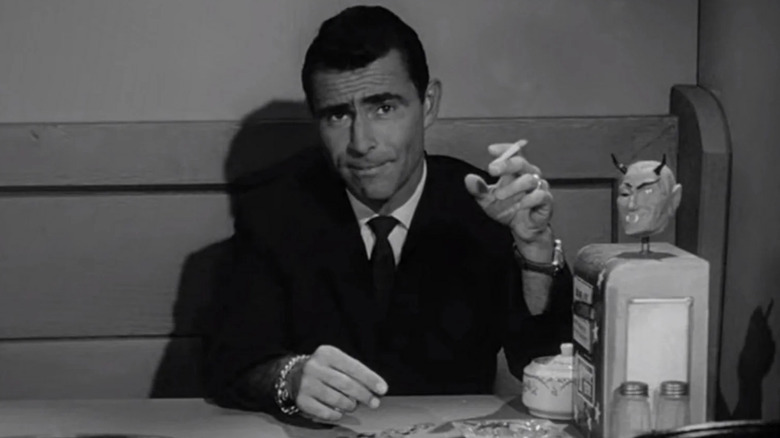
Few individuals have held as much influence over the entirety of television science fiction as Rod Serling, who in 1959 created, wrote, and hosted CBS' "The Twilight Zone," an anthology series broadly exploring the limits of human imagination and the unknown universe. Though some episodes tread closer to fantasy or horror than science fiction, the confluence of all these genres and their overlap is largely thanks to the impact "The Twilight Zone" has had on all three.
Among the scariest episodes of "The Twilight Zone" are classic sci-fi tropes like extraterrestrial invasion, telekinetic powers, and parallel universes, but where the show really excels is in Serling's ability to recruit the greatest talent of 1960s Hollywood for one-and-done roles. Among the various A-list stars who've appeared in the original "The Twilight Zone" series are Mickey Rooney, William Shatner, Cloris Leachman, Robert Redford, Buster Keaton, and Carol Burnett, some of whom were lucky enough for "The Twilight Zone" to precede their more noteworthy star turns.
What's especially great about "The Twilight Zone," particularly in hindsight, is how rewatchable the series is. You never have to start from Episode 1 and continue for a binge-watch to make sense; you can skim through all 150+ episodes for the ones whose concepts intrigue you. However, by doing this, you'd probably miss out on going outside your comfort zone and into the real unknown episodes, some of which are among the most terrifying science fiction ever created.
3. Battlestar Galactica
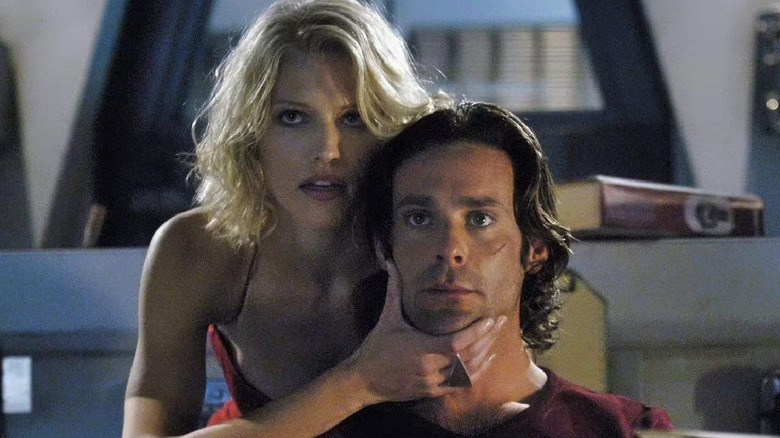
While "Battlestar Galactica" began as a 1978 television series that clearly drew on contemporary sci-fi like "Star Wars" and "Star Trek," it was revived in 2004 after a three-hour miniseries on the Sci-Fi Channel the year before. The series takes place in a galaxy where mankind is at war with a sentient robot race known as Cylons, mainly following the crew of the titular warship, Galactica, one of the few survivors of a devastating attack by the Cylons on the remaining human-populated planets.
The crew of the Galactica includes the ship's stalwart commander, "Husker" (Edward James Olmos), his son "Apollo" (Jamie Bamber), erratic lieutenant "Starbuck" (Katee Sackhoff), genius scientist Dr. Baltar (James Callis), and Cylon android Number Six (Tricia Helfer). Though some ardent sci-fi fans might have problems with contrived plot points throughout the series, ultimately, "Battlestar Galactica" is a show with incredibly layered characters and a deeply fascinating world, and that's all you can really ask for from a seminal show of the genre.
Given that the 2004 iteration of "Battlestar Galactica" is notably darker in tone than the original series, its influence over television science fiction can be felt well into the modern day. Over the show's four seasons, "Battlestar Galactica" reinvented the space opera for modern television audiences, carrying over the aesthetic of its 1978 incarnation while including enough relatable drama to stand alongside the best TV shows of the 21st century.
2. Andor
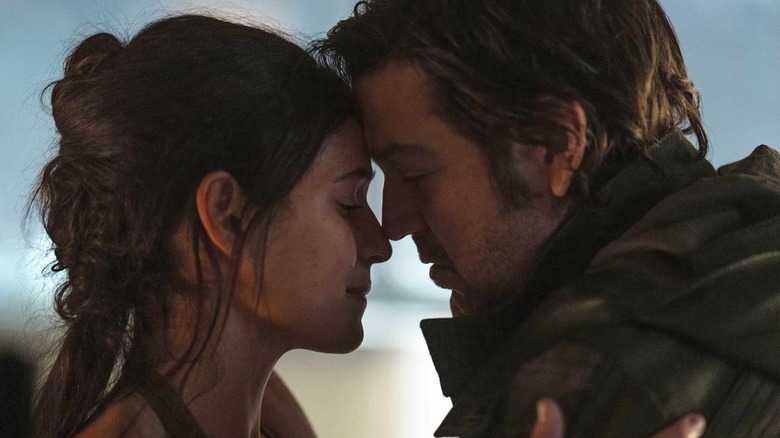
Obviously, certain expectations come with a Star Wars project, but that only makes a show like "Andor" stand out even more. A prequel to the 2016 film "Rogue One: A Star Wars Story," "Andor" ignores the Jedi and Mandalorians for a grounded depiction of how rebellion spreads throughout a galaxy. What begins as a crime drama in which Cassian Andor (Diego Luna) evades capture for the murder of Imperial guards evolves into a political thriller involving POV characters across the intergalactic castes radicalizing into supporters of the Rebel Alliance.
Though Andor's narrative is front and center, the show's supporting cast includes some of the strongest character work in all of Star Wars. Adria Arjona's Bix Caleen has a beautiful arc as Andor's former lover whose black market past makes her a target of the Empire, while Genevieve O'Reilly reprises her role as Mon Mothma, a politician desperately trying to enact change from the top. On the opposite side, Kyle Soller's Syril Karn and Denise Gough's Deedra Meero make for some of the most detestable Star Wars characters purely based on their undying loyalty to the Empire's cause.
Given that the original five-season plan of "Andor" was canceled, the show makes brisk work of only two seasons without ever feeling too slow or too rushed. In the process, it eschews Star Wars lore and spectacle for a show that feels especially poignant in modern times, when sci-fi's often lacking its older edge.
1. Orphan Black
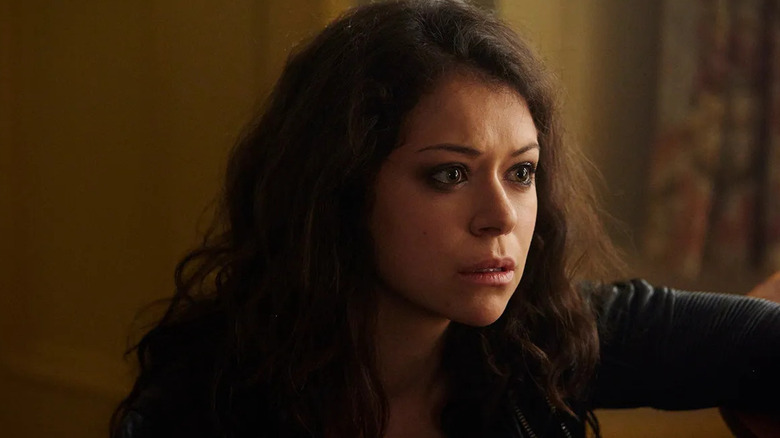
"Orphan Black" might not be a show that's widely influenced science fiction or television as a whole, but what it does do is perfectly portray a deeply human and political story through its careful weaving of sci-fi tropes. Tatiana Maslany stars as Sarah Manning, a British con artist who discovers that she and many other women across the planet are doppelgängers born from an illicit human cloning experiment, uncovering a massive biotech conspiracy that threatens the lives of her and all her identical selves.
Not only is the series impressive given that Maslany has to play over a dozen distinct characters, but the show perfectly utilizes its science fiction aspects to explore wider concepts of government deception, scientific ethics, and individuality. The most interesting and intimate scenes of "Orphan Black" feel straight out of a horror movie, never sacrificing the show's eerie and psychologically thrilling tone in its most ambitious and experimental moments.
With five seasons of consistently high quality, "Orphan Black" may not be the first show sci-fi fans would cite as the genre's best on television. That being said, it's hard to find a serious flaw in a show that's this meticulously crafted, beautifully acted, and impressively stylized. Thankfully, Maslany secured an Emmy win in 2016 for playing five of the show's central characters.